

Beijing Municipality
Beijing is a metropolis in northern China covering nearly 16,500 km2. It is the capital of the People’s Republic of China. It is one of the four municipalities of the PRC, which are equivalent to provinces in China’s administrative structure. The municipality of Beijing borders Hebei Province to the north, west, south, and for a small section in the east, and Tianjin Municipality to the southeast. Beijing is one of the Four Great Ancient Capitals of China and its second largest city with over 22 million inhabitants, after Shanghai. It is also a major transportation hub, with dozens of railways, roads and motorways passing through the city as well as the focal point of many international flights to Beijing Daxing International Airport, the second busiest in the world.
The ‘global city’ of Beijing is recognised as the political, educational, and cultural centre of the People’s Republic of China, while Shanghai and Hong Kong predominate in economic fields. Few cities in the world besides Beijing have served as the political and cultural centre of an area as immense as China for so long. It is renowned for its opulent palaces, temples, and huge stone walls and gates. Its art treasures and universities have long made the city a centre of culture and art in China.
Beijing is situated at the northern tip of the roughly triangular North China Plain, which opens to the south and east of the city. Mountains to the north, northwest and west shield the city and northern China’s agricultural heartland from the encroaching desert steppes. The northwestern part of the municipality, especially Yanqing County and Huairou District, are dominated by the Jundu Mountains, while the western part is framed by the Xishan Mountains. The Great Wall of China, which stretches across the northern part of Beijing Municipality, made use of this rugged topography to defend against nomadic incursions from the steppes. Mount Dongling in the Xishan ranges and on the border with Hebei is the municipality’s highest point, with an altitude of 2,303 metres.
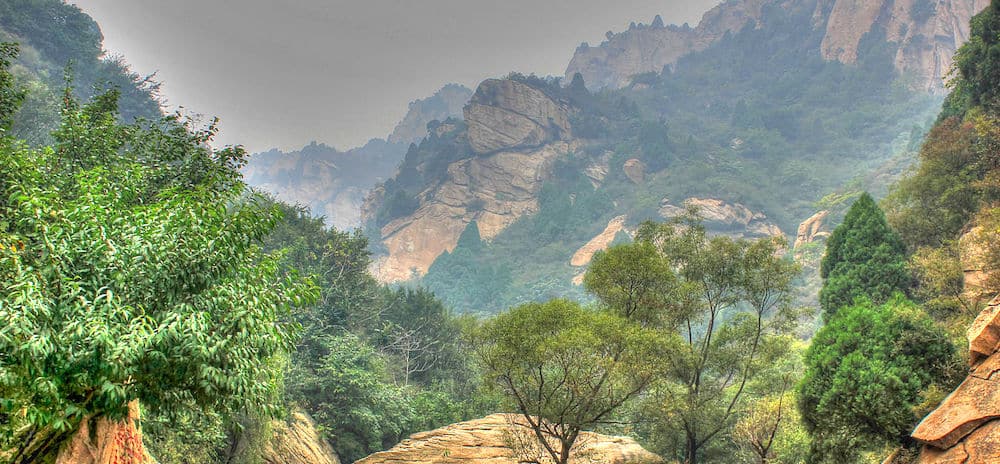
Jundu Mountains – ©Yinan Chen, Public Domain, via Wikimedia Commons
Major rivers flowing through the municipality include the Yongding River and the Chaobai River, part of the Hai River system, and flow in a southerly direction. Beijing is also the northern terminus of the Grand Canal of China which was built across the North China Plain to Hangzhou. Miyun Reservoir, built on the upper reaches of the Chaobai River, is Beijing’s largest reservoir, and crucial to its water supply. The urban area of Beijing is situated in the south-central part of the municipality and occupies a small but expanding part of the municipality’s area. It spreads out in bands of concentric ring roads, of which the fifth and outermost, the Sixth Ring Road (the numbering starts at 2), passes through several satellite towns. Tian’anmen (Gate of Heavenly Peace) and Tian’anmen Square are at the centre of Beijing, and are directly to the south of the Forbidden City, former residence of the emperors of China. To the west of Tian’anmen is Zhongnanhai, residence of the paramount leaders of the People’s Republic of China. Running through central Beijing from east to west is Chang’an Avenue, one of Beijing’s main thoroughfares.
The city’s climate is a monsoon-influenced humid continental climate characterised by hot, humid summers due to the East Asian monsoon, and generally cold, windy, dry winters that reflect the influence of the vast Siberian anticyclone. Average temperatures in January are at around 1 °C, while average temperatures in July are around 30°C. The highest temperature ever recorded was 42 °C and the lowest recorded was -27 °C. Total precipitation is around 410 mm; the majority of which occurs in the summer.
Birding Beijing
Beijing Municipality has 20 nature reserves that have a total area of over 1,300 km2 (500 square miles). The mountains to the west and north of the city are home to a number of protected wildlife species including Leopard, Leopard Cat, Wolf, Red Fox, Eild Boar, Masked Palm Civet, Raccoon Dog, Hog Badger, Siberian Weasel, Amur Hedgehog, Roe Deer, and Mandarin Rat Snake. The Beijing Aquatic Wildlife Rescue and Conservation Centre protects the Chinese Giant Salamander, Amur Stickleback and Mandarin Duck on the Huaijiu and Huaisha Rivers in Huairou District. Beijing Milu Park south of the city is home to one of the largest herds of Père David’s Deer, now extinct in the wild. The Beijing Barbastelle, a species of vesper bat discovered in caves of Fangshan District is endemic to Beijing. The mountains of Fangshan are also habitat for the more common Beijing Mouse-eared Bat, Large Myotis, Greater Horseshoe Bat and Rickett’s Big-footed Bat.
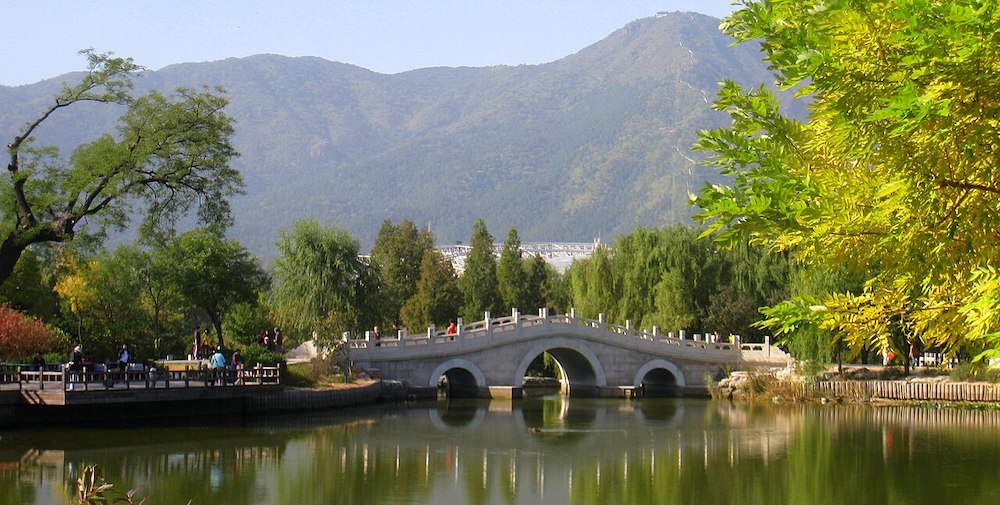
Beijing Botanical Garden – Public Domain via Wikimedia Commons
Though not famous as a hot bird spot or for certain groups of endemic birds, Beijing has recorded about 400 bird species thanks to the fact that the city is located in a flyway for migrating birds. In past years, southern birds have shown increasing appearance in Beijing. Each year there are two groups of birds visiting this city. The summer birds arrive in Beijing and breed between April and May,and leave during autumn and winter. The Wetlands and forests in Beijing suburbs serve as temporary habitats for wading birds and forest birds.
The best season for bird-watching in Beijing is early spring and mid- and late autumn when the migratory birds fly their way to the north for summer breeding or to the south for wintering. Beijing has a typical sub-humid warm temperate continental monsoon climate which is characterized by a hot and humid summer as a result of East Asian Monsoon and generally cold, windy and dry winter.
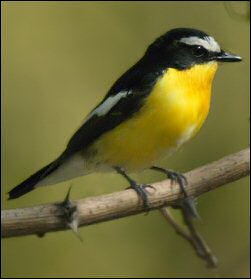
Each year, Beijing hosts between 200 and 300 species of migratory birds including Common Crane and the endangered Yellow-breasted Bunting. Common cuckoos nesting in the wetlands of Cuihu (Haidian), Hanshiqiao (Shunyi), Yeyahu (Yanqing) were tagged and have been traced to far as India, Kenya and Mozambique. The Beijing Forest Police undertook (2016) a month-long campaign to crack down on illegal hunting and trapping of migratory birds for sale in local bird markets. Over 1,000 rescued birds of protected species including Streptopelia species of Dove, Eurasian Siskin, Crested Myna, Coal Tit and Great Tit were handed to the Beijing Wildlife Protection and Rescue Centre for repatriation to the wild.
It may not be an endemic hotspot but there is some great birding around the metropolitan area or within a short drive of it. See some top places below.
This page is sponsored by Bird-Photo-Tours ASIA

This page is sponsored by Alpine Birding

-
Beijing Botanical Garden
InformationSatellite ViewBeijing Botanical Garden where inhibited a lot of northern specials in the lush forest like Beijing Babbler, Snowy-browed Nuthatch, Vinous-throated Parrotbill, Pere David's Laughingthrush, Grey-capped Woodpecker, Great Spotted Woodpecker, Grey-headed Woodpecker, Spotted Dove, Azure-winged Magpie, Yellow-bellied Tit, Marsh Tit, Silver-throated Tit, Light-vented Bulbul, Chinese Blackbird, Red-throated Thrush, Dusky Thrush, Yellow-billed Grosbeak, Oriental Greenfinch, etc. -
Donglingshan Mountain
InformationDonglingshan Mountain, the branch of Small Wutai Mountain, is located in the mountainous region of west Beijing quite distant from the downtown, with an average elevation of 800 to 1,500 meters. The forest coverage in this area amounts to 70% due to its geographical isolation, low human interference and recent forestation efforts. The survey (2000) showed endemic bird species amount to 71, most of which from Palearctic Realm, including 27 resident bird species, 46 travelling bird species. Some birds like Hill Pigeon, Black Vulture, Golden Eagle, Eastern Buzzard, Common Kestrel, Eurasian Hobby, Carrion Crow, Beijing Babbler, Willow Tit, Chinese Leaf Warbler, Yellow-streaked Warbler, Silver-throated Tit, Pere David's Laughingthrush, Black-throated Thrush, White-winged Redstart, Alpine Accentor, Siberian Accentor, Brambling, Chinese Beautiful Rosefinch, Long-tailed Rosefinch, Pallas's Rosefinch, Asian Rosy-Finch, Godlewski's Bunting, Meadow Bunting, etc. -
Songshan Nature Reserve
InformationSatellite ViewSongshan Nature Reserve, which was founded in 1986, is situated in Yanqing County. The vegetation in Songshan Mountain is dominated by temperate broad-leaved deciduous forest. Songshan Mountain is an important habitat for forest birds. Songshan Mountain is an ideal birding site throughout the year, especially the migrating season in spring and fall. There are 3 birding sites in this region, namely Lanjiaogou Virgin Forest, Songshan Forest scenic spot and the route along the asphalt road. Birds including Koklass Pheasant, Smew, Goosander, Hill Pigeon, Large Hawk-Cuckoo, Eurasian Sparrowhawk, Eurasian Hoopoe, Crested Kingfisher, Grey-capped Woodpecker, Great Spotted Woodpecker, Grey-headed Woodpecker, Eurasian Hobby, Eurasian Jay, Azure-winged Magpie, Spotted Nutcracker, Yellow-bellied Tit, Coal Tit, Marsh Tit, Willow Tit, Silver-throated Tit, Light-vented Bulbul, Beijing Babbler, Snowy-browed Nuthatch, Chinese Thrush, Dusky Thrush, Chinese Beautiful Rosefinch, Godlewski's Bunting, Meadow Bunting, Yellow-throated Bunting, etc. -
The Parks in Downtown Beijing
The best birding sites in downtown Beijing are parks of different sizes, the Summer Palace, Yuanmingyuan Imperial Garden, the Temple of Heaven, Botanical Garden, Yuyuantan Park, Ritan Park, Beihai Park, to name a few. The Temple of Heaven is a famous birding spot in Beijing, with over 130 bird species and May is the best time to watch birds there, like Eurasian Hoopoe, Gray-capped Woodpecker, Great Spotted Woodpecker, Yellow-bellied Tit, Marsh Tit, Light-vented Bulbul, White-cheeked Starling, Chinese Blackbird, Red-throated Thrush, Dusky Thrush, Red-flanked Bluetail, Yellow-billed Grosbeak, Oriental Greenfinch, etc. -
Yeyahu Lake
Beijing Yeyahu Lake Wetland Nature Reserve, the artificial lake wetland in southwest Yanqing County of Beijing, consists of Kuan-ting Reservoir and neighboring mudflat. Yeyahu Lake has recorded 264 bird species, with more than 20,000 water birds passing through this territory in spring and autumn each year, according to the survey, like Swan Goose, Whooper Swan, Ruddy Shelduck, Mandarin Duck, Falcated Duck, Northern Pintail, Red-crested Pochard, Common Pochard, Ferruginous Duck, Great Crested Grebe, Collared Dove, Black-winged Stilt, Northern Lapwing, Grey-headed Lapwing, Purple Heron, Great White Egret, Chinese Pond Heron, etc. In addition, we can also look for Eastern Marsh Harrier, Eurasian Sparrowhawk, Amur Falcon, Chinese Grey Shrike, Chinese Penduline Tit, Bearded Tit, Black-browed Reed Warbler, Oriental Reed Warbler, White-cheeked Starling, Water Pipit, Buff-bellied Pipit, Pallas's Reed Bunting, Little Bunting, Black-faced Bunting, etc.
-
Wikipedia
GNU Free Documentation License
https://en.wikipedia.org/wiki/Beijing -
Alpine Birding
http://www.alpinebirding.com
-
Number of bird species: 527
(As at August 2024)
-
Avibase
PDF ChecklistThis checklist includes all bird species found in Beijing , based on the best information available at this time. It is based on a wide variety of sources that I collated over many years. I am pleased to offer these checklists as a service to birdwatchers. If you find any error, please do not hesitate to report them. -
Wild Beijing
ChecklistThe latest official list of species seen in Beijing can be downloaded by clicking the link below. The document is a result of excellent work by members of the Beijing Birdwatching Society. -
eBird
PDF ChecklistThis checklist is generated with data from eBird (ebird.org), a global database of bird sightings from birders like you. If you enjoy this checklist, please consider contributing your sightings to eBird. It is 100% free to take part, and your observations will help support birders, researchers, and conservationists worldwide.

-
Atlas of Common Wild Birds: Beijing Area
| By Li Qiang | China Machnie Press | 2014 | Paperback | 372 pages, 700 colour illustrations | Chinese Text | ISBN: 9787111438168 Buy this book from NHBS.com -
Birds in China
| By Zhang Guangmei, Zhu Xiang & Pang Bingzhang | China Forestry Publishing House | 2002 | Hardback | 274 pages, 500+ colour photos | ISBN: 9787503830877 Buy this book from NHBS.com -
Birds of China
| By Liu Yang & Chen Shuihua | Princeton University Press | 2023 | Flexibound | 672 pages, plates with 4000 colour illustrations, colour distribution maps | ISBN: 9780691237527 Buy this book from NHBS.com -
Guide to the Birds of China
| By John MacKinnon | OUP | 2022 | Edition 2 | Paperback | 513 pages, 164 plates with colour illustrations; colour distribution maps | ISBN: 9780192893673 Buy this book from NHBS.com

Birds of the Eastern Asia
AndroidBirds of the Eastern Asia. It includes the birds of China, Japan, North Korea, South Korea, Mongolia, Taiwan. 1589 kind of birds, more than 6300 pictures.Organisations-
Beijing Bird Watching Society
InformationBeijing Bird Watching Society (BBWS) (in preparation) was founded by active and keen birdwatchers in Beijing. It is committed to forming bird watching groups in Beijing and promoting local bird watching activities. A number of members of BBWS have a professional background on ornithology, ecology, environmental conservation or education…. -
Wild Beijing
WebsiteWelcome to Wild Beijing, a website dedicated to celebrating the wildlife of China’s capital city. It is inspired by this quote from Baba Dioum, Senegalese conservationist, who said:
Reserves-
*Beijing Nature Reserves
InformationSatellite View -
*Protected Natural Areas in Beijing
InformationSatellite ViewAt the end of 2019, there were 79 protected natural areas of 5 categories in Beijing, including 21 nature reserves (2 national, 12 municipal, and 7 district-level), 11 scenic areas (3 national and 8 municipal), 31 forest parks (15 national and 16 municipal), 6 geoparks (5 national and 1 municipal), 10 wetland parks (2 national and 8 municipal). -
NR Songshan
InformationSatellite ViewCovering an area of 4,660 hectares, the Reserve mainly protects natural Chinese pine trees…
Sightings, News & Forums-
eBird
SightingseBirding This Month
Guides & Tour Operators-
Alpine Birding
Tour OperatorBirding trips here are made for avid birders including yearly-run trips and new China birding trips developed by AlpineBirding team and guided by our bird experts in the best -
Bird-Photo-Tours ASIA
Local Tour OperatorBird-Photo-Tours ASIA is the specialists in bird photography tours on the Asian continent with a portfolio of 50 bird photography tours across 26 countries and a particular specialism in bird photography in China including its capital Beijing. -
BirdFinders
Tour OperatorAfter transferring to our hotel to freshen up we will visit Tiananmen Square and the spectacular Forbidden City with their resident Azure-winged Magpies before taking lunch. In the afternoon we will visit a park to look for resident birds and migrants, which may include Spotted Dove, Grey-capped Pygmy, Grey-headed and Rufous-bellied Woodpeckers, White-cheeked Starling, Olive-backed Pipit, Oriental Greenfinch, Black-faced and Little Buntings and Chinese Grosbeak. Two nights in Beijing. -
BirdQuest
Tour OperatorCHINA IN WINTER – A wonderful selection of special birds, from the Beijing region south to subtropical Hainan Island -
China Birding Tours
Local Tour OperatorBeijing Birding -
HeatherLea
Tour OperatorChina - Sichuan and Beijing -
Pelago
Local Tour OperatorPrivate Seasonal Day Tour to Beidaihe from Beijing with Birding Experience -
Tour Home » Beijing Tour » Beijing Theme Tour » Beijing Bird Watching Beijing
Local Tour OperatorDay trips
Trip Reports-
2018 [01 January] - Oscar Campbell
PDF ReportThis short trip report outlines a winter visit to the greater Beijing area, with three full days in the city(mainly sight-seeing) and almost three days visiting the Great Wall at Mutianyu. In addition, a day trip wasmade to Lingshan mountain. Despite the limited birding time, cold conditions and rather limited bird list (58species seen in all), quality was excellent and this report will hopefully help others visiting Beijing as atourist or on business for a few days. -
2018 [04 April] - Mark Smiles - Beijing, Shaanxi & Sichuan
PDF ReportThis was a trip with my wife aimed at visiting the main Chinese cultural sites and a return to Sichuan, a province I’d had a taste of in May 2015 when I visited with t wo birding friends from the UAE. Although a little early for most of the returning migrants (most of which I’d previously seen in 2015 ), the timing of this trip proved very successful for certain species (esp ecially pheasants & tit - warblers) which become trickier late on.
-
Fatbirder - linking birders worldwide...
Skip to content