

Bavaria
Bavaria is one of the 16 federal states of Germany. It’s landlocked and has the largest area being 70,550 km2 (27,249 square miles) and it has over 13 million inhabitants. The largest city is the capital, Munich with more than 1.2 million inhabitants; the second city is Nuremberg with around half a million people.
The state shares international borders with Austria to the southeast and the Czech Republic, to the northeast as well as with Switzerland along across Lake Constance to the southwest. Its neighbouring German states are Baden-Württemberg to the southwest, Hesse to the northwest, Thuringia to the north and Saxony ton the northeast. Two major rivers flow through the state, the Danube and the Maine. The Bavarian Forest and the Bohemian Forest form the vast majority of the frontier with the Czech Republic and Bohemia.
Bavarias economy is driven by manufacture with one of the largest industries being the motor industry. Bavaria is the headquarters of both BMW and Audi, with four and two manufacturing plants respectively. It’s also the headquarters of the commercial vehicle manufacturer MAN and an aircraft engine manufacturer, as well as other global companies such as Adidas, Siemens and Alliance, and there are several US company IT research facilities too.

Bodensee – ©Jörg Braukmann CC BY-SA 4.0 via Wikimedia Commons
It is the most visited state in Germany and tourism peak for Oktoberfest and Christmas Markets.
Birding Bavaria
Bavaria is Germany’s largest state and includes almost the whole of the German Alps, consequently, all central European alpine species can be observed here and the large and varied types of wetlands contribute to the abundant bird life in the state.
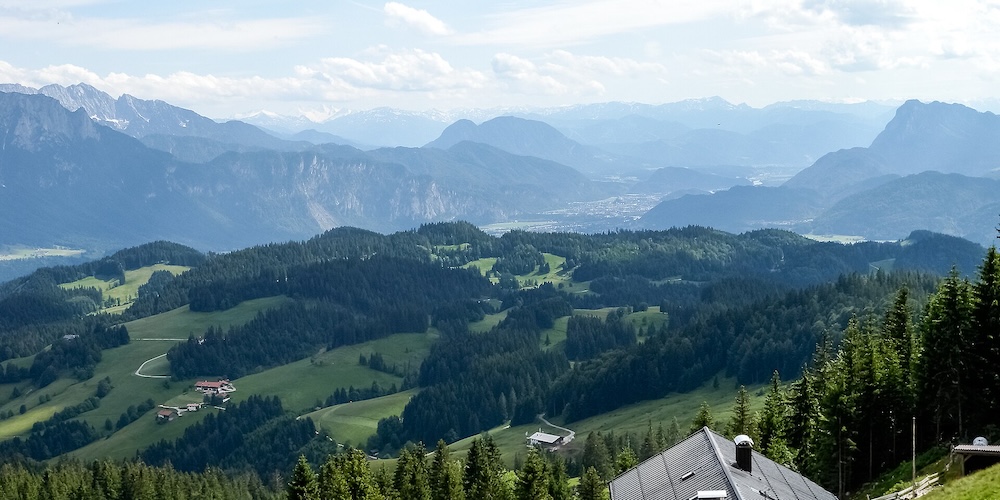
Bavarian Alps – ©Björn Láczay derivative work Georgfotoart CC BY-SA 2.0 via Wikimedia Commons
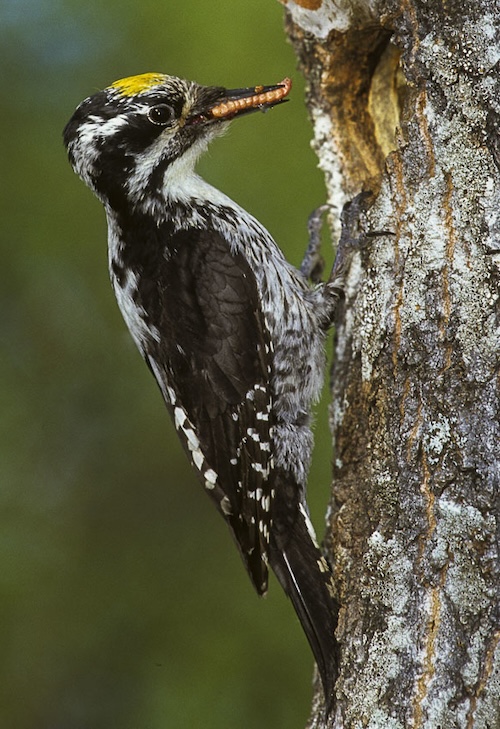
Top species include Divers, Night Heron, Little and Great White Egret, Goosander, Montagu’s Harrier, Golden Eagle, Ptarmigan, Capercaillie, Black and Hazel Grouse, Mediterranean Gull, Eagle Owl, White-backed and Three-toed Woodpecker, Crag Martin, Water Pipit, Alpine Accentor, Bluethroat, Ring Ouzel, River Warbler, Bonelli’s Warbler, Red-breasted and Collared Flycatcher, Wallcreeper, Nutcracker, Alpine Chough, Common Rosefinch, Citril Finch, & Snow Finch.
Almost all good birding areas in Southern Bavaria can be covered individually on a day’s excursion from the state capital Munich. The Starnberger See, Chiemsee and Ammersee are always attractive destinations in winter and in spring and summer a day’s hike in the mountains is worthwhile. Some of the best birding sites which can be reached in less than an hour’s drive from Munich are the Ismaniger, Moosburger and Echinger reservoirs and the lakes Ammersee and Starnberger See.
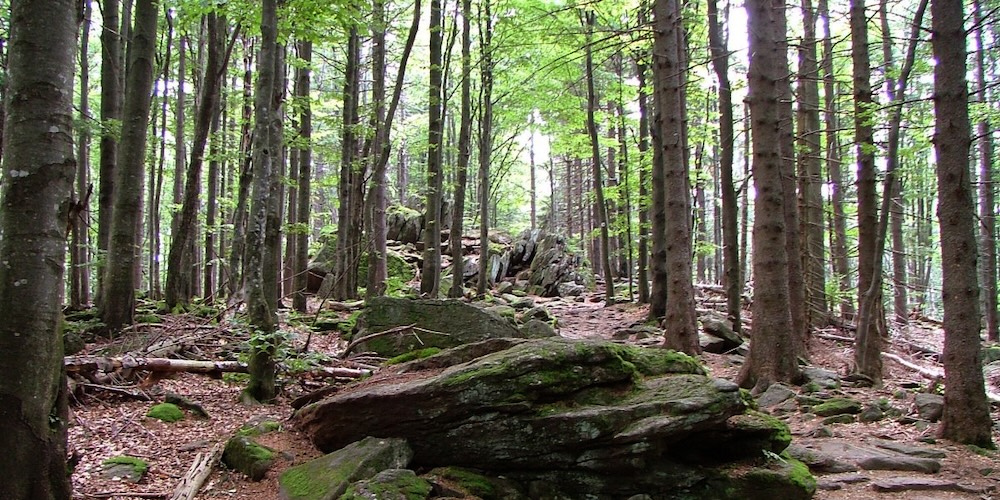
Bavarian Forest National Park – ©Kurt Seebauer CC BY-SA 3.0 via Wikimedia Commons
Those wanting to have a more exhaustive insight into Bavaria’s bird life are advised to visit the following birdwatching sites:
Firstly, one of the 3 large alpine regions. As alpine species are not easy ‘ticks’ several days are required for each of the regions (Allgaeu, the North Tyrolean Limestone Alps and the Karwendel Mountains and parts of the Salzburg Limestone Alps in the Berchtesgaden region). Some of the areas described are not reachable in winter, so winter clothing and mountaineering equipment is required. The best time for the upper regions is from May to July.
Secondly, one of the large lakes in the alpine foothills. Seasonally. Chiemsee or Starnberger See is good in summer or winter. The Murnauer Moos, is also a good half or full day tour in June when Common Rosefinch and Corncrake are present. A large river valley such as the Lower Inn; the Danube near Aholfing or the Donaumoos near Guenzburg are mainly interesting in the breeding and migration seasons; in winter there is less to see.
Particularly recommended sites (from the Moning & Wagner guide 2005) can be seen Top Sites section below.
ck and Hazel Grouse, Mediterranean Gull, Eagle Owl, White-backed and Three-toed Woodpecker, Crag Martin, Water Pipit, Alpine Accentor, Bluethroat, Ring Ouzel, River Warbler, Bonelli’s Warbler, Red-breasted and Collared Flycatcher, Wallcreeper, Nutcracker, Alpine Chough, Common Rosefinch, Citril Finch, & Snow Finch.
Almost all good birding areas in Southern Bavaria can be covered individually on a day’s excursion from the state capital Munich. The Starnberger See, Chiemsee and Ammersee are always attractive destinations in winter and in spring and summer a day’s hike in the mountains is worthwhile. Birding sites which can be reached in less than an hour’s drive from Munich are the Ismaniger, Moosburger and Echinger reservoirs and the lakes Ammersee and Starnberger See.Those wanting to have a more exhaustive insight into Bavaria’s bird life are advised to visit the following birdwatching sites:
* One of the 3 large alpine regions. As alpine species are not easy ‘ticks’ several days are required for each of the regions (Allgaeu, the North Tyrolean Limestone Alps and the Karwendel Mountains and parts of the Salzburg Limestone Alps in the Berchtesgaden region). Some of the areas described are not reachable in winter or winter clothing and mountaineering equipment is required. The best time for the upper regions is from May to July.* One of the large lakes in the alpine foothills. Seasonal – Chiemsee in summer or Starnberger See in winter.* The Murnauer Moos which is a good half or full day tour in June when Common Rosefinch and Corncrake are present.* A large river valley such as the Lower Inn, the Danube near Aholfing or the Donaumoos near Guenzburg. These areas are mainly interesting in the breeding and migration seasons; in winter there is less to see.
Particularly recommended sites (from the Moning & Wagner guide 2005) – see Top Sites below…
-
Allgaeu Alps near Oberstdorf
InformationSatellite ViewThis extensive area covering some 900 km², essentially the Allgaeu Alps Massif, provides opportunities for week-long hiking and birdwatching trips. The trip selection on this site gives access to almost all northern alpine and subalpine bird species. A small selection of interesting birds includes Golden Eagle, Black Grouse, Ptarmigan, Three-toed Woodpecker, Nutcracker and Bonelli's Warbler. -
Altmuehlsee and Brombachsee
InformationSatellite ViewAlso See/K_Brombachsee/k_brombachsee.htm -
Ammersee
InformationSatellite ViewThe Starnberger See’s little brother from an ornithological point of view. It offers a similarly interesting selection of passage and wintering species. The extensive dried-up and low bog areas in the south (Ammermoos) and north (Ampermoos), as well as mixed woodland in the west, add to the habitat variety of the area. -
Chiemsee
InformationSatellite ViewBavaria’s largest lake covering 8,500 hectares. Together with the surrounding moorland and the nearby mountains, the Chiemsee is one of the areas in the state most abundant in birds with some 300 species recorded since 1950. Some 40 % of the shoreline is still in a near-natural state. In winter up to 40,000 birds have been recorded on this RAMSAR site. Best during spring and autumn migration and in winter. Sedge Warbler, Savi's Warbler and Great Reed Warbler breed on the shoreline and Hobby, Honey Buzzard, Stonechat and Common Rosefinch in the surrounding moorland -
Danube between Regensburg and Deggendorf
InformationSatellite ViewAn important rest area for migrants. In spite of the extensive manmade changes to the Rhine bed in this area it is still very good for birding. For observation of the long stretch of dyke a bicycle is recommended but selected points can be covered in a day tour by car. In addition to a great variety of species and rarities on migration, breeding birds include Water Rail, Bluethroat, River Warbler, Penduline Tit, Golden Oriole, Collared Flycatcher and in recent years also Night Heron, Great Egret and Black-winged Stilt. -
Echinger and Moosburger reservoirs
InformationSatellite ViewThese reservoirs on the central stretch of the River Isar between Moosburg and Landshut, with 250 recorded species, offer a broad spectrum of wader, duck, rail and other water bird species in the course of a few hours during spring (April-June) and autumn (August-November) migration. Large numbers of ducks in winter. -
Garmisch-Partenkirchen and surroundings
InformationSatellite ViewThis area, covering a vast 1,000 km², comprises the massif of the Ammer, Ester and Wetterstein mountains as well as the Karwendel. Birding opportunities are countless and during a two week tour the same place need not be visited twice. Good access to the region is assured by a network of lifts, cable cars and trails. All northern alpine species can be observed. Best birds include White-backed and Three-toed Woodpecker, Citril Finch and grouse species. The woodpeckers and grouse need working for. Don’t forget that the winter lingers much longer in the mountains as in the lowlands -
Ismaninger Reservoir
WebpageSatellite ViewIsmaninger Reservoir is close to the Munich conurbation and is primarily a good birding area for water birds. It is worthwhile for a couple of comfortable hours birding in winter. -
Kochelsee
InformationSatellite ViewThe lake lies some 70km south of Munich near the Alps. The south end of the lake is surrounded by mountains whereas the northerly part lies in the foothills and is surrounded by moorland. Breeding birds include Black Kite, Marsh and Montagu’s Harrier, Common Snipe, Short-eared Owl. Grey-headed Woodpecker, Bluethroat, Whinchat, Red-backed and Great Grey Shrike -
Mohrhofweiher
InformationSatellite ViewThe Mohrhofweiher area is part of an extensive fishpond complex. When they are drained in autumn they are good feeding grounds for migrants. Over 250 species have been recorded, speciality breeding birds being Black-necked, Grebe, Little Bittern and Bluethroat. -
Murnauer Moos
InformationSatellite ViewThis area is well known as the best site for Corncrake and Common Rosefinch. Covering some 4,200 hectares it is one of the largest intact bog areas in Central Europe and an important area for ground breeders in Bavaria. The area, with its characteristic meadows and the magnificent Alps as backdrop, is best explored for a whole or half a day on foot or bicycle on the well-maintained tracks. Best from mid-May to mid-June for the interesting breeding birds of the region. -
National Park Berchtesgaden and its foothills
WebsiteSatellite ViewAlthough a large area covering some 240 km² only some 100 species breed in the region and just 150 species in total have been recorded. Good physical condition is required to see most of the breeding alpine species which make up the bird life. Heavy snowfall is not unusual in April and large tracts of the region are still snow-covered in May. A stay of several days is recommended to see a large number of alpine species. Interesting birds include Griffon Vulture, Golden Eagle, Honey Buzzard, Peregrine, Ptarmigan, Capercaillie, Black Grouse, Hazel Grouse, Tengmalm's Owl, Pygmy Owl, Black, Green, Grey-headed, White-backed- und Three-toed Woodpecker, Crag Martin, Water Pipit, Alpine Accentor, Ring Ouzel, Bonelli's Warbler, Red-breasted Flycatcher, Dipper, Wallcreeper (rare), Nutcracker, Raven, Alpine Chough, Snow Finch -
Starnberger See
InformationSatellite ViewA RAMSAR site of international importance with winter water bird populations of up to 20,000 birds. The south shore of the lake is probably the best place in Germany (apart from the coast) to see divers and sea ducks between October and April. A very full winter day’s birding. -
The Lower Inn
InformationSatellite ViewThe Europa reserve is one of the best birding areas in Bavaria and a RAMSAR site with over 300 species recorded. The extensive stretches of water, mudflats and reed beds and riverine woodland provide a great variety of species. Good for woodpeckers in March and April and song birds in May and June. A good full day’s birding but more time is required to explore the various river stretches in detail.
-
Number of bird species: 412
(As at June 2026)State Bird - Nutcracker Nucifraga caryocatactes
-
Aibase
PDF ChecklistThis checklist includes all bird species found in Bavaria , based on the best information available at this time. It is based on a wide variety of sources that I collated over many years. I am pleased to offer these checklists as a service to birdwatchers. If you find any error, please do not hesitate to report them. -
eBird
PDF ChecklistThis checklist is generated with data from eBird (ebird.org), a global database of bird sightings from birders like you. If you enjoy this checklist, please consider contributing your sightings to eBird. It is 100% free to take part, and your observations will help support birders, researchers, and conservationists worldwide.

-
Vögel beobachten in Süddeutschland
| (Die besten Beobachtungsgebiete zwischen Mosel und Watzmann) | By Christoph Moning & Christian Wagner | Franckh-Kosmos Verlags-GmbH & Co. KG | 2023 | Kindle Edition | (In German) | ISBN: 9783440510278 Buy this book from NHBS.com
-
Kempten [Bavaria] - LBV- Kreisgruppe Kempten-Oberallg
WebsiteA local group of the Bavarian Bird protection Society. -
Landesbund fuer Vogelschutz in Bayern e.V. (LBV)
WebsiteSociety for species and habitat protection in the province of Bavaria. Takes the place of NABU in the province (The Bavarians always do their own thing). Their emblem is the Kingfisher instead of the White Stork…
-
BR The Rhön
WebsiteSatellite View(English- French – German) Not particularly comprehensive – mainly for general tourism but has useful information. There is also a birdwatching page (in German) at http://www.biosphaerenreservat-rhoen.de/frame_vogel.html -
NR Altmuehlsee
InformationSatellite ViewThe first man-made dam in the Middle Franconian lake district. Flooded in 1985. The Middle Franconian lake district is a major project by the province of Bavaria; primarily to provide water resources but which, through the provision of recreational facilities, has developed into an important tourist resource. -
NR Brombachmoor
InformationSatellite ViewThe Brombachmoor is a nature reserve in the Franconian Lake District in the Middle Franconian county of Weißenburg-Gunzenhausen. The roughly 700-metre-long trough-shaped valley is covered in alder carr woods and riparian woodland as well as small pools known as Tümpeln. Between the sedge hummocks there are bulrushes, peat mosses, dogbanes, sedges und rushes. -
NR Deusmauer Moor
InformationSatellite ViewThe Deusmauer Moor is a nature reserve near Deusmauer, in the municipality of Velburg in the Upper Palatine county of Neumarkt in der Oberpfalz. The reserve covers an area of 73 hectares and is an extensive fen complex on the Schwarze Laber river. It is notable due to the presence of rare plants that are ice age relics. -
NR Hartelholz
InformationSatellite ViewHartelholz is a 115-hectare (280-acre) forest in the north of Munich, Germany. -
NR Seeon Lakes
InformationSatellite ViewSeeon Lakes is a small group of kettle lakes -
NR Wettersteinwald
InformationSatellite ViewThe Wettersteinwald is a nature reserve in the eastern part of the Wetterstein Mountains in Bavaria with an area of 42.6 hectares.
-
Bayern Rare Bird Alert
SightingsThe report below shows observations of rare birds in Bayern. Includes both unreviewed and reviewed/approved observations.
-
Digital Photography in Bavaria
GalleryAn offshoot of the popular and informative Bavarian Birds site, Stefan Tewinkel has published a new page to illustrate the magnification possible with a digital camera in combination with binoculars or scope - the increasingly popular art of digiscoping