

Japan
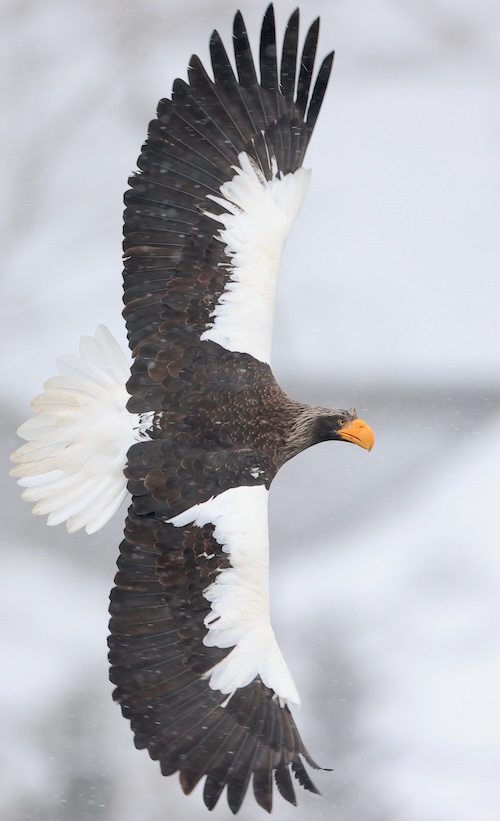
Japan is an island country in East Asia. Located in the Pacific Ocean off the northeast coast of the Asian mainland, it is bordered on the west by the Sea of Japan and extends from the Sea of Okhotsk in the north to the East China Sea in the south. The Japanese archipelago consists of five major islands: Hokkaido, Honshu, Shikoku, Kyushu and Okinawa, as well as thousands of smaller islands, covering 377,975 km2 (145,937 square miles). Japan has a population of over 123 million, making it the eleventh-most populous country. The capital of Japan and its largest city is Tokyo; the Greater Tokyo Area is the largest metropolitan area in the world, with more than 37 million inhabitants. Japan is divided into 47 administrative prefectures and eight traditional regions. About three-quarters of the country’s terrain is mountainous and heavily forested, concentrating its agriculture and highly urbanized population along its eastern coastal plains. The country sits on the Pacific Ring of Fire, making its islands prone to destructive earthquakes and tsunamis.
Japan comprises 14,125 islands extending along the Pacific coast of Asia. It stretches over 3000 km (1900 miles) northeast-southwest. The Ryukyu Islands, which include Okinawa, are a chain to the south of Kyushu. The Nanpō Islands are south and east of the main islands of Japan. Together they are often known as the Japanese archipelago. Japan has the sixth-longest coastline in the world at 29,751 km (18,486 miles). Because of its far-flung outlying islands, Japan’s exclusive economic zone is the eighth-largest in the world.
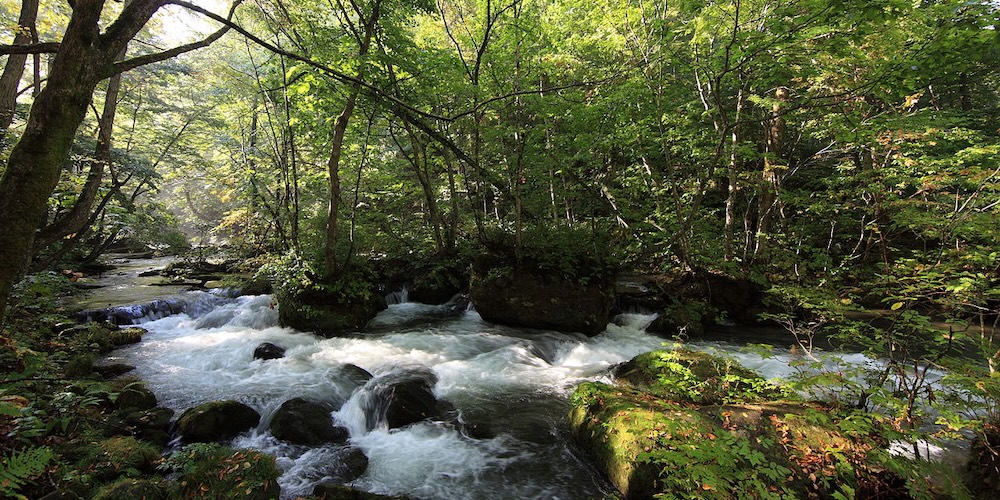
Towada-Hachimantai National Park – ©TANAKA Juuyoh (田中十洋), CC BY 2.0 via Wikimedia Commons
The Japanese archipelago is 67% forests and 14% agricultural. The primarily rugged and mountainous terrain is restricted for habitation. Thus the habitable zones, mainly in the coastal areas, have very high population densities: Japan is the 40th most densely populated country even without considering that local concentration. Honshu has the highest population density at 450 persons/km2, while Hokkaido has the lowest density of 64.5 persons/km2. Approximately 0.5% of Japan’s total area is reclaimed land. Lake Biwa is an ancient lake and the country’s largest freshwater lake.
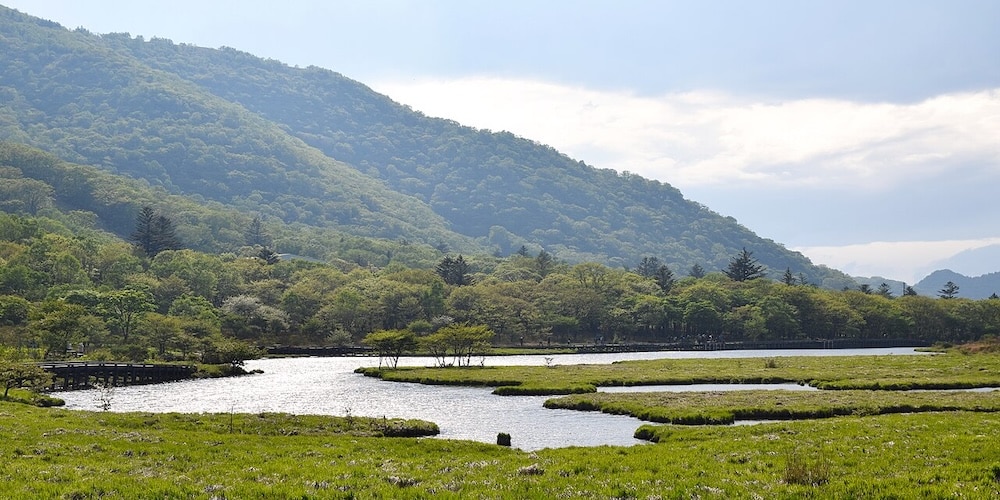
Kakumanbuchi Wetland – ©雷太, CC BY 2.0 via Wikimedia Commons
The climate of Japan is predominantly temperate but varies greatly from north to south. The northernmost region, Hokkaido, has a humid continental climate with long, cold winters and very warm to cool summers. Precipitation is not heavy, but the islands usually develop deep snowbanks in the winter. In the Sea of Japan region on Honshu’s west coast, northwest winter winds bring heavy snowfall during winter. In the summer, the region sometimes experiences extremely hot temperatures because of the Foehn wind. The Central Highland has a typical inland humid continental climate, with large temperature differences between summer and winter. The mountains of the Chūgoku and Shikoku regions shelter the Seto Inland Sea from seasonal winds, bringing mild weather year-round.
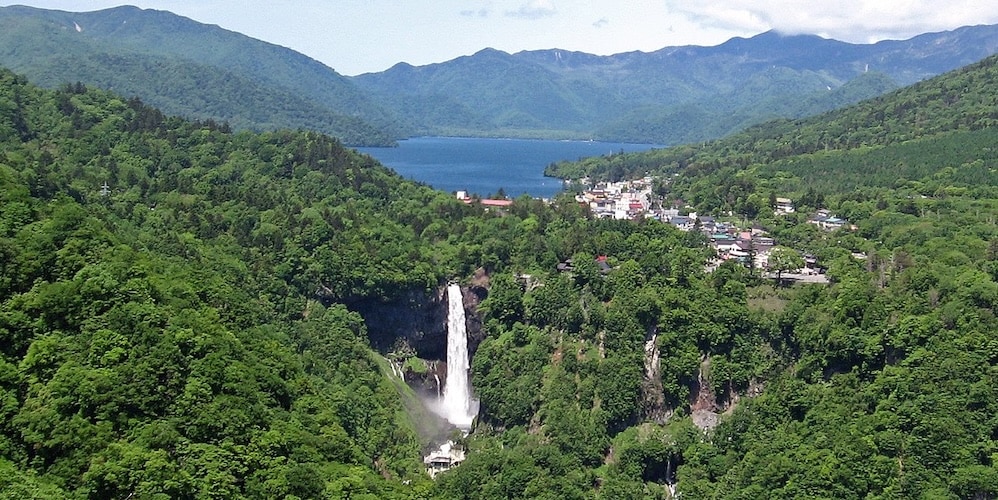
Nikko National Park – ©Uraomote yamaneko CC BY-SA 3.0 via Wikimedia Commons
The Pacific coast features a humid subtropical climate that experiences milder winters with occasional snowfall and hot, humid summers because of the southeast seasonal wind. The Ryukyu and Nanpō Islands have a subtropical climate, with warm winters and hot summers. Precipitation is very heavy, especially during the rainy season. The main rainy season begins in early May in Okinawa, and the rain front gradually moves north. In late summer and early autumn, typhoons often bring heavy rain.
Japan has nine forest eco-regions which reflect the climate and geography of the islands. They range from subtropical moist broadleaf forests in the Ryūkyū and Bonin Islands, to temperate broadleaf and mixed forests in the mild climate regions of the main islands, to temperate coniferous forests in the cold, winter portions of the northern islands. Japan’s wildlife includes brown bear, Japanese macaque, Japanese raccoon dog and the Japanese giant salamander.
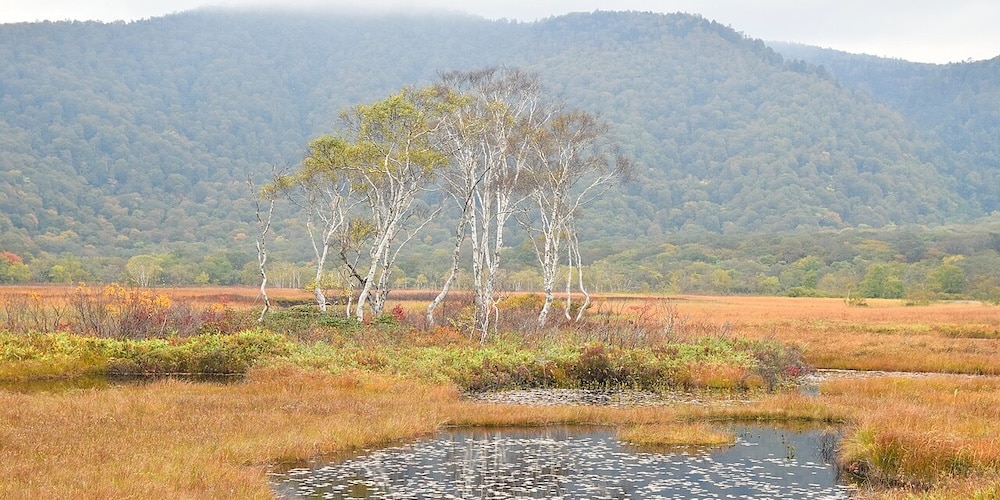
Oze National Park – ©雷太, CC BY 2.0 via Wikimedia Commons
There are 53 Ramsar wetland sites in Japan.
Birding Japan
Japan is located in the northwest Pacific Ocean. Being latitudinally long, the island chain covers a wide climatic range; from the boreal to the sub-tropical climate zone. There are also two ecological lines which divide the countries flora and fauna. These are Blakiston’s Line (between Hokkaido and Honshu) and the Watase’s Line (southern Japan). Because of this unusual ecological background, Japan’s avifauna is incredibly rich. More than 600 species have been recorded to date. Most of them are migratory (more than 60%) whilst approximately 60 species are either endemic or sub-regional endemic, including the internationally famous Okinawa Rail, Blakiston’s Fish-owl, Japanese Murrelet, Red-crowned Crane, Pryer’s Woodpecker and Lidth’s Jay.
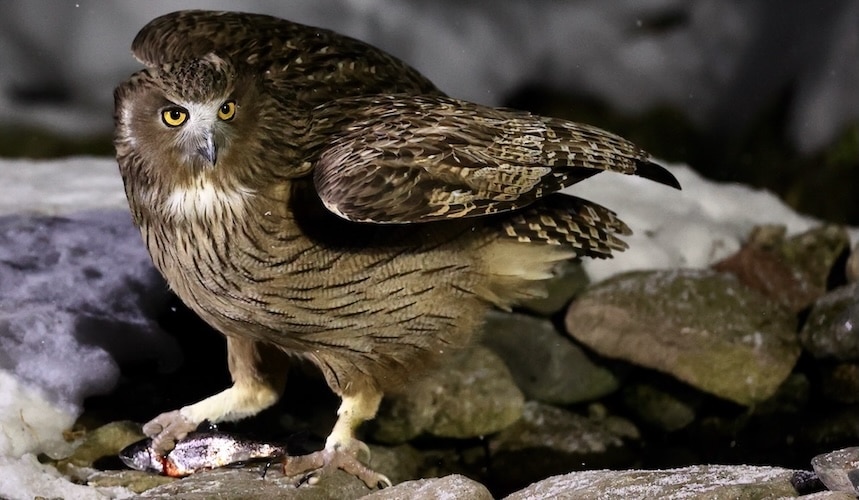
Blakiston’s Fish Owl Ketupa blakistoni – ©Bird-Photo-Tours ASIA
Birding in Japan is increasingly popular. The largest nature conservation NGO, the Wild Bird Society of Japan, has more than 53,000 members and there are more birders who do not belong to the WBS-J. Twitching is becoming more and more common. People can get to rare birds within a few hours of their discovery because of the development of the internet and mobile telephones.
Some top birding spots are set out below.
This page is sponsored by Bird-Photo-Tours ASIA

This page is sponsored by Naturalist Journeys

-
Amami Island
Satellite ViewBest place for Lidth's Jay and Amami Woodcock -
Eastern Hokkaido
Satellite ViewFor Blakiston's Fish-Owl, Red-crowned Crane and Steller's Sea-Eagle. -
Ferry between Hokkaido and Honshu
Satellite ViewFor seabirds. -
Hakata Bay
Satellite ViewFor Black-faced Spoonbill and Saunder's Gull. -
Izumi
Satellite ViewFor White-naped, Hooded, Sandhill, Common and Siberian Cranes. -
Karuizawa
Satellite ViewFor summer migrants -
Miyake Island
Satellite ViewFor Seven Island Thrush, Styan's Grasshopper Warbler and Ijima's Warbler. -
Okinawa
Satellite ViewFor Okinawa Rail, Pryer's Woodpecker and Ryukyu Robin.
-
Koji TAGI
| Bluebonnet0712@aol.com
http://birdwatching.web.fc2.com/menu-e.htm
-
Number of bird species: 723
(Extant as at May 2026)National Bird: Green Pheasant Phasianus versicolor
Number of endemics: 21
Copper Pheasant Phasianus soemmerringi
Green Pheasant Phasianus versicolor
Ryukyu Green Pigeon Treron permagnus
Okinawa Rail Rallus okinawae
Amami Woodcock Scolopax mira
Amami Woodpecker* Dendrocopos owstoni
Okinawa Woodpecker Dendrocopos noguchii
Japanese Woodpecker Picus awokera
Miyako Island Kingfisher Todiramphus miyakoensis
Ryūkyū Minivet Pericrocotus tegimae
Amami (Lidth’s) Jay Garrulus lidthi
Iriomote Tit Sittiparus olivaceus
Izu (Owston’s) Tit Sittiparus owstoni
Bonin White-eye Apalopteron familiare
Amami Thrush Zoothera major
Izu Thrush Turdus celaenops
Izu Robin* Erithacus tanensis
Ryūkyū Robin Erithacus komadori
Okinawa Robin Erithacus namiyei
Ryūkyū Flycatcher Ficedula owstoni
Bonin Greenfinch Chloris kittlitzi* Some authorities consider these to be sub-species
Number of endemics: 7 Breeding Endemics
(These species overwinter in other countries, but only breed in Japan):
Matsudaira's Storm Petrel Oceanodroma matsudairae
Short-tailed Albatross Phoebastria albatrus
Bryan's Sheerwater Puffinus bryani
Ijima's Willow Warbler Phylloscopus ijimae
Japanese Leaf Warbler Phylloscopus xanthodryas
Yellow Bunting Emberiza sulphurata
Japanese Pied Wagtail Motacilla grandis
-
Avibase
PDF ChecklistThis checklist includes all bird species found in Japan , based on the best information available at this time. It is based on a wide variety of sources that I collated over many years. I am pleased to offer these checklists as a service to birdwatchers. If you find any error, please do not hesitate to report them. -
E-Bird
PDF ChecklistThis checklist is generated with data from eBird (ebird.org), a global database of bird sightings from birders like you. If you enjoy this checklist, please consider contributing your sightings to eBird. It is 100% free to take part, and your observations will help support birders, researchers, and conservationists worldwide. -
Wikipedia
Annotated ListThis is a list of the bird species recorded in Japan. The avifauna of Japan include a total of 731 species, of which 19 are endemic, and 31 have been introduced by humans.

-
A Birdwatcher's Guide to Japan
| By Mark Brazil | Kodansha America | 1987 | Paperback | 220 pages, Maps | Out of Print | ISBN: 9780870118494 Buy this book from NHBS.com -
Birds of Japan
| By Mark Brazil | Christopher Helm | 2018 | Paperback | 416 Pages | 189 plates with colour illustrations; colour photos, colour distribution maps | ISBN: 9781472913869 Buy this book from NHBS.com -
Birds of Japan
| By Otani Chikara | Lynx Edicions | 2019 | Flexibound | 392 Pages | 1800+ colour illustrations, 540+ colour distribution maps | ISBN: 9788416728121 Buy this book from NHBS.com -
Birds of Japan and North-East Asia
| (A Photographic Guide) | by Tadao Shimba | Christopher Helm | 2007 | Paperback | 656 pages | 1750 colour photos | ISBN: 9781472947246 Buy this book from NHBS.com -
Collins Field Guide to the Birds of South-East Asia
| By Norman Arlott | William Collins | 2017 | Hardback | 432 pages, 178 plates with colour illustrations; colour distribution maps | ISBN: 9780007429547 Buy this book from NHBS.com -
Common and Iconic Birds of Japan
| By Mark Brazil | Japan Nature Guides | 2015 | Unbound | 12 pages, colour illustrations | ISBN: 9784990722821 Buy this book from NHBS.com -
Japan Birds
| (A Folding Pocket Guide to Familiar Species) | by James R Kavanagh | Waterford Press | 2027 | Unbound | 12 pages, colour illustrations, 1 colour map | ISBN: 9781620052761 Buy this book from NHBS.com
Japanese Birds
Apple iOS | Android| Enwit Inc | 280.4 MB | Requires iOS 9.3 or later | Requires Android 5.0 and up | This app provides information on 250 species of birds in Japan, complete with photographs, descriptions, and sounds. There are 364 sounds—including songs, calls, and drumming. Beautiful birdsong, passionate canzone, the melancholy melody of a love song, intense drumming, birdcall as daily communication—enjoy the diverse world of wild birds.Useful Information-
BirdLife Nature Zone
InformationFactsheet -
Japan Nature Guides
WebsiteJapan Nature Guides was founded in 2011 with the aim of providing accessible information on the natural history of Japan, to provide information on when and where to go to watch birds, mammals and other wildlife in Japan, and to facilitate guided or un-guided visits throughout the archipelago.
Observatories-
Yatsu Higata Nature Observation Center
Observatory WebsiteSatellite ViewYatsu Higata is playing an important role as a stopover point for the migrating birds flying between the land of the North (Siberia) and the countries of the South (Australia and Southeast Asia). Yatsu Higata presents the people so many happy encounters with the summer-birds who come to nurse their babies, the winter-birds who fly in to winter and the traveler birds perching in spring and fall. (Damag due to the 2011 earthquake has now been repaired and the obs re-opened in April)
Museums & Universities-
Abiko City Museum of Birds
WebpageHarmony among Birds and People
Organisations-
BirdLife International Tokyo
WebsiteBirdLife International Tokyo is the Japanese presence of BirdLife International, the world’s oldest and largest international nature conservation partnership working to protect birds and their habitats. -
Hawk Migration Network of Japan
WebsiteSite in Japanese -
Japan Alcid Society
WebsiteIncludes a photogallery -
The Ornithological Society of Japan
WebsiteThe Society is the only ornithological society in Japan and currently has approximately 1,300 members. The main purposes and activities of the Society are the following... -
Wild Bird Society of Japan
WebsiteWild Bird Society of Japan is a private organization founded in 1934 which has over 45,000 members and 90 chapters throughout Japan. Its purpose is to protect birds and their habitat, to encourage more people to enjoy bird watching, and to carry on research concerning the status and habitat of birds.
Reserves-
*Wildlife Protection Areas in Japan
InformationSatellite ViewAs of 1 November 2011, seventy-nine Wildlife Protection Areas had been established at a national level, covering an area of 5,772 km2, including 1,561 km2 of Special Protection Areas.[6] A further three Wildlife Protection Areas totalling 52.3 km2 were established in June 2012, prior to the eleventh Ramsar wetland conference which takes place from 6 to 13 July 2012 -
BS Karuizawa Wild Bird Sanctuary
WebpageSatellite ViewThe Karuizawa Wild Bird Sanctuary (Karuizawa Yacho no Mori) is about 100 hectares of forestland a little north-east of the resort town of Karuizawa in Nagano prefecture. The Sanctuary is forestland which contains among other trees Japanese chestnut and larch. There are about 3km of paths which visitors can freely wander through, observing the variegated flora and fauna. Over eighty species of birds, many of them quite rare and sporting beautiful plumage, can be viewed here throughout the year. -
BS Osaka-Nankou Sanctuary
WebsiteSatellite ViewOsaka Nankou Bird Sanctuary is in the northwest corner of Sakishima landfill with about 1,000 ha area in Osaka Bay. West side of the sanctuary faces the Osaka Bay through the sea bank. Now Osaka Nankou Bird Sanctuary plays a role as an important stopover site, and is nominated as one of Japan's important wetlands by the Ministry of the Environment. -
BS Syunkunitai Wild Bird Sanctuary
InformationSatellite ViewSyunkunitai is known as a important habitat for birds and a quite famous bird-watching area throughout Japan. Syunkunitai is a long and narow sandbank where has 8km in length and 1.3km in width. It is surrounded by the water and has various natural habitats as the stream, marsh, grassland and deciduous forest etc., therefore various species of birds, animals, insects and plants can live in here. About 250 species of birds have been recorded and endangered species as Red-crowned Cranes, White-tailed Eagles and Black Woodpeckers breed in Syunkunitai. -
BS Tateyama Wild Bird Sanctuary
InformationSatellite ViewDue to its location in the center of the Japanese Archipelago, this area has long been used by migratory birds as a place to rest and gather food and water, for which reason it has been designated as a protected bird sanctuary… -
BS Tokyo Port Wild Birds Park
WebsiteSatellite ViewThis is a small bird sanctuary (27 hectares) of the Wild Bird Society of Japan in the highly developed harbour area between central Tokyo and Haneda airport. It consists actually of two small parks, separated by a road. The entrance is in the west park. This park contains two small freshwater ponds closely surrounded by small trees and shrubs. Via a footbridge over the road one reaches the eastern park: a small open complex of freshwater ponds and mud flats and a larger tidal basin. In the middle there is a nicely designed building for bird observation with lots of telescopes, a tiny library and friendly japanese guides. In March 97 reconstruction of the eastern park has begun. -
BS Tsurui Ito Tancho Crane Sanctuary
WebpageSatellite ViewThis time we would like to introduce HARADA, Osamu, Chief Ranger of the Tsurui-Ito Red-Crowned Crane Sanctuary. Tsurui Village, Hokkaido, where Harada works, is well known as a feeding ground for Red-crowned cranes in winter. The red-crowned crane has been designated a special natural treasure of Japan. Harada is one of the leading activists striving to protect these precious birds. However, he does not focus on only the cranes. In order to protect the cranes, we must think about the whole environment in which they live. We had an interesting interview with HARADA about how he has been facing the present situation of the cranes and about the abundant nature of Hokkaido. -
BS Utonai-ko Sanctuary
InformationSatellite ViewIn May, 1981, the Wild Bird Society of Japan designated Lake Utonai and its surrounding marshland covering 511 hectares as a Bird Sanctuary, the nation's first of its kind, for the purpose of preserving nature and the wildlife as well as propagating the drive. In the sanctuary, a Nature Center, an observation hut and Bird-watching paths are provided. Aiming at protecting Lake Utonai, including its surrounding marshland and waterfowl, the city and nature protection organizations are lobbing the sanctuary to be designated as a location registered with the Lamsar Treaty through the Environmental Agency and other Authorities concerned. -
BS Yonago Waterbird Sanctuary
InformationSatellite ViewYonago Waterbirds Sanctuary Companion Circle is a citizens organization which supports the activities of the Yonago Waterbirds Sanctuary… [Japanese only] -
NP Kushiro Marshland
WebpageSatellite ViewThe Kushiro Marshland in Hokkaido was designated as a national park in 1987 in order to preserve the country's largest wetland and marsh habitat which supports the only known population of endangered Japanese Cranes in Japan. -
NR Koyaike Park
InformationSatellite ViewA pond occupies about half of the park, and viewing is possible during all four season. In addition to such sights as ducks, egrets, and whistler swans, in the winter visitors can also see tufted ducks. -
Notuke Peninsula
WebpageSatellite ViewNotsuke Peninsula is located in eastern Hokkaido and is known as Japan’s longest sandspit. The area is also designated as a Ramsar wetland, home to diverse wildlife and plants, and plays an important role in environmental conservation. -
WII IBA Katano-kamoike Lake
WebsiteSatellite ViewKatano-kamoike is a permanent freshwater lake in Kaga City, in the western part of Ishikawa Prefecture, central Honshu (main island), Japan. The Lake is surrounded by forested hills and rice fields. The Sea of Japan lies beyond the hill in the northwest of the Lake. The Lake is a wintering sites of the largest numbers of White-fronted Goose and Middendorf's Bean Goose in the western Japan. -
WII Kushiro International Wetland Center
WebsiteSatellite ViewThe Kushiro International Wetland Centre (KIWC) is committed to promoting the wise use of wetlands concept and specific approaches to this end. Such use is intended to enable the utilization of gifts provided by wetlands in daily life while protecting the ecological integrity of these areas. KIWC is based in the Kushiro region of Hokkaido in northern Japan... -
WII Lake Akkeshi - Bekanbeushi Marsh
InformationSatellite ViewLake Akkeshi is a shallow and brackish lake adjoining Akkeshi bay with a perimeter of 26 km. It is famed for its oyster and short-necked clam farming. At low tide several tidelands become exposed which provide good feeding grounds for waterfowl. For this reason, Japanese Crane breed here from spring to autumn whilst Whooper Swan Cygnus cygnus; over ten species of wild geese, ducks, White-tailed Sea Eagle Haliaeetus albicilla and Steller's Sea Eagle H. pelagicus are to be found here from autumn to spring. -
Wetlands
WebpageSatellite ViewJapan currently has 50 sites designated as Wetlands of International Importance (Ramsar Sites), with a surface area of 148,002 hectares.
Sightings, News & Forums-
eBird
SightingseBirding This Month
Guides & Tour Operators-
7 Wonders Birding
Tour Operatoring trips you can take and Japan surely is the premier destination for winter birding. -
AJT All Japan Tours
Local Tour OperatorCapture the natural splendor of Japan on film at beautiful locations in Hokkaido and Honshu. -
Alvaro's Adventures
Tour OperatorLed by Alvaro Jaramillo and Japanese birding expert Hiroyuki Tanoi. -
Bird Photo Tours ASIA
Tour OperatorThis tour will focus on close photographic encounters with Red-crowned Cranes dancing and displaying at their riverine roosts and Steller’s Sea Eagles hunting on the pack ice plus the world’s largest owl, Blakinston’s Fish Owl hunting at night. -
BirdFinders
Tour OperatorThis superb tour visits two of the three main islands, Hokkaido and Kyushu, where we will see huge gatherings of wintering Hooded Cranes together with smaller numbers of White-naped Cranes and the possibility of a vagrant Siberian Crane... -
BirdQuest
Tour OperatorJAPAN SPECIALITIES – including Honshu, Izu, Amami, Okinawa, Ishigaki, Iriomote, Hokkaido and the Bonin Islands -
Birding Ecotours
Tour OperatorJapan’s avifauna is incredibly rich, with more than 600 species having been recorded here. More than 60% are migratory, therefore winter is the preferred birding season in Japan. This is the time for watching wintering Hooded and White-naped Cranes in addition to the native Red-crowned Crane. and many other resident and migrant species in addition to the approximately 60 endemic or regionally endemic species. -
Birds Wildlife & Nature
Tour OperatorTo visit Japan in winter is a unique and wonderful experience. Tens of thousands of Cranes of at least 5 species can be seen dancing and displaying on the snowy fields or flying into roost against the backdrop of glorious sunsets. -
FieldGuides
Tour OperatorJapan's winter spectacles, including the fabulous cranes and Steller's Sea-Eagle. -
HeatherLea
Tour OperatorUltimate Japan A Wonderful Far Eastern Winter Wildlife Adventure -
Japan Nature Guides
Local Tour OperatorAt JNG we can help you plan and arrange birding tours throughout the country. -
Kolibri Expeditions
Tour Operator -
Naturalist Journeys
Tour OperatorNaturalist Journeys offers an incredibly exciting birding & nature tour to Japan. Our local expert guide leads this East Asia birding tour. Choose one of the Japan birding & nature tours to find out more. -
Rockjumper
Tour OperatorOur Highlights of Japan tour during spring takes in the very best of what Japan has to offer during this fabulous time of year... -
Sarus Tours
Tour OperatorWelcome to japanbirding.com, specialising in birding across the diverse islands that make up Japan. We are part of Sarus Bird Tours, offering both birding tours to Japan, and ground agent services to other birding tour companies. Select the relevant button below. -
Sicklebill Safaris
Tour OperatorJapan has recorded over 700 species of birds and has 22 endemics including7 breeding endemics. Many of these can be seen during a bird tour -
The Travelling Naturalist
Tour OperatorAs well as the vision of thousands of migrating cranes, which so gracefully symbolise the country, Japan offers wondrous birding and wildlife opportunities. -
Tropical Birding Tours
Tour OperatorJapan – the clean-cut, modern economic powerhouse – is also an archipelago that is as variable as it is exciting. From the subtropics of Kyushu to temperate Hokkaido... -
WINGS
Tour OperatorJapan in Spring Endemics and Culture
Trip Reports-
2017 [01 January] - Phil Gregory
Report...Japanese Woodpecker showed very well and was calling and drumming at Sendae, where we also found some distant Chinese Penduline Tits and Chestnut-eared Bunting for most. Crested Kingfisher and Long-billed Plover showed nicely on the Sendae River as we drove to Miike. Lake Miike was fog-shrouded and with dull showery conditions, but still gave us views of Yellow-throated Buntings and Ryukyu Minivet, whilst Japanese Woodpecker also showed very well and White-backed Woodpecker all too briefly, despite drumming loudly but out of sight for ages... -
2017 [02 February] - Glen Valentine - Ryukyu Islands
PDF Report...we were soon enjoying our first views of some of Japan’s fairly common and widespread species,like Brown-eared Bulbul, Grey-cappedGreenfinch, Bull-headed Shrike, Carrion andLarge-billed Crows, Japanese Tit, WhitecheekedStarling, White Wagtail and DuskyThrush. The river harboured familiarwaterfowl, such as Gadwall, Eurasian Wigeon,Eastern Spot-billed Duck, Northern Pintail,Eurasian Teal, Common Pochard, Tufted Duckand Greater Scaup, as well as Great CrestedGrebe, the cosmopolitan Black-crowned NightHeron, Great Cormorant in various stages ofplumage, Grey Heron, Black-headed, Mew andVega Gulls and Black-winged Stilt. Our first ofmany Western Osprey and Black Kite lingerednearby, while a fleeting Japanese Bush Warblerwas seen in the adjacent reedbeds.... -
2017 [03 March] - Glen Valentine
PDF Report...Our first full day on Hokkaido beganwith the most beautiful day imaginable.It was bright, sunny, still, crisp and clear.Absolutely stellar! Before departing ourhotel for the Red-crowned Cranegrounds a little further north, we decidedto have a quick look at the nearby riverand here we found several common andwidespread, but still enjoyable, new tripspecies such as Red-breasted andCommon Mergansers, Slaty-backed Gulland Common Golden-eye... -
2018 [02 February] - Andres Vasquez - Birding On Ice
PDF ReportJapan in Winter is a magical place and a tour that every birder MUST do at some point in life. With three of the birding world’s Super Stars like the hulking Steller’s Sea-Eagle, the elegant and iconic Red-crowned Cranes (once as little as 16 pairs was all there was for this species), the largest owl in the World Blakiston’s Fish-Owl posing for pictures, Hokkaido alone among the three islands visited, is a birder’s paradise. If you add to this heavyweight trio other localized targets like Japanese Accentor, Japanese Murrelet, Saunders’s Gull, Long-tailed Rosefinch, Baikal Teal, Asian Rosy-Finch, Black-faced Spoonbill, Falcated Duck, Japanese Waxwing, and Japanese Wood-Pigeon, then this tour is already a birder’s, and a lister’s dream. -
2018 [02 February] - Phil Gregory
Report...and a bird feeder that yielded Great Spotted Woodpecker, the strikingly pale amurensis race of Eurasian Nuthatch, Marsh Tit, and the distinctive brandtii race of Eurasian Jay. A Solitary Snipe also showed in the stream not long after we arrived, a much wanted bird. Some folks saw Blakiston's Fish-Owl at the fishing area outside, with great looks from the comfort of the lounge around 1800! -
2018 [03 Mar] - Matthew Kwan - Hokkaido, Japan
ReportHokkaido is likely considered one of the top sites anywhere in Asia for winter birding, the number of species that you can find during the harsh winter months are surprising, with impressive species such as Steller’s Sea Eagles, Red-crowned Cranes and Blakiston’s Fish Owls... -
2018 [03 March] - Erik Forsyth
PDF Report...while we searched various waterways, reedbeds and rice-fields included a confiding RuddybreastedCrake, Chinese Penduline Tit, Bull-headed Shrike, Common Reed, Chestnut-eared, Rustic andMeadow Buntings, Japanese and WhiteWagtails, White-cheeked and EurasianStarlings, and smart Russet Sparrows... -
2018 [06 June] - Okinawa
ReportMostly photos.... -
2019 [06 June] - Dave Farrow
PDF ReportThis year’s tour of Japan was once again a real delight, a wonderful island-hopping extravaganza around the Japanese archipelago. In the mountain forests on the island of Honshu we saw Japanese Green Woodpecker, Japanese Accentor, Brown-headed and Japanese Thrushes, Siberian Blue Robin, Narcissus and Blue-and-white Flycatchers, Eastern Crowned and Japanese Leaf Warblers, Japanese Grosbeak, Chestnut-eared and Japanese Yellow Bunting, and two different daytime Ural Owls, while in lowlands and wetland areas we saw Japanese Reed Bunting, Marsh Grassbird, Japanese Green Pheasant, Japanese Wagtail and Chestnut-cheeked Starlings -
2020 [03 March] - Dušan Brinkhuizen
PDF ReportWe had to take three different trains but everything went smooth and we even did some birding from the train platform from where we watched our first Bull-headed Shrike! -
2023 [05 May] - Sofia Broström
PDF ReportMy son Sander and I visited the Nansei-Shoto Islands in South Japan for the last three weeks of May, 2023. -
2023 [12 December] - Bryan Shirley
PDF ReportWe spent the first few days of our trip in southern Kyushu and were treated to nearly 15,000 Hooded and White-naped Cranes. The middle section of our trip was in central Honshu with thousands of wintering waterfowl, famous Japanese Gardens, Snow Monkeys, temples and castles. We ended our trip in the far north on the island of Hokkaido watching Red-crowned Cranes, eagles, and owls! -
2024 [01 January] - Kent Skaggs
PDF ReportAnnotated List -
2024 [02 February] - David Hoddinott
PDF Report...The following morning, we set off for Hanare Mountain where we had several great sightings. The optional walk up the mountain was strenuous and needed a good level of fitness. Highlights here included Willow Tit, Japanese Tit, Long-tailed Tit, Eurasian Nuthatch, Brambling, Hawfinch, Eurasian Bullfinch, Meadow Bunting, Pallas’s Rosefinch and a splendid mammal in the form of Japanese Serow... -
2024 [02 February] - Erik Vikkelsø Rasmussen
PDF Report...After an early breakfast driving from Memanbetsu to our accommodation at Rausu. During the day we birded at both at Abashiri, Tofutso-ko and Shibetsu before we arrived at Rausu 16.00. The Okhotsk Sea outside Abashiri harbor was frozen with ice packs. Our first Harlequin Ducks in the harbor and Stellers Sea-Eagles was sitting on the pack ice here... -
2024 [02 February] - Rob Gordijn
PDF ReportTargets: Pale Thrush, Japanese Pygmy Woodpecker, Varied Tit, Japanese Bush Warbler, Japanese Wagtail, Meadow Bunting, Masked Bunting, Japanese Night Heron. We visited 3 different parks... -
2024 [03 March] - Andrew Walker
PDF ReportWe recorded 140 bird species on this Japanese birdwatching tour (one of these was heard only) which included six crane species; Siberian Crane, Red-crowned Crane, White-naped Crane, Hooded Crane, Common Crane, and Sandhill Crane. -
2024 [06 June]m- Bryan Shirley
PDF ReportWe had an op*onal birding walk this morning, mee*ng at six to walk a few blocks over to Tokyo’s Tama River. To the south Mt. Fuji was visible, s*ll impressive to see in spite of the haze. Birds included Eastern Spot-billed Duck, Great Cormorant, Large-billed Crow, Asian House Mar*n, and White-cheeked Starling; fiSeen species in all. Then it was *me to pack up and catch the hotel shuTle over to the nearby airport to board our ANA mid-morning flight... -
2025 [02 February] - Bird-Photo-Tours
ReportThis trip report showcases many of the portraits from this Hokkaido, Japan 2025 Bird-Photo-Tour, a destination which was designed with a particular focus on three species: Red-crowned Crane, Steller's Sea Eagle and Blakinston's Eagle Owl. -
2025 [02 February] - Nigel Redman
PDF ReportOur classic winter tour this year successfully targeted most of Japan’s resident endemics and near-endemics, including two races of the shy Copper Pheasant, Green Pheasant, Japanese Murrelet, Japanese Green Woodpecker, Brown-eared Bulbul, Japanese Accentor, Japanese Wagtail and Grey Bunting... -
2025 [03 March] - Dominic Rollinson
PDF Report...Our rough schedule included five days on the southern island of Kyushu, where we enjoyed masses of wintering Hooded and White-naped Cranes at the Izumi Crane Centre, before we spent four days on the main island of Honshu... -
2025 [12 December] - Bryan Shirley & Mason Flint
PDF Report17 Day trip covering Kyushu, Honshu, and Hokkaido. Overall weather was great, but had a massive storm in Hokkaido the last couple of days. It was a great trip and we were lucky with some hard to find birds like Copper Pheasant, Siberian Crane, Lesser White-fronted Goose, and Surf Scoter. Highlights included 6 Species of cranes in 1 day in Kyushu, Hundreds of White-tailed and Steller's Sea Eagles in Hokkaido, and of course the Blakiston's Fish Owl. -
2026 [01 January] - Brian Shirley
PDF ReportBIRDS 155 species were recorded. Details are included below... -
2026 [04 Apriol] - Kent Skaggs
PDF ReportAwesome trip to Southern Japan timed to coincide with the Sakura (Cherry Blossoms). We spent the first week in Kyushu and hit the sakura bloom just perfect! One of the highlights of the Kyushu portion of the trip was seeing dozens of Japanese Murrelets off the coast near Hyuga...
Places to Stay-
Odaito Nest
AccommodationEnjoy a peaceful stay near Notsuke Peninsula in Hokkaido. Explore the natural beauty and unique charm of the area during your visit.
Other Links-
ARRCN Asian Raptor Migration Webpage
WebsiteThis web site is consisted by information of Asian raptor migration. Therfore, if you have some information on Asian raptor migration, please send me the data.We ask that the following raptor migration data be provided, at least. -
Bird Songs in Japan
WebsiteClickable links to birdsong -
Birds of Japan
WebsiteWhat's so great about a list of bird names? After all, the names that men give are just a pale reflection of the birds themselves. Well, bird-lovers may rejoice in biodiversity, but in matters linguistic they tend to use common or garden English as a lowest common denominator. So, in the interest of 'lingua-diversity', here it is: a list of bird species of Japan, with names in Japanese, Chinese, Korean, Russian, German, and French -
Seabirding Japan
WebsitePhotos of Jap[anese sea birds... -
Teuri Island Seabird Information Centre
WebsiteWhere to see Japanese seabirds
Blogs-
Masa Miyamoto
BLOGBirding BLOG with some superb photos from Hikkaido -
Nobuhiro Hashimoto - Shore Birds in Japan
BLOGBlog and many of photos shorebirds in japan -
Stuart Price - Hakodate Birding
BLOGMy name is Stuart Price and I'm an amateur bird photographer based in Hakodate in the south of Hokkaido, Japan. I've been doing this blog since 2007 and have accumulated a fair amount of bird photos over the years. I've been using Canon gear for almost all the time although when I started I was struggling with a cheap compact camera and telecope, I got about 2 decent photos from 18 months digiscoping. -
Tokyo Birder
BLOGBirdwatching in Japan… a one year (2006) diary of a birder in Tokyo
Photographers & Artists-
Artist - Rakusan Tsuchiya
GalleryRakusan Tsuchiya - Japanese Painter, Woodblock Print Artist, and Printer 1896 - 1976 -
Birdgraphic
GalleryWeblog of Japanese bird photograph using DIGISCO photo system -
Photographer - Dave Farrow
GalleryImages from a 2004 visit -
Photographer - Monte M & Christopher H Taylor
GalleryThere are two galleries of Japanese birds -
Photographer - Setsuko & Shimpei Watanabe
GalleryMany images - some excellent
-
Fatbirder - linking birders worldwide...
Skip to content