

La Pampa
La Pampa is one of the twenty-three provinces of Argentina; it is located in the Pampas region in the centre of the country. It is surrounded by San Luis & Córdoba provinces to the north, Mendoza to the northwest, Río Negro to the south and Buenos Aires to the east. To the west it shares a tiny border with Neuquén across the Colorado River. It covers an area of 143,440 km2 (55,380 square miles), but has a population of just under 400,000 people, more than a quarter of whom live in the capital and largest city, Santa Rosa.
There are only two major rivers in the province: the Colorado (Red River) on the border with the Province of Río Negro, and the Salado (Salty River) crossing it. The Salado’s level has been dropping, as its tributaries in the Province of Mendoza are diverted for irrigation. The Central and eastern parts of the province form a plain that is gently tilted to the east and is dissected by valleys. These transverse valleys, which are northeast-southwest orientated, can vary in breadth from several kilometres to tens of kilometres. They also function as wind tunnels for sand. While mostly flat, the province does also contain mountains like Sierra del Lihué Calel, where a variety of landforms can be observed including domes, nubbins, tours, and so forth
Lihué Calel National Park – ©Hardscarf CC BY-SA 4.0 via Wikimedia Commons
Situated in the middle of the pampas, the low, flat steppe receives 500 mm of rain a year, mostly between October and March, diminishing towards the West. The low humidity and temperate weather result in high contrast in temperature between day and night, which is reflected in the vegetation of the region. While most of the province is dry, northwestern La Pampa is part of the pampa humida, adjacent to the Province of Buenos Aires. The influence of the Cuyo region can be seen in the west, with its low mountain range.
La Pampa has long been Argentina’s most economically agricultural dependent province; the most important activity being cattle ranching with other livestock including sheep, goats and pigs. The Northeast, on the more fertile lands, various crops are grown including wheat, maize, alfalfa, barley, and other cereals. There’s also a dairy industry and cheese factories, honey production, and salt extraction from salt basins. La Pampa is home to very little industry or construction, but there is some mining and hundreds of oil wells and gas extraction points.
Birding La Pampa
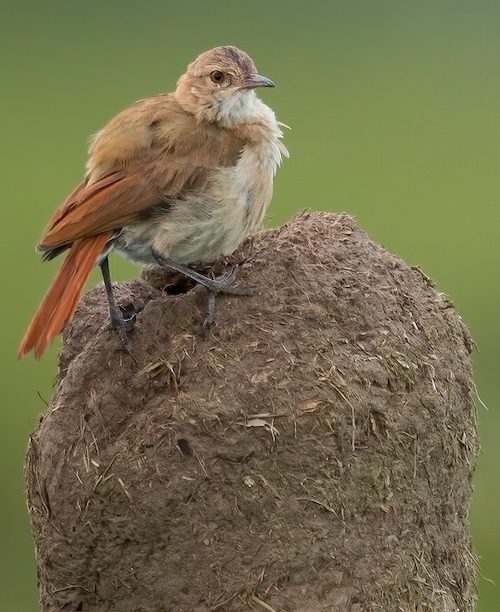
While not one of the obvious birding destinations in Argentina, nevertheless La Pampa has plenty to offer those who find themselves in the province. Open plains have their specialist birds like Greater Rhea, Rhea Americana. This large flightless bird is often seen grazing in the open plains. Another specialist of flat open areas is the charming Burrowing Owl, Athene Cunicularia frequently spotted perched near its ground burrows in open areas. Another denizen of the plains is the game bird, the Elegant Crested-tinamou, Eudromia elegans. This ground dwelling bird could be sometimes spotted by its prominent crest, as they are typical of the arid shrublands. In the scrubbier areas can be found Argentina’s national bird Rufus Hornero Funarius rufus, famous for building distinct oven shaped clay nests on posts. Wetlands have their specialities too. None more sought after than Southern Screamer, Chauna torquata, a large, loud, crested water bird found in marshlands and flooded grasslands. Of course, wetlands are the place to spot the door open Chilean flamingo Phoenicopterus chilensis brilliantly coloured pink, it stands out from the other herons and waders found in local lagoons and shallow lakes.
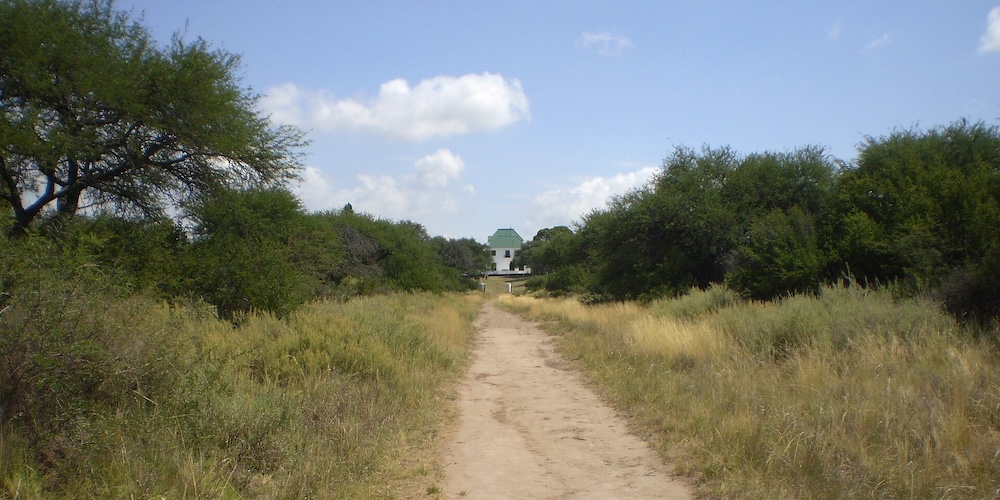
Luro Provincial Park – ©Claudio Elias, Public domain, via Wikimedia Commons
In the hills adjacent to the plains is one of the best-preserved areas rich in wildlife. Lihué Calel National Park features rocky hills and arid scrublands where you can find specialised regional passerine species like the Crested Gallito Rhinocrypta lanceolata. It is also famed for having a good number of vultures and other raptor species.
Luro provincial park is an historic woodland and grassland reserve thirty-five miles from Santa Rosa known as the only area deliberately preserving the native caldén forest. It also has open areas and is good for diverse forest birds as well of those of the open country open-country birds.
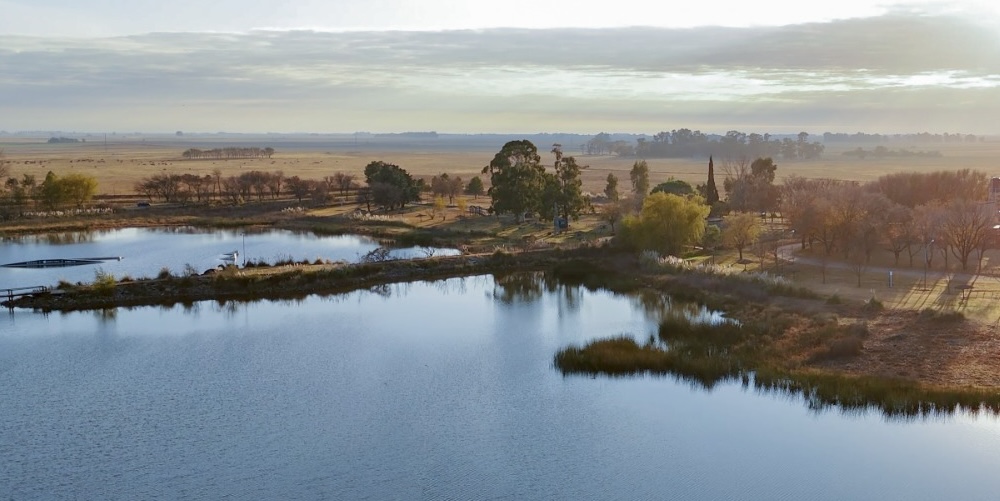
Reserva Natural Urbana Benicio Delfín Pérez – ©Public Domain via Wikimedia Commons
Don Tomás Lagoon is a large recreation park on the edge of Santa Rosa where locals can fish, boat and camp and generally enjoy the outdoors. Nevertheless, it is also a major urban wetland so ideal for waterbirds, with flamingos, and many migratory species dropping in. Another protected wetland is the Reserva Natural Urbana Benicio Delfín Perez near General Pico in the northeast of La Pampa. It is also great for waterfowl and marsh-dwelling passerines, as are lagoons at Utracán, at Guanaco and at Guatraché; excellent spots for observing waterbirds such as screamers, and migratory shorebirds.
With well over 300 bird species, and many of the best spots easy to reach, the province has much to offer birders.
-
Wikipedia
GNU Free Documentation License
Information
-
Number of bird species: 334
(As at September 2026)
-
Avibase
PDF ChecklistThis checklist includes all bird species found in La Pampa , based on the best information available at this time. It is based on a wide variety of sources that I collated over many years. I am pleased to offer these checklists as a service to birdwatchers. If you find any error, please do not hesitate to report them. -
eBird
PDF ChecklistThis checklist is generated with data from eBird (ebird.org), a global database of bird sightings from birders like you. If you enjoy this checklist, please consider contributing your sightings to eBird. It is 100% free to take part, and your observations will help support birders, researchers, and conservationists worldwide.
-
Don Tomás Lagoon
InformationSatellite ViewWhile this is a recreation parkmon the edge of nthe capital,m it hoilds great water birdsds. -
Laguna Guarrache
Observatory WebsiteSatellite View -
Laguna de Utracán
InformationSatellite ViewLaguna de Utracán is a laguna (like a lake) located in the Argentine province of La Pampa, approximately 16 kilometers from the town of General Acha and about 98 kilometers from the provincial capital, Santa Rosa. Its rugged surroundings are part of a municipal nature reserve aimed at conserving its valuable ecosystem. -
Laguna del Guanaco
Observatory WebsiteSatellite View -
NP Parque Nacional Lihué Calel
InformationSatellite ViewLihué Calel National Park (Spanish: Parque Nacional Quebrada del Condorito) is a national park in Argentina, in the Lihue Calel Department of La Pampa Province. Covering 99 square kilometres, it was established in 1977… -
NR Pichi Mahuida Natural Reserve
InformationSatellite Viewthis reserve protects a ten-kilometer riparian zone of the Colorado river? This being its greatest value, it makes it one of the most important reserves of the province of La Pampa. Watch the biodiversity of its forests and scrubs, its grasslands and shrubs. -
NR Parque Luro Reserve
WebpageSatellite Viewust 35 kilometers south of Santa Rosa, it is the only natural reserve of this typical La Pampa tree, the calden. There are self-guided trekking trails, an interpretation centre as well as bird and deer watching. -
NR Reserva Natural Urbana Benicio Delfín Perez
WebpageSatellite ViewThis 171-hectare reserve is located southeast of the city. It is home to a significant number of native plant and animal species; its maintenance and conservation help ensure vital ecological functions and natural phenomena, such as pollination and migration. The reserve boasts over 130 bird species and more than 1,000 trees, forming small groves.
-
La Pampa Rare Bird Alert
SightingsObservations for last 7 days - The report below shows observations of rare birds in La Pampa. Includes both unreviewed and reviewed/approved observations.
-
Guyra Birding
Tour OperatorThis program travels through the SW of Buenos Aires province and E of La Pampa province, places of residence of 2 emblematic species of Argentina: The Pampas Meadowlark and the Yellow Cardinal, both in serious danger of extinction.
-
2022 [12 December] - Mark Pearman
ReportThe 2022 edition of Southern & Central Argentina produced some 296 species with 126 diamond birds of restricted range: testimony to the unique avifauna of Patagonia. Among these, we secured all eight available Argentine endemics and all of Argentina’s 12 endemic breeders, most of which are austral migrants.