

Centre-Val de Loire
Landlocked Centre Val de Loire is one of the 13 regions of metropolitan France and covers an area of 39,151 km2 (15,116 square miles) with 2.6 million people. It straddles the middle of the Loire Valley in the interior of the country and is made up of six departments; Cher, Eure-et-Loir, Indre, Indre-et-Loire, Loir-et-Cher and Loiret. It is bordered by six other French regions, Normandy to the northwest, Île-de-France to the northeast, Bourgogne-Franche-Comté to the east, Auvergne-Rhône-Alpes to the southeast, Nouvelle-Aquitaine to the southwest, and Pays de la Loire to the west. Although Tours is the largest city, the administrative centre is Orléans.
The region lies in the Paris basin and as the name implies, it straddles the middle of the Loire Valley, which flows east to west through the region. Other important rivers include the Loir, Eure, Indre and Creuse. The northern part of the region is dominated by cereal growing, which is on an elevated plateau. In addition to wheat and maize, other crops include rapeseed and sunflower, which are widely grown. Both beef and dairy farms prevail on the western and southern borders, and along the major river valleys there is fruit and flower growing as well as viticulture.
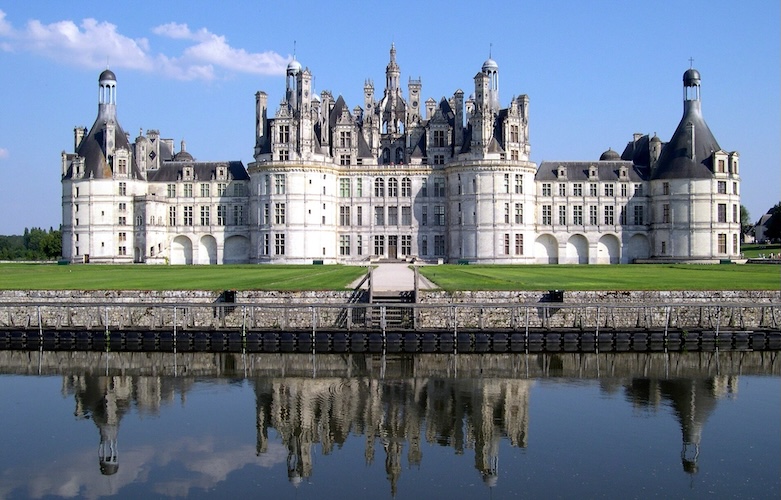
Chambord Chateau – ©CC BY-SA 3.0 via Wikimedia Commons
The region is famed for its Chateaux – like fairy-tale castles.
Birding Centre-Val de Loire
There are also some expansive areas of woodland dominated by chestnut, oak and ash, not only holding red and roe deer, but wild boar too. The forests of Sologne and Orléans are particularly important and can be great for raptors such as osprey, short-toed eagle and booted eagle.
Although the Loire Valley is the agricultural centre of the region, it is nevertheless still good for wildlife as are its tributaries, with European Beaver and the usual range of waterside birds.

Étang de la Sous et berges, Brenne – ©Jacques Le Letty CC BY-SA 3.0 via Wikimedia Commons
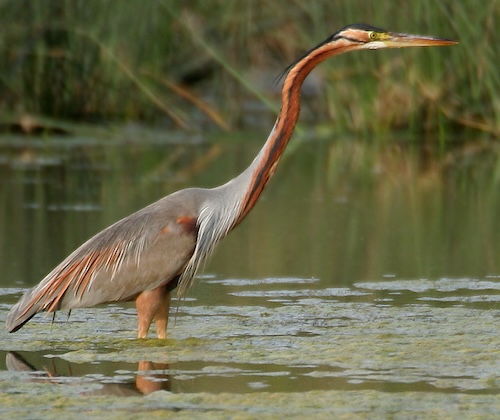
Perhaps the most attractive area for birdwatchers is the Brenne Regional Nature Park, which covers around 183,000 hectares and is often called the ‘Land of a Thousand Lakes’. It lives up to its name with extensive wetlands. European pond turtles are in evidence, and over 350 bird species, including breeding purple heron and black-necked grebe.
Loire-Anjou-Touraine Regional Nature Park covers just over 277,000 hectares along the Loire Valley. It is particularly well endowed with butterflies and orchids, which favour the mix of habitats including forests, hedged farmlands, and many small streams and rivers.
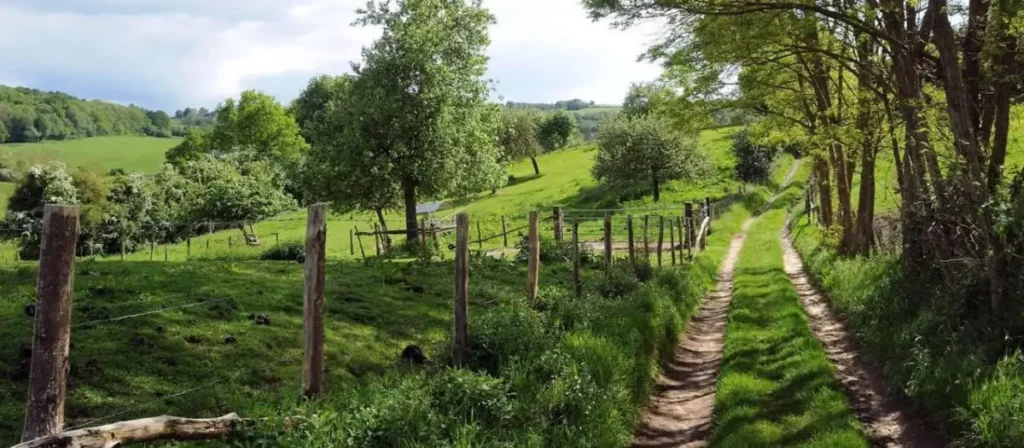
Perche Regional Nature Park – Public Domain via Wikimedia Commons
The region’s other regional park is the Perche Regional Nature Park, A land of wooded hilltops, old-fashioned farmland, orchards and small valleys. It is good for mammals and amphibians as well as a good range of bird species.
-
Grand Corbois Lake
Satellite ViewThe Grand Corbois lake in the Sologne, at St Viatre, 25km South of Orleans is an excellent site. -
The Parc Natural Regional de la Brenne
WebpageSatellite ViewCovering some 10,000 hectares and with over 1200 ‘etangs’, man-made lakes, the Brenne has reedbeds, meadows, rough pasture, cereal production and woodland, also two river valleys and some calcareous zones. Bird species number over 280, and at least 98 butterfly species and 60+ odonata species have been recorded here; orchid species number over 40. Amongst the birds, 150+ Common Cranes winter here, Whiskered Terns [c1000 pairs] and Black-necked Grebes [150+ pairs] nest, as do Purple Heron, Cattle Egret, Night Heron, Black-winged Stilt, a few pairs of Short-toed Eagle, and 30+ nesting pairs of Bee-eater; unfortunately Little Bustards are a thing of the past here. There are two good visitor centres, one at Cherine nature reserve [‘Maison de la Nature’], and one at Le Bouchet [‘Maison du Parc’], and a total of 10 hides throughout the park, 3 of which are at Cherine reserve.The biggest problem with the Brenne is that most etangs are private and the surrounding land difficult to access. However, apart from the reserve and other parts open to the public, there’s a very extensive network of well sign-posted footpaths that really open the Park up and provide some of the best birding – details from either visitor centre.
-
Number of bird species: 389
(As at June 2026)
-
Avibase
PDF ChecklistThis checklist includes all bird species found in Centre-Val de Loire , based on the best information available at this time. It is based on a wide variety of sources that I collated over many years. I am pleased to offer these checklists as a service to birdwatchers. If you find any error, please do not hesitate to report them. -
eBird
PDF ChecklistThis checklist is generated with data from eBird (ebird.org), a global database of bird sightings from birders like you. If you enjoy this checklist, please consider contributing your sightings to eBird. It is 100% free to take part, and your observations will help support birders, researchers, and conservationists worldwide.
-
RNP La Brenne
WebsiteSatellite ViewThe park is cut in two by the Creuse River. The wild countryside of La Brenne Regional Nature Park, which covers 166,000 hectares, is dotted with over 2,000 lakes and ponds and a paradise for flora and fauna, especially migratory birds that stop there to reproduce. A dream destination for botany and ornithology fans, this haven of peace strewn with lakes and ponds, marshland, reed beds, moors, prairies and woods is home to no fewer than 2,300 animal and 1,200 plant species! Among its most emblematic are European pond turtles, purple herons, orchids, black-necked grebes, ducks, Eurasian bitterns and dragonflies. -
RNP Natural Regional Parc of Loire-Anjou-Touraine
WebsiteSatellite ViewMore than 200 bird species are present. Among mammals European beaver has recolonised the Loire and its tributaries since its reintroduction in the Loiret in the 1970s. -
RNP Perche Regional Nature Park
WebsiteSatellite ViewThe Perche, a rural area astride Normandy and the Centre-Val de Loire regions, is depicted by lush green meadows, wooded hillsides of hundred-year-old beeches and oak trees.
-
Centre-Val de Loire Rare Bird Alert
SightingsThe report below shows observations of rare birds in Centre-Val de Loire. Includes both unreviewed and reviewed/approved observations.
-
2023 [06 June] - Marcelo Padua & Megan Edwards Crewe
Report...In the mornings, we searched for birds in forests, grasslands, wetlands and agricultural areas between the scenic Loire River and several of its larger tributaries, with several trips further afield to the pond-pocked regions of the Sologne and La Brenne...
-
Indre Nature
WebsiteComprehensive website covering the wildlife of the Brenne and the departement Indre -
Moulismes Nature
WebsiteDesigned to showcase the wildlife of the Brenne and the area around Moulismes in the southern Vienne. -
Unspoiled nature reserves in Sud Val de Loire
InformationFor the Centre – Val de Loire region, these meadows are also a precious breeding site for rare bird species, such as the Eurasian Curlew, the Red-backed...