

Algarve
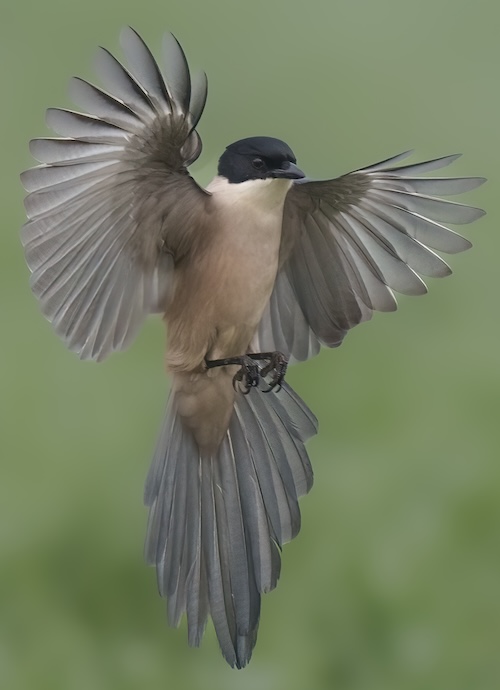
The Algarve is the southernmost of Portugal’s regions and it has an area of 4,997 km2 (1,929 square miles) and almost half a million inhabitants. It borders the region of Alentejo to the north, the Atlantic Ocean to the south and west, and to the east is the Guadiana River marking the border with Spain. The highest point is located in the northwest in the Monchique Mountains with a maximum altitude of just under 3,000 feet on Pico da Fóia. Its administrative centre is the city of Faro, which also has the region’s international airport. The length of the south-facing coastline is roughly 96 miles. The cost is rocky but has many sandy beaches.
Algarve’s climate is the warmest in all of southern Europe, with an Atlantic-influenced Mediterranean climate. It has mild wet winters and warm to very hot, dry summers. It is also overall the sunniest region in Europe, with annual sunshine values above any others. Generally, the winter daytime temperatures are around 16 or 17 degrees centigrade, although temperatures high as 25 have been recorded. Summer sees the highest average temperatures in the east, where the maximum range is usually 29 to 30 degrees centigrade at the coast, and slightly higher in the interior. Some parts of the coast can be much cooler, as a consequence of the upswelling western currents. The Algarve’s interior can get very hot in the summer, with temperatures above 40 degrees not uncommon. Overnight lows are often dependent on the location, with around 16 to 20 degrees in most of the Algarve. Annual rainfall can vary between 18 and 47 inches, with December being the wettest month and July the driest.
Its economy is based on mass tourism, but also has food production, including fish and other seafood, as well as fruit and vegetables.
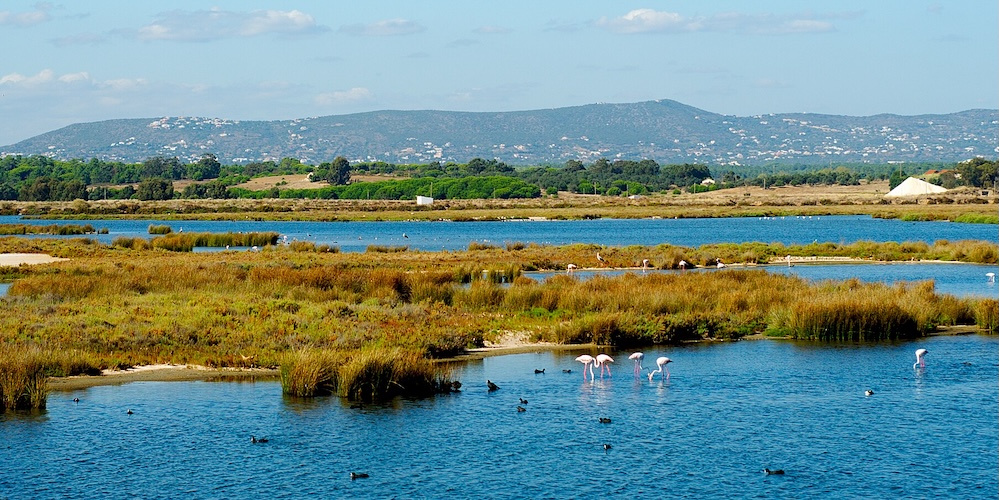
Ria Formosa Lagoon – ©cingularite CC BY-SA 2.0 via Wikimedia Commons
From the birders’ perspective, the region is also home to the Rio Formosa Lagoon, a nature reserve which covers over 170 square kilometres and is a stopover for hundreds of different species of birds. The system of barrier islands joins with the sea through six inlets.
Birding Algarve
Watching along the Algarve coast is focused on the Ria Formosa Reserve and the salt pans of Castro Marim, bordering the Guadiana River, which marks the border with Spain. While the West is now over overrun with tourists much of the Eastern Algarve remains off the beaten track.
Salt Marsh Natural Reserve at Castro Marim – Covering an area of 2,089 hectares, the reserve’s biggest attraction is undoubtedly the large number of birds – especially aquatic birds – that can be seen there. There are 153 species to spot, including storks, avocets, sandpipers, mallards and the ever-popular flamingos. Because the reserve is a permanent home to some species, a seasonal refuge for others and a migratory stopping off point for yet others, it offers birders a constantly changing year-round panoply of sights and sounds. A visitors’ centre at Cerro da Rocha provides documentation and guides to itineraries.
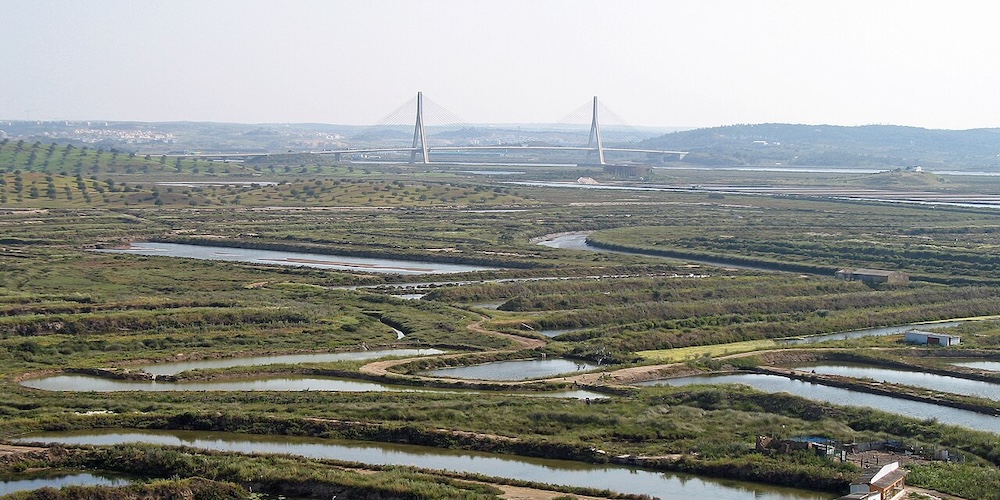
Castro Marim Salinas – ©Marc Ryckaert CC BY-SA 4.0 via Wikimedia Commons
The Ria Formosa – Now a UN recognised nature reserve stretching from west of Faro to the Ilha de Tavira in the east, is important for numerous water-birds, especially beach-nesting Kentish Plover Charadrius alexandrinus and Little Tern Sterna albifrons and for wintering waders and duck. Over 20,000 water-birds winter regularly. The reed-beds of the site and salt pans at Tavira are important for several nesting water-bird species, as well as for large numbers of migrating Passerines during both autumn and spring migration.
Ilha de Tavira – This is an easily accessible tidal lagoon system, and is home to Redstart, Melodious Warblers and more common migrants in the mixed vegetation in the dunes, which flood at high tide.
Barril Beach – Between Santa Luzia and Luz de Tavira this beach is reached by a miniature railway for the idle or a 10 minute walk for the vigorous. There are many creeks – and the Canal de Tavira – where waders and terns are plentiful.
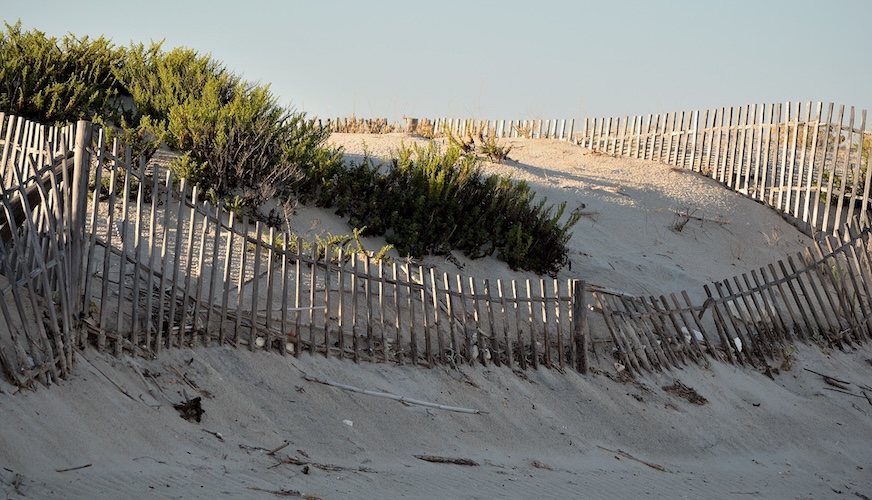
Barril Beach – ©Carlos Pinto CC BY-SA 2.0 via Wikimedia Commons
Tavira Saltpans – These can be accessed from the road between St. Luzia and Tavira, or viewed from the road from Tavira to Quatro Aguas, the town’s beach. It is relatively easy to find parking spaces. Species to be found there include Audouin’s Gull, Greater Flamingo and breeding Avocet. Excellent close views of waders and Spoonbillls are possible.
On land, holidaying birders regularly sight Short-toed Treecreepers, Azure-winged Magpie, Serin, Golden Oriole, Waxbills, Hoopoe, Sardinian Warblers and Nightjars.
-
Sagres and Cape St Vincent
Satellite ViewThis is the most south-western end of Europe and can be exciting in autumn, when hundreds of breeding raptors move through the area.
-
Number of bird species: 446
(As at May 2026)
-
Avibase
PDF ChecklistThis checklist includes all bird species found in Algarve , based on the best information available at this time. It is based on a wide variety of sources that I collated over many years. I am pleased to offer these checklists as a service to birdwatchers. If you find any error, please do not hesitate to report them.

-
Birds of the Algarve - An annotated checklist
| By Gonçalo Elias | (privately published) | 2022 | Paperback | 114 pages, b/w photos, b/w maps | ISBN: 9798447820206 Buy this book from NHBS.com -
Birds of the Algarve and Southern Alentejo An Annotated Checklist
| By Gonçalo Elias | (privately published) | 2016 | Paperback | 98 pages, b/w photos, b/w maps | ISBN: 978151749781 Buy this book from NHBS.com -
Crossbill Guide: Southern Portugal: From Lisbon to the Algarve
| By Dirk Hilbers & Kees Woutersen | KNNV Uitgeverij | 2024 | Paperback | 256 pages, colour photos, colour illustrations, colour maps | ISBN: 9789491648304 Buy this book from NHBS.com -
Finding Birds in South Portugal - Booklet
| By Dave Gosney | Easybirder| Jun 2013 | Paperback | ISBN: 9781907316401 Buy this book from NHBS.com -
Finding Birds in South Portugal - DVD
| By Dave Gosney | Easybirder | 2013 | Runtime: 78 min | ISBN: 9781907316418 Buy this book from NHBS.com -
The 100 Best Birding Hotspots in the Algarve
| By Gonçalo Elias | (privately published) | 2020 | Paperback | 293 pages, b/w photos, b/w maps | ISBN: 9798672347158 Buy this book from NHBS.com
-
Portuguese Society for the Study of Birds (SPEA)
WebsiteFrom the Azores Bullfinch to the Tagus Estuary, we work to protect birds and the unique habitats they depend on. Thanks to the support of our members, volunteers and partners, we monitor populations, restore habitats, remove invasive species, push for better laws, fight environmental crime and much, much more.
-
NP Ria Formosa
InformationSatellite ViewThe dunes, the sand banks, the canals and the marshes run along the undefined line of the horizon, guaranteeing the Formosa Estuary in the Algarve its role as one of the most important points in the network of wetlands that links Europe and sub-Saharan Africa… -
NR Castro Marim & Vila Real de Santo António Marsh
InformationSatellite ViewCastro Marim and Vila Real de Santo António Marsh Natural Reserve is one of the 30 areas which are officially under protection in Portugal. -
NR Parque Natural do Vale do Guadiana
InformationSatellite ViewThe countryside is a mixture of wooded hills clad with pine or introduced eucalyptus, grasslands studded with holm oak trees under which the famous black pigs forage for acorns in the autumn, and the largest area of rolling steppes in Portugal. -
NR Ria de Alvor
InformationSatellite ViewEach spring and autumn, the estuary of the Alvor River becomes a staging post for thousands of migrating birds.
-
Rare Birds Algarve
SightingsA group to post observations of rare birds (rarities) made in the Algarve, Portugal, to allow visiting birders and those who do not speak Portuguese, to get....
-
Algarve Selvagem
Local Tour OperatorAlgarve Selvagem is made up of a team of professionals related to various activities in nature. They are connoisseurs of the regions morphology, from the coastline to in interior and its various habitats. Your guides with extensive experience gained over more than 30 years both her in Portugal and abroad. They have always been linked to outdoor activities such as diving, hiking, kayaking and bird observation. They would like to share their knowledge showing you various possibilities that this region offers in eco and nature tourism… -
Algarve-birdwatching
Local Tour Operator & Day GuideTop quality bird-watching and wildlife photography tours -
Birdwatching-Algarve
Local Tour OperatorLiving in Central Algarve, right next to the beautifull Ria Formosa Natural Park, we can guide you through all Southern Portugal.Tours can be tailored to your individual needs -
Simon Wates
Local Tour Operator & Day GuideSimon Wates is resident in Portugal on the nature-rich Sagres peninsula right at the tip of southwestern Europe. He can bring you in close contact with all the birdlife of this region
-
2019 [03 March] - Ella Maria & Leif Bisschop-Larsen
PDF ReportLonging for springtime and warm weather made us leave Denmark and head for Southern Portugal in the last week of February. Our aim was to enjoy nature and bird-life of the region Alentejo in a relaxing way. -
2023 [04 April] - Ann Gifford
PDF Report...Our first stop was at the White stork colony on the Aljustrel Road. Always enjoyable watching storks, especially when they have young and there were plenty of Spanish sparrows too! At the nearby bridge, there were Sand martins, Red-rumped swallows, Booted eagle... -
2024 [03 March] - Bob Swann
PDF Report...The pools north of the road were mostly out of bounds, but south of the road we followed a cycle track to access other pools. On these “Creek” pools a flock of 60 Common Pochard, some Red-crested Pochard, Little Grebe, Common Coot and Moorhen. In the reedy channel closest to the cycle track a Little Bittern and lots of displaying Black-headed Weaver... -
2024 [06 June] - Erik Kleyheeg
PDF ReportThis trip report is limited to an annotated bird list of the 96 species we observed, illustrated with some photos of the trip. -
2024 [10 October] - Hans-Peter Bieri & Michael Widmer - South Portugal
PDF Report
-
Casa Flor de Sal - Ria Formosa
AccommodationCasa Flor de Sal lies in the Ria Formosa Nature Reserve and enjoys sea views and a seclusion. The 250 year old house has been renovated with true regional and historic features and atmosphere. Enjoy the sun, pool, and peace. Otherwise, the wonderful, long, sandy beaches and the birdlife of the Ria Formosa Nature Reserve are close at hand. The nature reserve is very rich in bird life and other wildlife, being the crossing point for migratory birds traveling between Africa and Europe… -
Casa Redonda - Quinta da Saudade
AccommodationThe Quinta da Saudade is a small British-run estate of privately-owned villas occupying approximately twenty-four acres about five miles west of Albufeira. Nestling in the peaceful country setting of an old hillside farm estate and set amid orange, almond and olive trees, the Quinta is about forty-five minutes drive from the Airport at Faro. There are attractive country walks in the vicinity and there is a wetlands nature reserve nearby with a wealth of bird and plant life not commonly found in the UK. Purple Heron, Little Bittern, Alpine Swift, Bee Eater, Red Necked Night Jar, Azure Winged Magpie and more -
Quintamar - Ria Formosa
AccommodationAmidst the natural reserve of Ria Formosa, which stretches along the coast of the Eastern Algarve, Quintamar is situated in an olive and almond orchard less than 30 kilometres away from Faro International Airport. It is an ideal place for families, groups and people who would like to unwind in unspoilt nature and relax at white and beaches away from the madding crowd. A refreshing alternative for swimming is Quintamar
-
Birdwatching Guide to the Algarve
PDF BookIOn-line Book -
Birdwatching in Ria Formosa – Algarve
WebpageWith Passeios Ria Formosa you have several birdwatching tours inside the Ria, at Sea or on Land... -
Birdwatching in the Algarve
WebpageBirdwatching in the Algarve isn’t just a hobby. It’s one of the most rewarding ways to explore Portugal’s southern coast. With wetlands, lagoons, cliffs, and mountain ranges, the Algarve is home to the country’s richest variety of birds. More than 395 species have been recorded here, and at least 250 can be spotted year-round. -
Birdwatching in the Algarve: All You Need to Know
WebpageAre you ready to experience one of the best bird-watching areas in Europe? Join the Lands team to learn more about the incredible birdlife found in The Algarve.