

Norte

Norte is the most northerly region of Portugal, covering some Norte is the most northerly region of Portugal, covering some 21,278 km2 (13,222 square miles). It borders Spain to the north and east, Centro to the south and the Atlantic Ocean to the west. It is the third largest region, but the most populous, with around 3.6 million inhabitants. Its administrative centre is Portugal’s second largest city, Porto. Its greater metropolitan area has a population of around 1.8 million people. The area is famed for its wines.
Northern Portugal is a mountainous region, some of which form natural parks. Peneda-Gerês National Park, Montesinho Natural Park, and the Alvão Natural Park. The highest peak is Serra do Gerês is over 1,500 meters. To the west is a flat strip of land on the Costa Verde; one side are sandy beaches and on the other side low hills, with a flat plain between, the largest of which is the coastal plain between Cávado and the Ave rivers. The area is known for its long stretch of sand dunes, which accumulated during the Little Ice Age. Part of this is protected as the Northern Littoral Natural Park.
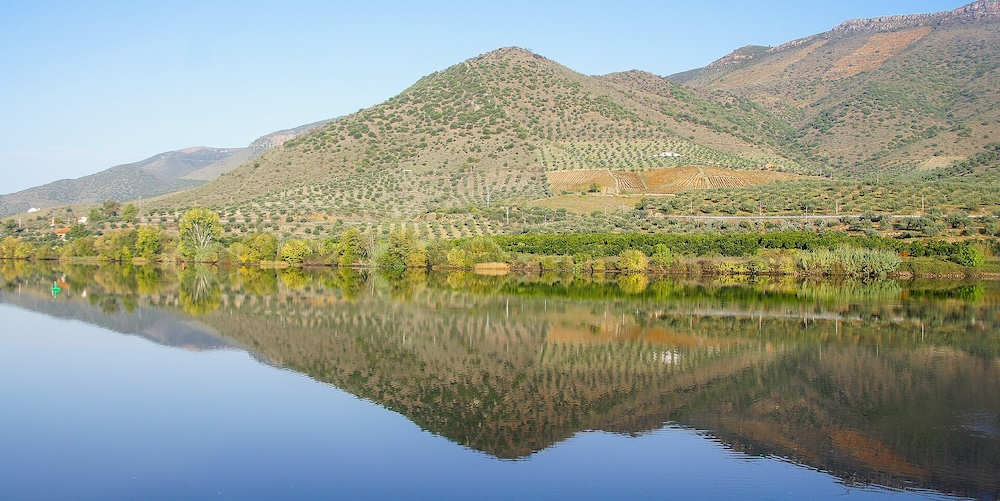
Douro River – ©Gerry Labrijn CC BY-SA 4.0 via Wikimedia Commons
Some of the River Douro forms the border with the central region, and the other major rivers are the Minho, Lima, Neiva, Cávado and Ave, which predominantly flow into the Atlantic Ocean. Inland, the Tâmega is a major tributary that empties into the Douro River. The Minho River marks the northwest Portuguese-Spanish border.
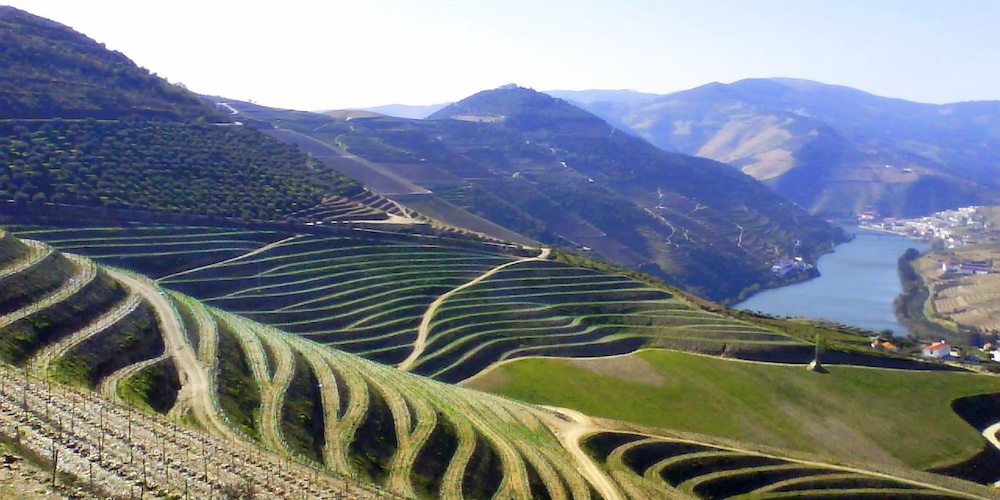
Oporto Terraced Vineyards – ©Feliciano Guimarães CC BY 2.0 via Wikimedia Commons
The region as a whole has a warm Mediterranean climate on the coast and a hot Mediterranean climate along the Duro Valley. The region has temperate summers and mild winters, influenced by the Atlantic Ocean, so that the daytime temperature rarely drop below 10 degrees Centigrade or exceed 30 degrees.
Birding Norte
Birding in Norte offers diverse habitats, from the rugged Peneda-Gerês National Park, Montesinho, and Alvão Natural Parks, to the coastal areas like the Litoral Norte Natural Park. Any time of year can be good for resident species including many raptors in the uplands and waders in the estuaries, but the best time to visit is during autumn and spring migrations.
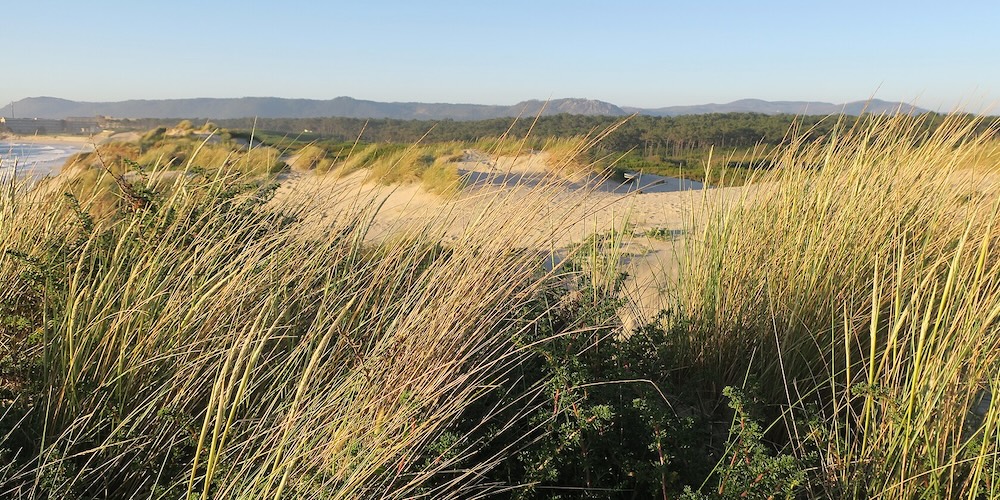
Northern Littoral Natural Park in Esposende – ©PedroPVZ CC BY-SA 4.0 via Wikimedia Commons
The estuary of the River Cávado, despite its small size and its urban location is good for waders, herons like Spoonbills and wildfowl such as Ruddy Shelduck, but the Douro Estuary Nature Reserve is the best wetland for variety and numbers of birds as well as convenience as it has bird hides and is accessible via a walkway. The reserve has a coastal front, a dune restinga and an interior area of estuary and marshes. Just about any waterbird can turn up and it is also good for other species including the Hoopoe and Turtle dove. Then dunes and scrubby areas hold many passerines including Golden Oriole, Woodlark, Serin, Red-rumped Swallow, Bonelli’s Warbler and Zitting Cisticola.
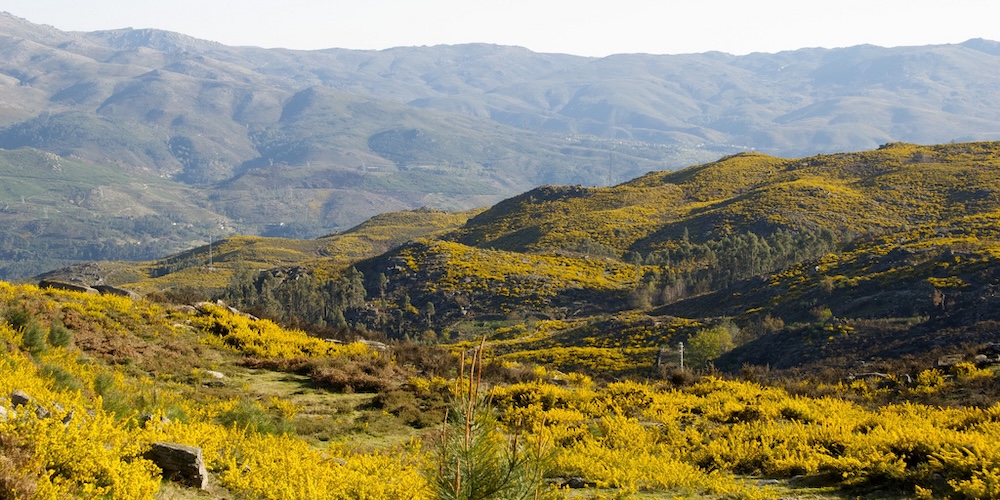
Peneda-Gerês National Park – ©manjerix CC BY-SA 2.0 via Wikimedia Commons
The mountain ranges, river valleys, and mixed forests offer excellent birding too. Such as Golden Eagle and Spanish Imperial Eagle soaring over Peneda-Gerês, with Short-toed Snake Eagle hovering over its rocky terrain and wandering Griffon Vultures. There are Blue Rock Thrush and White-throated Dipper in the fast-flowing streams.
Almost anywhere in the region you will find White Stork nesting on chimneys and church towers and Iberian Magpies. Black Redstart is often around towns, with European Bee-eater over the vineyards and orchards. Iberian Grey Shrike and Black Wheatear favouring more open areas.
-
Number of bird species: 389
(As at May 2026)
-
Avibase
PDF ChecklistThis checklist includes all bird species found in Norte , based on the best information available at this time. It is based on a wide variety of sources that I collated over many years. I am pleased to offer these checklists as a service to birdwatchers. If you find any error, please do not hesitate to report them.
-
Portuguese Society for the Study of Birds (SPEA)
WebsiteFrom the Azores Bullfinch to the Tagus Estuary, we work to protect birds and the unique habitats they depend on. Thanks to the support of our members, volunteers and partners, we monitor populations, restore habitats, remove invasive species, push for better laws, fight environmental crime and much, much more.
-
Birding Ecotours
Tour OperatorWe begin our Portugal birding tour in the beautiful city of Porto, from here we will head straight into the picturesque Douro River Valley, east of the city, for our first look at rural Portugal and its wonderful vineyards. While in the area we will enjoy not only vineyards but also beautiful scenery from several viewpoints, and we will also get to grips with mountain birding with species such as Griffon Vulture, Blue Rock Thrush, Iberian Grey Shrike, White-throated Dipper, and Black Wheatear all among some of our first targets. -
NatureTrek
Tour Operatorn 8-day holiday focusing on the birds, flora, other natural history and prehistoric rock art of north-eastern Portugal, based in the Côa Valley and Tejo International Natural Park. -
Officina Noctua
Local Day Tour OperatorWe offer two different tours for birdwatchers. On the first, you will get to know the mountain areas, rivers and valleys around Amarante, and on the other one, dedicated to the experienced birdwatcher, you will be shown the coastal areas of Minho to Douro area on the border with Spain. These tours last for one day minimum, and can be adapted to target for specific species. -
Oporto Adventure Tours
Local Day Tour OperatorBirdwatching isn’t just about birds. It’s about noticing more. Looking up instead of down. Taking a breath. Being where you are. And realizing that the world is full of color, sound, and life – if we just take the time to see it. If you are looking for a Birding Tour near Porto, we have got you covered! -
Pedro Bravo - Guia de Natureza
Local Tour Operator8 Days walking and birding in North of Portugal - Starting from Porto, we will hike with binoculars to observe birds in the mountains of northern Portugal.
-
2016 [05 May] - Rob Macklin
PDF ReportBirds just kept on turning up as a woodlark sang in full view from overhead telephone wires and was joined in song by our first Thekla lark. Three golden orioles were singing and giving us brief views, a woodchat shrike sat atop a dead branch out in the open, a green woodpecker called, a quail sang ‘wet-my-lips’ from the herbage, a cuckoo flew over and our first Iberian grey shrike hunted for insects over the scrub. -
2022 [05 May] - Marcelo Padua
ReportWe started the tour in the vibrant city of Porto with a visit to the wine lodges where Porto is aged, and a brief birding session at the Mouth of the Douro River, where we had good looks at several gulls, including Mediterranean and Auduouin’s. We also found some common species such as Zitting Cisticola, and Eurasian Magpie, and even an Osprey that was a bit of a surprise. We wrapped up our time in Porto with a Fado Concert and a seafood feast that set the tone for the many memorable meals we would have on the tour. -
2023 [05 May] - Marcelo Padua
Report...enjoying amazing views of Egyptian Vulture, Eurasian Griffons, and great views of the iconic Eurasian Hoopoe flying back and forth to its nest. Our last stop in the Douro International Park had us exploring the Faia Brava reserve, where we learned about the rewilding Europe conservation program, watched Golden Eagles performing display flights, and enjoyed an unforgettable picnic lunch...
-
Birdwatching Oporto & North Region
WebpageIn the north of Portugal the landscape features fine countryside areas with its rolling hills, deep valleys, impressive slopes of the Port terraced vineyards and sheltering villages that still preserve the old community ways. The north is rich in scenarios that allow direct contact with nature and tranquility. In here you will find some of the largest protected areas in Portugal like the Peneda-Gerês National Park or The International Douro Natural Park that are excellent for birdwatching, specially prey birds.