

State of Roraima
Roraima is one of the twenty-seven states of Brazil and is the northernmost and least populated state of Brazil, located in the Amazon region. It borders the states of Amazonas to the south and west and Pará to the southeast, as well as the nations of Venezuela to the north and northwest and Guyana to the east. It covers a total area of 223,645 km2 (86,350 square miles) with a population of just three-quarters of a million people, making it the least densely populated too. Its largest city and capital is Boa Vista where two thirds of the state’s population live.
It is still a frontier zone with agriculture, forestry and mining impinging on the wild world and indigenous peoples. When its grasslands were discovered in the mid-eighteenth century they were thought ideal cattle country. The state is rich in mineral deposits – especially gold, diamonds, cassiterite, bauxite, marble and copper. Many of these deposits are located in indigenous reserves, and illegal mining has resulted in frequent conflicts with the native population, especially that of the Yanomami and the Macuxi and allied groups. During the late 1980s there was a massive gold rush here with an influx of as many as 50,000 ‘garimpeiros’ – the area’s total population had been about 200,000 before. This influx in the northwest of the state was formerly the territory of the Yanomami Indians, a relatively recently discovered people. Almost half the state’s territory is composed of indigenous areas.
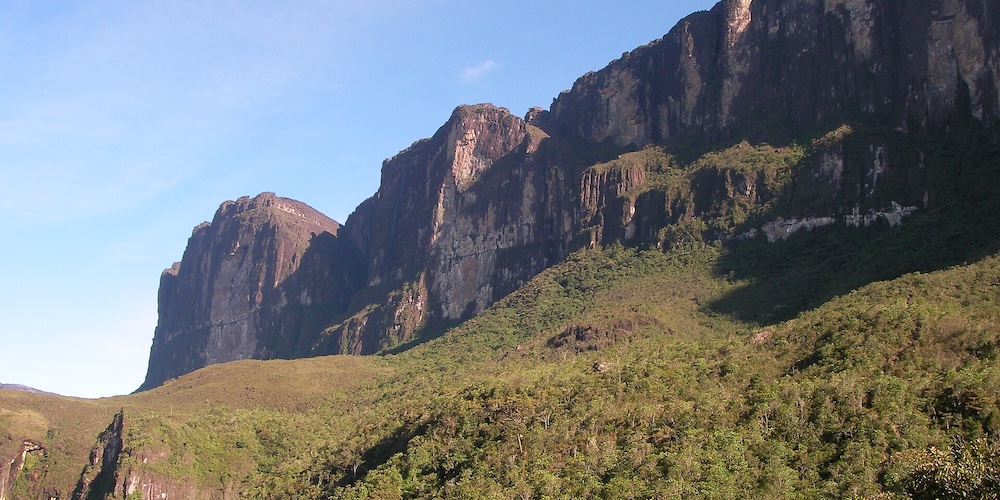
Tepui – ©Csar13 CC BY-SA 3.0 via Wikimedia Commons
The climate is tropical with an annual mean temperature of 26°C (78.8°F). Most of the state is located in the Amazon rainforest, with a small strip of savanna to the east. Except in the higher mountains where the climate is cooler but very wet, Roraima has an equatorial climate. This is a type of tropical climate in which there is no dry season and all months have mean precipitation values of at least 60 mm
Birding Roraima
Tropical rainforest is the natural vegetation in this equatorial region. A large area of the state is environmentally preserved with 18,879 km2 (7,300 square miles), 8.42% of Roraima’s area protected. The Monte Roraima National Park is located around the highest mountain of the state, the 9,400 feet high tepui known as Monte Roraima.
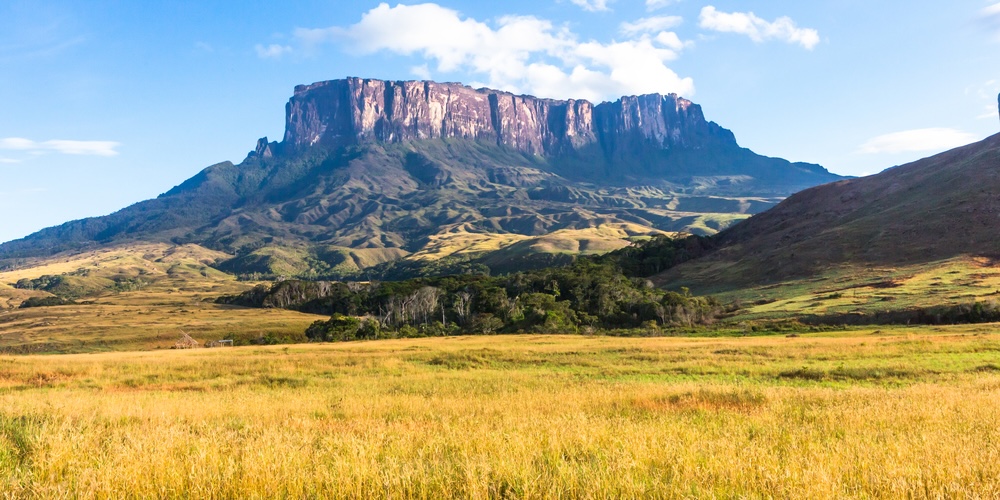
Mount Roraima National Park – ©Marcelo Alex CC BY-SA 2.0 via Wikimedia Commons
Near the borders of Venezuela and Guyana are the mountains of Parima and Pacaraima, which include Mount Roraima. Generally, Roraima is predominantly flat. About 60% of the area is below 200 m (700 feet), about 25% averages between 200 and 300 metres, 14% from 300 to 900 metres and only 1% has elevations over 900 metres above sea level. There are also two geomorphological structures: the Wavy Plateau and the Northern Escarpments, which are part of the Guiana Shield. Its Wavy Plateau is a large pediplain, formed by isolated and dispersed massifs and peaks.
The state has extensive river systems. Its fourteen main rivers being: Água Boa do Univiní, Ailã, Ajarani, Alalaú, Branco, Catrimani, Cauamé, Itapará, Mucajaí, Surumu, Takutu, Uraricoera, Urubu and Xeruini. The Branco River sub-basin of 45,530 km2 (17,600 square miles), is the largest and most important in the state and a tributary of one of the Amazons main branches, the Rio Negro. Most of the rivers in the region have a large number of beaches in the summer, as well as rapids in rivers located in the north of the state. Almost all water sources in the state originate within its territory, except for two rivers with springs in Guyana. All Roraiman rivers flow into the Amazon Basin.

Viruá National Park – ©Carlos Marques CC BY-SA 2.0 via Wikimedia Commons
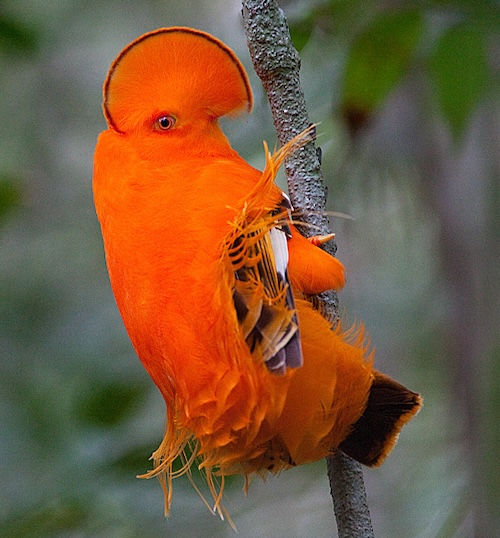
Over 900 species of bird have been recorded in the state. Key locations include Viruá National Park, which is famous for its white sand camp and forest birding. It’s good for Crestless Curassow, Yapacana Antbird and Rio Branco Antbird. The Lavrado, otherwise known as Savannah, are open lowlands around Boa Vista and Normandia, which are home to special birds such as the Sun Parakeet and Hoary-throated Spinetail. Tepui slopes and Tepequém are good for high altitude specialities such as Tepui Redstart, Tepui Antpitta, Scarlet-horned Manakin and Red-banded Fruiteater, as well as Sooty-capped Hermit and other slope-dwelling fruiteaters. Whereas the lowlands and savannah are good for Caura Antbird, Guianan Cock-of-the-Rock and Point-tailed Palmcreeper.
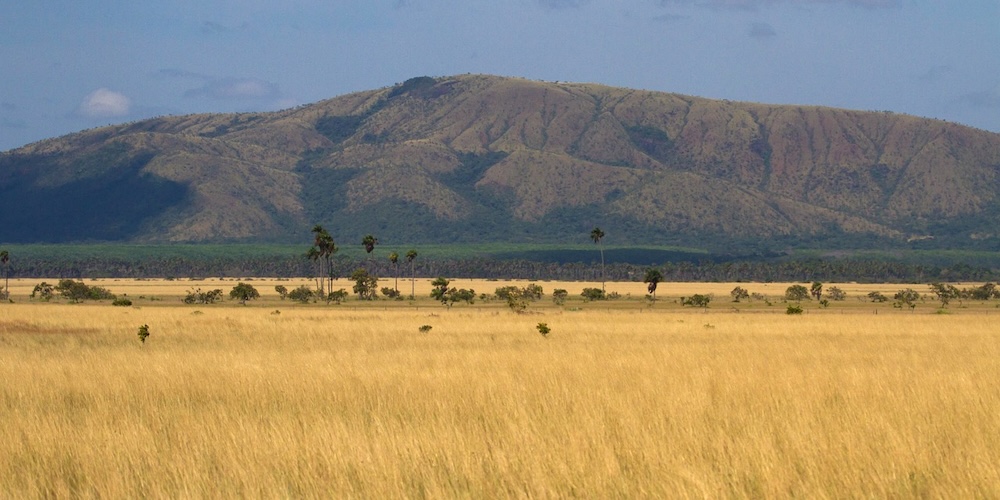
Roraima’s Lavrado – ©Public Domain via pixabay
Across the regions, there are three different types of vegetation: Mainland forests never affected by river floods; floodplain forests and riparian forests effected every year by river floods. The diversity of landscapes and biomes make for diversity of fauna too; mammals such as jaguars, tapirs, peccaries, alligators, margay cats, otters, deer, monkeys, and many other species abound. Along the Branco River and the Savannah, there are anteaters, armadillos, tortoises, pampas deer, pacas, agouti, several species of snakes and many other species.
-
Wikipedia
GNU Free Documentation License
Information
-
Number of bird species: 904
(As at September 2026)
-
Avibase
PDF ChecklistThis checklist includes all bird species found in Roraima , based on the best information available at this time. It is based on a wide variety of sources that I collated over many years. I am pleased to offer these checklists as a service to birdwatchers. If you find any error, please do not hesitate to report them. -
eBird
PDF ChecklistThis checklist is generated with data from eBird (ebird.org), a global database of bird sightings from birders like you. If you enjoy this checklist, please consider contributing your sightings to eBird. It is 100% free to take part, and your observations will help support birders, researchers, and conservationists worldwide.
-
NP Viruá National Park
InformationSatellite ViewThe park covers an extensive sandy plain, and holds the Viruá alluvial "megafan". Soils are extremely poor in nutrients and highly acidic. There is no potential for farming, grazing or forestry. The park is subject to seasonal flooding. The park holds a great patchwork of campinaranas and open or closed canopy forests. The many environments support high biodiversity, and the park is one of the main areas for studying campinarana. More than 2,000 plants species have been identified, and it is estimated that there are more than 5,000 in total, making it one of the most botanically diverse conservation units in Brazil. -
NP Parque Nacional do Monte Roraima
InformationSatellite ViewMonte Roraima National Park, created in 1989, covers an area of 116,000 hectares… -
NP Serra da Mocidade National Park
InformationSatellite ViewThe park lies in the Amazon biome. It covers 376,813 hectares (931,130 acres). -
NR Caracaraí Ecological Station
InformationSatellite ViewThe station is named after the municipality, whose name means "little hawk", a very common bird in the region. -
NR Estação Ecológico Ilha de Maracá
InformationSatellite ViewThe island of Maracá is located on the border between the Amazon rainforest and the savannas that extend through Venezuela and Guyana. Located in the middle Uraricoera, the island of Maracá covers 101 312 hectares -
NR Maracá Ecological Station
InformationSatellite ViewIt consists of a large island in the Uraricoera River that is covered by Amazon rainforest. The Maracá Ecological Station now covers 103,976 hectares (256,930 acres). It was established with the purpose of preserving a representative sample of the Amazon ecosystem -
NR Niquiá Ecological Station
InformationSatellite ViewThe station is a region of transition forest, with tall trees with thin trunks. Fauna are representative of both the Amazon and the cerrado. -
NR Reserva Ecológico do Xixuaú-Xiparinã (Associação Amazônia)
WebpageSatellite ViewThe Xixuaú-Xiparinã Ecological Reserve is a preserved forest area in the Brazilian Amazon—spanning approximately 180,000 hectares (450,000 acres)—located along the banks of the Jauaperí River in the state of Roraima. Renowned for its sustainable community-based tourism and rich biodiversity, the reserve is managed in cooperation with local residents.
-
eBird
SightingseBirding This Month
-
Amazon Birdwatching
Tour Operatorn this itinerary, we will explore by land the trails and forests of the southern Amazon, all the way to the far north. Departing from Porto Velho (RO), Canutama (AM), Humaíta (AM), Manaus (AM), Presidente Figueiredo (AM), Caracaraí (RR), and Boa Vista (RR). -
BirdFinders
Tour OperatorWith over 200 endemics, Brazil is one of the world’s top birding destinations. A visit to the northeast combining the threatened Atlantic Forest and Caatinga offers some truly spectacular, endemic-rich birding, with species including Caatinga Antwren, Araripe Manakin, Caatinga Antshrike, Great Xenops, White-browed Antpitta, Stripe-backed Antbird, Hooded Visorbearer, Indigo Macaw, Scarlet-throated Tanager, Horned Sungem and Gould’s Toucanet. -
Brazil Birding
Tour OperatorEmbrace the untamed beauty of the Amazon: Manaus, Amazonia National Park & Roraima Adventure! Prepare for an unparalleled Amazonian birding expedition! This extraordinary journey delves into four distinct Amazonian endemism centers, promising an abundance of avian wonders. -
FieldGuides
Tour OperatorNumerous white-sand forest birds can be seen here, including White-naped Seedeater, Black Manakin, Large-billed Seed-Finch, and Yapacana Antbird—a unique member of the Thamnophilidae that sounds more like an insect than a bird! Crestless Curassows often stroll the road in the early morning. Virua also supports a grid system of trails into the terra firme, where it’s possible to see Gray-winged Trumpeter, Black Curassow, Black-headed Parrot, Ferruginous-backed Antbird, and numerous other “ant things.” -
Serra dos Tucanos Birding Tours
Tour OperatorWe will arrive in time to watch the most important bird of this area, the Slender Antbird. Boa Nova is strategically located behind a mountain range that holds all the moisture coming from the Ocean, therefore around the village we will find the Caatinga, combined with the “Mata do Cipó” (vine forest, it really deserves this name and has to be seen to be believed)! This vine forest is home to the Slender Antbird, Narrow-billed Antwren, Stripe-backed Antbird, Silvery-cheeked Antshrike, Buff-breasted Tody-Tyrant, Ruby-Topaz Hummingbird and a day time roost (!) for the Pygmy Nightjar!
-
2018 [08 August] - Bret Whitney - Roraima (Brazil) Scouting Special
ReportThe state of Roraima in northern Brazil is a land of biotic extremes: a Tepui archipelago in sea of palm-ribboned savannas, cerrados, campinas, and majestic hardwood forest. For several years Bret and I have talked (dreamed) of scouting out this remarkable corner of Brazil and this year we did just that, along with 10 other lucky birders. We drove through some awe-inspiring landscapes, saw some impressive birds, overshot a couple turnoffs (we eventually got to where we needed to go!) and managed to keep our feet dry most of the time, despite the paucity of dry land due to a prolonged rainy season. The trip was punctuated by many highlights; we were dazzled by a male Ruby Topaz, bewildered by whirling flocks of Tepui Swifts over Serra do Tepequem, and stunned by the crisp white dots lining the undertail of Rio Branco Antbird! -
2019 [11 November] - Micah Riegner
ReportThere were numerous highlights including the Orange-breasted Falcons at Tepequem and Caracarai, the majestic mother Harpy incubating her egg—icon of tropical America—the Hoary-throated Spinetails on the Rio Uraricoera and the Crestless Curassow (better known as careless curassow) walking right toward us on the Estrada Perdida. It was a great tour for antbirds... -
2024 [03 March] - Eduardo Patrial
PDF ReportThe birding and the whole experience at Serra do Sol with the Ingarikó people was unforgettable, and without any doubt it has been now consecrated as a top site within the Tepui region to go whilst remaining in Brazil. Beauties like Red-banded Fruiteater, Foothill Screech Owl, Tepui Toucanet, Rufous-breasted Sabrewing, Fire-shouldered Parakeet, Roraiman Barbtail, Roraiman Antbird, Tepui Antpitta, Scarlethorned and Orange-bellied Manakins, White and Bearded Bellbirds, Rose-collared Piha, Greater Flowerpiercer and others are still fresh delightful remembrances.