

Chubut
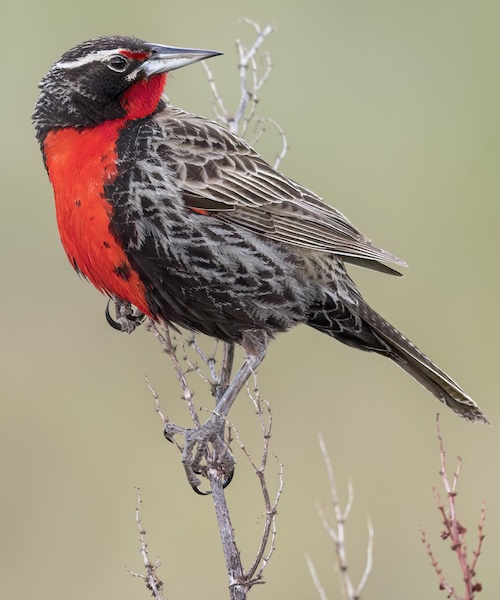
Chubut is one of the twenty-three provinces of Argentina and is situated in the south as part of Patagonia area. It spans an area of 224,686 km2 (86,752 square miles) and has a population of around 600,000 people. It is bordered by Rio Negro Province along the 42nd parallel to the north, and by Santa Cruz Province along the 46th parallel to the south. To the west lies Chile and to the east the South Atlantic Ocean. The capital is Rawson with less than 30,000 citizens, much smaller than the provinces largest city with over 200,000 people, a third of those living in the province.
As it stretches from the Andes to the ocean it has three distinct geographical regions; the Andes, the central plane and the coast. For the most part the Andes are not high here, with most peaks around 1500 to 2000 metres. The highest peak is Cerro dos Picos, east of Lake Cholila, with a height of 8,251 feet. The peaks are separated by wide, deep valleys lying east west in direction, often with glacial lakes filled by runoff from the mountains.
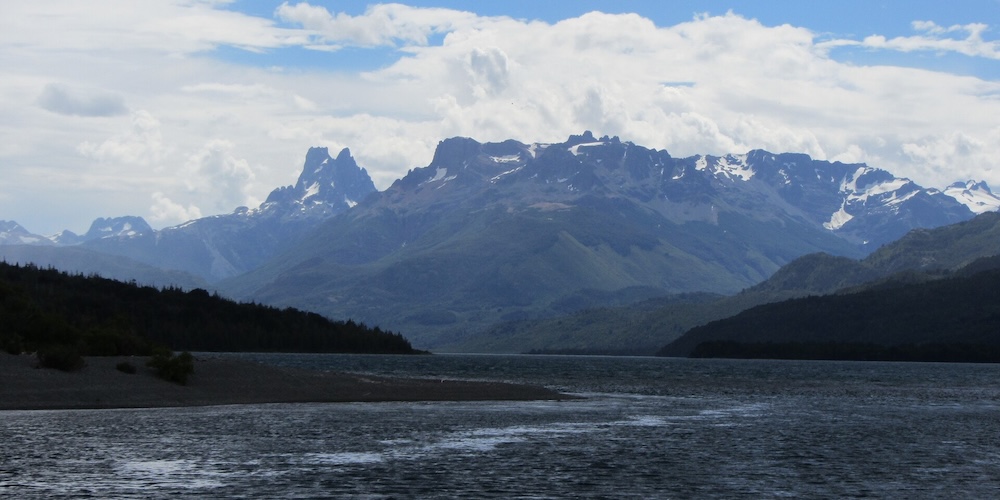
Lake Cholila – ©Pablo Gimenez CC BY-SA 2.0 via Wikimedia Commons
The Chubut River is the major river of Patagonia and meanders across the province emptying into the Atlantic near the capital. Its seasonal flooding creates a fertile area important for agriculture, with wheat and barley being grown here.
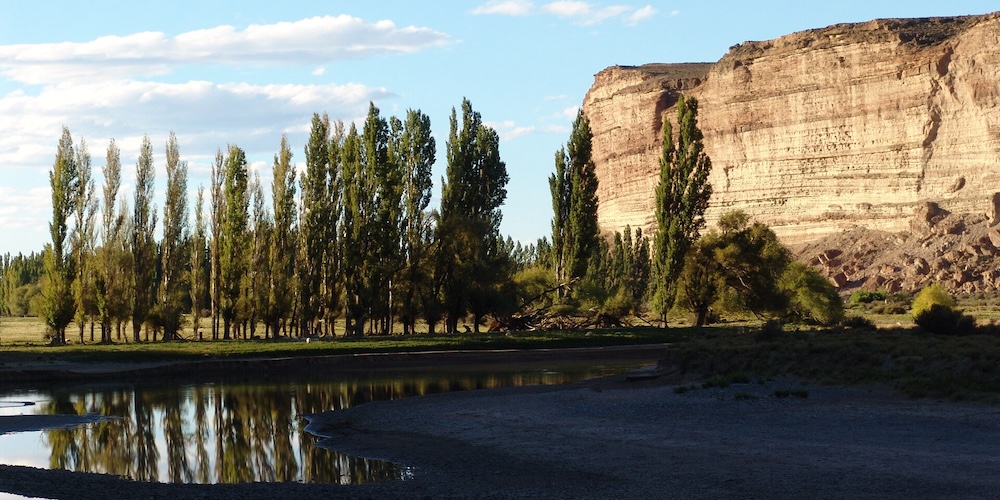
Valle de Los Altares, Río Chubut – ©Raul Horacio Comes CC BY-SA 3.0 via Wikimedia Commons
Humid winds off the Pacific precipitate most of their moisture on the western side of the Andes, meaning that most of the Andean portion of the province is dry, and owing to the higher elevations relatively cool. The central parts of the province are windy throughout the year, although it has an arid and hot climate in the summer with cold winters. The coast has an arid or semi-arid climate, with hot but short summers and cold winters, although it is the mildest region of the province with the warmest annual mean temperature.
Birding Chubut
To most birders Chubut is just about Peninsula de Valdez with its Penguins, Flamingos, Black-necked Swans, Terns, Cormorants, Gulls and Waders. And while I do not doubt the extraordinary appeal of the place (it is, after all, a world heritage site) Chubut has a lot more to offer besides. (Including, of course, the Magellanic Penguin colony at Punta Tombo with its accompanying Gulls, Cormorants and nearby Rheas.)
From the chance to see a Magellanic Woodpecker in its Andes slopes to the Chubut Steamer Ducks on its seashore, there are many great birding spots and many, many birds to see.

Punta Tombo, Penguin Colony – ©Gabriel Miranda CC BY-SA 3.0 via Wikimedia Commons
For example, Sarmiento in the south, a small, sleepy town west of Comodoro Rivadavia is located at the centre of a large shallow valley. An irrigation system has brought trees and pastures to an otherwise rather barren landscape. (While in town check the plaza for Patagonian Thrush). Perhaps the junction of water bodies and steppe account for its biodiversity. Most birds you will see along the main farming roads are familiar to those coming from the verdant pampas. Waterfowl are plentiful and the chances are you will see many duck species in one day. If you happen to be there in early autumn look for mixed flocks of Chloephaga Geese. Check the wire fences for Long-tailed Meadowlark.
The two main recommended spots are a bit further away. On the Lago Musters southwest shore can be found a large breeding colony of Black-necked Swans. There are so many, that you will see them from the road as hundreds of tiny white spots. Along the route (that goes to Esquel) you will find several dirt track entrances, ask for permission to enter at one of the small houses as the area is private. The people there have a reputation for being rather rude and not very friendly. Its best to play it slow… maybe show them your birding book and make sure they understand that you will not do any hunting (that they might want to do that themselves!). The shores host grebes, ducks, terns, waders, coots and many others. Magellanic Plover has been recorded there.
To reach the other spot you will need permission from the tourist office in town. Easy to find, it is right across from the Railway Water Tower along San Martin Ave. They have helpful and friendly staff (most of the time). Ask for permission to visit the Sarasola Caves. This is a cave system dating from the Jurassic Era. The site is about 35km west of the town and you can do both places at once as it is along the same road.
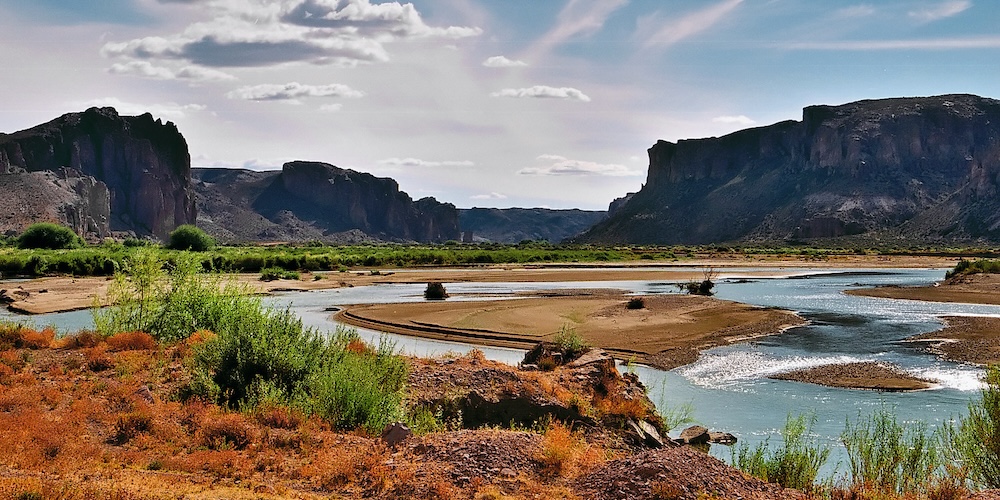
©Lisandro Moises, CC BY 2.0 via Wikimedia Commons
Usually., a local guide will lead you there as unguided visits to the cave are not allowed. Let them know what you want to go there for. The caves are located at the top of a table-mountain and to reach them you walk about 4km along a steep and narrow valley. There, there is a spring that attracts birds all year round. But what is best about it, is the fact that you will see birds usually located at much higher altitudes such as the Rufous-bellied Seedsnipe. Along the many species seen there are Tawny-throated Dotterel, Blue-winged Ground Dove, Miners, Earth-creepers (Straight-bellied, Patagonian and Scale-throated); Des Mur’s Wiretail, Canasteros (including the endemic Patagonian). Black-bellied Shrike Tyrant, Chocolate-vented Tyrant, Rusty-backed Monjita (endemic) Patagonian Yellow Finch along with Phrygilus Finches, Black-chinned Siskin, White-crested Elaenia, and many more. Check both the valley’s forested area for finches and the table-mountain tops for Patagonian Tinamou.
If you are in the area you may want to check the petrified forest, 20km to the south. Bird life is thin there, but there are Burrowing Parrots, Finches and Raptors. Check the ponds on the way too. It is windy… so just enjoy the purity of the air!
-
Number of bird species: 337
(As at October 2026)
-
Avibase
PDF ChecklistThis checklist includes all bird species found in Chubut , based on the best information available at this time. It is based on a wide variety of sources that I collated over many years. I am pleased to offer these checklists as a service to birdwatchers. If you find any error, please do not hesitate to report them. -
eBird
PDF ChecklistThis checklist is generated with data from eBird (ebird.org), a global database of bird sightings from birders like you. If you enjoy this checklist, please consider contributing your sightings to eBird. It is 100% free to take part, and your observations will help support birders, researchers, and conservationists worldwide.
-
Club Observadores de Aves Namco/Golfo San Jorge
WebsiteBlog del COA
-
NP Lago Puelo National Park
InformationSatellite ViewAmong birds we find the great grebe (Podiceps major), the flying steamer duck (Tachyeres patachonicus), the black-faced ibis (Theristicus melanopis), the Chilean flicker (Colaptes pitius) and the Austral thrush (Turdus falcklandii). -
NP Los Alerces National Park
InformationSatellite ViewThe park was created in 1937 in order to protect the alerce forest, and other typical examples of the flora of the Patagonian Andes. The National Park has the largest alerce forest of Argentina. Alerce is one of the longest-living trees in the world; some in the park are around 3,000 years old, with many of them over 1,000 years…. also see: https://argentinaxplora.com/activida/parques/parc/alerces.htm -
NR Punta Tombo Penguin Reserve
InformationSatellite ViewHome to the largest colony of Magellanic penguins in South America, Punta Tombo is a narrow peninsula that juts out into the South Atlantic. The 500 acre reserve here provides nesting ground to the penguin population… -
NR Valdes Peninsula
InformationSatellite ViewThis is a place rich in fascinating wild life, plenty of animals, birds, and fish (most of them in the Birds Isle - Isla de los Pájaros ). Here it is possible to see sea elephants, cormorants, terns and even see the whales which come to breed each year between July and November. Sometimes propelled by their powerful tails, the whales leap completely out of the water and crash back causing enormous swirls of water…
-
Chubut Rare Bird Alert
SightingsObservations for last 7 days - The report below shows observations of rare birds in Chubut. Includes both unreviewed and reviewed/approved observations.
-
Argentina Wild Expeditions
Tour OperatorTransition habitat rich in birdlife... -
BirdQuest
Tour Operator...Argentina’s Chubut province, where the highlight of our stay will be the huge penguin colony at Cabo Dos Bahias, never mind another great collection of endemics and regional specialities, including Lesser Rhea, Darwin’s Nothura, Elegant Crested Tinamou, Chubut Steamer Duck, Snowy Sheathbill, Chilean Skua, Band-tailed Earthcreeper, Patagonian Canastero, Lesser Shrike-Tyrant, Rusty-backed Monjita, Short-billed Pipit, Patagonian Mockingbird and Patagonian Yellow Finch. -
Birding Puerto Madryn
Local Tour OperatorAgustín Esmoris specialises in planning and operating customized birding tours in Puerto Madryn and the Península Valdés region. We will gladly organize the trip according to your travel expectations, what species you wish to see, and your desired traveling pace. Custom tours offer the freedom to design an itinerary around your specific needs. Our tours are for a limited number of guests -
FieldGuides
Tour OperatorOn our Southern Argentina itinerary, we venture to the Pampas for grassland species like Greater Rhea, South American Painted-Snipe, and Scarlet-headed Blackbird, then continue to Chubut Province's arid scrub and the famed Valdez Peninsula, where you can witness thousands of Magellanic Penguins, Snowy Sheathbills, and even Southern Right Whales. -
Ornis Birding Expeditions
Tour Operator...With a full morning to explore the Valdés Peninsula loop road, we will try our best to locate Darwin’s Nothura should we still need it (here one of the few places where it does not overlap with Spotted Nothura) and can expect several sightings of Snowy Sheathbill. Among an abundance of Southern Cone specialties... -
Trogon Tours
Tour Operator...the Province of Chubut holds the most spectacular natural treasures of them all: The Valdés Peninsula. This unique wilderness area is home and breeding ground to a great diversity of marine mammals and birds, including Southern Right Whale, Southern Elephant Seal, Orca, Magellanic Penguin and Commerson’s Dolphin to name but a few. -
WINGS
Tour Operator...move south to explore the Valdez peninsula, quintessential Patagonia with dry stony plains covered in xerophytic bushes and dotted with tinamous and rheas, and remote shingle beaches that are refuge for elephant seals and sea lions, and colonies of seabirds...
-
2025 [11 November] - Laura Koehne
PDF Report.... We then spent a couple of days exploring the Valdes Peninsula and visited the Punta Tombo Penguin Colony... -
2026 [03 March] - Nick Buys
PDF Report...For this, we focused on two main areas: Torres del Paine National Park in Chile and Peninsula Valdés in Chubut Province, Argentina. Both are iconic bucket-list mammals and high on most naturalists’ wish lists...
-
Bahía Bustamante Lodge
AccommodationDescribed by The New York Times as ´Argentina's Private (and Secret) answer to The Galapagos´, Bahia Bustamante is a seaside Lodge surrounded by 360° of pure nature,. -
Cabanas Arco Iris
AccommodationIn San Martin of the Andes, a beautiful tyrolean style village framed by impressive mountains, forests and lakes, we offer the charm and comfort of CABA
-
Aves del Chubut
Facebook PageBirds of Chubut is addressed to all bird lovers, shows us all the birds we can find in our province. As it is very difficult to photograph all the birds, you can also help build this page and provide data. -
Megellanic Penguin Project
WebpageThere are few species that represent the coast of Patagonia better than the Magellanic penguin. Wiry birds with tuxedo-like markings, they can survive at sea for more than five months at a stretch. We now know these birds migrate more than four thousand miles on the ocean, live over 25 years, and keep returning to the same nest and partner, if they can.
-
Aves del Golfo San Jorge
BLOGThis blog was created with the objective of making known the importance of the avifauna present in the environments that comprise the San Jorge Gulf located from the Camarones to Puerto Deseado both locations located in the provinces of Chubut and Santa Cruz respectively and within Patagonia Argentina.