

Pays de la Loire
Pays-de-la-Loire is a region of western France covering 38,082 km2 (12,387 square miles) with a population of around four million people. It borders Normandy to the north, Centre to the east, Nouvelle-Aquitaine to the south, Brittany to the west, and the Atlantic Ocean’s Bay of Biscay to the southwest. The region is made up of the Departments of Loire-Atlantique, Maine-et-Loire, Mayenne, Sarthe & Vendee. The traditional Provinces of: Anjou, Bretagne, Maine & Poitou. The largest city and administrative capital is Nantes, France’s sixth largest city.
The region is dominated by the lower Loire River, which empties into the Atlantic, alongside the Mayenne, Sarthe, Loir, and Erdre rivers and its rugged coast and offshore islands. The Loire Valley is known for its châteaux, fine wines and of course, its stunning scenery and there is so much to see, and much of it is off the beaten track, undiscovered by tourists. Inland the region is characterised by flatlands and shallow valleys, scattered woodlands, and open countryside along with the vast marshlands of the Marais Poitevin.
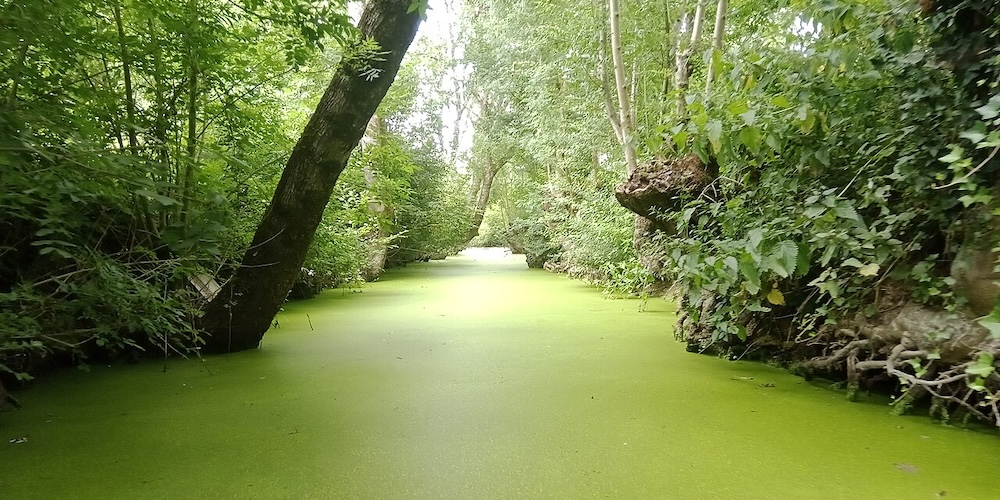
Marais Poitevin – Rémih CC BY-SA 4.0 via Wikimedia Commons
The climate is temperate; mild, wet winters give wat to warm, sunny summers with significant sunshine along the coast.
Birding Pays-de-la-Loire
This is a superbly biodiverse region with some knockout wildlife which includes breeding European Beavers. The latter were reintroduced into the area 25 years ago very successfully and can be seen up and down the river, but particularly the Ile de a Folie in Chaumont sur Loire, where one can see dams and the beavers hard at work.
But of course, behind all that are the birds, bees and other wildlife who have made the Loire Valley their home, its climate means that it is inhabited by many species that can’t often be found, if at all in the UK. Wine, chateaux, Little Bustards, and Whiskered Terns what more could you possibly ask for?
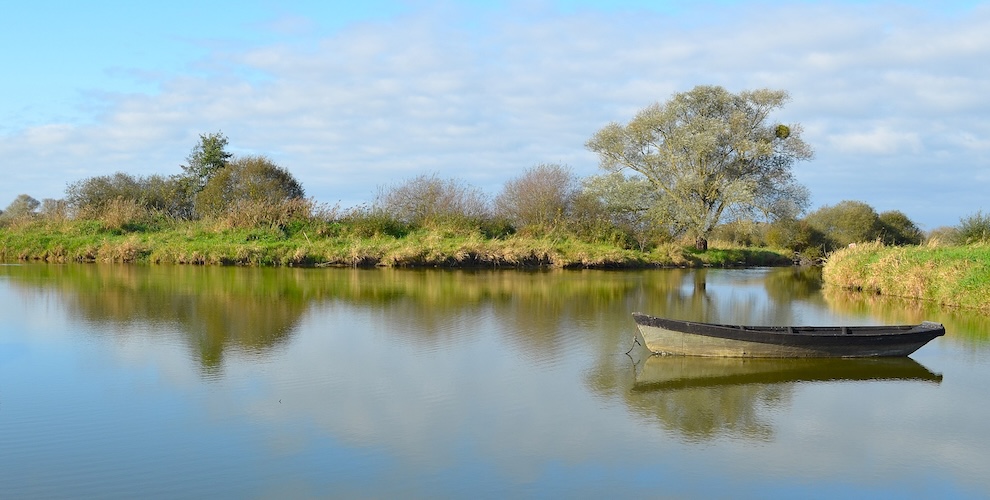
Lac de Grand Lieu – ©Selbymay CC BY-SA 3.0 via Wikimedia Commons
The region offers some exceptional birdwatching sites, notably Lake Grandlieu (the second largest bird reserve in France after the Camargue) and the banks of the Loire Angevine. South of Nantes, the area is Ideal for waterfowl and migratory birds. The Loire Angevine is also excellent for water loving species like Osprey and riverine species such as Kingfisher, Common Sandpiper etc.
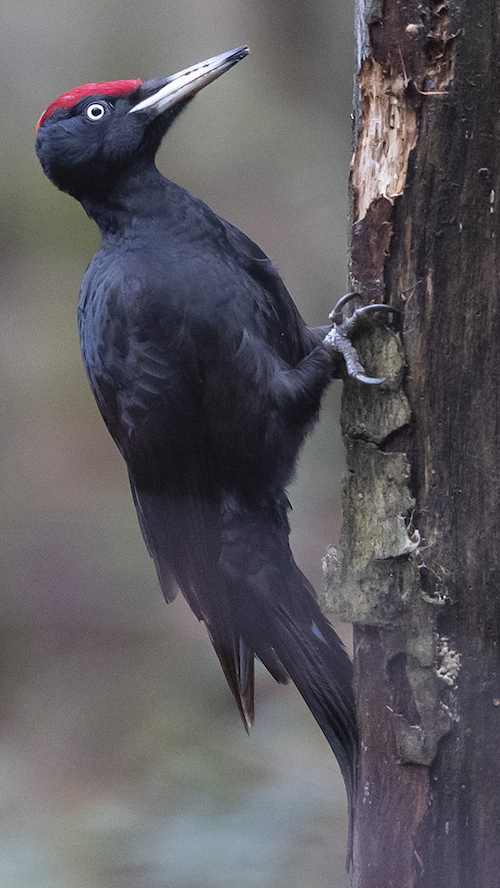
Sillé Forest is a woodland site good for Black, Middle-spotted and Grey-headed Woodpeckers, as well as warblers and flycatchers in summer.
The Loire Estuary (Lavau-sur-Loire) has wetlands, mudflats, and meadows that are rich in animal and plant species. Common Terns nest on the Loire islands in spring. Osprey can be seen hunting along the river. Waders and herons abound and Black-winged Stilt and Spoonbill present inn good numbers.
Spring is great for nesting birds and the return of migratory birds. Autumn/Winter are best for observing waterfowl during migration or over-wintering. There are designated birdwatching hides, such as the one at Le Ravoir, to give you a fully immersive experience.
-
Foret de Pail - Cornich de Pail
Satellite ViewBetween Villaines la Juhel and Pre en Pail, the Corniche (an area of heath with a few trees) holds breeding Nightjars and Hen Harriers. Occassional Black Stork, Honey Buzzard, Black Kite and numerous heathland birds. The forest also has Goshawk, Hobby, and Scops Owl all breeding. -
Foret de Sillé
Satellite ViewThis is close to Sillé le Guillaume (from which follow signs to La Plage) which is 33kms north-west of Le Mans. Park in the often very crowded car park and visit the lake and the woodland for Black, Middle-spotted, and Grey-headed woodpeckers, Crossbills, Wood, Bonelli's, and Melodious Warblers. Examine carefully the foraging tit flocks for Lesser-spotted Woodpeckers and Firecrests. -
Lac de Grande Lieu
Satellite ViewSouth of the River Loire at Nantes. There are 4 well-known points of access [but there must be more].1. St. Aignan Grandlieu - A short walk from the signposted car park. Excellent views but a scope is recommended. Good for waders and terns.2. Pont St. Martin - Park at the side of the river bridge then walk to the lake through various marshland habitats. Excellent in spring and early summer.3. Passay - Observatory tower for visitors but go down to the lake itself. During one May visit we had Night Heron, Purple Heron, Great White Egret, and Black Kite. 4.St. Lumine-de-Coutais - Drive to informal car park at end of Rue du Stade (D71). We had 7-800 Whiskered Terns here.
-
Roy Croucher
Averton, Mayenne | nfwt@online.fr
http://nfwt.online.fr/
-
Number of bird species: 481
(As at May 2026)
-
Avibase
PDF ChecklistThis checklist includes all bird species found in Pays de la Loire , based on the best information available at this time. It is based on a wide variety of sources that I collated over many years. I am pleased to offer these checklists as a service to birdwatchers. If you find any error, please do not hesitate to report them.

-
A Birdwatching Guide to France North of the Loire
| By Jacquie Crozier | Arlequin Press | 2003 | Paperback | 266 pages, colour photos, maps | ISBN: 9781900159760 Buy this book from NHBS.com -
GUIDE DES OISEAUX DES PAYS DE LA LOIRE: Observations & fiches
| By Thomas Brosset | Geste | 2021 | 175 pages in French | ISBN: 9791035310363 Buy this book from NHBS.com
-
Ligue pour la Protection des Oiseaux - Loire-Atlantique
WebsiteBienvenue sur le site de la Ligue pour la Protection des Oiseaux de Loire-Atlantique. Vous pourrez y trouver, toutes les informations sur la LPO et ses activit -
Ligue pour la Protection des Oiseaux Anjou
WebsiteThe LPO Anjou is present throughout the departmental territory thanks to its local groups of volunteers, essential actors of the associative life. All the citizens who wish it are freely invited to join them, in order to act for the protection of the nature. The groups are the local pillars of the departmental association.
-
RP Brière Regional Natural Park
InformationSatellite ViewIt covers a total area of 40,000 hectares (99,000 acres) with a core of wetland, the Grande Brière, covering approximately 7,000 hectares (17,000 acres). -
RP Loire-Anjou-Touraine Regional Nature Park
WebpageSatellite View -
RP Marais Poitevin Regional Nature Park
InformationSatellite ViewThe Marais Poitevin is a large area of marshland in western France, a remnant of the former Gulf of Poitou. The myriad canals are covered in green duckweed (hence the Green Venice nickname) and the drained marsh land is home to a varied fauna.
-
Pays de la Loire Rare Bird Alert
SightingsThe report below shows observations of rare birds in Pays de la Loire. Includes both unreviewed and reviewed/approved
-
2021 [09 September] - Helmut Laussmann
PDF ReportIn German
-
La Basse Cour, Ancinnes, Pays de la Loire
AccommodationThis XVIII century Normandy farmhouse has three beautiful en-suite guest rooms (chambres d'hôtes) approved by Gîtes de France. The guest house is in a lovely setting by a lake, surrounded by wooded and planted gardens on the fringes of the Forest of Perseigne, straddling the Orne (Normandy) and Sarthe (Pays de Loire)… -
Parc Mayenne
WebsiteThe Parc and surrounding areas are home to many birds and already growing as a known bird watching retreat.
-
Parc naturel régional Loire-Anjou-Touraine
WebpageWhere to watch birds (and other wildlife) -
Parc naturel régional Marais poitevin
WebpageThe Marais poitevin Regional Natural Park not only attracts protected nature and beautiful landscapes lovers, but it is also a paradise for migratory birds. As they follow a migration route North-South that crosses the Marais poitevin, the territory becomes an ideal halt for them. Each year some 500,000 birds fly over the Marais Poitevin in their trip to lands with milder weather and more abundant food. -
The Lac de Grand-Lieu, a paradise for birds
WebpageExplore the impressive Lac de Grand-Lieu, fifteen kilometres from Nantes. A countryside walk that allows you to see the many species of birds that live in France's second-largest bird reserve.