

Saxony-Anhalt
Saxony-Anhalt is one of the sixteen federal states of Germany, located in the western part of eastern Germany. It has an area of 20,447 km2 (7,895 square miles), and a population of around 2.2 million. Its capital and largest city is Magdeburg. It borders the state of Brandenburg to the northeast, Saxony to the southeast, Thuringia to the southwest and Lower Saxony to the northwest.
The landscape of Saxony-Anhalt is quite varied. In the north, the landscape is dominated by the flat expanse of the north German plain. The Colbitz-Letzlingen Heath mark the transition between the Altmark region and the Elbe-Börde-Heath region, with its fertile, sparsely wooded Magdeburg Börde.
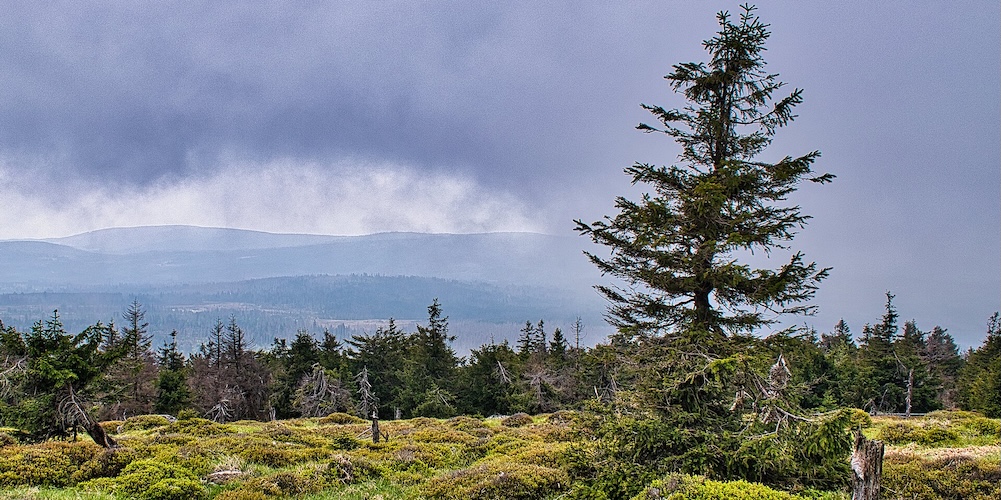
Harz National Park – ©Matthias Trusheim CC BY-SA 4.0 via Wikimedia Commons
The Harz Mountains are located in the southwest, part of which is the Harz National Park. The wine-growing area of Saale-Unstrut is located on the Rivers Saal and Unstrut in the south of the state.
Birding Saxony-Anhalt
The varied habitats of the state make for an interesting avi fauna. Some of the better areas to explore are:
Probably the best urban site in Magdeburg is Rotehorn Park, where urban birding is surprisingly good, as the Elbe runs right through the city.
Haken & Kliekener Aue, which is located along the Elbe River, these areas feature floodplain forests, oxbow lakes, and conveniently placed observation towers. Target species here include White-tailed Eagle, Black Stork, Common Crane and Great Reed Warbler.
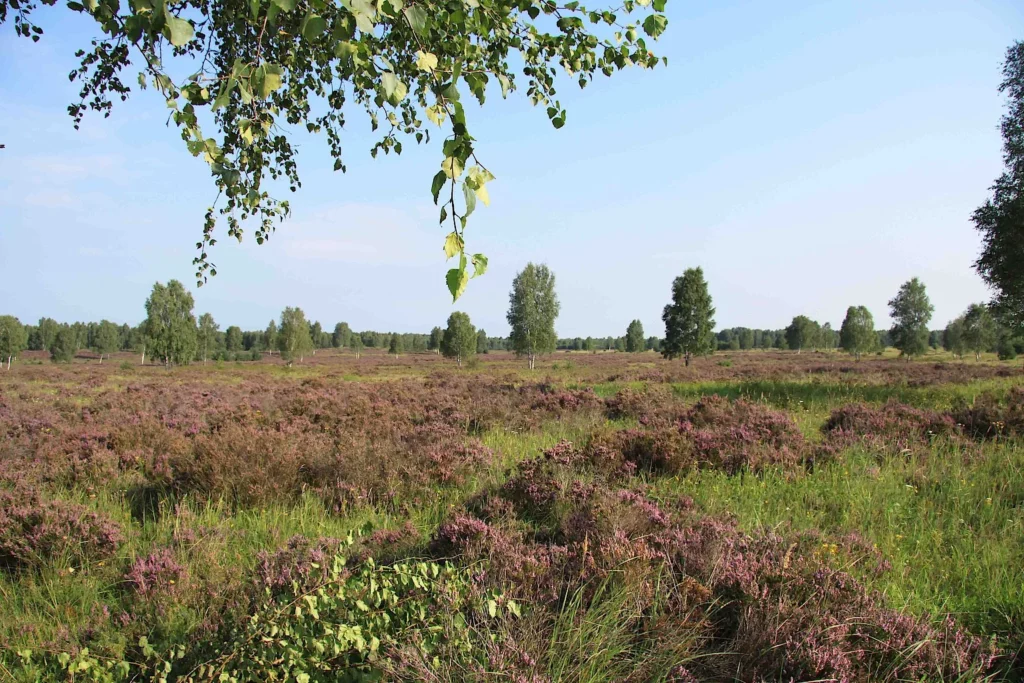
Oranienbaumer Heide – Public Domain via Wikimedia commons
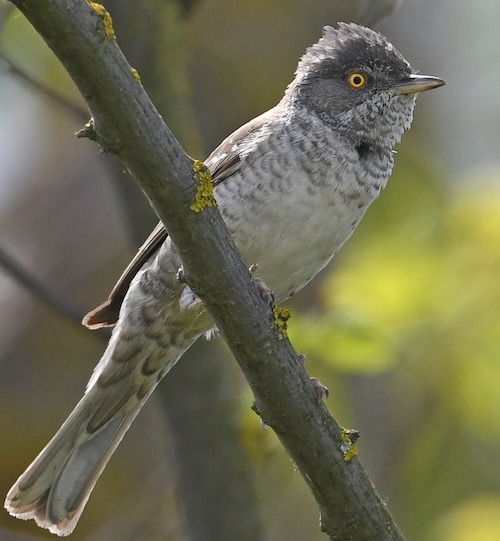
The Oranienbaumer Heide is a massive, species-rich reserve near Dessau that is characterised by dry grasslands, heaths, and deciduous woodlands. This pattern of habitats makes it good for European Honey-buzzard, Hoopoe, Eurasian Nightjar, Red-backed Shrike and Barred Warbler.
Kelbra Dam, which is a Ramsar Site is a globally important reservoir that hosts incredible numbers of waterbirds particularly during migration months. Apart from a plethora of wildfowl species and waders there is the spectacle of tens of thousands of migrating cranes. If you’re unlucky, you may also see bitterns in the marginal reeds. Geiseltalsee is another deep lake that acts as a vital migration stopover, but is especially good for overwintering wildfowl. Scarcer species include Red-crested Pochard, Smew and both Red-necked & Slavonian Grebes.
-
Number of bird species: 312
(As aJune 2026)State Bird - Common Swift Apus apus
-
eBase
PDF ChecklistThis checklist is generated with data from eBird (ebird.org), a global database of bird sightings from birders like you. If you enjoy this checklist, please consider contributing your sightings to eBird. It is 100% free to take part, and your observations will help support birders, researchers, and conservationists worldwide.
-
BR Middle Elbe Biosphere Reserve
InformationSatellite ViewWelcome to the Middle Elbe Biosphere Reserve ...at least to the internet version. The following pages are designed to provide a quick overview about some essential features of the biosphere reserve. In addition to general information about UNESCO biosphere reserves and specific information about the Middle Elbe/Riverlandscape Elbe biosphere reserve, you will also find details about our current projects, activities, and interesting facts for visitors. -
BiR Kelbra Dam WII IBA
InformationSatellite ViewThe reservoir is of international importance as a result of the variety of birds found on and around its waters, which, in terms of species as well as sheer numbers exceeds those settling on comparable stretches of water. For example, the following birds can regularly be observed here: duck (e.g. mallard, teal, pochard), waders (peewit, snipe, redshank, curlew), divers (great crested grebe, little grebe, black-necked grebe), rails (water rail, coot), mute swan, black-headed gull and bittern (little bittern and Eurasian bittern). In addition white-tailed eagle, osprey, peregrine and cormorant may also be spotted here. The variety of birds occurring during migration is particularly impressive. Up to 10,000 crane stop over on the reservoir and large flocks of larks and finches may be seen passing through. Since 1978 the reservoirs has been placed under the protection of the Ramsar Convention as an internationally important retreat for birds. -
NR Alter Stolberg
InformationSatellite ViewIt lies in the districts of Nordhausen in the state of Thuringia and Mansfeld-Südharz. The northern part of the heavily forested ridge is designated as the Alter Stolberg Nature Reserve and large parts of it as the Alter Stolberg Protected Landscape. -
NR Bode Gorge
InformationSatellite ViewThe Bode Gorge ist also a habitat and refuge for many types of rare animal. Such rarities include the wildcat, Bechstein's bat, peregrine falcon, black stork, middle spotted woodpecker. The insect fauna is particularly varied. The white-throated dipper and grey wagtail can be observed hunting for insects on the stream beds. Mallard breed here and there in the reed beds or on remote gravel beds. In spring fire salamanders can be seen splashing about in the Bode Gorge during the spawning season. Care must be taken when walking not to disturb them. -
NR Brandberge
InformationSatellite ViewThe Brandberge is a protected natural area in Saxony-Anhalt, Germany, in the northwest of Halle. It is part of the Naturpark Unteres Saaletal, a protected landscape area which extends along the River Saale from Halle to Nienburg. The fauna is unusually varied, including the European hare, the European stonechat, the shrike, the diving bell spider and many kinds of amphibians and reptiles, such as the natterjack toad, northern crested newt and grass snake. Waders and songbirds use the area as a brooding site, raptors use the arable land as a source of prey, and the entire area has an extremely varied insect population including the scarce blue-tailed damselfly and small emerald damselfly. -
NR Brocken
InformationSatellite ViewThe Brocken, also sometimes referred to as the Blocksberg, is the highest peak of the Harz mountain range and also the highest peak of Northern Germany; it is located near Schierke in the German state of Saxony-Anhalt between the rivers Weser and Elbe. Several animal species have adapted to the conditions of life on the Brocken. For example, the water pipit (Anthus aquaticus) and the ring ouzel both breed in the area around the summit. -
NR Drömling
InformationSatellite ViewThe Drömling is a sparsely populated depression on the border of Lower Saxony and Saxony-Anhalt in Germany with an area of about 340 square kilometres (130 sq mi). The larger part belonging to Saxony-Anhalt in the east is a nature park. -
NR Großes Bruch
InformationSatellite ViewThe Großes Bruch is a 45 kilometres (28 mi) long wetland strip in Germany, stretching from Oschersleben in Saxony-Anhalt in the east to Hornburg, Lower Saxony in the west. The meadows are the residence and breeding areas of rare birds, including the hen harrier, Montagu's harrier, Eurasian curlew, short-eared owl, common snipe and corncrake. The little owl breeds in stands of pollarded willows.
-
Sachsen-Anhalt Rare Bird Alert
SightingsThe report below shows observations of rare birds in Sachsen-Anhalt. Includes both unreviewed and reviewed/approved observations.