

Tierra del Fuego
Tierra del Fuego (officially Provincia de Tierra del Fuego, Antártida e Islas del Atlántico Sur) is one of the twenty-three Argentine provinces. At the southern tip of South America, it is entirely separated from mainland Argentina by the Strait of Magellan, but shares a land border with Chile. It includes the eastern part of the Isla Grande of Tierra del Fuego (the western part is the Chilean province of Tierra del Fuego). It is a spectacular part of the world. It covers an area of 21,263 km2 (8,210 square miles) but has a population of less than 200,000 people, the fewest of any province. Almost half live in the capital Ushuaia, the world’s southernmost city.
Due to its latitude, the island has a cold oceanic climate. The influences from the surrounding ocean and the predominant winds from the west result in the climate being uniform throughout the province. Mean annual temperatures are low, with winter temperatures averaging close to 0 °C and summer temperatures averaging around 10 °C. Extreme temperatures range from 27 °C to −16 °C in the northeast and 29 °C to −21 °C in the interior. The strong westerly winds from the Pacific Ocean mean that with wind chill, it feels even colder.
In the extreme south in the Beagle Channel which is surrounded by hills rising above 330 feet, winds can exceed 100 km/h. The windiest months being from September to March. The island averages around 28 inches of precipitation per year which is fairly evenly distributed throughout the year with a slight peak in autumn. Western parts of the province average as much as 79 inches. Snowfall is abundant throughout the province, much of which can be classified as within the Magellanic subpolar forests ecoregion.
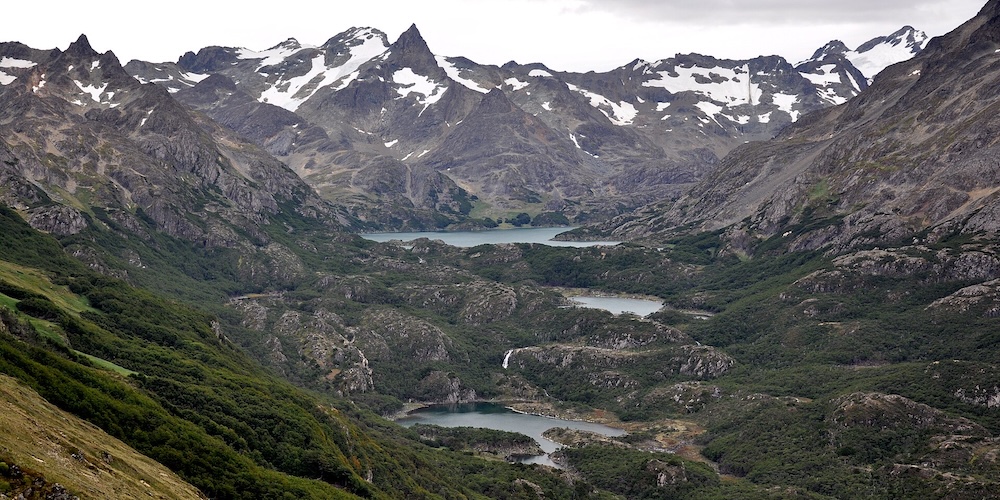
Tierra del Fuego National Park – ©Butterfly austral via Wikimedia Commons
Many parts of the province, such as Tierra del Fuego National Park have dramatic scenery with waterfalls, forests, mountains, and glaciers. Forests of Antarctic Beech, Lenga Beech and Coihue in the lower elevations of the park are home to many animal species. There are 20 species of terrestrial mammals, including the Guanaco, Andean Fox, North American Beaver, European Rabbit and Muskrat and 90 species o0f birds live there.
The southernmost extension of the Andes brings jagged, snow-capped mountains, glaciers, and glacial valleys, such as the Martial range near Ushuaia and peaks in the southern islands. Southern valleys and hills feature cool, wind-sculpted forests dominated by southern beeches alongside open peat bogs and wetlands. Glaciers have carved basins that now hold lakes like Lake Fagnano and Lago Roca and mountain lagoons such as Laguna Esmeralda, as well as rivers flowing toward the Atlantic and Beagle Channel. Moving north across Isla Grande de Tierra del Fuego, the terrain shifts toward cooler, windier plains and tussock grasslands and the coastline has rocky outcroppings, pebble beaches, sheltered bays, and the Beagle Channel connect the archipelago to the South Atlantic, Pacific, and Southern Ocean waters.
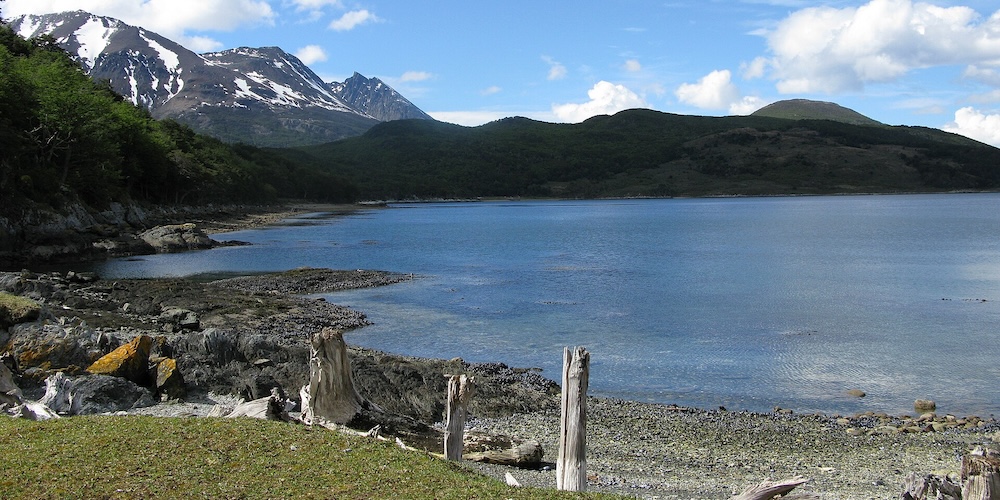
Tierra del Fuego National Park Coast – ©Butterfly voyages Serge Ouachée via Wikimedia Commons
There are low mountains and sandy beaches at the north of the island, ascending to the south. The north is somewhat similar to the steppe of the Santa Cruz Province. In the middle of the island, the end of the Andes mountain system runs horizontally, and its highest peak, Mount Cornú, rises to 1,490 meters. There are also a number of short rivers (Grande, Moneta, Ona, Lasifashaj, etc.) and due to the low temperature, there are many small glaciers that descend towards the sea.
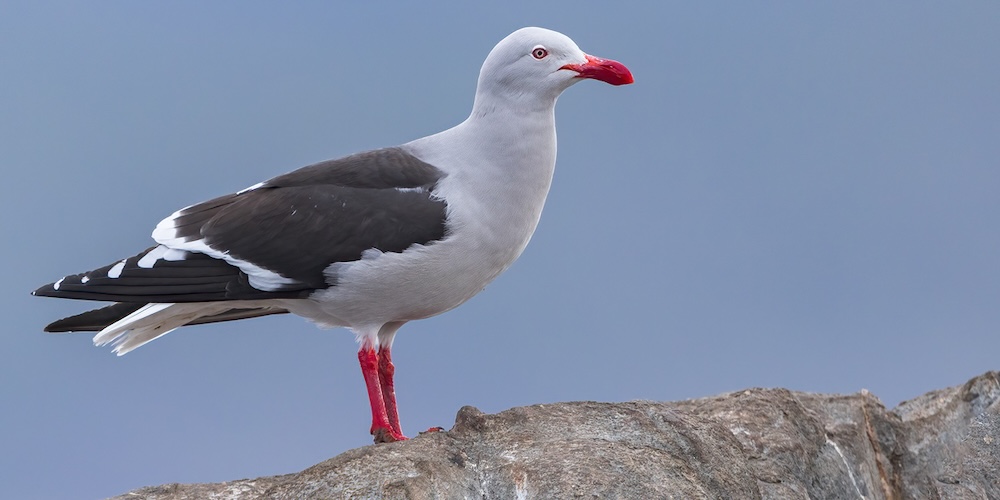
Dolphin Gull Leucophaeus scoresbii – ©Dubi Shapiro
Oil and gas production and sheep farming are the main impacts on the land although there is a growing manufacturing base and development of tourism.
Birding Tierra del Fuego
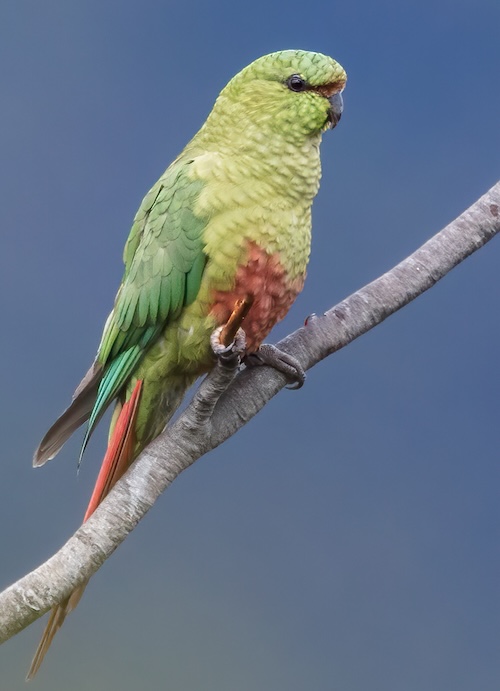
Birders arriving in Ushuaia (the departure point for many Antarctica, South Georgia and Falkland Island cruise ships) will be treated not only to some extremely special birds, but also beautiful jagged, snow-capped mountain peaks on one side and the Beagle Channel on the other. The most sought-after of all the birds around here is the massive Magellanic Woodpecker, not uncommon in the well-developed beech forests in the nearby Tierra del Fuego National Park, home to 90 species of bird including Austral Parakeet, Austral Pygmy Owl and White-throated Tree-runner. Two species of steamer ducks and several other rather attractive, localised duck and goose species are also easy to find around here.
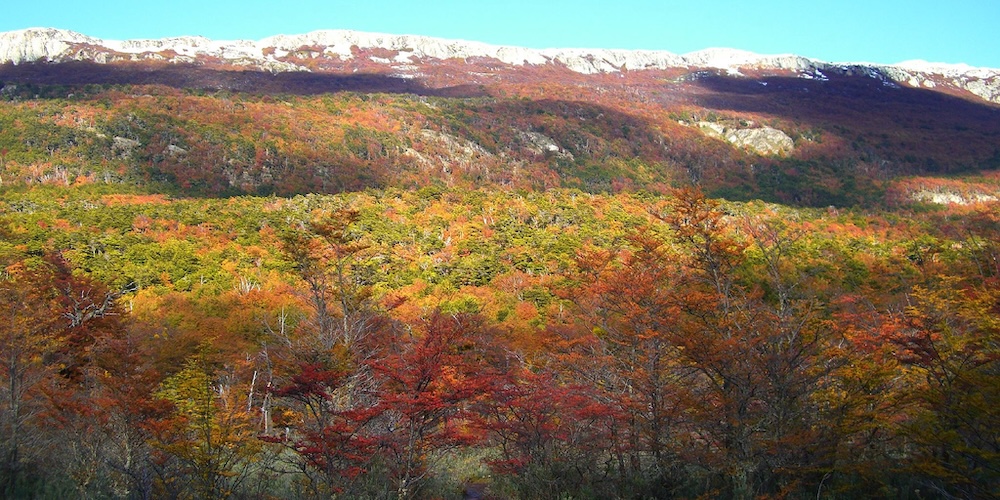
Southern Beech Forest – ©Joachin Pietsch via Wikimedia Commons
Among birders, Ushuaia’s rubbish dump is famous for White-throated Caracara along with a couple of more widespread caracaras, vultures and gulls (including the attractive Dolphin Gull).
Heading up into the high mountains near here, the tough-to-find White-bellied Seedsnipe is a real prize – with luck you might see a couple of them when they decide to walk over a snow patch; otherwise you’ll have to contend with their camouflage. Andean Condor and other raptors should put in an appearance, along with several other excellent birds.
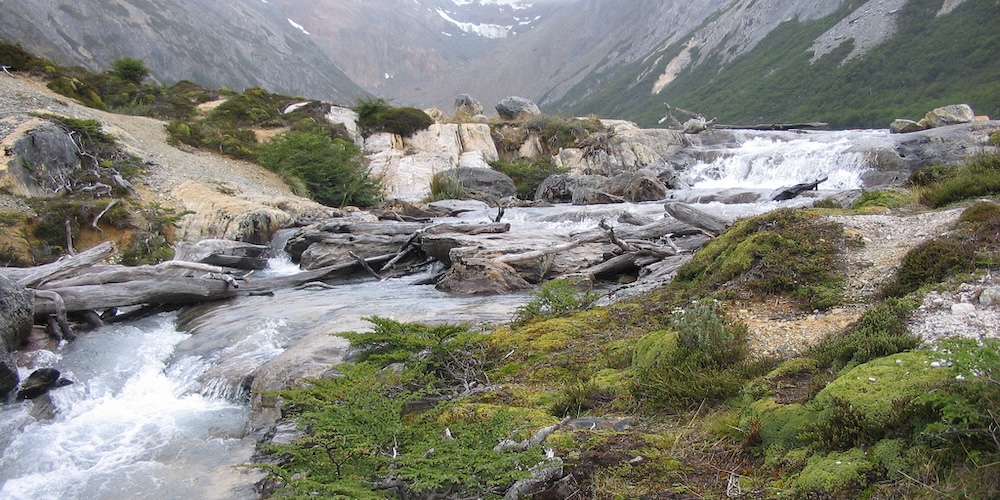
Glacial River – ©Marssipa CC-BY et CC-BY-SA via Wikimedia Commons
The Beagle Channel is of course very exciting. Without trying hard, you’ll get close-up views of Southern Giant Petrel from the shore, but will see other pelagic species and Magellanic Penguin if you take a boat trip (if you’re not already sailing the Beagle Channel on your way from here to Antarctica or the Falklands). Magellanic Diving Petrel are more reliable in the Strait of Magellan which forms the northern boundary of Tierra del Fuego – watch for this if you’re taking the ferry.
A birder can happily spend three or four days exploring the whole of the island (of Tierra del Fuego), although most birders only have a day or two around Ushuaia itself. The other most visited destinations, are the Tren del Fin del Mundo, Fagnano Lake, Museum of the End of the World, Les Eclaireurs lighthouse, the old jail, and the Isla de los Estados.
-
Dr Chris Lotz
Birding Ecotours
-
Number of bird species: 243
(As at September 2026)
-
Avibase
PDF ChecklistThis checklist includes all bird species found in Tierra del Fuego , based on the best information available at this time. It is based on a wide variety of sources that I collated over many years. I am pleased to offer these checklists as a service to birdwatchers. If you find any error, please do not hesitate to report them. -
eBird
PDF ChecklistThis checklist is generated with data from eBird (ebird.org), a global database of bird sightings from birders like you. If you enjoy this checklist, please consider contributing your sightings to eBird. It is 100% free to take part, and your observations will help support birders, researchers, and conservationists worldwide.

-
Birds of Patagonia, Tierra del Fuego and Antarctic Peninsula
(The Falkland Islands and South Georgia) | By E Couve & C Vidal | Fantastico Sur | 2003 | Paperback | 656 pages, 200 colour photos, distrib maps | ISBN: 9568007040 Buy this book from NHBS.com
-
NP Parque Nacional Tierra del Fuego
InformationSatellite ViewAmong the 90 species of birds are the Kelp Goose, Torrent Duck, Austral Parakeet, Andean Condor, Blackish Oystercatcher, and Magellanic Oystercatcher…
-
Tierra del Fuego Rare Bird Alert
SightingsThe report below shows observations of rare birds in Tierra del Fuego. Includes both unreviewed and reviewed/approved observations. Subscribe to this alert Observations for last 7 days
-
Birding Ushuaia
Local Tour OperatorWe specialice in birding, wildlife and nature Photography Tours in Tierra del Fuego and Patagonia. -
Albatross Birding
Tour OperatorPatagonia: Tierra del Fuego, the steppes and Torres del Paine -
Birding Ecotours
Tour OperatorThis magnificent cruise starts in the world’s southernmost city, Ushuaia. This Argentinean city is bounded by the famous Beagle Channel on one side and by the mountains of Tierra del Fuego (“Land of the Fire”) on the other. Birding Tour Argentina: 1-day Ushuaia Birding Tour... -
Far South Expeditions
Local Tour OperatorBirding Ushuaia. During this full day birding journey we will explore the sub-Antarctic forests and montane grassland ecosystems of Tierra del Fuego National Park, searching for a wealth of specialties of southern Patagonia... -
FieldGuides
Tour OperatorThe Pampas, Patagonia & Tierra del Fuego -
Magellanic Nature Tours
Tour Operator"Explore Tierra del Fuego with expert local naturalist guides. Enjoy Birding and native wildlife through personalized tours and small groups... -
Rainbow Tours
Tour OperatorVisit the only National Park on the Tierra del Fuego island. The park is located 12 kilometres to the west of Ushuaia, near the international borderline with Chile.... -
WINGS
Tour OperatorTierra del Fuego to the Atacama Desert
-
2017 [12 December] - Chris Lotz
PDF ReportWhat an incredible journey of a lifetime! The scenery was unbelievably spectacular. The birds were wonderful and included seven penguin species, Snow Petrel, many albatrosses including the most majestic of all, Wandering Albatross, along with the sleek, beautiful Light-mantled Albatross, and some rare, localised terrestrial birds such as South Georgia Pipit and Cobb’s Wren, and then of course all the sought-after birds of southernmost South America (Tierra del Fuego) such as Magellanic Woodpecker and the tricky White-bellied Seedsnipe. -
2022 [11 November] - Colin Reid
PDF Report...This 5 day sojourn in Tierra del Fuego was part of a six week trip to Argentina and Antarctica... -
2025 [01 January] - Rockjumper
PDF Report...Continued cruising towards Tierra del Fuego which we reached at dusk... -
2025 [03 March] - Bram Vogels
PDF Report...In the morning we were in doubt to try for the seedsnipe again, but the weather predictions were not very good. We decided to try the walk up to the glacier in hope to find the snipe there and be up in time before the bad weather arrived. The scenery was nice but no seedsnipe and not that big amount of birds with Thorn-tailed rayadito, Patagonian sierra finch, White-crested elaenia, Austral thrush, Buffwinged cinclodes and Dark-faced ground tyrant...
-
Aves del Canal Beagle
BLOGEste Blog intenta ser una ayuda en el avistaje de Aves acuáticas del Canal Beagle y Ushuaia…