

State of Acre
Acre is one of the twenty-seven states of Brazil. It is located in the westernmost part of the country with a two-hour time difference from Brasília, Acre is bordered by Amazonas to the north and northeast, Rondônia to the east, the Bolivian department of Pando to the southeast, and the Peruvian regions of Madre de Dios, Ucayali and Loreto to the south and west. It occupies an area of over 152,000 km2 (just under 59,000 square miles), and is only slightly smaller than the country of Tunisia. It has a population of less than one million people almost half of whom live in the capital, Rio Branco.
Practically all of the terrain of the state of Acre is part of the low sandstone plateau, which dominates most of the Brazilian Amazon. In the extreme west is found the Serra da Contamana or Serra do Divisor, along the western border, with the highest altitudes in the state just under 2000 feet. The Amazon Rainforest covers all of the state territory. It is very rich in rubber trees of the most valuable species Hevea brasiliensis and Brazil nut trees Bertholletia excelsa. Acre’s principal rivers, mostly navigable during the wet season when some major roads are impassable, are the Juruá, Moa, Tarauacá, Envira, Purús, Iaco, and Acre, which cross the state with almost parallel courses, which will only converge outside of its territory.
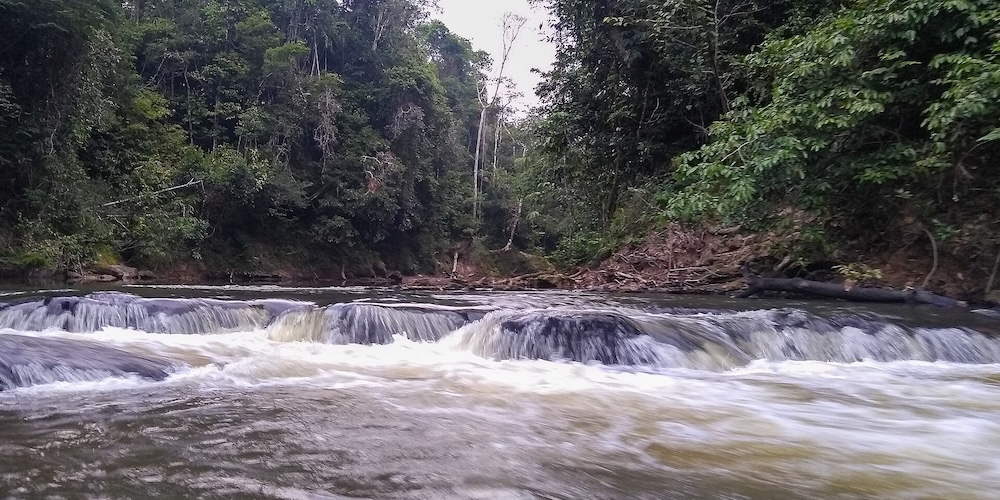
Rio Moa – ©Hector Bottai CC BY-SA 4.0 via Wikimedia Commons
The climate is hot and very humid with monthly average temperatures between 24 °C and 27 °C. The rainfall reaches an annual total of 2,100 mm (83 in), with a clear dry season in the months of June, July, and August.
Birding Acre
The Rio Branco Area, being the state capital serves as the primary base but has accessible forest tracks and reserves surrounding it.
Some areas of forest are little changed, such as the Serra do Divisor National Park situated between the basins of the Rio Ucayali and Rio Juruá. Most of its area is covered by open rainforest with palm trees or bamboos, dense and open sub-mountain rainforests, and dense and open alluvial rainforests that are periodically inundated. The forest types show quite differentiated structures, flora and tree species dominance. Open forest grows on poorly drained, wet or inundated soils. Palm-trees become more frequent on wetter soils. The dense lowland rainforests (Not-flooded forests) grow on dryer soils and the open, sub-montane forests grow on the lower hillsides. Dense forests occupy the higher slopes. At the very top grows a low forest with both typical and rare sub-Andean species. Open alluvial forests grow on river margins frequently inundated by muddy waters. Dense alluvial forests appear in less frequently inundated areas.
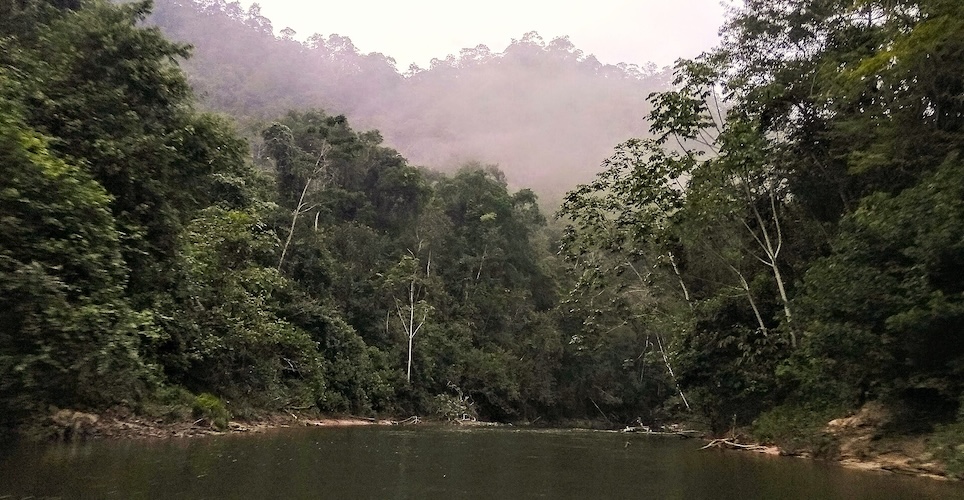
Serra do Divisor National Park – ©Hector Bottai CC BY-SA 4.0 via Wikimedia Commons
Then rich floral biodiversity is reflected in the fauna with a massive number of insect species supporting more than 100 amphibians, 30 reptiles and as many as 500 bird species along with numerous bats and other mammals.
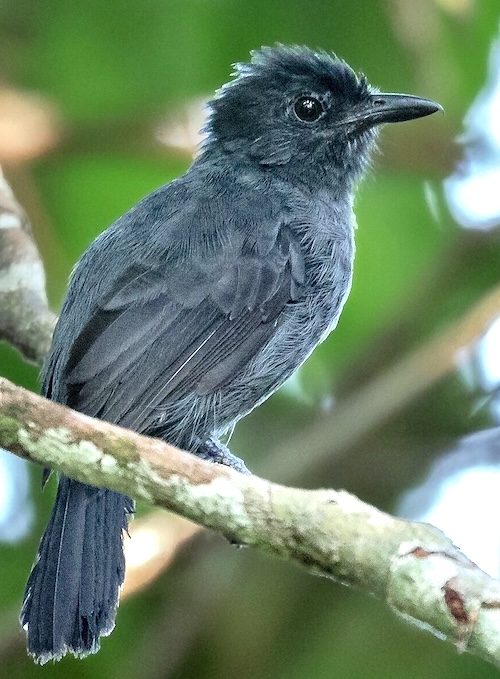
This and other preserved areas hold many Brazilian endemics, Sought-after species here include Acre Antshrike Thamnophilus divisorius, this rare antshrike lives on ridge crests with specific bamboo and forest habitats in the park. Acre Tody-Tyrant Hemitriccus cohnhafti is most associated with patches of Guadua bamboo in regional forest fragments like the Humaitá Forest Reserve. Rufous Twistwing Cnipodectes superrufus is another bamboo specialist as is Rufous-headed Woodpecker Celeus spectabilis found in understory habitats of the Inambari center of endemism, which straddles the border with Peru.

Acre Forest – ©Gleilson Miranda CC BY 2.0 via Wikimedia Commons
The Humaitá Forest Reserve is an important forest fragment in eastern Acre holding over 356 bird species, and is particularly good for spotting restricted-range and threatened Amazonian birds such as White-breasted Antbird, Pale-faced Bare-eye, and various other range-restricted Amazonian antwrens and cotingas.
-
Reserva Extrativista do Alto Juruá
InformationSatellite View130 species of mammals have been recorded including 16 primate species, jaguar, puma, giant otter, tapir, deer and manatee. Reptiles include caimans and alligator. There 84 species of amphibians and 115 of fish. 527 species of birds have been identified including macaws, parrots, herons and the harpy eagle...
-
Number of bird species: 800
(As at August 2026)
-
Avibase
PDF ChecklistThis checklist includes all bird species found in Acre , based on the best information available at this time. It is based on a wide variety of sources that I collated over many years. I am pleased to offer these checklists as a service to birdwatchers. If you find any error, please do not hesitate to report them. -
eBird
PDF ChecklistThis checklist is generated with data from eBird (ebird.org), a global database of bird sightings from birders like you. If you enjoy this checklist, please consider contributing your sightings to eBird. It is 100% free to take part, and your observations will help support birders, researchers, and conservationists worldwide.
-
NR Reserva Extrativista do Alto Juruá
InformationSatellite ViewThe Extractive Reserve of the Upper Juruá is located in the extreme west of the State of Acre and Brazil, covering the municipalities of Jordão, Marechal Thaumaturgo, Porto Walter and Tarauac.
-
eBird
SightingsBirding This Month
-
BirdQuest
Tour OperatorBRAZIL’S SOUTHWEST AMAZONIA – Specialities of Rondônia, southern Amazonas and Acre -
Feel Brasil
Tour OperatorA 7-day expedition reveals one of the wildest and richest biodiversity sanctuaries in the Brazilian Amazon, highlighting rare and endangered birds. It is in this sanctuary of life that the Serra do Divisor National Park is located, one of the most coveted places by professional birdwatchers. Among landscapes ranging from dense forests to crystal-clear waterfalls, the region is a great refuge for Amazonian flora and fauna. More than 485 species have already been recorded in the region, including 30 threatened with extinction and 12 endemic — that is, species found only there. -
Ornis Birding Expeditions
Tour OperatorSpecialities of the little-visited but bird-rich Rondonia, Inambari and Acre regions. Includes four days at PiraAçu Lodge, an astounding new birding destination in the deep Amazon! -
Rockjumper
Tour OperatorAcre Extension
-
2018 [07 July] - Eduardo Patrial
PDF Report...We recorded nearly five hundred species (493), highlighting the impressive number of Antbirds (66), Woodcreepers (21), Tyrants/flycatchers (69), also Parrots (22), Jacamars (7) and some good Puffbirds. Besides a good number of Brazilian (16) and several other regional endemics, rarities and even some river island specialties on the huge Madeira we got this time... -
2019 [07 July] - Bradley Davis
PDF Report...and the bamboo-laden forest of eastern Acre, Brazil’s southwesternmost state bordering Peru and Bolivia... -
2024 [07 July] - Eduardo Patrial & Chris Venetz
PDF Report...Starting at Porto Velho, we went birding on the dirt road G33 that cuts a large forest fragment on right (east) bank of Rio Madeira... -
2025 [06 June] - Caio Brito
PDF Report...t’s not the well-trodden path, and each visit still brings small discoveries, new behaviors, or species showing up in places we didn’t expect... -
2025 [07 July] - Eduardo Patrial
PDF Report...fantastic views of Rufous Twistwing and Purple-throated Cotinga that morning, and so many other good birds we saw, like White-throated Jacamar, Fine-barred Piculet, Blue-headed Macaw, Bamboo Antshrike, Ornate Stipplethroat, Yellow-breasted Warbling Antbird, Riparian, White-browed and Goeldi’s Antbirds, the localised Black-faced Cotinga; Yellow-cheeked Becard, Johannes’s TodyTyrant, Guira Tanager and more... -
2025 [07 July] - David Van den Schoor
PDF ReportA report on the birds seen during a trip to the states Amazonas, Rondônia and Acre from 2 till 29 July 2025 -
2025 [08 August] - Eduardo Patrial
PDF Report...We returned to the Inambari area near Porto Velho for a full day of birding. Early in the morning we visited a lovely bamboo forest along a small river in search of Black Bushbird. There we observed Great Black Hawk, Bluish-fronted Jacamar, Ringed Kingfisher, Golden-winged Parakeet, Red-bellied Macaw, Manu Antbird, White-throated Antbird, Point-tailed Palmcreeper, Snethlage’s Tody-Tyrant, Yellow-olive Flatbill, Buff-breasted Wren, Green Honeycreeper and Buff-throated Saltator...