

Henan Province
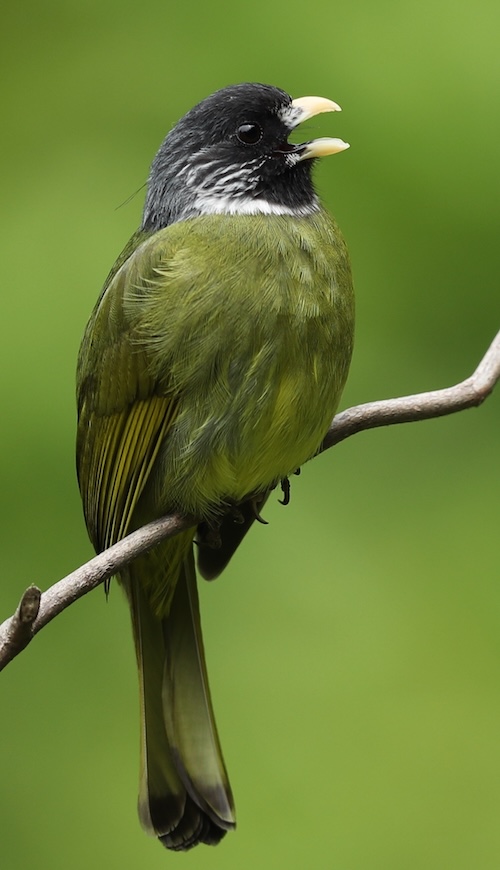
Henan is a province in Central China. It is home to many heritage sites, including Yinxu, the ruins of the final capital of the Shang dynasty and the Shaolin Temple. Four of the historical capitals of China, Luoyang, Anyang, Kaifeng and Zhengzhou, are in Henan. While the province’s name means ‘south of the river’, approximately a quarter of the province lies north of the Yellow River. With an area of 167,000 km2 (64,000 square miles), Henan covers a large part of the fertile and densely populated North China Plain. Henan shares borders with six other provinces. It is bordered to the west by Shaanxi, to the south by Hubei, and to the northwest by Shanxi and northeast by Hebei. To the east lie Shandong and Anhui, whose borders meet at a narrow strip of land which separates Henan from Jiangsu to the east. It is China’s third-most populous province and the most populous among inland provinces, with a population of over 100 million. It is also the world’s seventh-most populous administrative division; if it were a country by itself, Henan would be the 17th-most populous in the world, behind Egypt and Vietnam. People from Henan often suffer from regional discrimination.
The province has the 5th-largest provincial economy of China, the second-largest in South Central China after Guangdong, and the largest among inland provinces, with a nominal GDP ahead of the nation of Turkey; if it were a country, it would be the world’s 18th-largest economy. However, its GDP per capita is low compared to other eastern and central provinces. The economy continues to grow based on aluminium and coal prices, as well as agriculture, heavy industry, tourism and retail. High-tech industries and the service sector are concentrated around Zhengzhou and Luoyang. Henan hosts more than 150 institutions of higher education, ranking first in the Central China region. Three major cities in the province ranked in the top 200 cities in the world (Zhengzhou 76th, Kaifeng 154th and Xinxiang 195th) by scientific research output.
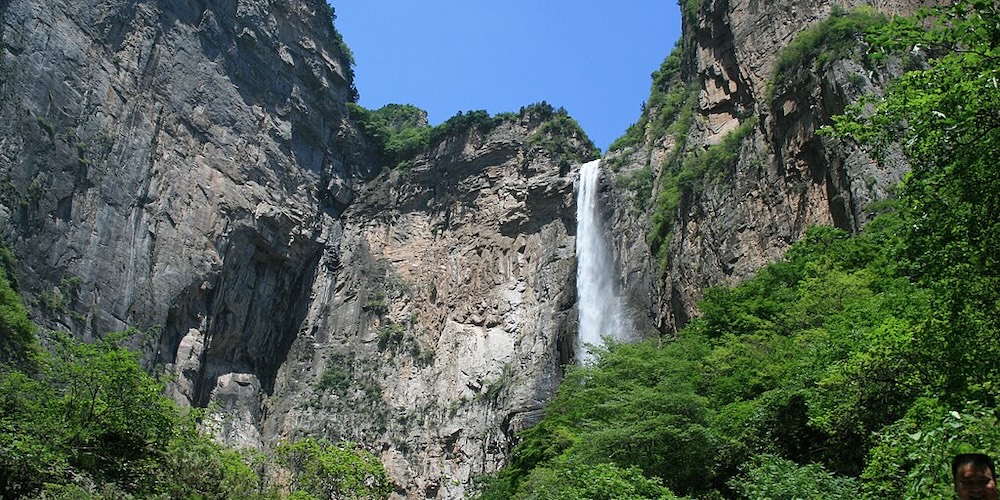
Yuntai Mountain – ©Gary Todd, CC0, via Wikimedia Commons
Henan has a diverse landscape with floodplains in the east and mountains in the west. Much of the province forms part the densely populated North China Plain, an area known as the ‘breadbasket of China’. The Taihang Mountains intrude partially into Henan’s northwestern borders from Shanxi, forming the eastern edge of Loess Plateau. To the west the Xionger and Funiu Mountains form an extensive network of mountain ranges and plateaus, supporting one of the few remaining temperate deciduous forests which once covered all of Henan. The renowned Mount Song and its Shaolin Temple is located in the far east of the region, near the capital city Zhengzhou. To the far south, the Dabie Mountains divides Hubei from Henan. The Nanyang Basin, separated from North China Plain by these mountains, is another important agricultural and population centre, with culture and history distinct from the rest of Henan and closer to that of Hubei’s. Unlike the rest of northern China, desertification is not a problem in Henan, though sandstorms are common in cities near the Yellow River due to the large amount of sand present in the river. The highest point in Henan province is Laoyachanao.
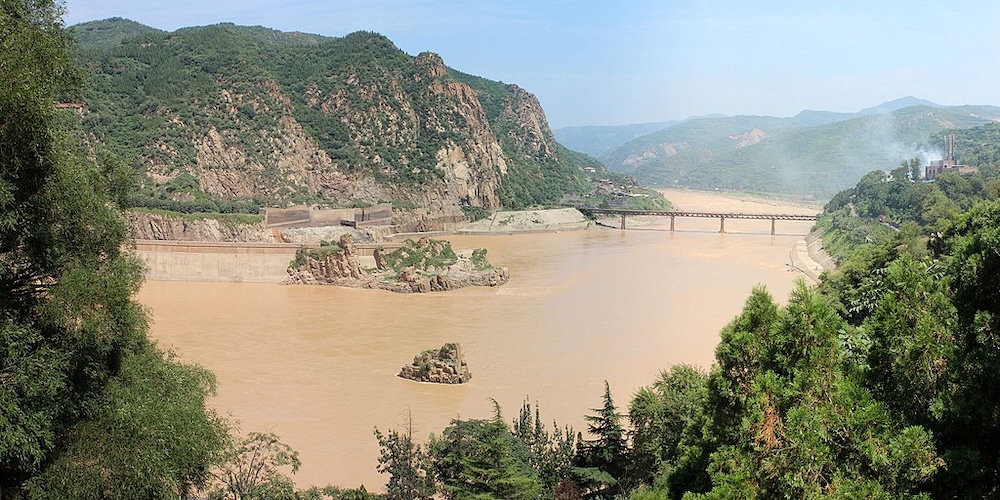
The Yellow River – ©fading CC BY-SA 3.0 via Wikimedia Commons
The Yellow River passes through central Henan. It enters from the northwest, via the Sanmenxia Reservoir. After it passes Luoyang, the mountains give way to plains. Excessive amount of sediments are formed due to the silt it picks up from the Loess Plateau, raising the river bed and causing frequent floods which shaped the habitat of the region. More recently however, construction of dams and levees, as well as the depletion of water resources have ended the floods. The Huai River in southern Henan is another important river, and has been recognised as part of the boundary dividing northern and southern Chinese climate and culture.
Henan has a temperate climate that is humid subtropical to the south of the Yellow River and bordering on humid continental to the north. It has a distinct seasonal climate characterised by hot, humid summers due to the East Asian monsoon, and generally cool to cold, windy, dry winters that reflect the influence of the vast Siberian anticyclone. Temperatures average around the freezing mark in January and c. 28 °C in July. A great majority of the annual rainfall occurs during the summer.
Birding Henan
Geographically Henan Province serves as the transitional area between north China and south China with animal species typical to both northern and southern China.
Situated in the transitional area between the Palaearctic and Oriental zones, Henan has bird species from both realms. More than 450 bird species from 54 families have so far been recorded in Henan province. Among them are over 200 Palaearctic species with c.100 Oriental species.
The bird habitats are quite diverse in this province, ranging from farmlands and wetlands, to forests and scrub. Henan has an abundant botanical resource with nearly 4,000 plant species ranging from sub-tropical evergreen, deciduous broadleaf and temperate deciduous broadleaf forest going from north to south because of climate and geology. There are 1500 rivers of different sizes which have contributed to large number of reservoirs in this province. And along the Yellow River, there are vast wetlands. All these have endowed this province with the abundance of bird species, especially water birds including wintering birds and migrants.
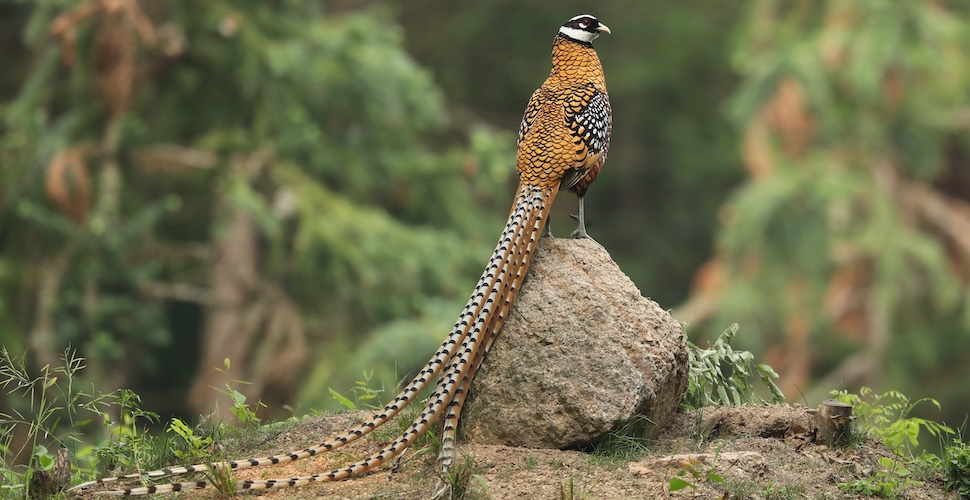
Reeve’s Pheasant Syrmaticus reevesii – ©Bird-Photo-Tours ASIA
Its premier birding location is Dongzhai National Nature Reserve, which is located on the north side of Dabie Mountain and is in the transition zone between middle and low mountain elevation before to the eastern plain. The species rich forests here are home to many Chinese endemics and species unique to the central region of China. Over 200 bird species have been recorded there including the much sought-after endemic Reeves’s Pheasant as well as the Endangered Crested Ibis. Other birds include Fairy Pitta, Black Baza, Chinese Sparrowhawk, Crested Goshawk, Oriental Scops Owl, Rufous Turtle Dove, Chestnut-winged Cuckoo, Asian Koel, Large Hawk-Cuckoo, Indian Cuckoo, Grey Nightjar, Black-capped Kingfisher, Crested Kingfisher, Speckled Piculet, Grey-capped Woodpecker, Grey-headed Woodpecker, Brown-rumped Minivet, Black-winged Cuckooshrike, Black Drongo, Ashy Drongo, Collared Crow, Brown-breasted Bulbul, Rufous-faced Warbler, Brownish-flanked Bush Warbler, Silver-throated Tit, Black-throated Tit, Streak-breasted Scimitar-Babbler, Masked Laughingthrush, Blue Whistling-Thrush, White-crowned Forktail, Yellow-rumped Flycatcher, Russet Sparrow, and Forest Wagtail.
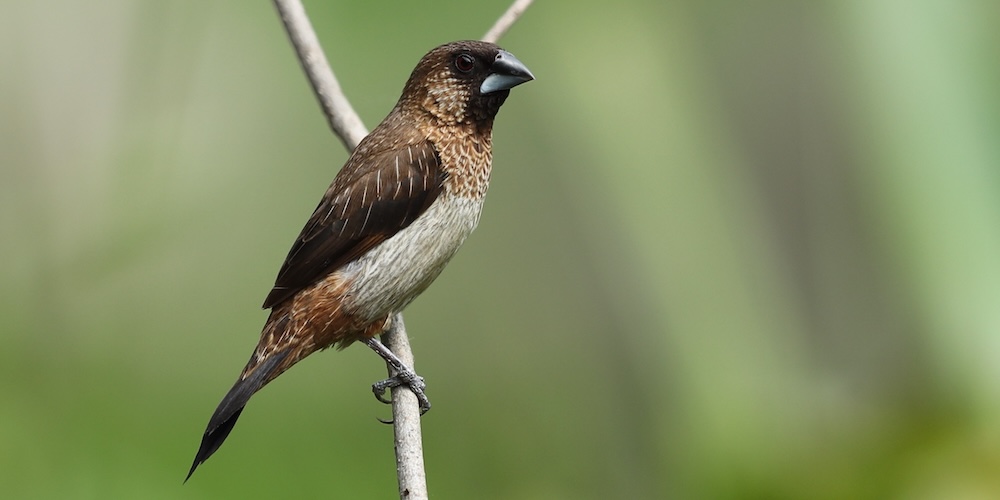
White-rumped Munia Lonchura striata – ©Bird-Photo-Tours ASIA
Also of interest to birders, Zhengzhou Yellow River Provincial Wetlands Reserve is north of the city of the same name. It covers over 38,000 hectares and is home to at least 170 bird species including Yellow Bittern, Chinese Pond Heron, Common Moorhen, Long-billed Plover, Little Ringed Plover, Pied Kingfisher, Crested Kingfisher, Grey-capped Pygmy Woodpecker, Grey-headed Woodpecker, Azure-winged Magpie, Light-vented Bulbul, Silver-throated Bushtit, Oriental Reed Warbler, Vinous-throated Parrotbill, Chinese Blackbird, Dusky Thrush, Chinese Grosbeak and Black-faced Bunting to name just a few.
This page is sponsored by Alpine Birding

This page is sponsored by Bird-Photo-Tours ASIA

-
Dongzhai Nature Reserve
InformationSatellite ViewSituated in the south Luoshan County, Dongzhai Nature Reserve was established in 1982 mainly to protect Reeve’s Pheasant Syrmaticus reevesii under guidance of the late World-famous Chinese ornithologist Zheng Zuoxin. In 2001, the reserve was upgraded to national level nature reserve. With a population of around 1500 Reeve’s pheasants, the reserve has 245 recorded bird species, accounting for 80% of total bird species in Henan Province or 20% of the total in China. Located in the transitional area between the Palaeartic and Oriental faunal zones, the reserve has birds from both realms. -
Mengjin Wetland Nature Reserve
InformationSatellite ViewMengjin Yellow River Nature Reserve is situated in the northeast of Mengjin County. The reserve was set up in 1995 and was incorporated into Henan Yellow River Wetland National Nature Reserve in 2003. Totally covering 15,000 hectares, the reserve consists of three parts, namely the core area (4500 hectare), buffer area (3500 hectare) and experimental area (7000 hectares). The reserve has recorded 166 bird species, of which 95 are water birds. -
Zhengzhou Wetlands Reserve
InformationSatellite ViewEstablished in 2004, Zhengzhou Yellow River Wetlands Reserve is located between the middle and lower reaches of Yellow River. Covering 38,007 hectares, the reserve is 158.5km long and 23km wide. Based on records from past surveys, the reserve has extremely abundant fauna and flora including 21 mammals and 169 bird species. Endangered bird species include: White Stork Ciconia ciconia, Red-crowned Crane Grus japonensisOriental White Stork Ciconia boycianaGreat Bustard Otis tardaImperial Eagle & Pallas’s Fish Eagle Haliaeetus leucoryphus, Hooded Crane Grus monachaDalmatian Pelican Pelecanus crispus and Greater Spotted Eagle Aquila clanga.
-
Philip He
Sichuan Province
http://www.alpinebirding.com/
-
Number of bird species: 487
(As at May 2025)
-
Avibase
PDF Checklist -
E-Bird
PDF ChecklistThis checklist is generated with data from eBird (ebird.org), a global database of bird sightings from birders like you. If you enjoy this checklist, please consider contributing your sightings to eBird. It is 100% free to take part, and your observations will help support birders, researchers, and conservationists worldwide.

-
Birds of China
| By Liu Yang & Chen Shuihua | Princeton University Press | 2023 | Flexibound | 672 pages, plates with 4000 colour illustrations, colour distribution maps | ISBN: 9780691237527 Buy this book from NHBS.com -
Guide to the Birds of China
| By John MacKinnon | OUP | 2022 | Edition 2 | Paperback | 513 pages, 164 plates with colour illustrations; colour distribution maps | ISBN: 9780192893673 Buy this book from NHBS.com -
HKBWS Field Guide to the Birds of Hong Kong and South China [English / Chinese]
| By Hong Kong Birdwatching Society | HKBS | 2022 | Edition 9 | Paperback | 372 pages, plates with colour illustrations | ISBN: 9789627508342 Buy this book from NHBS.com
-
Henan Wild Bird Society
InformationThe Henan Wild Bird Society is a wildlife conservation organization in Henan Province, China, dedicated to protecting bird species and their habitats, particularly in the Yellow River Wetland Nature Reserve.
-
NNR Baotianman National Nature Reserve
InformationSatellite ViewThe Baotianman National Nature Reserve is the most well-preserved natural broad-leaved forest area in east China. It is embedded in the much larger (909.5 km²) Baotianman UNESCO-MAB Biosphere Reserve. -
NNR Dongzhai Bay
InformationSatellite ViewDongzhai Harbor Mangrove Natural Reserve Area, is located within Dongzhai Harbor, in the area of Yanfeng Town, Meilan District, Haikou, Hainan, China. It has an area of 2,500 hectares (6,200 acres) and includes six rivers. The coastline is very irregular and includes a number of bays and tidewater gullies. The mangrove forest on the south coast provides a habitat for birds and other wildlife -
NR Mengjin Huanghe Nature Reserve
InformationSatellite ViewMengjin Huanghe Nature Reserve is located in the north-eastern part of Mengjin County, in the middle reaches of the Huang He (Yellow River). Siltation of the river bed has changed the course of the river many times, and formed a large area of floodplain. The nature reserve is 28 km long and 0.5-5.0 km wide. -
NR Zhengzhou Huanghe Wetland
InformationSatellite ViewThe IBA includes 2,055 ha of forest, 7,352 ha of agricultural land, 19,000 ha of beaches, 9,500 ha of open water, and about 100 ha of ponds. There is human activity throughout most of the nature reserve, which causes considerable disturbance.
-
eBird
SightingseBirding This Year
-
Alpine Birding
Tour OperatorDongzhai is located on the north side of Dabie Mountain and is in the transition zone between middle and low mountain elevation before to the eastern plain... -
Bird Photo Tours ASIA
Tour OperatorThis Bird-Photo-Tour follows four of China's easterly provinces focussing on enjoying close photographic encounters with 18 species of Tragopans, Pheasants and Partridges including 6 Endemics. -
Bird Tour Asia
Tour OperatorA full day in search of one of China’s most recognisable endemics – the splendid Reeves’s Pheasant. Dongzhai has the largest population of this increasingly rare species but it is still difficult to find. -
BirdQuest
Tour OperatorFrom Guangzhou, we travel northwards to Xinyang in Henan. From there we will head for the Dongzhai National Reserve in Henan province. One of the two major attractions here is the spectacular Reeves’s Pheasant, and this is surely the best place in China to get good views of this extraordinary and beautiful creature. -
Rockjumper
Tour OperatorChina - Southeast in Spring
-
2016 [06 June] - Jiak Hong
ReportBirding China-Dongzhai National Nature Reserve