

Haryana
Haryana is a landlocked state located in the northern part of India. It is ranked 21st in terms of area, with less than 1.4% (44,212 km2 or 17,070 square miles) of India’s land area. The state capital is Chandigarh, which it shares with the neighbouring state of Punjab; the most populous city is Faridabad, a part of the National Capital Region. The city of Gurgaon is among India’s largest financial and technology hubs. The state is rich in history, monuments, heritage, flora and fauna and tourism, with a well-developed economy, national and state highways. It is bordered by Punjab and Himachal Pradesh to the north, by Rajasthan to the west and south, while river Yamuna forms its eastern border with Uttar Pradesh. Haryana surrounds the country’s capital territory of Delhi on three sides (north, west and south), consequently, a large area of Haryana state is included in the economically important National Capital Region of India for the purposes of planning and development.
The altitude of Haryana varies between 700 and 3600 feet above sea level. It has only 4% forested areas, compared with the national average of over 21%. Karoh Peak, a 4,813 feet tall mountain peak in the Sivalik Hills range of the greater Himalayas range located near Morni Hills area of Panchkula district, is the highest point in Haryana. Most of the state sits atop the fertile Yamuna-Ghaggar Plain, a subsection of the Indo-Gangetic Plain. The Bagar region semi-desert dry sandy plain in north west of Haryana, covering northwest districts of Sirsa, western Fatehabad and northwestern Hisar.
Northern Haryana has several northeast to west flowing rivers originating from the Sivalik Hills of Himalayas, such as Ghaggar, Chautang, Tangri river, Kaushalya River, Markanda River, Sarsuti, Dangri and Somb. Haryana’s main seasonal river, the Ghaggar-Hakra, known as Ghaggar before the Ottu barrage and as the Hakra downstream of the barrage, rises in the outer Himalayas, between the Yamuna and the Satluj and enters the state near Pinjore in the Panchkula district, passes through Ambala and Sirsa, it reaches Bikaner in Rajasthan and runs for 460 kilometres (290 miles) before disappearing into the deserts of Rajasthan. The seasonal Markanda River originates from the lower Shivalik Hills and enters Haryana west of Ambala, and swells into a raging torrent during monsoon so is notorious for its devastating power.
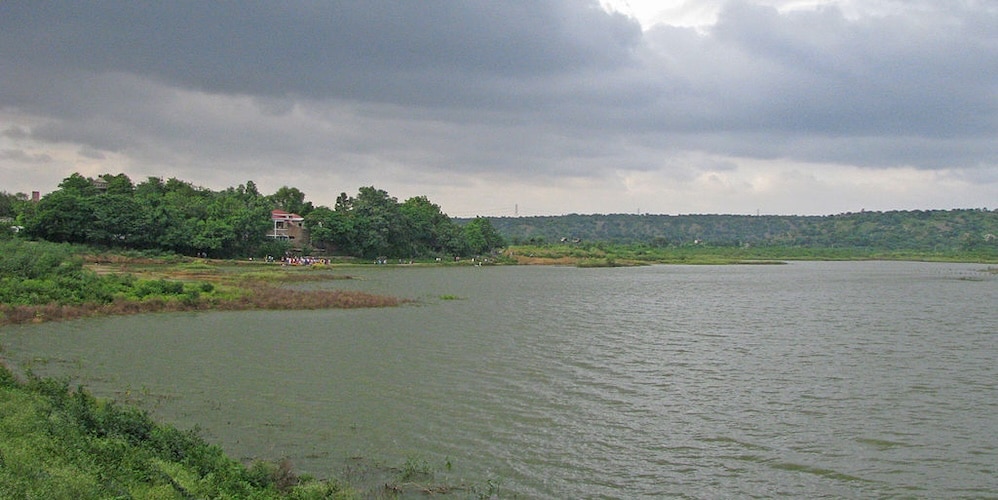
Damdama Lake – ©Ekabhishek CC BY-SA 3.0 via Wikimedia Commons
Southern Haryana has several south-west to east flowing seasonal rivulets originating from the Aravalli Range in and around the hills in Mewat region, including Sahibi River, Dohan River, Krishnavati River and Indori River. Major canals are Western Yamuna Canal, Sutlej Yamuna link canal and Indira Gandhi Canal. Major lakes are Dighal Wetland, Basai Wetland, Badkhal Lake in Faridabad, holy Brahma Sarovar and Sannihit Sarovar in Kurukshetra, Blue Bird Lake in Hisar, Damdama Lake at Sohna, Hathni Kund in Yamunanagar district, Karna Lake at Karnal, ancient Surajkund in Faridabad and Tilyar Lake in Rohtak.
Haryana is hot in summer at around 45 °C and mild in winter. The hottest months are May and June and the coldest are December and January. The climate is arid to semi-arid with an average rainfall of about 24 inchesa. Around 29% of rainfall is received during the months from July to September as a result of the monsoon, and the remaining rainfall is received during the period from December to February as a result of the western disturbance.
Thorny, dry, deciduous forest and thorny shrubs can be found all over the state. During the monsoon, a carpet of grass covers the hills. Mulberry, eucalyptus, pine, kikar, shisham and babul are found here. Mammal species found in the state include black buck, nilgai, panther, fox, mongoose, jackal and wild dog.
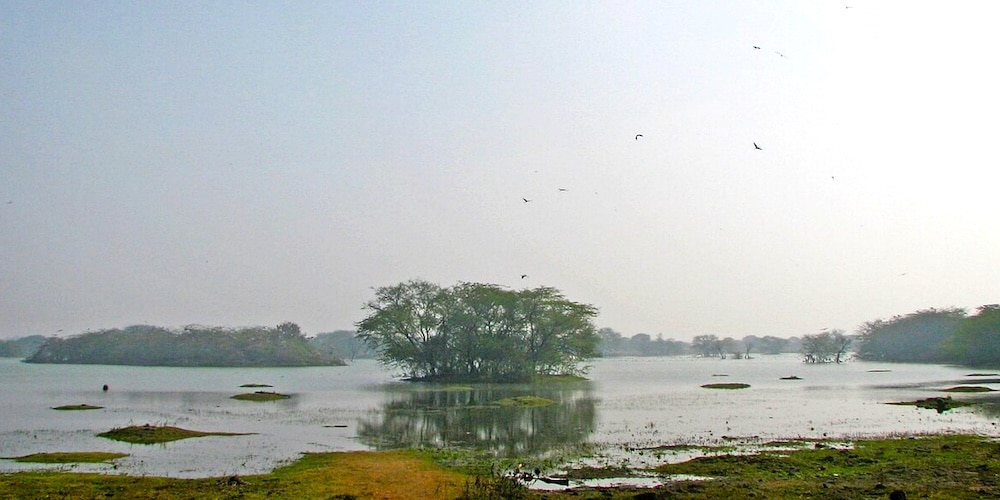
Sultanpur Bird Sanctuary – ©Ekabhishek CC BY-SA 3.0 via Wikimedia Commons
Haryana has two national parks, eight wildlife sanctuaries, two wildlife conservation areas, four animal and bird breeding centres, one deer park and three zoos, all of which are managed by the Haryana Forest Department of the Government of Haryana. Sultanpur National Park is a notable park in Gurgaon District.
Birding Haryana
Haryana has recorded more than 650 species of birds. Water birds can be seen at Sultanpur Jheel (with its flats towards the railway track harbouring chats and coursers); including nearby Basai Wetland and Bhindawas Lake Bird Sanctuary – all within one day birding trip from Delhi.
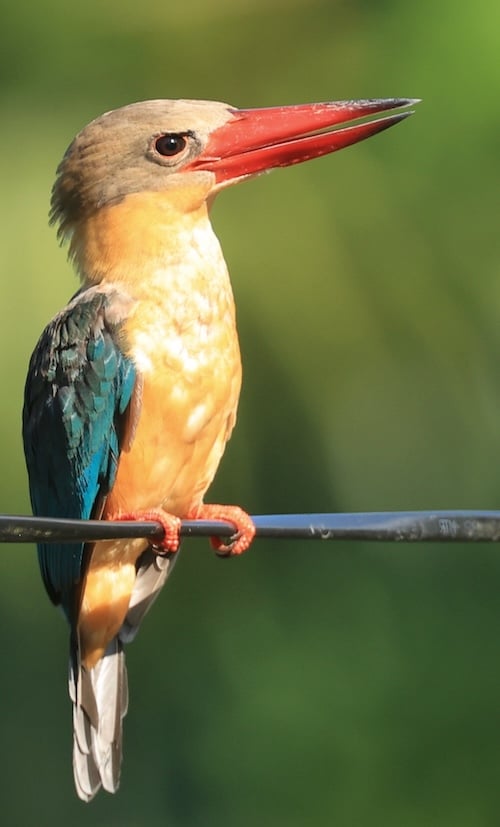
Stork-billed Kingfisher Pelargopsis capensis – Bird-Photo-Tours ASIA
There is a largish desert patch of by the village of Khedarh, (near Barwala, Hissar district) which is a guaranteed place in winter for White-browed Bushchat – possibly 2 individuals. Desert, Variable and Isabelline Chats being additional menu items; with some luck, one can catch a sight of Sandgrouse species too. Ottu Waterhead in Sirsa district has yielded a Rufuous-vented Prinia and after a good monsoon, Ottu harbour has over 15,000 migratory water birds, so is a great birding destination.
The Morni Hills in Panchkula district near Chandigarh are 1200-1300 meters high and days birding there can result in many Himalayan species including Bearded Vultures, two species of Accentors, as well as Thrushes, Woodpeckers & Barbets. Back in 2003, the state government launched its first ever Bird Safari near Berwala Wildlife Checkpost in the Morni Hills.
Another rich birding hot spot for the Himalayan birds in Haryana is Kalka where, with some luck, one can get Spotted Forktail.
Parts of Haryana along the canals still harbour Sarus Cranes and Black-necked Storks. Half a day birding along the canals, passing through the cultivated areas in winter usually produces 120+ species including several globally threatened birds. The contributor of this section spotted and alerted the world to the spreading Sind Sparrows along the canals of the state and they have become regulars in Sonipat district.
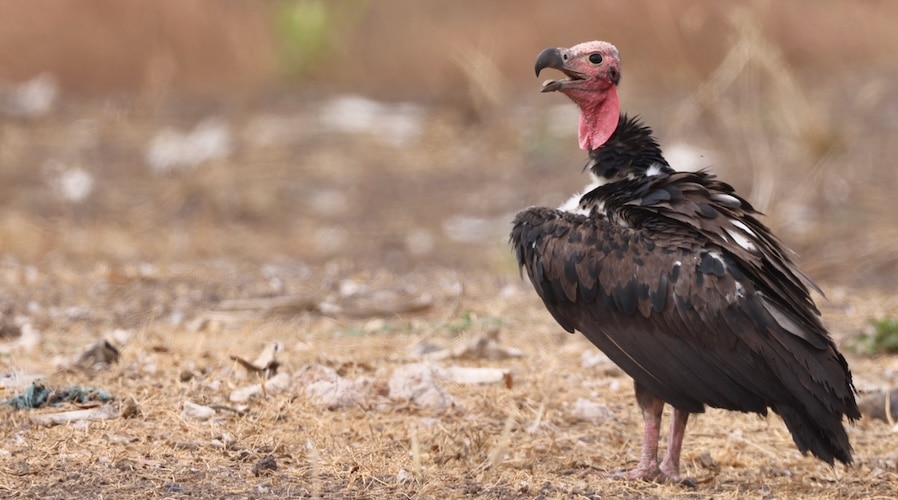
Red-headed Vulture Sarcogyps calvus – ©Bird-Photo-Tours ASIA
Checklists of birds (by Suresh C Sharma) of various parts of Haryana are available including those for the Morni Hills in Panchkula district, Kalesar Wildlife Sanctuary in Yamunanagar district, DDN8 in Sonipat district, Western Yamuna Canal (spreading in several districts); Bhor Saiyadan in Kurukshetra district, Naharh Wildlife Sanctuary in Rewari district, Bhindawas Lake Bird Sanctuary in Jhajjar district and so on.
-
Number of bird species: 666
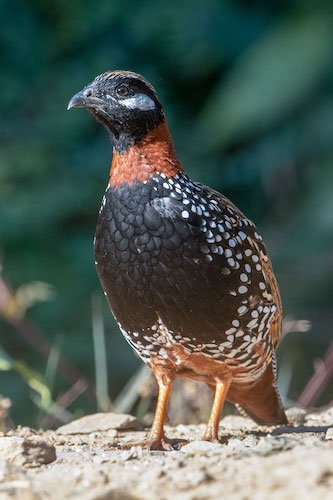
(As at June 2025)State Bird: Black Francolin Francolinus francolinus
-
Avibase
PDF ChecklistThis checklist includes all bird species found in Haryana , based on the best information available at this time. It is based on a wide variety of sources that I collated over many years. I am pleased to offer these checklists as a service to birdwatchers. If you find any error, please do not hesitate to report them. -
E-Bird
PDF ChecklistThis checklist is generated with data from eBird (ebird.org), a global database of bird sightings from birders like you. If you enjoy this checklist, please consider contributing your sightings to eBird. It is 100% free to take part, and your observations will help support birders, researchers, and conservationists worldwide.

-
Birds of the Indian Subcontinent
| By Richard Grimmett, Carol Inskipp & Tim Inskipp | Helm | 2025 | Edition 2 | Paperback | 544 pages, 240+ plates with colour illustrations; colour distribution maps, b/w illustrations | ISBN: 9781472984777 Buy this book from NHBS.com -
Fauna of Sultanpur National Park Haryana
| Written & published by Zoological Survey of India (ZSI) | 2017 | Paperback | 219 pages, 16 plates with colour photos; colour & b/w illustrations, colour maps | ISBN: 9788181714749 Buy this book from NHBS.com
Birds of the Indian Subcontinent
Apple iOS | AndroidThe eGuide to Birds of the Indian Subcontinent is an interactive companion to Birds of the Indian Subcontinent – the definitive guide for birdwatchers visiting the region. It covers India, Pakistan, Nepal, Bhutan, Bangladesh, Sri Lanka and the Maldives. This application has specific features that will enhance your birding experience.
Indian Birds
Apple iOS | AndroidPioneers in bringing Indian Birding to the smart phone generation - Introducing Indian Birds, the time-honoured and cherished birding companion for India. Established in 2010, it proudly remains the sole mobile app available on App Store, offering bird enthusiasts the ability to explore bird namesOrganisations-
Chandigarh Bird Club
Facebook PageThe Chandigarh Bird Club (CBC) is a prominent birdwatching and conservation group in the Haryana region, focusing on the Tri-City area (Chandigarh, Panchkula, and Mohali). It was established in 2008 by local birdwatchers with the goals of documenting local birdlife, their habitats, and raising awareness about their importance. -
DelhiBird Foundation
WebsiteOne day, Nikhil Devasar who was born and brought up in Delhi, decided to take a closer look at nature and wildlife. This enchanted journey was the beginning of a new relationship with birds and nature. Which eventually led to the creation of delhibird.
Reserves-
*CBC List of IBAs
InformationSatellite View -
Blue Bird Lake
InformationSatellite ViewBlue Bird Lake, Hisar is a resident and endangered migratory bird wetland habitat, lake and recreation area in the town of Hisar, in the Hisar district of Haryana State. The lake and surrounding wetland and parks are spread across 52 acres. The lake itself is 20 acres and has small islands where migratory birds and other flora and fauna live and nest. -
IBA Basai Wetland
InformationSatellite ViewBasai wetland located in Basai village in Gurgaon tehsil in Gurgaon district in Haryana, India, is a flora and fauna rich water body. It is recognised as one of India's Important Bird and Biodiversity Areas and is of global conservation significance as it supports populations of several endangered, vulnerable, and threatened bird species. The wetland supports a high diversity of birds, with at least 239 species reported since 2001 in the area. The wetland is also recognised as a birding hotspot in eBird with 282 bird species recorded as of May 2017. -
IBA Kaushalya Dam
InformationSatellite ViewIt is an important wetland that is home of many endangered migratory birds. -
NP BS IBA Sultanpur
InformationSatellite ViewThis Bird Sanctuary, ideal for birding and bird watchers, is best visited in winters when a large number of migratory birds come here. Over 250 species regularly seen. -
NP WS Kalesar
InformationSatellite ViewKalesar National Park (13,000 acres (53 km2)) and adjacent Kalesar Wildlife Sanctuary (13,209 acres (53.45 km2)) are protected areas in Yamunanagar district of Haryana state in India, 122 kilometres (76 mi) from Chandigarh. Both are also contiguous to Simbalbara National Park in Himachal Pradesh and Rajaji National Park in Uttrakhand. -
WS BS Bhindawas
InformationSatellite ViewBhindawas Wildlife Sanctuary and the nearby Bhindawas Bird Sanctuary are located in Jhajjar district, which is about 15 km from Jhajjar town. Rain water, JLN Feeder canal and its escape channel are main source of water in the bird sanctuary. -
WS Chhilchhila
InformationSatellite ViewThe Chhilchhila Wildlife Sanctuary also known as Seonthi Reserve Forest, is located near Kurukshetra University in Kurukshetra district in the Indian state of Haryana. The early arrivals in October were gadwall (Aythya ferina), northern pintail (Anas acuta), northern shoveller (Anas clypeata), common teal (Anas crecca), common pochard (Aythya ferina), and common coot (Fulica atra). The birds recorded during November were mallard (Anas platyrhynchos), spot-billed duck (Anas poecilorhyncha), and knob-billed duck (Sarkidiornis melanotos). The departure of the birds from the sanctuary was also noted in different months, towards the end of the winter season. The summer birds recorded were the lesser whistling duck (Dendrocygna javanica) and the cotton teal (Nettapus coromandelianus). -
WS Saraswati
InformationSatellite ViewSaraswati Wildlife Sanctuary also known as Seonsar Forest is situated in Kaithal district of Haryana State, India. It is spread over an area of 4,452.85 hectares (11,003.2 acres). Kalesar National Park, Morni Hills and Saraswati Wildlife Sanctuary are respectively first, second and third largest forest in Haryana.
Sightings, News & Forums-
eBird
SightingseBirding This Month
Guides & Tour Operators-
Asian Adventures
Local Tour OperatorDelhi, Sultanpur, Bharatpur, Chambal, Agra, Corbett National Park, Pangot and Sat Tal -
BirdQuest
Tour OperatorBIRDS & TIGERS OF NORTHERN INDIA – from the Himalayas to Rajasthan -
Bluetail Birding
Tour OperatorAn 18-day, small group birding tour that explores the incredible birdlife of the Indo-Gangetic Plains up into the mid-altitudes of the Central Himalayas, together with the equally impressive diversity of large mammals found in this region. -
Delhi Magi
Local Tour OperatorTwo hours drive from Delhi is Sultanpur National Park, a beautiful expanse of marshy wilderness that is home to a huge variety of avian life. -
India Bird Watching
Local Tour OperatorSultanpur Bird Sanctuary: 250 bird species, a destination steeped in the history of royalty and the power struggles of India. -
Kavi Nanda
Local GuideJoin us for an enchanting Earth Walk at Sultanpur National Park, led by the knowledgeable birder Kavi Nanda. -
Sanjay Sharma
Local GuideSanjay Sharma is a bird-watching guide from Sultanpur village in Haryana, near the famous Sultanpur National Park, one of the best birding sites near Delhi.
Trip Reports-
2020 [02 February] - Dylan Vasapolli
PDF Report...r. Beginning in the capital city, New Delhi, the tour visits the diverse Sultanpur National Park on the outskirts of this megacity before moving south to the famous Ranthambhore National Park... -
2023 [02 February] - Ann & Roland Gifford
PDF Report...Quite warm by the time we arrived at Sultanpur. My friends, Jyoti and Kishore had already arrived and were out and about somewhere. We had a good walk and were soon enjoying excellent views of the Sind sparrows when our friends caught up with us... -
2023 [12 December] - Stu Elsom
PDF ReportWe departed the noisy metropolis of Delhi early morning and headed to a somewhat peaceful Sultanpur Wetland. Exploring the varied habitats via a network of trails produced well over 100 species. There were many highlights, but a selection included a huge colony of nesting Painted Storks, a pristine adult, Black-necked Stork, numerous palearctic wildfowl, herons and waterbirds, a handful of Citrine Wagtails, cute Spotted Owlets and probably the scarcest bird of the day, the tiny Brooks’ Leaf Warbler. A very good start to our Indian Adventure. Black-rumped Flameback showed well to the group at Sultanpur... -
2024 [01 January] - Bent Otto Poulsen
PDF ReportNorthern India - Haryana, Uttar Pradesh & Utterakhand
Other Links-
Birding Sultanpur Bird Sanctuary
WebpageSultanpur bird sanctuary is situated very close to Delhi only 46 KMS away. This Bird Sanctuary is a paradise for bird watchers as various resident and migratory birds reside here in the winter. -
Ponds, Canals and Countryside
WebsiteI am no Henry David Thoreau but every pond of Haryana is a Walden Pond. There is no Ganga in Haryana, but every water irrigation channel is as sacred as the holy river to me. Nature dresses and undresses my countryside. Every outing is a new illustrated chapter of live birds. My aim is to write my experiences as a birdwatcher's journey in his neighbourhood. And this should be true for other states as well
Fatbirder - linking birders worldwide...
Skip to content