

Uttar Pradesh
Uttar Pradesh is a state in northern India. With over 241 million inhabitants, it is the most populated state in India as well as the most populous country subdivision in the world – more populous than all but four other countries outside of India (China, United States, Indonesia, and Pakistan) – and accounting for 10% of the population of India. The state is bordered by Rajasthan to the west, Haryana, Himachal Pradesh and Delhi to the northwest, Uttarakhand and Nepal to the north, Bihar to the east, Madhya Pradesh, Chhattisgarh and Jharkhand to the south. It is the fourth-largest Indian state by area covering 243,286 km2 (93,933 square miles), making it about the size of the UK. It is 7.3% of the total area of India. Lucknow is the largest city with 4 million people, and the state capital, with Prayagraj being the judicial capital.
The two major rivers of the state, the Ganges and its tributary Yamuna, meet at the Triveni Sangam in Prayagraj, a Hindu pilgrimage site. Other notable rivers are Gomti and Sarayu. Forest covers just over 6% of the state’s geographical area. The cultivable area covers 82% percent of the total geographical area, but less than 69% is under cultivation. Although long known for sugar production, the state’s economy is now dominated by the services industry. The service sector comprises travel and tourism, hotel industry, real estate, insurance and finance. The economy of Uttar Pradesh is the third-largest in India.
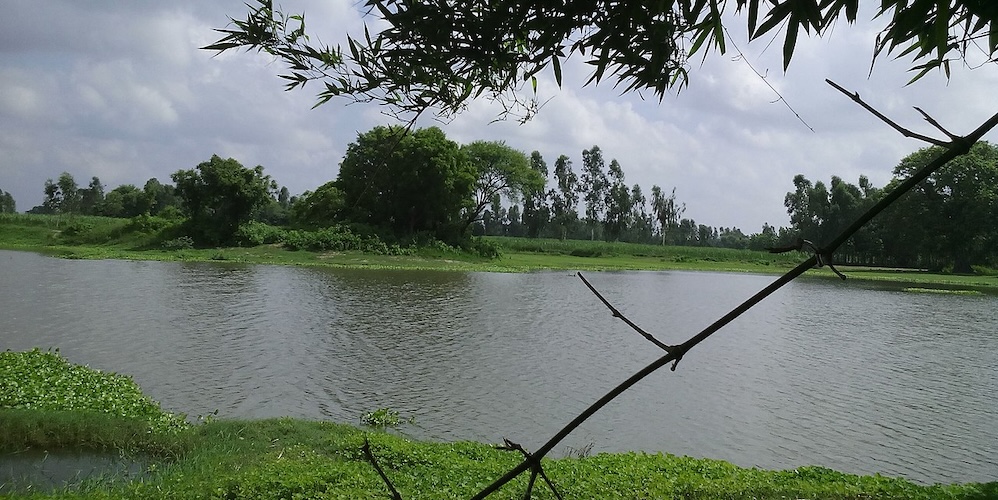
©Nurseekuyee CC BY-SA 4.0 via Wikimedia Commons
The Himalayas border the state on the north, but the plains that cover most of the state are distinctly different from those high mountains. The larger Gangetic Plain region is in the north; it includes the Ganges-Yamuna Doab, the Ghaghra plains, the Ganges plains and the Terai. The smaller Vindhya Range and plateau region are in the south. It is characterised by hard rock strata and a varied topography of hills, plains, valleys and plateaus. The Bhabhar tract gives place to the terai area which is covered with tall elephant grass and thick forests interspersed with marshes and swamps. The sluggish rivers of the bhabhar deepen in this area, their course running through a tangled mass of thick undergrowth.
Cultivation is intensive in the state. Uttar Pradesh falls under three agro-climatic zones viz. Middle Gangetic Plains region, Upper Gangetic Plains region and Central Plateau and Hills region. The valley areas have fertile and rich soil. There is intensive cultivation on terraced hill slopes, but irrigation systems are deficient. The Siwalik Range which forms the southern foothills of the Himalayas, slopes down into a boulder bed called ‘bhabhar’ The transitional belt running along the entire length of the state is called the terai and bhabhar area. It has rich forests, cutting across it are innumerable streams which swell into raging torrents during the monsoon.
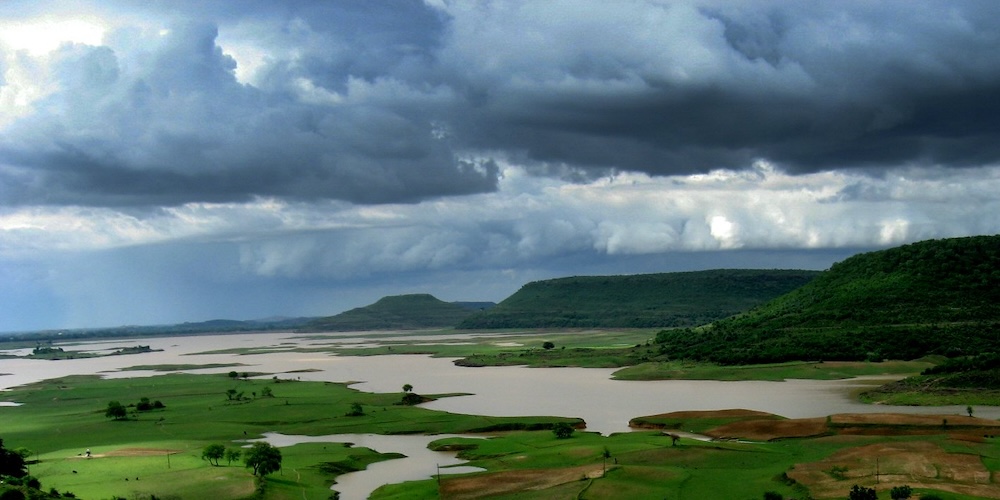
Terai Region, Indo-Gangetic Plain – ©Rikkimaheshwari, FAL, via Wikimedia Commons
The terai runs parallel to the bhabhar in a thin strip. The entire alluvial plain is divided into three sub-regions. The first in the eastern tract consisting of 14 districts which are subject to periodical floods and droughts and have been classified as scarcity areas. These districts have the highest density of population which gives the lowest per capita land. The other two regions, central and western, are comparatively better with a well-developed irrigation system. They can suffer from waterlogging, but the area is fairly arid. The state has more than 32 large and small rivers; of them, the Ganga, Yamuna, Saraswati, Sarayu, Betwa, and Ghaghara are larger and of religious importance in Hinduism.
Uttar Pradesh has a humid subtropical climate and experiences four seasons. The winter in January and February is followed by summer between March and May and the monsoon season between June and September. Summers are extreme with temperatures fluctuating anywhere between 0–50 °C in parts of the state coupled with dry hot winds called the Loo. The Gangetic plain varies from semiarid to sub-humid. The mean annual rainfall ranges from 26 inches in the southwest corner of the state to 39 inches in the eastern and south eastern parts. Primarily a summer phenomenon, the Bay of Bengal branch of the Indian monsoon is the major bearer of rain in most parts of state. After summer it is the southwest monsoon which brings most of the rain here, while in winters rain due to the western disturbances and north-east monsoon also contribute small quantities towards the overall precipitation of the state.
Birding Uttar Pradesh
Uttar Pradesh has an abundance of natural resources. Forest covers 16,583 km2 (6,403 square miles) in spite of rapid deforestation and poaching of wildlife, diverse flora and fauna continue to exist in the state. Several species of trees, large and small mammals, reptiles, and insects are found in the belt of temperate upper mountainous forests. Medicinal plants are found in the wild and are also grown in plantations. The Terai–Duar savanna and grasslands support cattle. Moist deciduous trees grow in the upper Gangetic plain, especially along its riverbanks. This plain supports a wide variety of plants and animals. The Ganges and its tributaries are the habitat of large and small reptiles, amphibians, fresh-water fish, and crabs. Scrubland trees such as the Babool (Vachellia nilotica) and animals such as the Chinkara (Gazella bennettii) are found in the arid Vindhyas. Tropical dry deciduous forests are found in all parts of the plains. Since much sunlight reaches the ground, shrubs and grasses are also abundant. Large tracts of these forests have been cleared for cultivation. Tropical thorny forests, consisting of widely scattered thorny trees, mainly babool are mostly found in the southwestern parts of the state.
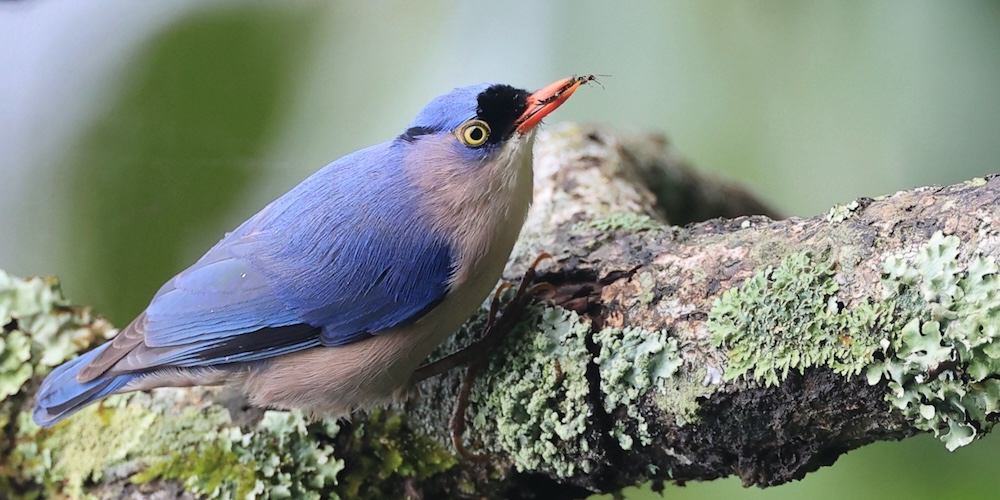
Velvet-fronted Nuthatch Sitta frontalis – ©Bird-Photo-Tours ASIA
It’s not surprising, therefore, that Uttar Pradesh is known for its extensive avifauna. Common birds include species of doves, partridges, parakeets, quails, kingfishers, woodpeckers, and many passerines such as warblers, bulbuls and thrushes. There is only one national park in the state, Dudhwa National Park, but there are around 25 wildlife sanctuaries. Bird sanctuaries include: Bakhira Sanctuary, National Chambal Sanctuary, Chandra Prabha Wildlife Sanctuary, Hastinapur Wildlife Sanctuary, Kaimoor Wildlife Sanctuary, and Okhla Sanctuary.
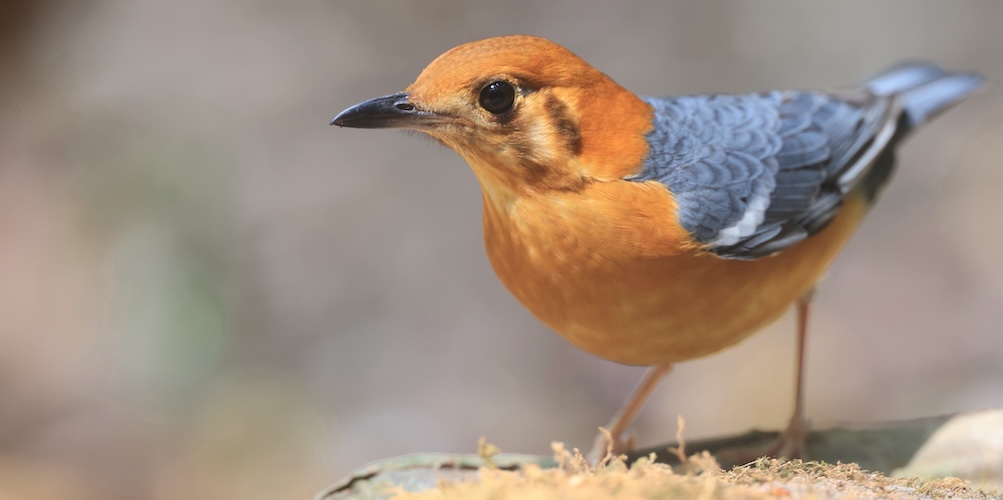
Orange-headed Thrush Geokichla citrina – ©Bird-Photo-Tours ASIA
Other animals in the state include reptiles including lizards, gharials and snakes such as cobras and kraits. Among the wide variety of fishes, the most common ones are mahaseer and trout. Some animal species have gone extinct in recent years, while others, like the Asiatic lion from the Gangetic Plain, the rhinoceros from the Terai region, Ganges River dolphin primarily found in the Ganges have become endangered. Many species are vulnerable to poaching despite regulation by the government. Throughout, there is limited water availability. Some of the best hotspots for birders are set out below:
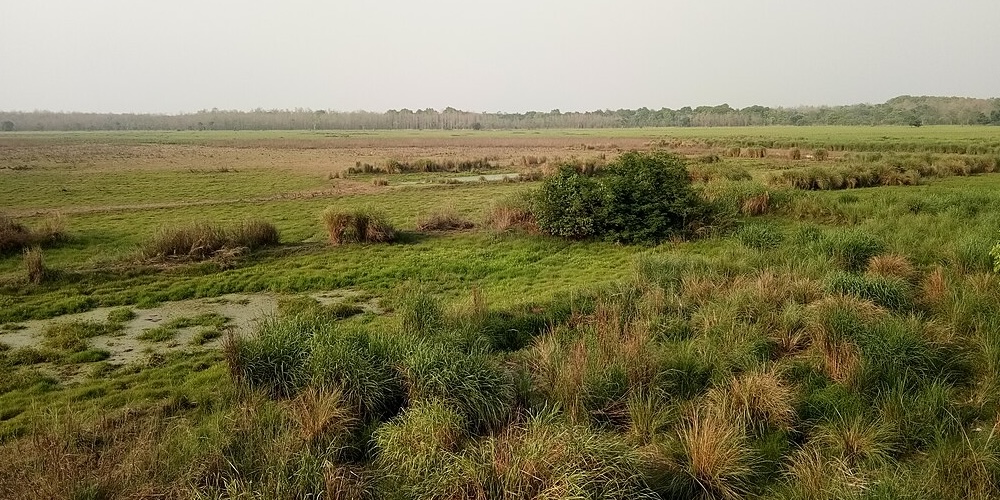
Dudhwa National Park – ©Rajesh.chansausi CC BY-SA 4.0 via Wikimedia Commons
Dudhwa National Park comprises of sal forests, marshes and grasslands which harbour a wide variety of wildlife. The park is famous for the swamp deer (barasingha) & reintroduced one-horned rhino. Dudhwa has the distinction of having the largest surviving population of this endangered species, their presence rendered more spectacular by the propensity for segregation of the antlered males. Dudhwa also has an abundance of birds. Its marshes are home to a range of water birds both local and migratory. There are spectacular Painted Storks, Black and White-necked Storks, Sarus Cranes and varied night birds of prey, ranging from the great Indian Horned Owl to the Jungle Owlet. It is an ideal paradise for birders to see the Lesser Bengal Florican and Swamp Francolin both on the red alert list. Woodpeckers, barbets, kingfishers, minivets, bee-eaters, and bulbuls flit through the forest canopy.
The Chambal National Park is shared by the three states of Rajasthan, Madhya Pradesh and Uttar Pradesh. The sanctuary houses many endangered inhabitants like Gangetic dolphin, Mugger and Gharial crocodiles, chinkara, samber, nilgai wolf and wild boar. It is one of the best places to see the Indian Skimmer and River Terns as well as terns, and passerines like water redstarts and dippers etc. The sanctuary hosts more than 200 species of birds…
Katarniaghat Wildlife Sanctuary is little-known reserve near the Nepal border that sprawls over an area of 400 sq. kms. Tiger, leopard, swamp deer, blackbuck, chital, barking deer, sambar, nilgai, sloth bear and wild boar are some of the inhabitants of the sanctuary. Gharial and mugger can be found in the Girwa River and its tributaries.
About 200,000 birds of 300 different species of birds frequent the Patna Sanctuary. Pied Mynas, herons, cormorants & ducks and geese of all descriptions also frequent the Sanctuary. It is best during the winter months as most of the birds tend to leave in March.
-
Dudhwa National Park
InformationSatellite ViewDudhwa has an abundance of birds... -
Katarniaghat Wildlife Sanctuary
InformationSatellite ViewThis little known sanctuary near the Nepal border sprawls over an area of 400 sq. kms. -
National Chambal Sanctuary
InformationSatellite ViewThe nearest airport is situated at Agra, which is 90km away from the sanctuary and nearest railhead is also at Agra. -
Patna Pakshi Vihar
InformationSatellite ViewPatna Sanctuary is best during the winter months as most of the birds tend to leave in March…
-
Mohit Aggarwal
Delhi | wildindiatours@vsnl.com
https://www.indianwildlife.com/
-
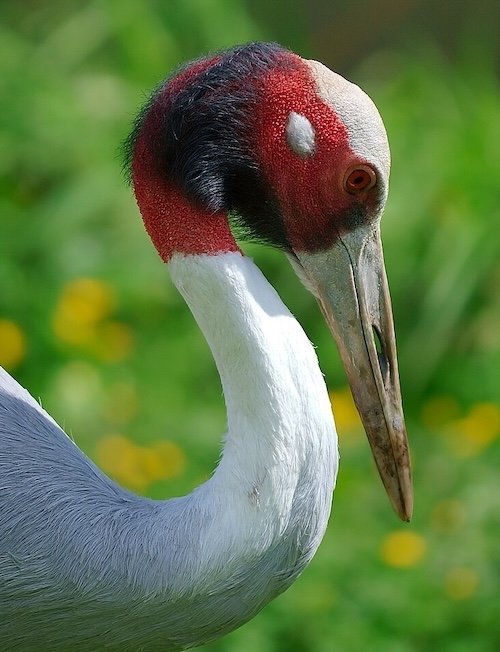
Number of bird species: 824
(As at July 2025)State Bird: Sarus Crane Grus antigone
-
Avibase
PDF ChecklistThis checklist includes all bird species found in Uttar Pradesh , based on the best information available at this time. It is based on a wide variety of sources that I collated over many years. I am pleased to offer these checklists as a service to birdwatchers. If you find any error, please do not hesitate to report them. -
E-Bird
PDF ChecklistThis checklist is generated with data from eBird (ebird.org), a global database of bird sightings from birders like you. If you enjoy this checklist, please consider contributing your sightings to eBird. It is 100% free to take part, and your observations will help support birders, researchers, and conservationists worldwide.

-
Birds of the Indian Subcontinent
| By Richard Grimmett, Carol Inskipp & Tim Inskipp | Helm | 2025 | Edition 2 | Paperback | 544 pages, 240+ plates with colour illustrations; colour distribution maps, b/w illustrations | ISBN: 9781472984777 Buy this book from NHBS.com -
Threatened Birds of Uttar Pradesh
| By Asad R Rahmani, Sanjay Kumar, Neeraj Srivastav), Rajat Bhargava & Noor Inayat Khan | Oxford University Press | 2015 | Paperback | 219 pages, 100 colour photos, 41 colour distribution maps | ISBN: 9780199455249 Buy this book from NHBS.com
Birds of the Indian Subcontinent
Apple iOS | AndroidThe eGuide to Birds of the Indian Subcontinent is an interactive companion to Birds of the Indian Subcontinent – the definitive guide for birdwatchers visiting the region. It covers India, Pakistan, Nepal, Bhutan, Bangladesh, Sri Lanka and the Maldives. This application has specific features that will enhance your birding experience.
Indian Birds
Apple iOS | AndroidPioneers in bringing Indian Birding to the smart phone generation - Introducing Indian Birds, the time-honoured and cherished birding companion for India. Established in 2010, it proudly remains the sole mobile app available on App Store, offering bird enthusiasts the ability to explore bird namesFestivals & Bird Fairs-
Uttar Pradesh Bird Festival
InformationThe fact that Uttar Pradesh homes some of the rare and endangered bird species, this Bird Festival is the first initiative of its kind to bring together the best from birding world from around the globe, hoping to promote eco-tourism in the state. UP Bird Festival is jointly organised by UP Forest department, UP Forest Corporation & FICCI
Reserves-
*Protected areas of Uttar Pradesh
InformationSatellite View1 National Park, 7 Tiger reserves, 25 wildlife sanctuarues etc... Interactive links -
BS Bakhira
InformationSatellite ViewThe Bakhira Bird Sanctuary is the largest natural flood plain wetland of India in Sant Kabir Nagar district of Eastern Uttar Pradesh. The sanctuary was established in 1980. It is situated 44 km west of Gorakhpur city. It is a vast stretch of water body expanding over an area of 29 km2. This is an important lake of eastern UP, which provides a wintering and staging ground for a number of migratory waterfowls and a breeding ground for resident birds. -
BS Chandra Shekhar Azad (was Nawabganj)
InformationSatellite ViewThe bird sanctuary is located in Unnao district on the Kanpur-Lucknow highway in Uttar Pradesh, India consisting of a lake and the surrounding environment. It is one of the many wetlands of Northern India. The sanctuary provides protection for 250 species of migratory birds. -
BS Lakh Bahosi
InformationSatellite ViewLakh Bahosi Sanctuary is a bird sanctuary spread over two jheels (shallow lakes) near the villages of Lakh and Bahosi (abt 4 km apart) in Kannauj district, Uttar Pradesh. It is about 40 km from Kannauj. Primarily a bird sanctuary, species from 49 genera (of the 97 inhabiting India) can be seen at the sanctuary. It is one of India's larger bird sanctuaries, covering 80 km2 including also a stretch of the Upper Ganges canal. -
BS Okhla Sanctuary
InformationSatellite ViewThis is a bird sanctuary at the Okhla barrage over Yamuna River. It is situated in Noida, Gautam Buddh Nagar district, on Delhi-Uttar Pradesh state border and known as a haven for over 300 bird species, especially waterbirds. -
BS Patna Sanctuary
InformationSatellite ViewThe sanctuary is situated near the town of Agra (of Taj Mahal fame); from the hotel district, one should head towards the River Yamuna, and take a left turn after crossing the river. The road to Patna turns right just before a building with a painted Pepsi ad. About 200,000 birds of 300 different species of birds frequent the sanctuary. Pied mynas, herons, cormorants and ducks and geese of all descriptions abound. Patna Sanctuary is best during the winter months as most of the birds tend to leave in March. -
BS Saman
InformationSatellite ViewThe sanctuary is spread over an area of 5 km2. There are many birds which can be seen here and the sanctuary is best suited for Bird safari. Also there are different mammals such as Jackal, Mongoose, and Hare and various local and migratory birds. -
BS Sandi
InformationSatellite ViewThe sanctuary is located at a distance of 19 km on Hardoi-Sandi Road in Sandi in Hardoi district of Uttar Pradesh. Sandi Bird Sanctuary is 1 km from Sandi town on Main Road at Nawabganj, near Sandi Police Station of Hardoi district. Migratory birds rest on the banks of the river before reaching the Sandi Bird sanctuary. The migratory birds begin to arrive at the sanctuary at the beginning of winter in the month of November. Sandi is a tourist As a tourist destination and is of particular interest to birdwatchers. The best time to visit the sanctuary is from December to February. -
BS Surha Taal (Jai Parkash Narayan National Sanctuary)
InformationSatellite ViewIt is an oval shaped natural oxbow lake which has an area of 34.32 sq. km. and is located about 17 km. north from the Ballia city along the river Ganges. -
NP Dudhwa
InformationSatellite ViewDue to the topography, swamplands and location of the park, it is a haven for all kinds of bird species. An amazing 400 species and more have been recorded within it's boundaries. The park is also famous for its variety of resident owl species. It is home to the Great Horned Owl, the Forest Eagle Owl, the Brown Fish Owl, the Tawny Fish Owl, the Dusky Horned Owl, the Brown Wood Owl, the Scops Owl and Jungle Owlets. -
NP Jim Corbett
WebsiteSatellite ViewCorbett Park is a birdwatcher1s dream come true. The park, with its rich biogeographic diversity, is home to more than 600 species of birds - about half of the total species found in the entire Indian subcontinent! You can see parakeets, owls, orioles, drongos, thrushes, babblers, bulbuls, cuckoos, doves, bee eaters, rollers, flycatchers, warblers, robins, chats, finches, forktails, hornbills, kingfishers and many many more. It is also possibly one of the best places in the world for observing birds of prey. About 50 species out of the total 70 odd species found in South East Asia live in the park. The numerous water bodies provide an ideal habitat for ducks and waders. -
NP Nanda Devi
InformationSatellite ViewNanda Devi National Park is situated in Chamoli district of Uttarakhand. The spectacular panoramas of peaks encircling the National Park are Trishul (7120 m) Dunagiri (7066 m) Nanda Devi (7817 m) Nanda Devi East (7430 m) Bethartoli (6352 m) etc.. The beautiful surroundings with abundant flora and fauna like Brahma-Kamal and Bharal (blue mountain goat) make this a sanctuary of nature… -
TR Amangarh
InformationSatellite ViewAmangarh Tiger Reserve was originally part of the famed Jim Corbett National Park, and after the state of Uttarakhand was carved out of Uttar Pradesh, Jim Corbett went to Uttarakhand and Amangarh remained in Uttar Pradesh. Like Corbett NP it is rich in birdlife from wallcreeper to orioles, verditer flycatcher to raptors. -
TR Pilibhit
InformationSatellite ViewIt lies along the India-Nepal border in the foothills of the Himalayas and the plains of the ‘terai’ in Uttar Pradesh. It is one of India's 41 Project Tiger Tiger reserves. Pilibhit Tiger Reserve is home to a large number of rare and threatened species, which include Bengal tiger, Indian leopard, swamp deer, hispid hare and Bengal floricans. -
WS Katarniaghat
InformationSatellite ViewSpread over an area of 400 sq. kms near the Nepal border, this little known sanctuary was established in 1976. Tiger, leopard, swamp deer, blackbuck, chital, barking deer, sambar, nilgai, sloth bear and wild boar are some of the inhabitants of the sanctuary. Gharial and magar can be found in the Girwa river and its tributaries… -
WS WII IBA National Chambal Sanctuary
InformationSatellite ViewThe large area of National Chambal park is shared by the three states of Rajasthan, Madhya Pradesh and Uttar Pradesh. This sanctuary is famous for the rare gangetic dolphin. The National Chambal Sanctuary is listed as an important bird area and is a proposed Ramsar site. At least 320 species of resident and migratory birds inhabit the sanctuary. Migratory birds from Siberia form part of its rich avian fauna. Vulnerable bird species here include the Indian skimmer, sarus crane, Pallas's fish eagle and Indian courser.
Sightings, News & Forums-
eBird
SightingseBirding This Month
Guides & Tour Operators-
Asian Adventures
Local Tour OperatorNorth India Birding and Wildlife in 2 Weeks for 400 Species -
BirdQuest
Tour Operator...Our Northern India tour samples all the major habitats of northwestern India, from the Himalayas at Naini Tal south through the foothills and the piedmont at Jim Corbett National Park to the Chambal River and famous Bharatpur in the Gangetic plains and the dry thorn-forest of Ranthambhore in Rajasthan... -
Bluetail Birding
Tour OperatorAn 18-day, small group birding tour that explores the incredible birdlife of the Indo-Gangetic Plains up into the mid-altitudes of the Central Himalayas, together with the equally impressive diversity of large mammals found in this region -
Chambal Safari
Local Tour OperatorA birdwatcher's paradise, the Sanctuary currently boasts of 264 species of resident and migratory birds including large numbers of the rare Indian Skimmer, Greater Thick-knee, Small Pratincole, and Lapwings. The Chambal is also home to Marsh Crocodiles (muggers), Gharials (gavials), eight species of Turtles, Smooth coated Otters and the rare and endangered Gangetic Dolphins -
India Birding Tours
Local Tour OperatorDelhi – Ranthambore National Park - Bharatpur - Keoladeo National Park - Dholpur - Agra - Corbett National Park - Kumeria - Pangot - Sat Tal -
India Footprints Adventure
Local Tour OperatorFor the best birding tours in Northern India. Corbett Tiger Reserve and surrounding areas are highly acclaimed birding areas. North India is home to wintering species that arrive in large numbers. -
Jungle Lore
Local Tour OperatorLargest and No.1 Indian bird tour operator... -
Kalypso Adventures
Tour OperatorThis North Indian Birding Tour begins at Chambal, a sanctuary spanning Rajasthan, Madhya Pradesh, and Uttar Pradesh, known for its ravines and riverine habitats. -
Nature Travel Birding
Tour OperatorOur North India Birding tour explores most of the birding hotspots in Uttarakhand, Uttar Pradesh and Rajasthan
Trip Reports-
2020 [02 February] - Dylan Vasapolli
PDF Report...Here we base ourselves in both Sattal and Pangot and explore the surrounding areas. Our last stop is the famous Corbett National Park, where we spend a few days both within and outside the park, searching for the area’s many... -
2020 [11 November] - Mike Prince
PDF Report...We were headed to a place further up the River Kosi, along the eastern border of Corbett Tiger Reserve, to look for two key wintering species: Ibisbill and Wallcreeper. Ibisbills are to be found most winters, especially near the Girija Devi Temple, but we were probably a bit too early—whilst some years they are present in late October, it is more usual for them to arrive later in November or early December. Pleasingly we were successful with the Wallcreeper though, and watched one flitting amongst the shingle rocks... -
2022 [11 November] - Garry Armstrong
PDF Report...Today we would bird the area around the Kosi River with a guide, J P, from Corbett National Park. We crossed the Kosi barrage where there was a flock of about twenty Ruddy Shelducks before heading upriver... -
2022 [12 December] - Chris Mills
Report...we moved onto the Corbett National Park, staying about a mile from the park entrance at The Golden Tusk. For three mornings and three afternoons we were transported by safari jeep with mammals featuring as high on our agenda as birds... -
2023 [03 March] - Ann Gifford
PDF Report...I had long wanted to visit the Lower Himalayas with Corbett, Pangot, the Doon Valley and Sat Tal being high on the list... -
2023 [12 December] - Stu Elsom
PDF Report...We started our chilly final morning at Jim Corbett NP with same enthusiasm we had the previous day, but once again the Tigers were ahead of us, and slipped away before we could lay eyes on them. Pallas’s and Lesser Fish Eagles were some compensation, and a plethora of new and exciting species followed including no less than nine species of woodpecker including the range-restricted Streak-throated as well as several Brown Fish Owls and beautiful male Black-hooded Oriole... -
2024 [02 February] - Mahesh Rajpoot
PDF Report...Corbett National Park revealed its treasures, showcasing the majestic Pallas's Fish Eagle, the charming Ibisbill, and the melodious Nepal Cupwing... -
Undated - Nature Travel Birding
ReportWe made our way north towards Jim Corbett National Park and on the way enjoyed sightings of hundreds of Black Kite, House Crow, Indian Jungle Crow, the beautiful Sarus Crane, Greater Coucal, Red-wattled Lapwing, Shikra and Red-headed Vulture.
Places to Stay-
Chambal Safari Lodge
AccommodationThe Chambal Safari Lodge -
Riverview Retreat
AccommodationThe Corbett Hideaway is concealed in the thick of a mango grove, where in season, the mangoes hang ripe and luscious right against your door! Exotic mixed shrubbery, alive with flowers, is crossed by pebbled paths lead to charming cottages with sitouts. The wonderful stillness is broken only by the sound of the Kosi river and myriad birds. -
Tiger Camp - Corbett National Park
AccommodationTiger Camp is located on the eastern periphery of Corbett National Park surrounded by thick jungles on one side and river Kosi on the other. The advantage of staying here is that you get comfortable lodging and it is the base for visits to some of the best areas of the park such as Jhirna, Bijrani, Dhikala and Lohachaur. …and very nice it is too, good food, comfortable accommodation and terrific birds… Fatbirder
Other Links-
The Joy of Birding in Uttar Pradesh
ArticleExplore the beautiful forests of Dudhwa National Park and Suhelwa Wildlife Sanctuary in Uttar Pradesh to get to know their winged denizens up close and personal...
Fatbirder - linking birders worldwide...
Skip to content