

Provence-Alpes-Côte d’Azur
The Provence-Alpes-Côte d’Azur region is one of the eighteen administrative regions of France; its capital is Marseille. The region is roughly coterminous with the former French province of Provence with some additions. It encompasses six departments in Southeastern France: Alpes-de-Haute-Provence, Alpes-Maritimes, Bouches-du-Rhône, Hautes-Alpes, Var and Vaucluse. It is bounded to the east by the France-Italy border, to the south by the Mediterranean Sea and by the Principality of Monaco, to the north by Auvergne-Rhône-Alpes, and to the west by Occitanie, with the Rhône River marking its westernmost border.
The population is around five million; Marseille and its metropolitan area is the most populous in the region with a city population of over 850,000, an urban population of over one and a half million and a metropolitan population approaching two million. Marseille is the second largest city in France after Paris, and has the third largest metropolitan population, behind those of Paris and Lyon respectively.
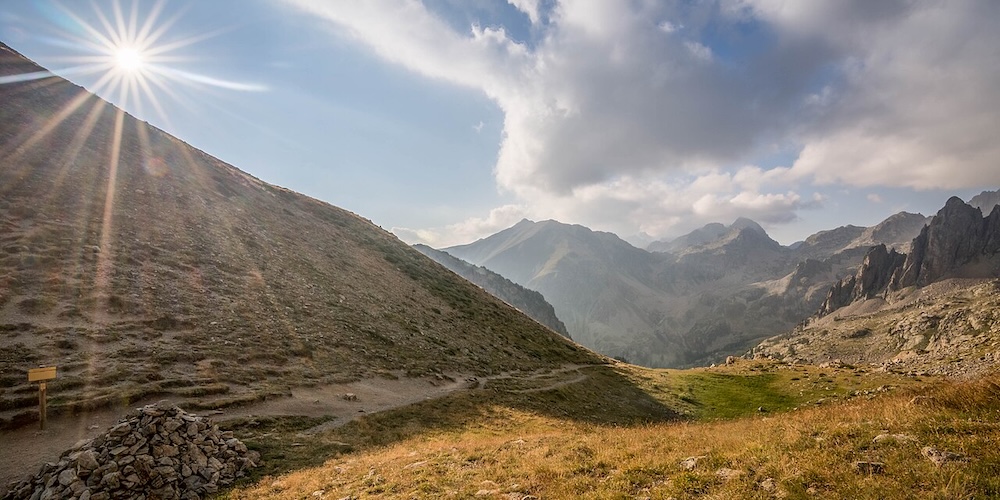
Baisse des Cinq Lacs, Parc Naturel Régional du Mercantour – ©Ju2kiwi, CC BY-SA 4.0 via Wikimedia Commons
The Mediterranean Coast – This region has a total area of 31,400 km2 (12,100 square miles). It has a wide variety of landscapes, from the Alps to the plains and coastal areas like Nice and Marseille, which form the majority of the land area. It has a Mediterranean coastline, on which the majority of its population lives and is very famous for the Côte d’Azur (French Riviera), which spans the glamorous cities of Nice, Saint-Laurent-du-Var, Antibes, Juan-les-Pins, Cannes, Fréjus, Saint-Raphaël, Sainte-Maxime and Saint-Tropez. Some of the best birding is found along this coast.
La Camargue – brilliant, not to be missed breeding birds include Collared Pratincole, eigth species of Heron, Gull-billed Tern, Slender-billed Gull and Flamingos etc… In the winter huge number of wildfowl overwinter as well as Spotted Eagle. Migration time is the best with Sandpipers and Plovers in the saltpans (South of Salin de Giraud, Phare de la Gachole); freshwater waders (including good numbers of Marsh Sandpiper); Marsh Terns and Herons in the north (Basse Méjane, Mas d’Agon, Salin de Badon and La Capellière) and good passerine falls in bushes by the sea (Phare de la Gachole and Beauduc). Good information can be obtained at La Capellière which has a decent set of hides as well as quite good exhibit on the local Ecology.
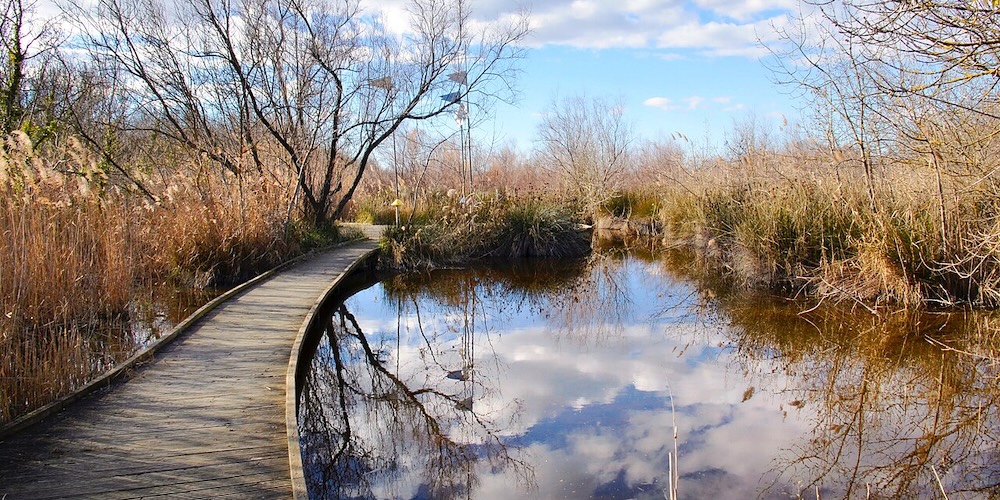
Réserve Naturelle des Marais du Vigueirat – ©Eris.spiller, CC BY-SA 4.0 <via Wikimedia Commons
La Crau – the only French desert with Stone Curlew, Little Bustard, Roller and a small population of Pin-tailled Sandgrouse, Calandra Lark and Lesser Kestrel. In recent years a few (up to ten) Richards Pipits have been found overwintering.
Les Alpilles – Limestone hills with a chance to see Egyptian Vulture, Bonelli’s Eagle and Eagle Owl.
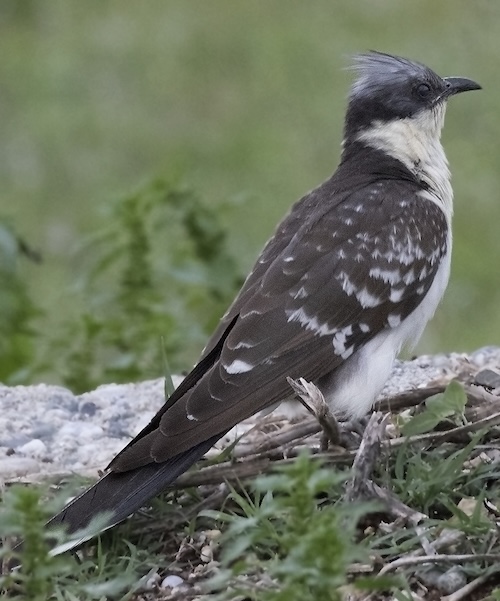
Le Narbonnai – Very good area for visible migration (La station ornithologique de Gruissan) in both spring and Autumn… Pissevache (near Narbonne Plage); Les Salin de Lapalme and La Franquie (near Leucate) are all very good for water birds as well as providing good passerine falls. Cave has a small population of spotless Starlings and the hills north of this little village have the only French population of Thekla Lark. The whole area has a good population of Great-spotted Cuckoo. For further information about this area contact the LPO-Aude.
-
Les Marais du Vigueirat
WebsiteSatellite ViewLes Marais du Vigueirat (the Vigueirat Marshes) is a natural site situated in the Eastern Camargue, between La Camargue and La Crau, south to les Alpilles. It is a protected area of 1000ha; the propriety of the Conservatoire du Littoral (French Government). It has a great natural richness and biodiversity, and is one of the most remarkable wetland areas of the mediterranean French coast. You can see more than 280 bird species including up to 35,000 ducks in winter…
-
Number of bird species: 486
(As at May 2026)
-
Avibase
PDF Checklist - Alpes-de-Haute-ProvenceThis checklist includes all bird species found in Alpes-de-Haute-Provence , based on the best information available at this time. It is based on a wide variety of sources that I collated over many years. I am pleased to offer these checklists as a service to birdwatchers. If you find any error, please do not hesitate to report them. -
Avibase
PDF Checklist - Alpes-MaritimesThis checklist includes all bird species found in Alpes-Maritimes , based on the best information available at this time. It is based on a wide variety of sources that I collated over many years. I am pleased to offer these checklists as a service to birdwatchers. If you find any error, please do not hesitate to report them. -
Avibase
PDF Checklist - Bouches-du-RhôneThis checklist includes all bird species found in Bouches-du-Rhône , based on the best information available at this time. It is based on a wide variety of sources that I collated over many years. I am pleased to offer these checklists as a service to birdwatchers. If you find any error, please do not hesitate to report them. -
eBird
PDF ChecklistThis checklist is generated with data from eBird (ebird.org), a global database of bird sightings from birders like you. If you enjoy this checklist, please consider contributing your sightings to eBird. It is 100% free to take part, and your observations will help support birders, researchers, and conservationists worldwide.

-
Finding Birds in the South of France
| By Dave Gosney | Easybirder | 2026 | Paperback | 44 pages, b/w maps | ISBN: 9781907316555 Buy this book from NHBS.com -
Oiseaux Remarquables de Provence
| Écologie, Statut et Conservation | By M Lasceve, C Crocq and B Kabouche | Delachaux et Niestle | 2006 | Hardback | 320 pages, 200 photos, dist maps { French language only | ISBN: 9782603013915 Buy this book from NHBS.com -
The Birds of the Camargue / Oiseaux de Camargue
| By Paul Isenmann & Luc Hoffmann | Societé d'Etudes Ornithologiques de France | 1993 | Paperback | 158 pages, colour photos, colour distribution maps | Bilingual in English & French | ISBN: 9782950654823 Buy this book from NHBS.com
-
NNR Marais du Vigueirat
InformationSatellite ViewIt is a protected natural site of 1,200 hectares at the junction of 2 remarkable ecosystems , the delta of the Rhone and the dessert-like steppe the plain of Crau. The Marais du Vigueirat has a great diversity of flora with a mosaic of wet natural environments, where there are more than 2,000 species of animals and plants : more than 300 species of birds have been observed, including all species of herons. Europe , and up to 35,000 ducks in winter. -
NP Calanques
InformationSatellite ViewCalanques National Park is a national park located in southern France. It extends over 520 km2 (201 sq mi), of which 85 km2 (33 sq mi) is land, while the remaining is marine area.[1] It includes parts of the Massif des Calanques stretching between Marseille and Cassis. -
NP Mercantour
InformationSatellite ViewThe protected area covers some 685 km², consisting of a central uninhabited zone comprising seven valleys: Roya, Bévéra, Vésubie, Tinée, Haut Var and Cians (in the Alpes-Maritimes) plus Verdon and Ubaye (in the Alpes-de-Haute-Provence), and a peripheral zone comprising 28 villages. There is a tremendous variety of wildlife in the Mercantour: red deer and roe deer in the undergrowth, hares and wild boars, partridges, golden eagles and buzzards, numerous species of butterflies and even about 50 Italian wolves (which migrated there at the beginning of the 1990s). A Wolves Centre welcomes visitors in Saint-martin-Vésubie. -
NP Port-Cros
InformationSatellite ViewPort-Cros National Park is a French national park established on the Mediterranean island of Port-Cros, east of Toulon. The park claims being the first national park in Europe that unites terrestrial and maritime protection zones. The protected area is about 700 hectares of land and 1288 hectares of sea at 600m zone from the coast. Most of the area of the main island Port-Cros as well as the small islands of Bagaud, Gabinière and Rascas are protected. Moreover, about 1000 ha of land on the island of Porquerolles is included. -
RNP Des Alpilles
InformationSatellite ViewCovering a total surface area of just 510 km², the Alpilles Park, created in 2007 in the department of Bouches-du-Rhône, is spread across a limestone mountain range near the charming small town of Saint-Rémy-de-Provence. This territory of abundant biodiversity combining wetlands and dry areas has been shaped by over 4,000 years of civilisation. There are around 250 bird species including Bonelli's eagle, lesser kestrel, Egyptian vulture and Eurasian eagle-owl. -
RNP Préalpes d'Azur
InformationSatellite ViewLocated in Alpes-Maritimes, the Préalpes d'Azur Regional Natural Park was created in 2012 and ranges in altitude from 300 to 1,800 metres. Like a wonderful balcony over the French Riviera and the Alps. It is remarkable for its biodiversity, with over 2,000 species of plants alone, 2/3 of French flora. It also offers a prodigious diversity of landscapes, including karstic plateaux, gorges, clues, terraced landscapes with perched villages overlooking the valleys. -
RNP Verdon
InformationSatellite ViewFrom a flora, fauna and landscape point of view, the Verdon Natural Regional Park is a truly remarkable natural area. The Gorges du Verdon, Sainte Croix lake and Castillon lake are stunning iconic sites that attract many visitors. -
RP Carmargue WII IBA
InformationSatellite ViewThe Camargue is a natural region located south of Arles, France, between the Mediterranean Sea and the two arms of the Rhône delta. The eastern arm is called the Grand Rhône; the western one is the Petit Rhône. It is a vast plain comprising large brine lagoons or étangs, cut off from the sea by sandbars and encircled by reed-covered marshes. These are in turn surrounded by a large cultivated area. Approximately a third of the Camargue is either lakes or marshland. The Camargue is home to more than 400 species of birds and has been identified as an Important Bird Area & Wetland of International Importance.
-
2018 [09 September] - Jay VanderGaast - Camargue & Pyrenees
ReportOur visit to the Crau steppe was a bit more frustrating due to the limited access, which probably cost us a few species, but we still managed to find some great local specialties, including Iberian Gray Shrike (now split from Southern), a pair of Little Owls loafing atop a nearby barn, a striking Eurasian Hoopoe strolling through the stony plains along the Peau de Meau, and a trio of Greater Short-toed Larks doing the same. Nearby wooded areas also came through, with goodies such as Lesser Spotted Woodpecker, Eurasian Wryneck, Long-tailed Tit, and an unexpected Common Nightingale, a bird that is usually long gone before we arrive in France. Also unexpected were two different Bluethroats, both giving fine views just a year after we'd recorded this species for the first time ever on this tour! -
2018 [09 September] - Megan Edwards Crewe - Camargue & Pyrenees
Report...Two strikingly peachy adult Lammergeiers sat on a ledge against an equally peachy cliff, tearing hunks from some unseen carcass. A Black Woodpecker made multiple passes, calling challenges. Eurasian Griffons glided overhead on massive outstretched wings... -
2019 [05 May] - Andy Hall
PDF ReportIt had been about seven years since I had been birding in the south of France and having done the Camargue and other areas in Provence, I was tempted by an alternative location -
2019 [05 May] - Andy Hannaford - The Camarge
PDF ReportOnce again, I was indebted to Dave Gosney and his guide to Finding Birds in The South of France. As with his previous publications which I have used in other areas, I found his recommendations excellent, easy to find and accurate in description. I would highly recommend them to anyone visiting the area. I did spend a beneficial amount of time before visiting this area putting the grid references provided by Dave Gosney into my TomTom making locating and driving too them quick and easy... -
2025 [12 December] - Louis Backstrom
PDF Report... Provence stands out to me as an excellent winter birding destination – not only is it a regular wintering area for a variety of species (e.g. Wallcreeper, Alpine Accentor, Tundra Swan) alongside hosting some high-quality resident birds (e.g. Little Bustard, Bonelli’s Eagle, Eurasian Eagle-Owl), but it also has a number of breeding migrant species that winter in small numbers around the region (e.g. Black-winged Stilt, Common Hoopoe, Slender-billed Gull) – a trait that I suspect will only become more notable as climate change means milder winters and less incentive for individual birds to migrate...
-
La Maison des Guides de Camargue
GitesTour guide, discovering nature and Camargue traditions. The House of the Camargue Guide also offers a cottage in a terraced house.