Cavan
County Cavan is bordered by six counties, County Leitrim to the west, the Northern Irish County of Fermanagh to the north, County Monaghan to the northeast, County Meath to the southeast, County Longford to the southwest and County Westmeath to the south. It covers an area: 1,931 km² (746 square miles) and has a population of around 82,000 people. The county town is Cavan, the county’s largest with a population of around 12,000 people. It is largely rural with agriculture being its prime industry especially dairy farming, its heavy clay soils making it most suitable for pasture. Although dairy predominates, it is one or Ireland’s leading counties for pig production.
The county is characterised by drumlin countryside dotted with many lakes and hills. The north-western area of the county is sparsely populated and mountainous. The Breifne mountains contain the highest point, Cuilcagh, at 665 metres (2,182 feet).
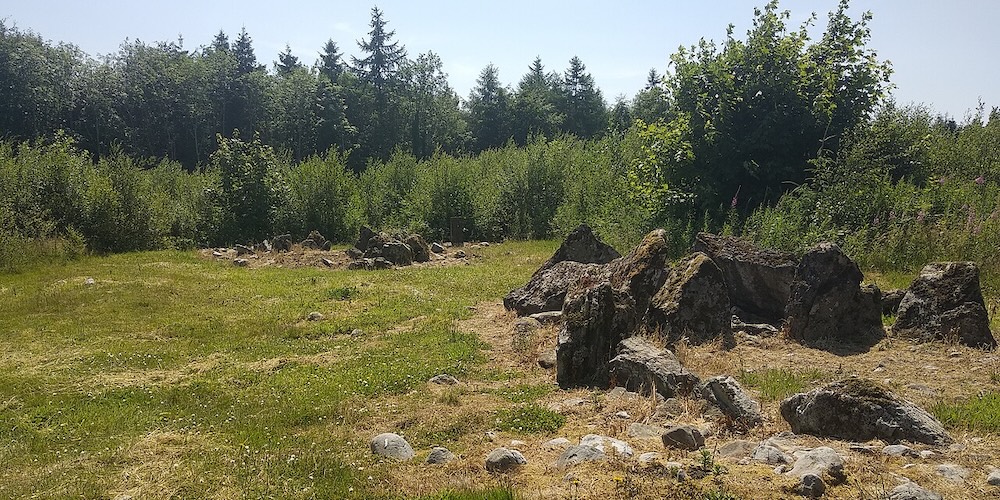
Gartnanoul Court Tomb in Killykeen Forest Park – ©NTF30, CC BY-SA 4.0 via Wikimedia Commons
Cavan is the source of many rivers. Shannon Pot on the slopes of Cuilcagh is the source of the River Shannon, the longest river in Ireland at 386 kilometres (240 miles). The River Erne is a major river which rises from Beaghy Lough, two miles (3 km) south of Stradone in Cavan and flows into Lough Erne. Other rivers in the county include the Blackwater River, which rises near Bailieborough and flows through Lough Ramor, joining the River Boyne at Navan; the Dee which springs near Bailieborough; the River Annalee which flows from Lough Sillan and joins the Erne; and the Cladagh river which rises from Cuilcagh and flows into Fermanagh. The Glyde and the Owenroe also source in Cavan. The county is known as ‘The Lakeland County’ and is reputed to contain 365 lakes – one for each day of the year. Lough Sheelin is the county’s largest lake; it is situated in the south of the county and forms a three-way border on its waters between counties Meath, Westmeath and Cavan.
A large complex of lakes in the north and west of Cavan are designated Specially Protected Areas (SPA); one example is Lough Oughter.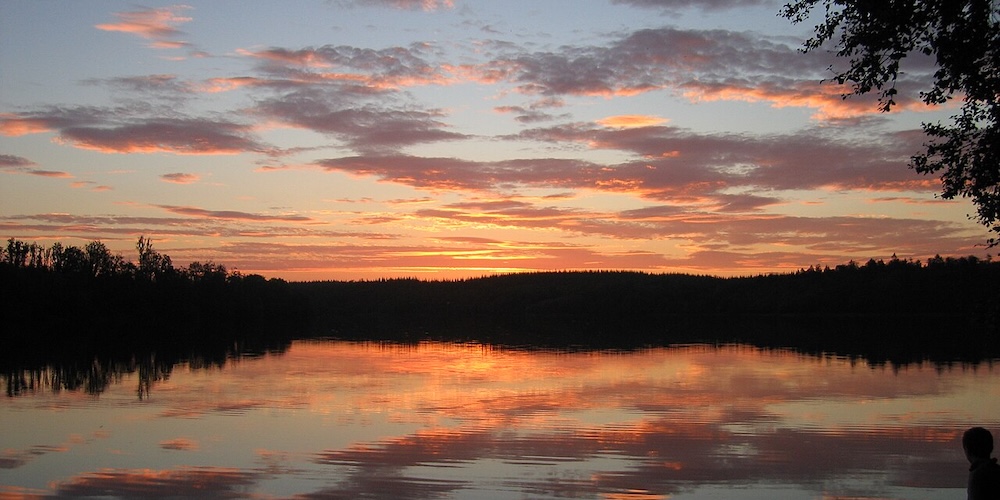
Lough Oughter – ©Sarah777 Public domain, via Wikimedia Commons
The climate is temperate maritime with cold winters and mild, humid summers.
Birding County Cavan
Lough Oughter and other important wildlife protected lakes such as Lough Gowna and Lough Ramor are in the south and east of the county. Cavan has a mainly hilly (drumlin) landscape and contains just under 7,000 hectares (17,000 acres) of forested area, 3.6% of Cavan’s total land area, including Bellamont Forest near Cootehill, Killykeen Forest Park at Lough Oughter, Dún na Rí Forest Park and the Burren Forest.
Cuilcagh supports a rich assemblage of upland insects and is one of the most important sites in Ireland for a number of such species, including water beetles and is also a Ramsar site. The nature reserve has a boardwalk to protect the underlying peatbog.
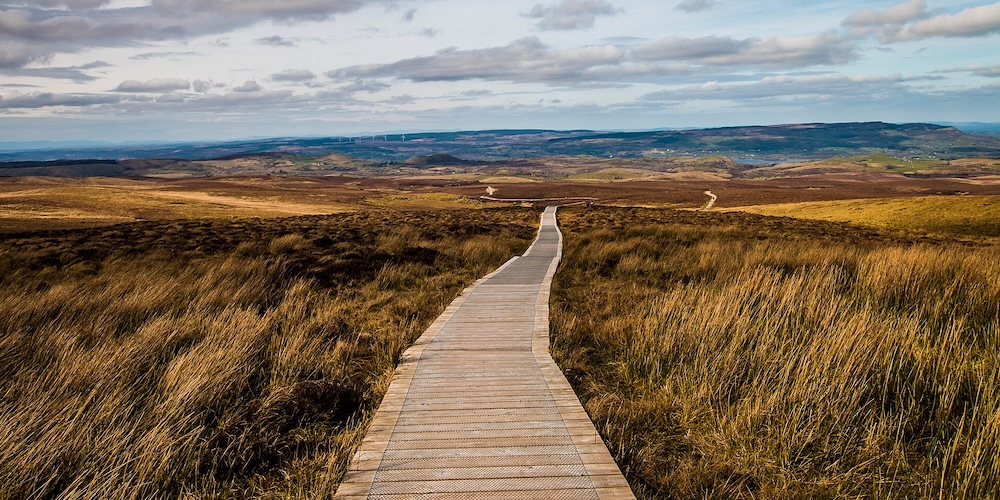
Cuilcagh’s ‘Stairway to Heaven’ – ©Carl Meehan CC BY 2.0 via Wikimedia Commons
Killykeen Forest Park is an important area for wildlife, especially for wintering birds, consisting mainly of mixed woodland with Norway and Sitka spruce, oak and beech, and is also popular with anglers. Dún na Rí Forest Park is situated in a glen and is home to stoats, hare, rabbits, otters, both grey and red squirrels, and a feral population of mink along the banks of the River Cabra. It is mainly oak and ash with a mixture of other deciduous woodland and an understory of hazel, holly and unfortunately rhododendron. Open areas of the woodland are carpeted in bluebells in spring.
-
Wikipedia
GNU Free Documentation License
https://en.wikipedia.org/wiki/County_Cavan
-
Number of bird species: 181
(As at March 2026)
-
Avibase
ChecklistThis checklist includes all bird species found in Cavan , based on the best information available at this time. It is based on a wide variety of sources that I collated over many years. I am pleased to offer these checklists as a service to birdwatchers. If you find any error, please do not hesitate to report them.
-
Birds of Ireland - A Field Guide
| By Jim Wilson | Gill Books | 2024 | Edition 2 | Paperback | 288 pages, 1600+ colour photos, colour distribution maps | ISBN: 9781804580721 Buy this book from NHBS.com -
Finding Birds in Ireland - The Complete Guide
| By Eric Dempsey & Michael O'Clery | Gill Books | 2014 | Edition 2 | Paperback | 389 pages, 300 colour photos, colour maps | ISBN: 9780717159253 Buy this book from NHBS.com
-
Birdwatch Ireland
WebpageCavan Birdwatch are delighted to be writing an article each month for the Anglo Celt; our local paper. We will post the articles here after they have been published. -
Cavan birdwatching
Facebook PageCavan branch of Birdwatch Ireland: The primary objective of BirdWatch Ireland is the protection of wild birds and their habitats in Ireland.
-
FP Killykeen Forest Park
InformationSatellite ViewKillykeen Forest Park is located in a very scenic area of Co Cavan. It lies on the shores of Lough Oughter which is part of the River Erne system. The forest park consists of approx 240 hectares. The predominant species are Norway and Sitka Spruce with a considerable amount of mixed woodland including Ash, Oak and Beech. Lough Oughter is renowned for course fishing with the main species of fish being pike, bream and perch. There are four signposted walks, and a family cycle trail in Killykeen Forest Park.
-
E-Bird
WebpageeBirding This Month