

Ptiliogonatidae – Silky-flycatchers
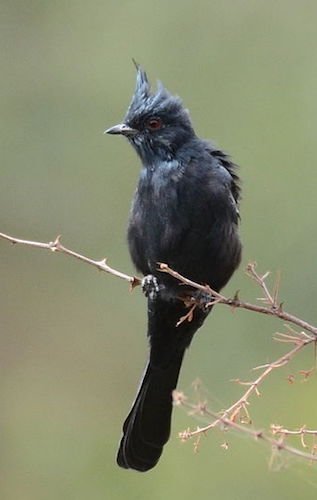
Ptiliogonatidae (Silky-flycatchers) are a small family of passerines with only four species in three genera. They were formerly lumped with waxwings and hypocolius in the family Bombycillidae. The family is named for their silky plumage and their aerial fly-catching techniques, although they are unrelated to the Muscicapidae. (Old-World Flycatchers) and the Tyrannidae (Tyrant Flycatchers).
They occur mainly in Central America from Panama to Mexico, with one species, the Phainopepla, extending northwards into the southwestern US. Most do not engage in long-distance migration (instead wandering widely in search of fruit), but the Phainopepla is migratory over the northern part of its range.
They are related to waxwings, and like that group have soft silky plumage, usually grey or pale yellow. All species, with the exception of the Black-and-yellow Phainoptila, have small crests. They range in size from 18 to 25 cm in length and are mostly slender birds (with the exception again of the Black-and-yellow Phainoptila). All the species in this family are sexually dimorphic both in plumage colour and in having a longer tail. Juveniles of both sexes resemble females.
They birds eat fruit or insects and other invertebrates. The Phainopepla is particularly dependent on desert mistletoe, Phoradendron californicum. Despite their name, most eat more fruit than insects, concentrating on insect foraging primarily when they are feeding young chicks.
|
|
|
|
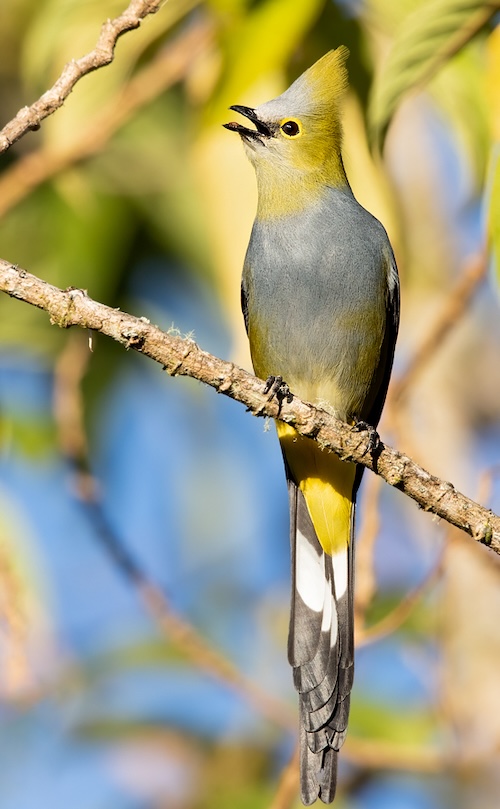
Long-tailed Silky-flycatcher Ptiiogonys caudatus |
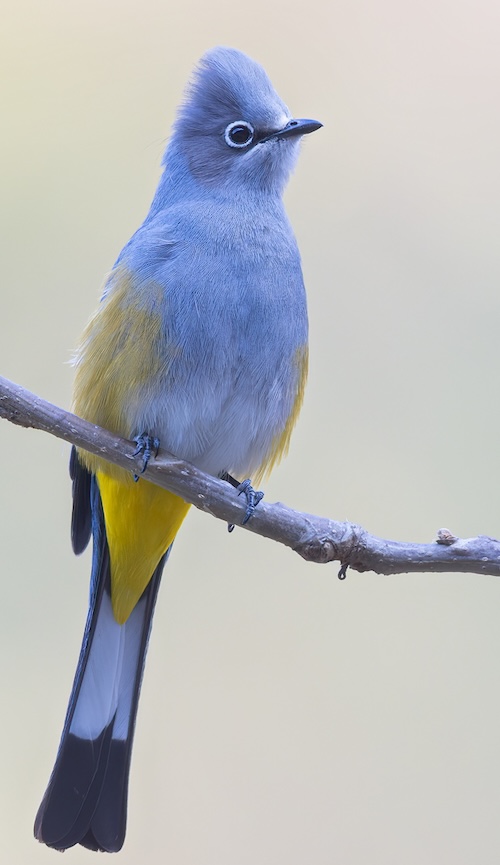
Grey Silky-flycatcher Ptiliogonys cinereus |
|
All photos in this text courtesy of ©Dubi Shapiro |
|
They are found in various types of woodland (semi-desert with trees for the Phainopepla), and they nest in trees. At least one species appears to move hundreds of kilometres between breeding attempts, indicating an awareness of environmental conditions across an unusually broad spatial scale.
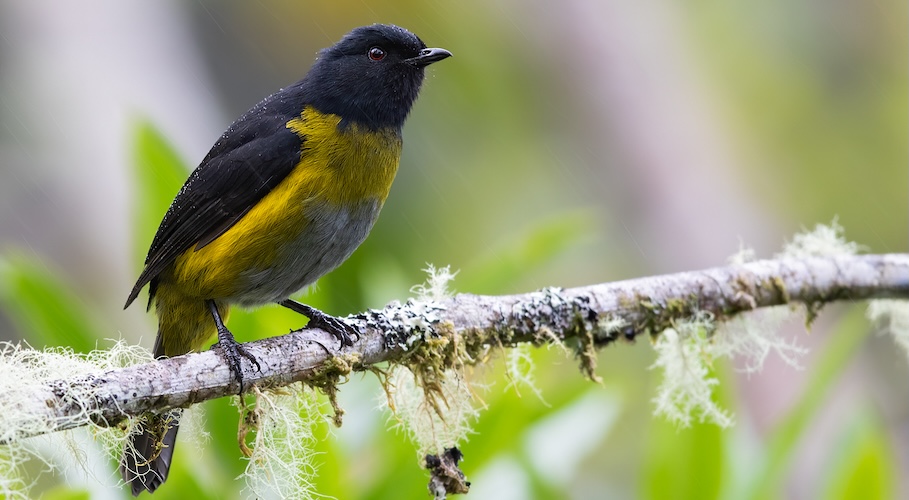
Black-and-yellow Phainopepla Phainoptila melanoxantha – ©Dubi Shapiro
-
Number of bird species: 4
(As at October 2025)
According to the recently (2025) amalgamated AviList, there are four species, in three genera in the Ptiliogonatidae family. They are:
Black-and-yellow Phainopepla Phainoptila melanoxantha
Phainopepla Phainopepla nitens
Long-tailed Silky-flycatcher Ptiiogonys caudatus
Grey Silky-flycatcher Ptiliogonys cinereus
-
Ptiliogonatidae
Family AccountThe silky flycatchers are a small group of sleek, elegant birds found only in Central America and the southwestern United States. -
Ptiliogonatidae
Family AccountThe silky-flycatchers are a small family, Ptiliogonatidae, of passerine birds. The family contains only four species in three genera.
Given that this is a very small family with just four species in three genera, Fatbirder provides active links below to all species.
-
Black-and-yellow Phainopepla Phainoptila melanoxantha
Species AccountPlump fruit-eating bird with uncertain taxonomic affiliations. -
Black-and-yellow Phainopepla Phainoptila melanoxantha
Species AccountThe black-and-yellow phainoptila or black-and-yellow silky-flycatcher (Phainoptila melanoxantha) is a species of bird in the family Ptiliogonatidae. It is monotypic within the genus Phainoptila.[2] It is found in Costa Rica and Panama. -
Black-and-yellow Phainopepla Phainoptila melanoxantha
Species AccountSound archive and distribution map. -
Gray Silky-flycatcher Ptilogonys cinerus
Species AccountSound archive and distribution map. -
Grey Silky-flycatcher Ptilogonys cinerus
Species AccountNot a flycatcher, but related to Phainopepla, this elegant, long-tailed bird is fairly common but local in foothills and highlands. -
Grey Silky-flycatcher Ptilogonys cinerus
Species AccountThe grey silky-flycatcher or grey silky (Ptiliogonys cinereus), is a species of bird in the Ptiliogonatidae family. It is usually found only in Guatemala and Mexico, but vagrants have turned up in the southern United States. It is found in montane forest and adjacent scrub, both mesic and xeric. -
Long-tailed Silky-flycatcher Ptilogonys caudatus
Species AccountVery long tail and obvious crest stand out, in addition to soft blue-gray body with yellow-green head and flanks. -
Long-tailed Silky-flycatcher Ptilogonys caudatus
Species AccountThe long-tailed silky-flycatcher, (Ptiliogonys caudatus), is a passerine bird which occurs only in the mountains of Costa Rica and western Panama, usually from 1,850 m altitude to the timberline. It is a thrush-sized species weighing about 37 g. The silky-flycatchers are related to waxwings, and like that group have soft silky plumage. -
Long-tailed Silky-flycatcher Ptilogonys caudatus
Species AccountSound archive and distribution map. -
Phainopepla Phainopepla nitens
Species AccountUnique bird of scrubby oak and mesquite habitats with a sleek body, shaggy crest, long tail, and staring red eyes. -
Phainopepla Phainopepla nitens
Species AccountThe phainopepla or northern phainopepla[2] (Phainopepla nitens) is the most northerly representative of the mainly tropical Central American family Ptiliogonatidae, the silky flycatchers. Its name is from the Greek phain pepla meaning "shining robe" in reference to the male's plumage. -
Phainopepla Phainopepla nitens
Species AccountSound archive and distribution map.