

By Oli Reville, Birding Ecotours
There is nothing quite like the feeling of birding somewhere new for the first time. The excitement of a new environment and new birds gets under your skin and every moment feels more exciting than the last. If you have never tried it then there is one country in Europe which stands head and shoulders above the rest for memorable avian experiences.
Around ten years ago I felt these feelings for the first time in Spain. Ever since, this fascinating country has been under my skin and I have returned multiple times a year since. In 2019 I was fortunate enough to move to Spain, sadly for this to be cut short by the Covid-19 pandemic, but I hope to return to the country at the first opportunity and I look forward to leading the brand new Spain: Spring Birding Extravaganza tour for Birding Ecotours from the spring of 2021.
Most people have an idea of Spain as just being miles and miles of endless tourist resorts, and they would be right, there is that, but for birders it is about so much more. For the visiting birdwatcher Spain is Western Europe’s top destination for a bird holiday. Its mixture of coastal wetlands, vast steppes, breath-taking mountains, and lush forests make it a non-stop adventure teeming with a huge number of birds.
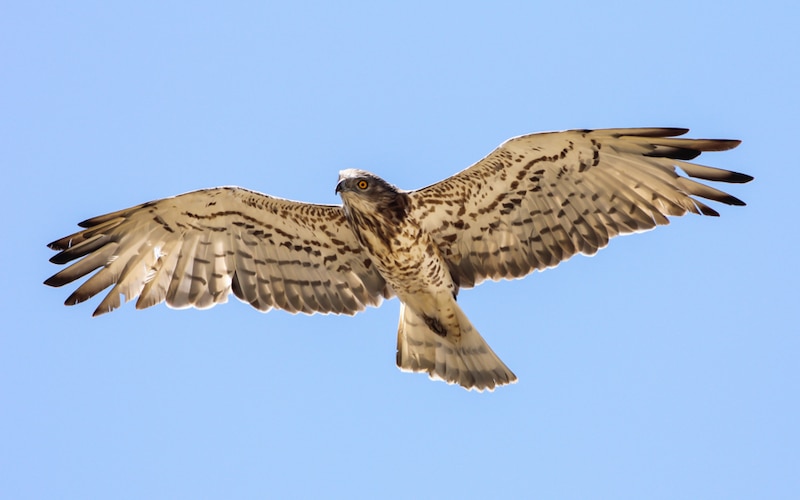
The striking Short-toed Snake Eagle is a real highlight of any visit to Spain
So, what makes Spain so good for birding? There are several incredible specific species to be found (details of some of those coming below, keep reading!) but it would be wrong of me not to mention the spectacle of visible migration which occurs here every year. In spring millions of birds of all kinds move north from Africa to Europe via the Straits of Gibraltar, a 14-kilometres (8 miles) stretch of water that separates these two huge continents. In autumn, this movement is reversed as these birds escape the approaching European winter. During these movements, the number of birds is amazing to witness and it lives long in the memory. The migration here is on a par with any of the other major flyways around the world and is a mesmerising sight.
Spain is also home to some truly special individual species. When thinking of birding in Spain one cannot look past the spectacular and huge Spanish Imperial Eagle (Aquila adaberti). This beautiful, large eagle species is a Spanish icon and a prime target of our tour. This species was really on the brink a few years ago but thanks to significant conservation efforts the population is now increasing.
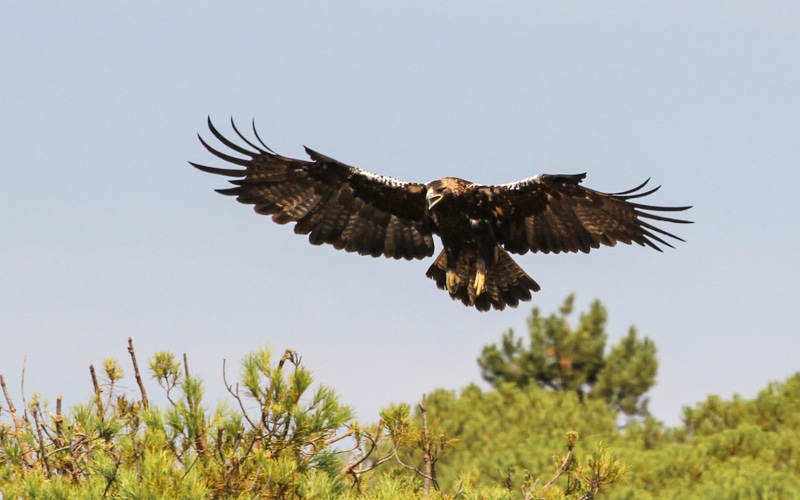
Spanish Imperial Eagle is making a comeback from the brink of extinction thanks to a great deal of conservation work
Another species that really stands out is the Wallcreeper (Tichodroma muraria), a monotypic family. While not unique to Spain (it actually has a large range all the way across into Asia), seeing this species high in the absolutely stunning Pyrenees is a memorable experience. They sometimes move south during the winter and I was incredibly lucky in early 2020 to see one about an hour from my home in Spain, a wonderful moment for me. It is the combination of their fascinating behaviour, beautiful appearance, and overall uniqueness which makes this species a real star – this is also a top target for ‘family listers’, being a monotypic family and one we always enjoy looking for.
The third species which really stands out for me is not actually a bird, it is a mammal. The moment I first set my eyes on Iberian Lynx (Lynx pardinus) I knew it would be hard to top as far as wildlife experiences go. Like Spanish Imperial Eagle this species was on the brink of extinction, with less than 100 animals left in the wild in 2002, before its population slowly increased in recent years to a slightly healthier 900 individuals. Its rarity (it was the world’s rarest big cat), its secrecy, and its mystical nature really make this a must-see animal. Restricted in range to just two relatively small areas of southern Spain, makes this large cat hard to see, but it is one we put time into looking for on our tour.
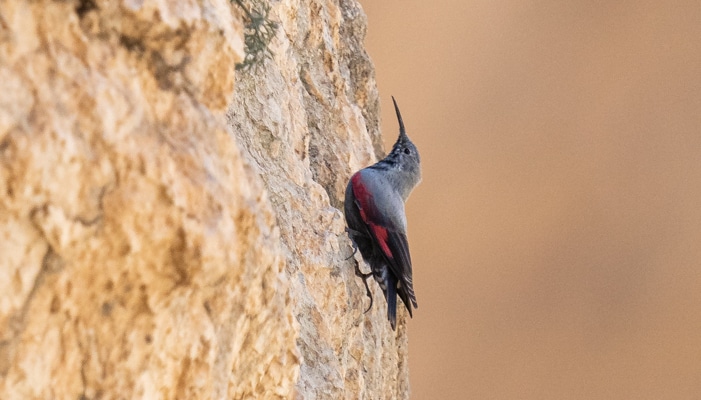
The beautiful Wallcreeper is a fascinating species and a must-see
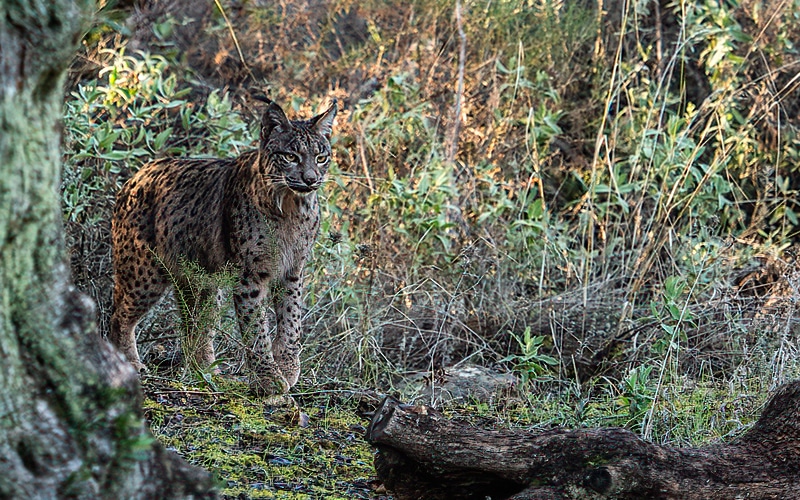
Spotting an Iberian Lynx takes patience but seeing one of these rare big cats is a life-changing experience
While the three sensational species are my personal favourites, Spain is full of so many other wonderful natural wonders such as the awe-inspiring giants of Great Bustard (Otis tarda) and Bearded Vulture (Gypaetus barbatus), huge numbers of wintering Common Crane (Grus grus), the mystical Rufous-tailed Scrub Robin (Cercotrichas galactotes), localized Dupont’s Lark (Chersophilus duponti), and the rare (at least in Europe), Red-knobbed Coot (Fulica cristata).
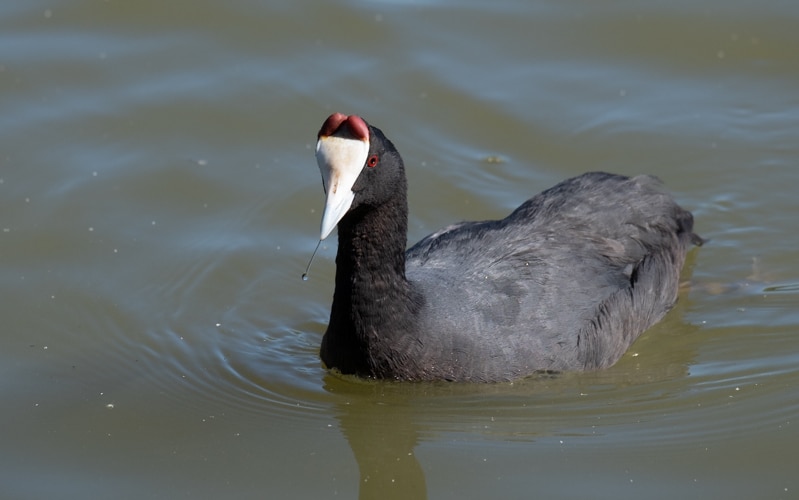
The Critically Endangered (on the Red List of Spain) Red-knobbed Coot is a subtly beautiful species
Then there are more incredible mammal highlights too, like the bizarre Egyptian Mongoose (Herpestes ichneumon) and Common Genet (Genetta genetta), and the mighty mammals like (European) Brown Bear (Ursus arctos arctos), Iberian Wolf (Canis lupus signatus), and Killer Whale (Orca) (Orcinus orca). Combine these with a multitude of special reptiles, amphibians, insects, butterflies, and flora and you have one of the most fulfilling countries in Europe.
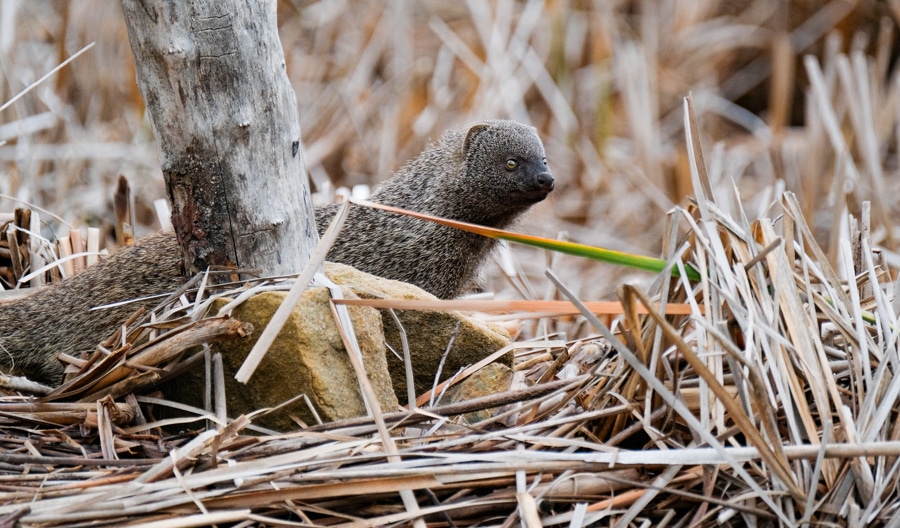
The Egyptian Mongoose is believed to be an introduced species to Spain. They are a strange and often elusive mammal, and a sighting is always a privilege
The question I get asked most about Spain is how one goes about seeing as much birdlife as possible. Birding in Spain is a pleasant experience and for the more common species it is an easy task to find birds. But if you want to see the special birds of the country, I really recommend a guided tour. By doing this you will maximise the birds you will see and increase your chances of seeing the more elusive species, you may even see an Iberian Lynx!
All photos © Oli Reville and Andy Walker