
Digiscoping
So, exactly what is digiscoping?
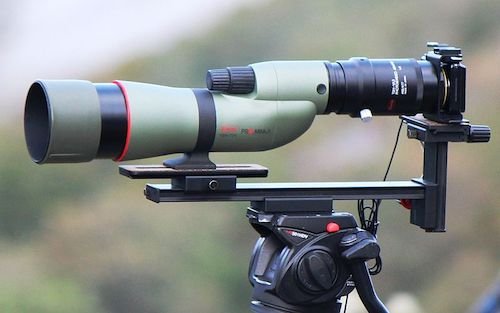
Well in plain terms it is the relatively new art of attaching a digital camera to your telescope, to effectively achieve a very powerful camera lens. It has proved to be an excellent way to attempt bird and other wildlife photography; it is a lot cheaper than the SLR alternative, although producing slightly less in terms of quality. There are a couple of closely related terms which you may come across – Digi-binning (using your Binoculars instead of telescope), and phone-scoping (substituting your camera for one of the latest smartphones). Indeed, many birders who started out attaching a SLR camera to their scope, moved on to either ditching the scope and buying massive telephoto lenses for their cameras; or ditching the camera in favour of a smart phone.
There are various ways in which digiscoping can be achieved and no end of equipment that can be used, but for this introduction I will stick to what were the most commonly used items when digiscoping first became a thing. Firstly, you will need a camera, and the usual camera of choice seems to be a Nikon Coolpix type (990/995/4500) – they have swivelling bodies which aid positioning as well as having no external zoom, which means they can get close to the eyepiece of the telescope, and not move.
Secondly, you need a telescope, any will do but the 80mm (or above) types tend to have the best light intake, and the high-definition glass used in modern scopes is also advantageous (Swarovskis AT/ATS80 HD or Leicas APO77 were the ideal).
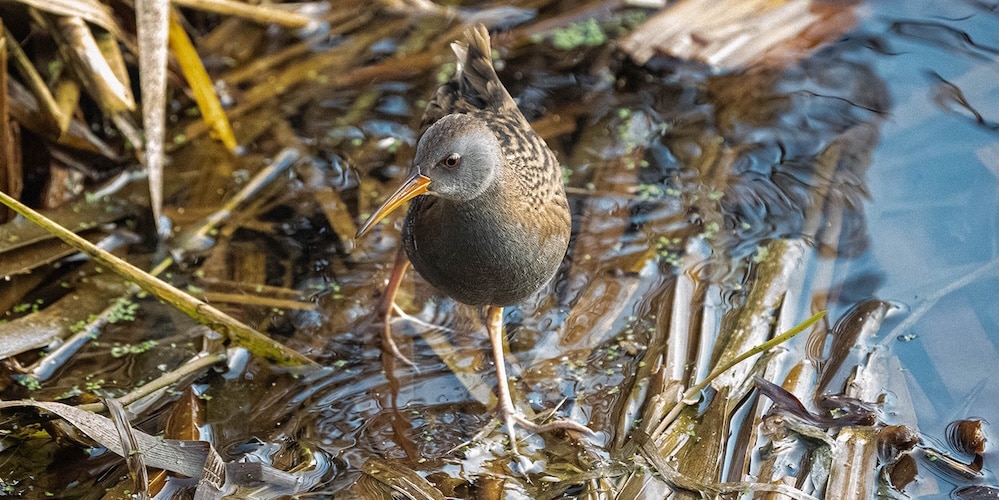
Water Rail Rallus aquaticus – ©Ashley Beolens
Thirdly, you will need some way of attaching your chosen camera to the telescope. There are various ways to achieve this, from hand holding the lens to the eyepiece; buying one of several designs of adapter (there are many of different styles from tubes to hinges), to making one of your own.
However you choose to connect the two together, the important thing to remember is that stability is of the utmost importance and the closer you can get the two lenses together the better – this reduces ‘vignetting’, which is getting a dark circle around the photo. You may also choose to add optional extras, such as shutter releases (electric or manual), sighting devices (attached to the end of your scope to help line up the shot) or sun shades, to improve visibility on the imaging screen. Once you have all the gear you need, then it is time to practice! Remember DO NOT be disappointed if you are not an expert from the off. At the time of writing, I had been trying for around a year and was still improving, although I (2004) upgraded my scope, which immensely improved the end product. Two decades on, I have no scope, but moved on the using a long-lens on a much upgraded camera.
There are plenty of websites available to help you learn the best set-ups, and there are even short courses being taught. Of course, you may just get lucky and bump into one of the experts in the field, most of whom will lend a hand if asked. As for the quality of photographs being taken using this method, you only have to look at the work of the late Lawrence Po in Malaysia (acknowledged as the inventor of digiscoping) or Paul Hackett in the UK, to discover how good they can be! If my humble attempts turned out half as good as theirs I’m a happy man.
I was first introduced to Digiscoping in 2000, when a friend of mine, Steve Blain, was using his Sony digital camcorder to record his sightings, by 2004 it seemed to have exploded, and rarely a day’s birding went by when you did not meet at least one digiscoper in the field. Since that first encounter, I waited patiently until I was able to purchase the correct equipment and start myself. My own set up was a Nikon Coolpix 4500 camera, a Swarovski AT80 HD scope with a home-made adapter, and I produced better and better shots as I learned. Pictured within this introduction is one of my many attempts since abandoning digiscoping for a more expensive set up.
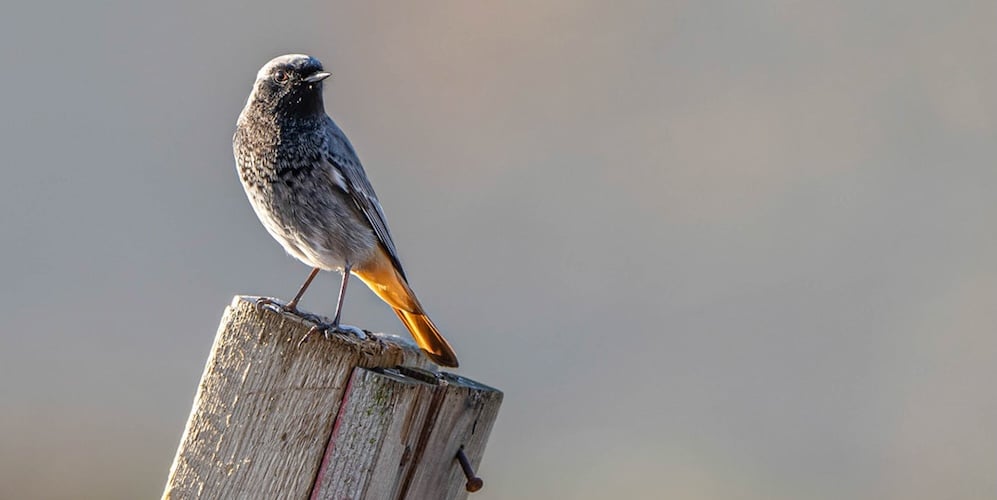
Black Redstart Phoenicurus ochruros – ©Ashley Beolens
The one thing you will learn is that along with the joy of capturing that elusive rarity or common bird in a perfect pose, there is an awful lot of heartbreak involved, you would not believe the number of times a leaf crosses the bird just as you shoot, or the bird moves at the vital moment, or even that the light is too poor to capture the bird. Whatever happens don’t lose heart, the next shot may be the one!
2026 Addendum
In the two decades since this intro was written things have moved on for many, and turned full circle for some. Wildlife photography has really grown exponentially. These days when you go out birding, half the people you meet are walking around with a long lens and camera and may not even carry binoculars, let alone a telescope. For some this is all about the image, for others it’s all about the bird. There is no doubt that the photographs being produced these days are outstanding. Even relatively new birders equipped with the latest cameras, capture images in such detail that professional photographers of a few decades ago would have killed for. For some it’s become an aid to ID. Those who’ve come into birding from the photography route may well take an image and then consult their field guide or the internet to identify what the bird is that they just captured.
On the other hand, the also exponential change in the quality of images now captured with a smartphone has meant that digiscoping has had something of a resurgence. The equipment needed is, after all, something you have in any event, and attaching it to a telescope is relatively easy. For example, my iPhone 17 has as standard an 8x life-size image available, and I’m astounded by how sharp the detail is, even when I take a shaky snap through a window, in the rain, of something visiting my bird feeders. Birders with the time and inclination can now achieve as good results using their smartphone and telescope as could be captured only a few years ago by the very best cameras.
-
Ashley Crombet-Beolens
Milton Keynes, UK
https://urbanlakephotography.com/home-page
Camera FV-5
Android| FGAE | Requires Android Varies with device | Camera FV-5 is a professional camera application for mobile devices, that puts DSLR-like manual controls in your fingertips. Tailored to enthusiast and professional photographers, with this camera application you can capture the best raw photographs so that you can post-process them later and get stunning results. The only limit is your imagination and creativity!Useful Information-
Complete Guide to Digiscoping
YouTube VideoDigiscoping, taking photos through a spotting scope or binoculars, is a great skill for any birder to learn. This video covers the "how to's" of digiscoping with a smartphone, with examples of how technology has changed to make it easier, and in some cases, harder. -
Digiscoping
WikiDigiscoping is a neologism for afocal photography, using a (digital) camera to record distant images through the eyepiece of an optical telescope. -
Digiscoping Guide
WebpageThe information below is intended to help you understand some of the basics of using our equipment for telephotography or so-called digiscoping or, more recently, phonescoping. -
Secrets of Digital Bird Photography
WebsiteAn excellent series of articles covering the whole gamut A free on-line book of over 800 pages -
The Complete Guide to Digiscoping
WebpageSpotting scopes are a familiar tool among wildlife observers, photographers, birders and more. Your camera’s lens can only take you so far in nature observation – viewing and capturing wildlife in its natural habitat is hugely rewarding at a much larger magnification. -
The Complete Guide to Digiscoping for Birdwatching
BLOGPageDigiscoping is definitely my favourite way for birdwatchers to capture wildlife encounters without carrying heavy, expensive camera gear.
Other Links-
Arto Juvonen
WebsiteBrilliant images from this Finnish photographer -
Birding Image Quality Tool
WebsiteThis simple tool is intended for birders who want a score individual digital photos based on image quality parameters. I would see this tool being of particular value to rarities committees and for web-based forums trying to establish the identity of a bird based on less than perfect images. It is really intended as a sense check. If the tool scores an image below 40% that doesn't automatically mean the image should not form part of an assessment, it just means that additional care should be taken with the information presented.... -
Birdingpix
WebsiteDigital photos and videograbs of birds and other wildlife by: Richard Fray, Rob Fray, Andy Mackay, Andy Brett, Jeff Higgott, Mark Reeder. -
Digi-dylan
WebsiteI've been taking photographs since July 2002 when I bought a Nikon Coolpix 4500 camera. I initially bought my equipment for digiscoping but my interest in photography has grown and I have since bought a Canon digital SLR… -
Digiscoping Accessories
WebpageBrowse our collection of digiscoping accessories which can be used to enhance your ability to capture stunning images and videos through your binoculars or spotting scope. -
Digiscoping Gear & Guides
WebpageDigiscoping—connect your camera or smartphone to a spotting scope for stunning wildlife photos. Shop adapters, kits, and tips for clear, stable shots. -
Digiscoping Kits
Webpage -
Digiscoping | Optics
WebpageBuy digiscoping adapters and mounts to attach your smartphone, DSLR, compact, or CSC to your spotting scope. We stock Celestron, Nikon... -
Gerd Rossen
WebsiteThis website is about my hobby nature-photography, especially the photography of wildlife birds in Northern Germany. All pics are taken with a Nikon digital-camera in Northern Germany and they all show wildlife animals or plants in their natural behavior. I only show nature as it is. If there has done some manipulating photoshop-work to the pics, I write an EBV into the pic. So, I`ll hope you`ll enjoy viewing my pics -
Graham Checkley
WebsiteAll of the photographs in the galleries you see here are taken with my CP4500, but employing a Leica APO 77 Telescope with a 32X eyepiece as a super telephoto. The technique, described as Digiscoping, involves connecting the camera to the eyepiece of the telescope. It also involves good luck, good light, a steady tripod and a co-operative subect. -
Natuurlijk-Erp
WebsiteThe world of Digiscoping -
Phone Skope
WebsiteWalk through our easy and quick builder to get the exact Phoneskope you need to fit your personal phone/device and optic. -
Yves Leduc - Feathered Memories
WebsiteFeathered Memories was conceived shortly after I retired in 1996 as a project combining my three great passions (the Internet, bird-watching and photography); and having one very specific goal: to put on the Internet a visual checklist of birds shot in extreme close-up through my Swarovski AT-80 telescope.
-
Fatbirder - linking birders worldwide...
Skip to content