

Ifritidae – Blue-capped Ifrit
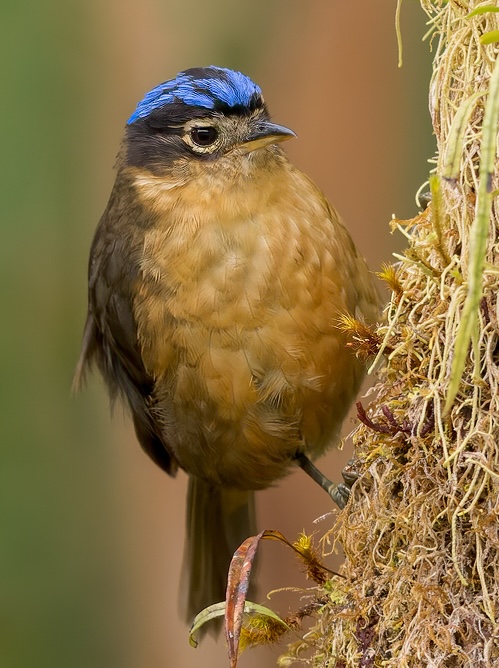
The Ifritidae is a family of just one genus, with a sole species; the Blue-capped Ifrit Ifrita kowaldi, which is also known as the Blue-capped Ifrita. It is a small insectivorous passerine endemic to the rainforests of New Guinea. It measures up to 16.5 cm long and has yellowish brown plumage with a blue and black crown. The male has a white streak behind its eye, while the female’s is a dull yellow. It creeps on trunks and branches in search of insects.
It is placed as the only member of the genus Ifrita, which historically has been placed in the family Cinclosomatidae or the Monarchidae. It now appears the bird is more properly placed in its own family. This enigmatic bird is one of only three bird genera known to have poisonous members, the others being the genus Pitohui, also from New Guinea, and the Little Shrikethrush Colluricincla.
The Blue-capped Ifrit, like the Hooded Pitohui, sequesters batrachotoxin in its skin and feathers, which causes numbness and tingling to those who handle the bird. The toxin is acquired from part of its diet, specifically Choresine spp. beetles.
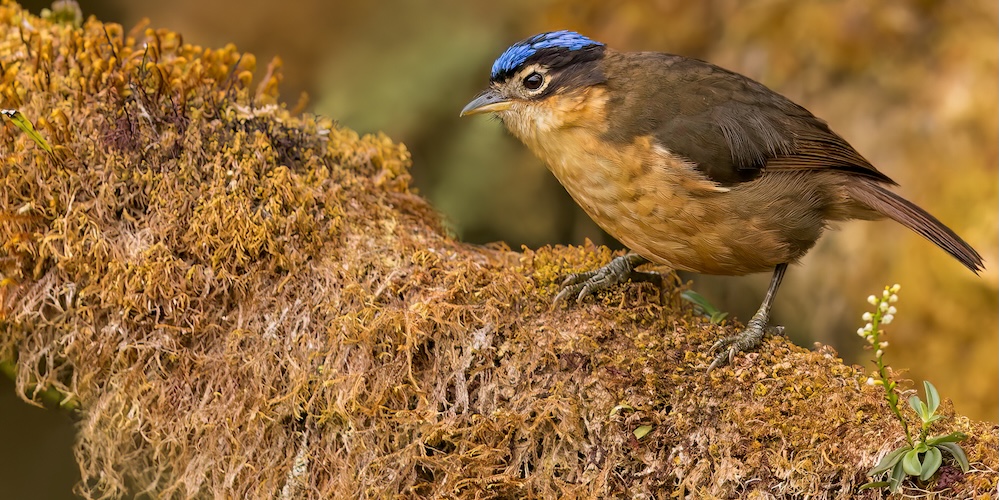
Blue-capped Ifrit Ifrita kowaldi – ©Dubi Shapiro
Widespread and common throughout its large range, the Blue-capped ifrit is evaluated as least concern on the IUCN Red List of Threatened Species. It mainly lives in subtropical and tropical moist montane forests and is highly dependent on the forest ecosystem and is found from sea-level up to around 12,000 feet, although it is mostly found above 5,000 feet.
Nests are built (August to November) from green moss and leaf fern and are usually placed 2-3 meters above the ground, often in a fork if a small tree or sapling. Each clutch typically contains a single white egg with black and purple spots for camouflage. Both parents participate in nest building and chick care, and the small clutch size points to a high investment in the offspring. The bird’s toxin covered breast and belly feathers may rub off on the egg or nest, which may offer chemical protection from predators.
The blue-capped ifrits song produces an upbeat “toowa-tee!”, along with a short dry “Wik” call. They primary feed on insects and worms, foraging carefully through moss, along branches and on tree trunks. Occasionally, the bird will eat soft fruits to supplement a food source. They are often seen in small groups of up to six, and are rarely seen alone, which may indicate that are not territorial.
-
Number of bird species: 1
(As at October 2025)
According to the recently (2025) amalgamated AviList, the Ifritidae is a family with one genus having one species. It is:
Blue-capped Ifrit Ifrita kowaldi
-
Ifritidae
Family AccountAn enigmatic species from New Guinea, the Ifrita is largely arboreal, creeping up moss-covered trunks and branches, and gleaning insects... -
Ifritidae
Family AccountThe blue-capped ifrit (Ifrita kowaldi), is a species of small passerine bird in the monotypic family, Ifritidae, native to the montane rainforests of New Guinea
-
Blue-capped Ifrit Ifrita kowaldi
Species AccountA medium-sized bird of montane forest. Brown upperparts with dotted edge to the wing, pale buff underparts, blue cap edged with black, black crown spot. -
Blue-capped Ifrit Ifrita kowaldi
Species AccountThe blue-capped ifrit (Ifrita kowaldi), also known as the blue-capped ifrita, is a small insectivorous bird endemic to the rainforests of New Guinea. It measures up to 16.5 cm long and has yellowish brown plumage with a blue and black crown. The male has a white streak behind its eye, while the female's is a dull yellow. It creeps on trunks and branches in search of insects. -
Blue-capped Ifrit Ifrita kowaldi
Species AccountIfrita kowaldi is listed as Least Concern. -
Blue-capped Ifrit Ifrita kowaldi
Species AccountSound archive and distribution map.