

Prunellidae – Accentors
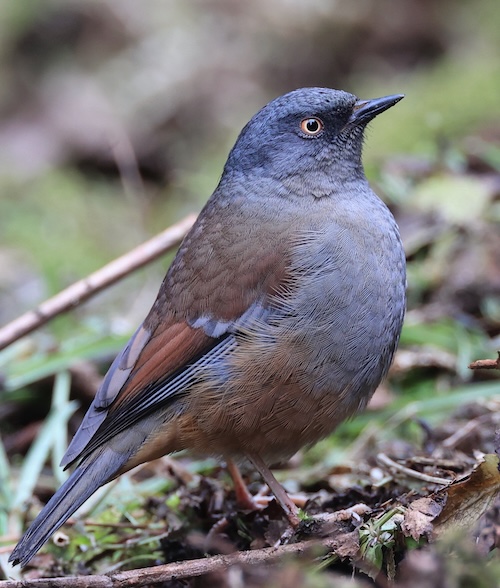
The Prunellidae (Accentors) are the only bird family, which is endemic to the Palearctic. This small group of closely related passerines are all in a single genus – Prunella. (Although the Alpine Accentor and Altai Accentor used to be separated into the genus Laiscopus by some taxonomists.) All but the Dunnock and the Japanese ccentor are inhabitants of the mountainous regions of Europe and Asia; these two also occur in lowland areas, as does the Siberian Accentor in the far north of Siberia.
Their typical habitat is mountainous regions in an area far above the tree-line, but below the snow-line. The Himalayan accentor can be found as high as 17,000 ft above sea level when breeding, however, most accentors breed in scrub vegetation at lower levels and most species migrate downwards to spend the winter, with only some being hardy enough to remain. This genus is not strongly migratory, but they will leave the coldest parts of their range in winter, as well as making altitudinal movements. Accentors spend the majority of their time in the undergrowth and even when flushed, stay low to the ground until reaching cover.
|
|
|
|
Brown Accentor Prunella fulvescens |
Kozlov’s Accentor Prunella koslowi |
|
Unless otherwise attributed, all photos on this page courtesy of ©Nick Ludovic Green Bird-Photo-Tours ASIA |
|
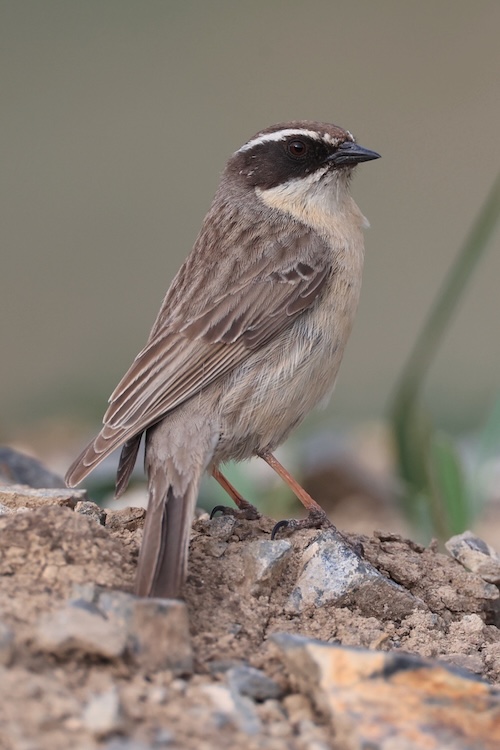
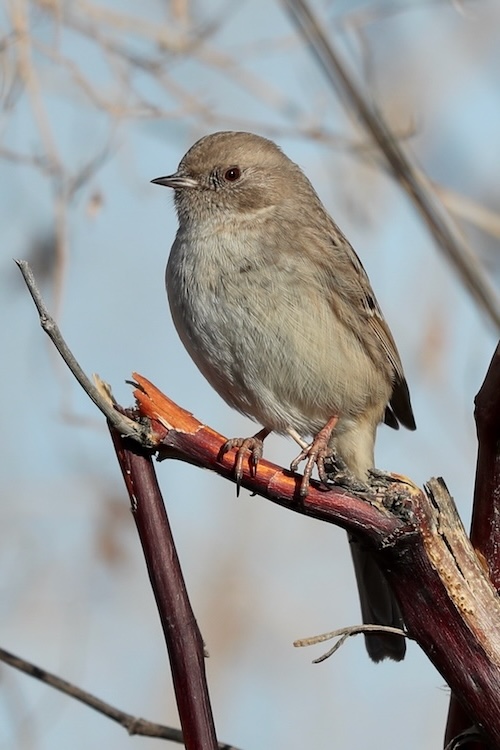
They are small, often rather drab species generally regarded as being related to the thrushes or the warblers. Accentors have thin sharp bills, reflecting their diet of ground-dwelling insects in summer, augmented with seeds and berries in winter. They may also swallow grit and sand to help their stomach break up these seeds.
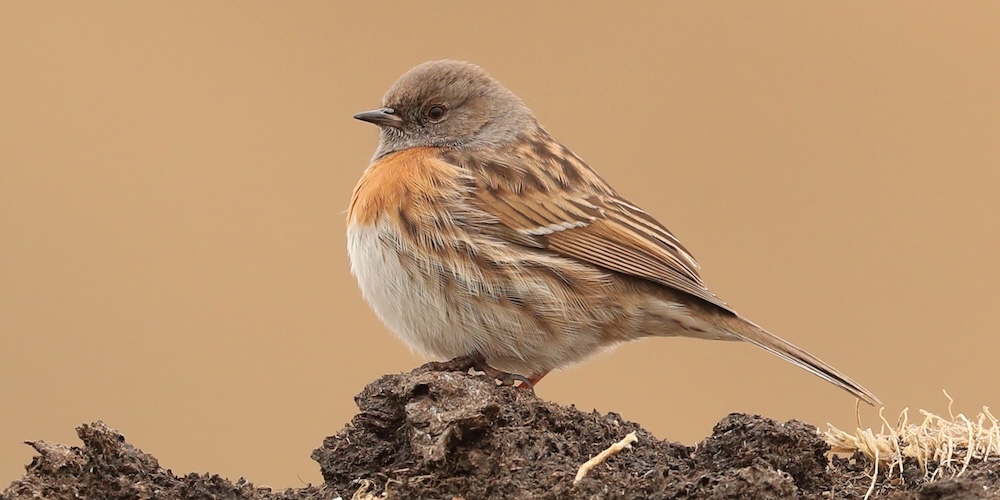
Robin Accentor Prunella rubeculoides 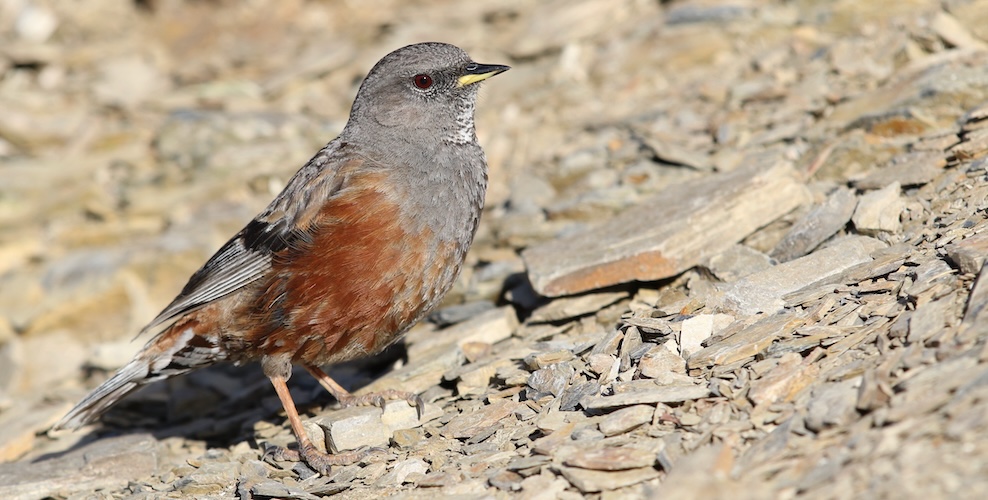
Alpine Accentor Prunella collaris
Most of the species live together in flocks. The Dunnock is an exception since it prefers to be solitary except when feeding. The Dunnock also earned a nickname of “shuffle-wing” since it most strongly displays the characteristic wing flicks used during courtship and other displays.
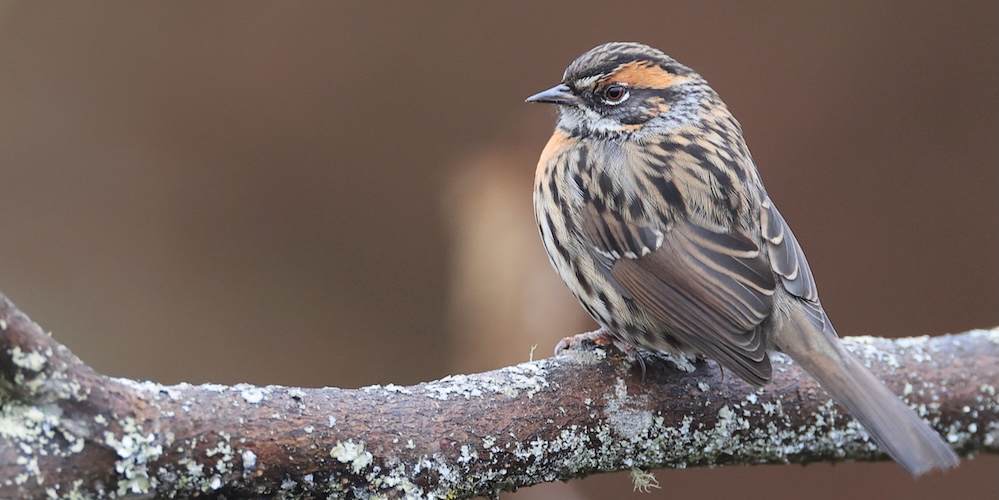
Rufous-breasted Accentor Prunella strophiata
Their mating systems are unusually flexible, with some pairs breeding monogamously (usually where resources are relatively scarce) and others breeding polygamously, either one male with two or more females (polygyny), one female with two or more males (polyandry), or, occasionally, several males and females together (polygynandry). This variety reflects the fact that males and females defend territories more or less independently.
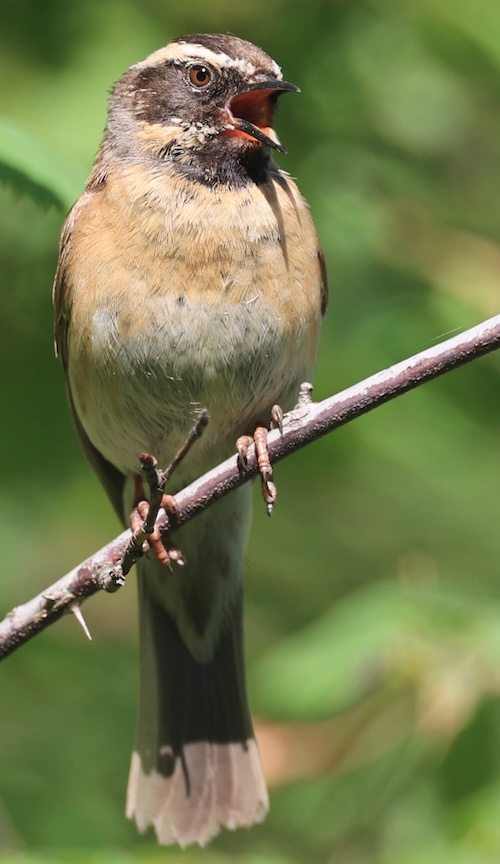
Black-throated Accentor Prunella atrogularis
Where resources are rich (and hence territories can be small) it is possible for males to monopolise several females, or for females to attract several males. Accentors may have two to three broods a year. Courtship consists of a great deal of song from the males, which may include short lark-like song flights to attract a mate. In most species, the male and female share in the nest making, with the dunnock being an exception – their males have no part in nest building or incubation. They build neat cup nests and lay about three or four unspotted green or blue eggs. Both parents tend to share feeding and rearing of young.
The accentors are mostly birds of high-mountain meadows, fell fields, scrublands, and forest habitats far more extreme than the gardens and hedgerows occupied by the low-altitude Dunnock.
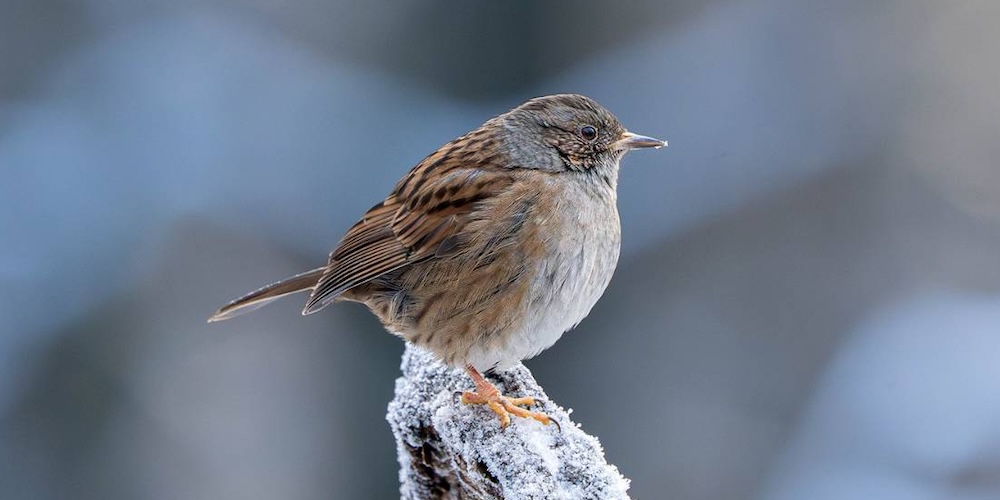
Dunnock Prunella modularis – ©Ashley Beolens
Details are sparse, but available data indicate that the mating systems of the high-altitude accentors may be just as variable and intriguing as that of the Dunnock; one of the world’s plainest birds to look at, it has every mating system known in passerines in a single species. This mating system, in which males compete for mating opportunities with females and females compete for parental care from males, is a wonderful contrast to those of virtually all other passerine groups and a laboratory for understanding sexual selection in sexually monomorphic birds.
-
Number of bird species: 12
(As at December 2025)
According to the recently (2025) amalgamated AviList, there are just twelve species, in one genus in the Prunellidae family. They are:
Altai Accentor Prunella himalayana
Alpine Accentor Prunella collaris
Maroon-backed Accentor Prunella immaculata
Robin Accentor Prunella rubeculoides
Black-throated Accentor Prunella atrogularis
Radde’s Accentor Prunella ocularis
Dunnock Prunella modularis
Japanese Accentor Prunella rubida
Siberian Accentor Prunella montanella
Rufous-breasted Accentor Prunella strophiata
Kozlov’s Accentor Prunella koslowi
Brown Accentor Prunella fulvescens
-
Dunnock Behaviour and Social Evolution
| By Nick B Davies | OUP | 1992 | Paperback | 236 pages, 236 pages 15 black/white photos 71 line illustrations | ISBN: 9780198546757 Buy this book from NHBS.com
-
Prunellidae
Family AccountThe accentors are mostly birds of high-mountain meadows, fell fields, scrublands, and forest habitats far more extreme than the gardens and hedgerows occupied by their low-altitude cousin the Dunnock. -
Prunellidae
Family AccountThe accentors are a genus of birds in the family Prunellidae, which is endemic to the Old World.
Given that this is a small family with just twelve species in only one genus, Fatbirder provides active links below to all species.
-
Alpine Accentor Prunella collaris
WebpageAvibase species account... -
Alpine Accentor Prunella collaris
WebpageNames, image and video -
Alpine Accentor Prunella collaris
Wiki -
Altai Accentor Prunella himalayana
WebpageAvibase species account... -
Altai Accentor Prunella himalayana
WebpageThe IUCN Red Listing of the species Threatened Species status... -
Altai Accentor Prunella himalayana
Wiki -
Arabian Accentor Prunella fagani
WebpageAvibase species account... -
Arabian Accentor Prunella fagani
Wiki -
Black-throated Accentor Prunella atrogularis
WebpageAvibase species account... -
Black-throated Accentor Prunella atrogularis
Wiki -
Brown Accentor Prunella fulvescens
WebpageSound recordings and distribution... -
Brown Accentor Prunella fulvescens
Wiki -
Brown Accentor Prunella fulvescens
WebpageAvibase species account... -
Dunnock Prunella modularis
WebpageAvibase species account... -
Dunnock Prunella modularis
WebpageSound recordings and distribution map..., -
Dunnock Prunella modularis
Wiki -
Dunnock Prunella modularis
WebpageRSPB species account, image & UK distribution & status... -
Japanese Accentor Prunella rubida
WebpageAvibase species account... -
Japanese Accentor Prunella rubida
WebpageSpecies account with images and maps... -
Japanese Accentor Prunella rubida
WebpageSound recordings and distribution map... -
Japanese Accentor Prunella rubida
Wiki -
Kozlov's Accentor Prunella koslowi
WebpageSound recordings and distribution map... -
Kozlov's Accentor Prunella koslowi
WebpageAvibase species account... -
Kozlov's Accentor Prunella koslowi
WebpageSpecies account (French) & image... -
Maroon-backed Accentor Prunella immaculata
WebpageAvibase species account... -
Maroon-backed Accentor Prunella immaculata
WebpageIUCN Red List of Threatened Species status... -
Maroon-backed Accentor Prunella immaculata
WebpageSound recordings and distribution map... -
Maroon-backed Accentor Prunella immaculata
Wiki -
Radde's Accentor Prunella ocularis
WebpageAvibase species account... -
Radde's Accentor Prunella ocularis
Wiki -
Robin Accentor Prunella rubeculoides
Wiki -
Robin Accentor Prunella rubeculoides
WebpageSound recordings with distribution map... -
Robin Accentor Prunella rubeculoides
WebpageIUCN Red List of Threatened Species status -
Robin Accentor Prunella rubeculoides
WebpageAvibase species account... -
Rufous-breasted Accentor Prunella strophiata
WebpageAvibase species account... -
Rufous-breasted Accentor Prunella strophiata
WebpageIUCN Red List of Threatened Species status... -
Rufous-breasted Accentor Prunella strophiata
WebpageSound recordings and distribution map... -
Rufous-breasted Accentor Prunella strophiata
Wiki -
Siberian Accentor Prunella montanella
WebpageAvibase species account... -
Siberian Accentor Prunella montanella
WebpageIUCN Red List of Threatened Species status -
Siberian Accentor Prunella montanella
WebpageSound recordings and distribution -
Siberian Accentor Prunella montanella
Wiki
-
Abundance and Breeding Ecology of Brown Accentors Prunella fulvescens in Lhasa, Tibet
Article -
Dunnock Prunella modularis
ArticleFood Distribution and a Variable Mating System in the Dunnock, Prunella modularis... -
Dunnock Prunella modularis
Facebook Page
-
Alpine Accentor - Prunella collaris
Gallery -
Alpine Accentor Prunella collaris
Video -
Altai Accentor Prunella himalayana
WebpageTerrific Image + Gray-brown overall with orange streaks on the breast and a white throat bordered by a thin black outline. Similar to Alpine Accentor, but darker and more extensively streaked. A common inhabitant of rocky alpine plateaus, meadows, and mountain slopes. Typically forages singly, but is often found in high numbers around campsites and towns where they scrounge for scraps. -
Arabian Accentor Prunella fagani
Gallery -
Black-throated Accentor Prunella atrogularis
Image -
Brown Accentor Prunella fulvescens
WebpageExcellent Image + POWERED BY MERLIN Listen +1 more audio recording A relatively plain bird of open areas with scattered thickets in alpine and subalpine regions. Well-marked but not striking: gray-brown above with a dark face, a snowy white eyebrow and belly, and a soft orange wash on the throat and breast. -
Dunnock Prunella modularis
Gallery -
Dunnock Prunella modularis
Video -
Japanese Accentor Prunella rubida
Video -
Kozlov's (Mongolian) Accentor Prunella koslowi
WebpageA very plain accentor of dry, open areas with sparse, scrubby vegetation. Patterning more closely resembles that of a lark or a pipit than another accentor: pale sandy brown all over with a paler belly and a finely streaked back. For an accentor, oddly shy and skulking, usually sticking to cover and infrequently vocalizing. -
Maroon-backed Accentor Prunella immaculata
Image -
Radde's Accentor Prunella ocularis
Video -
Robin Accentor Prunella rubeculoides
Video -
Rufous-breasted Accentor Prunella strophiata
WebpageSuperb Image + Brightly-colored accentor which combines the head pattern of Black-throated Accentor with the orange breast of Robin Accentor. Bright orange breast and eyebrow are striking, contrasting sharply with the white throat and streaked brown back. -
Siberian Accentor Prunella montanella
WebpageGreat Image + The Siberian accentor is a small passerine bird that breeds in northern Russia from the Ural Mountains eastwards across Siberia.