
County Roscommon
County Roscommon is located in central Ireland, in the province of Connacht with a population of just over 70,000 people. It covers 2,547 square kilometres (983 square miles) and is the only county in Connacht that does not have a sea shore. The landlocked county is bordered by Mayo to the west, Sligo to the northwest, Leitrim to the northeast, Longford and Westmeath to the east, Offaly to the southeast and Galway to the south.
Roscommon is also the name of the county town. Athlone, on the River Shannon, which lies partly in Roscommon and partly in County Westmeath (in the neighbouring province of Leinster), is considered to be Ireland’s most central town. Statistically, Roscommon has the longest life expectancy of any county on the island of Ireland. Lough Key in north Roscommon is noted for having thirty-two islands. This is, coincidentally, the number of counties on the island of Ireland.
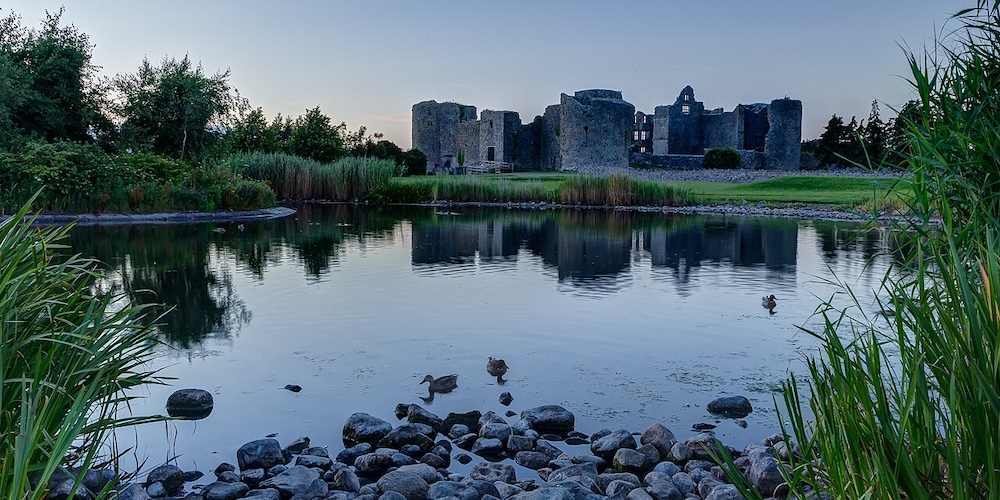
Roscommon Castle – ©Garychamp18 CC BY-SA 4.0 via Wikimedia Commons
Roscommon is a largely low-lying, rural and agricultural county. The River Shannon is the longest river in Ireland and, along with Lough Ree (the third largest lough in Ireland), forms the eastern boundary to the county, running through a number of other large loughs. These include Lough Key in the north, part of Lough Allen, Lough O’Flynn, Lough Meelagh, Lough Boderg, Lough Bofin and more.
The county is also noted for its Turloughs, which are unique to Ireland, are often associated with limestone areas and occur mostly in the western counties including Roscommon. They are temporary water bodies that are filled and emptied though a swallow hole that is connected with the underground water table. Turloughs are usually filled during the winter and wetter months of the year, drying out in summer.
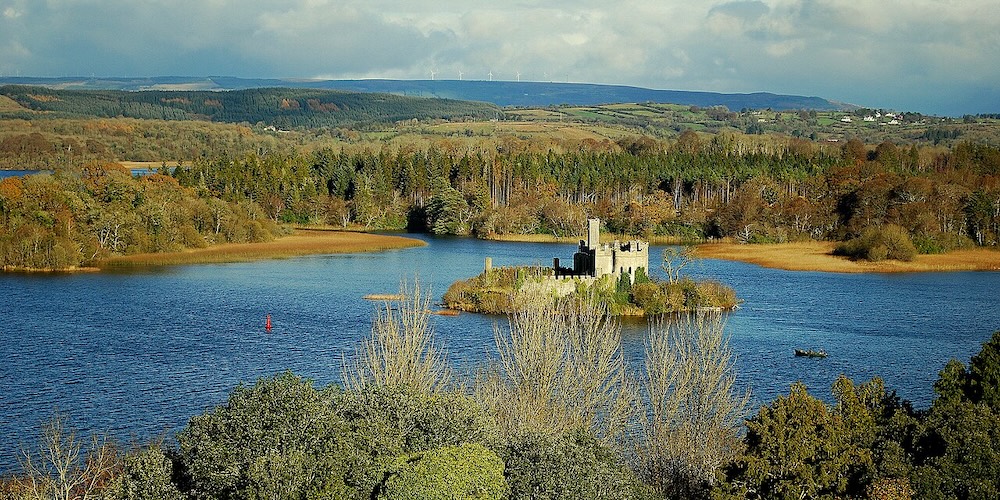
Lough Key – ©Apiechorowska CC BY-SA 4.0 via Wikimedia Commons
Birding County Roscommon
As a largely rural and agricultural county, much of Roscommon’s biodiversity is found on farms, particularly on marginal land like hedgerows and rough grassland. Arable fields, trees, scrub, ponds and streams being havens for wildlife. The county has many wet and watery places that are also great for nature and its rivers, streams, lakes and lough sides are hugely important for biodiversity.
The River Shannon contains many habitats of value along its length, most notably the Shannon callows. These wet meadows occur in the floodplains of the Shannon and other rivers. Composed of tall grasses and herbs such as reed canary grass, meadowsweet, ragged robin, and various sedges and rushes they provide nesting and foraging habitats for birds. These are the strongholds of the rare and threatened Corncrake population.
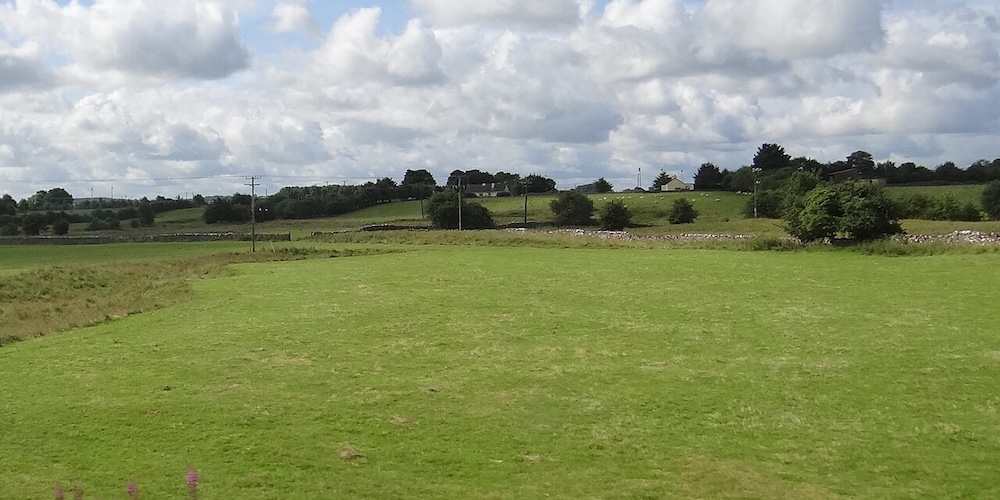
Fields west of Roscommon – ©Ian Paterson CC BY-SA 2.0 via Wikimedia Commons
Lough Ree is one of the most important sites for wintering and breeding birds in the midlands and is a Special Protection Area. Nationally important populations of several birds have been recorded on the lake including Wigeon, Teal, Goldeneye and Tufted Duck. Greenland White-fronted Geese, Whooper Swan overwinter and Common Tern breed around the lake.
Rivers, lakes, ponds, turloughs, reservoirs, floodplains, bogs, fens, marsh, swamp, wet woodlands and peatlands, which are productive habitats and therefore support a vast array of wildlife, are all found in Roscommon. Turloughs in particular could have been purposely designed for overwintering wildfowl.
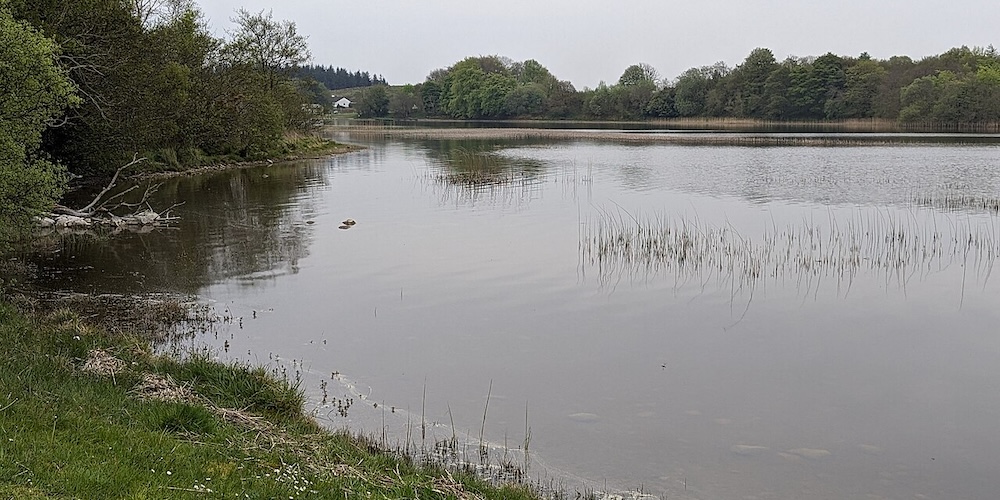
Lough Errit – ©CaitNi CC BY-SA 4.0 via Wikimedia Commons
Both raised bogs and blanket bogs can be found in the county. Blanket bog is found on Kilronan and Corry mountains, both designated as Natural Heritage Areas, but there are several raised bogs in Roscommon although they are now very rare in the rest of Europe. One of Europe’s rarest butterflies is found there; the Marsh Fritillary.
Lough Key Forest Park landscape is dominated by conifers aincluding Norway Spruce, Sitka Spruce, Western Red Cedar and Scots Pine as well as broadleaf trees, which include oak, ash, lime, sycamore and beech. The woodland floor is also species-rich with heavy scented Wild Garlic, Wood Anemone, Wood Sorrel, primrose and iris. A wide variety of waders and wildfowl inhabit the long stretches of Lough Key lakeshore and it is good for kingfisher.
A number of semi rewilding projects have been established including the privately owned Mount Plunkett Nature Reserve. This is a forty-acre farm, with 600 metres of canal frontage, most of which s is an SAC (special area of conservation). It was started as a biodiversity project on a farm, consisting of establishing new hedgerows, digging out wildlife ponds, erecting bird and bat boxes and removing 10 acres of encroachment scrub on the wetlands to provide a suitable nesting habitat for breeding waders (Snipe, Lapwing and Corncrake). The Nature reserve provides a perfect habitat to numerous species including Barn Owls, Kestrel, Lapwing, Kingfisher, etc.
-
Number of bird species: 201
(As at March 2026)
-
Avibase
PDF ChecklistThis checklist includes all bird species found in Roscommon , based on the best information available at this time. It is based on a wide variety of sources that I collated over many years. I am pleased to offer these checklists as a service to birdwatchers. If you find any error, please do not hesitate to report them. -
eBird
PDF ChecklistThis checklist is generated with data from eBird (ebird.org), a global database of bird sightings from birders like you. If you enjoy this checklist, please consider contributing your sightings to eBird. It is 100% free to take part, and your observations will help support birders, researchers, and conservationists worldwide.

-
Birds of Ireland - A Field Guide
| By Jim Wilson | Gill Books | 2024 | Edition 2 | Paperback | 288 pages, 1600+ colour photos, colour distribution maps | ISBN: 9781804580721 Buy this book from NHBS.com -
Finding Birds in Ireland - The Complete Guide
| By Eric Dempsey & Michael O'Clery | Gill Books | 2014 | Edition 2 | Paperback | 389 pages, 300 colour photos, colour maps | ISBN: 9780717159253 Buy this book from NHBS.com
-
Birdwatch Ireland - Roscommon Branch
WebsiteContacts & Events etc -
Native Woodland Trust - Roscommon Branch
Facebook PageEstablishment of this branch was funded with the assistance of the Heritage Council
-
FP Lough Key Forest Park
WebpageSatellite ViewRoscommon is home to Lough Key Forest Park, set in a dramatic landscape where visitors can enjoy forest nature walks and fishing, and observe the free-roaming herds of deer. -
FP St. John's Wood
WebpageSatellite ViewSt. John’s Wood in Roscommon is one of Ireland’s largest surviving ancient woodlands, over 260 acres 70% of which is owned and managed by the National Parks and Wildlife Service (NPWS). -
NHA Tullaghan Bog & Bay
WebsiteSatellite View -
NR Mount Plunket Nature Reserve
WebsiteSatellite ViewMount Plunkett Nature Reserve is a farm of land containing 40.5 acres of which 37 acres is an SAC (special area of conservation), with a 600 metres of canal frontage.
-
Nature & Wildlife i8n Roscommon
WebpageRoscommon is an inland county with a wealth of nature and wildlife, and natural amenities... -
Turloughs of County Roscommon
WebpageTurloughs are noted for waterbirds particularly in winter when large numbers can occur. In summer when the water levels are low wildflowers grow in abundance. Wildflowers attract insects that in turn attract summer birds...