

Western Cape
The Western Cape is a province of South Africa, situated on the south-western coast of the country. It is the fourth largest of the nine provinces with an area of c.130,000 square kilometres (50,000 square miles), and the third most populous, with around 7.5 million inhabitants. About five million of these inhabitants live in the metropolitan area of Cape Town, which is also the provincial capital.
The Western Cape is roughly L-shaped, extending north and east from the Cape of Good Hope, in the southwestern corner of South Africa. It stretches about 400 kilometres (250 miles) northwards along the Atlantic coast and about 500 kilometres (300 miles) eastwards along the South African south coast (Southern Indian Ocean). It is bordered on the north by the Northern Cape and on the east by the Eastern Cape.
The province is topographically exceptionally diverse. Most of the province falls within the Cape Fold Belt, a set of nearly parallel ranges. The height of the mountain peaks in the different ranges varies from 1,000 metres (3,300 ft) to 2,300 metres (7,500 ft). The valleys between ranges are generally very fertile. The far interior forms part of the Karoo. This region of the province is generally arid and hilly, with a prominent escarpment that runs close to the Province’s most inland boundary. The principal rivers of the province are the Berg and Olifants which drain into the Atlantic Ocean, and the Breede and Gourits which drain into the Indian Ocean.
The vegetation of the region is also extremely diverse, with one of the world’s seven floral kingdoms almost exclusively endemic to the province, namely the Cape Floral Kingdom, most of which is covered by Fynbos. These evergreen heathlands are extremely rich in species diversity. The arid interior is dominated by Karoo drought-resistant shrubbery.
The Western Cape is climatologically diverse, with many distinct micro-climates created by the varied topography and the influence of the surrounding ocean currents. These are the warm Agulhas Current which flows southwards along South Africa’s east coast, and the cold Benguela Current which is an upwelling current from the depths of the South Atlantic Ocean along South Africa’s west coast.
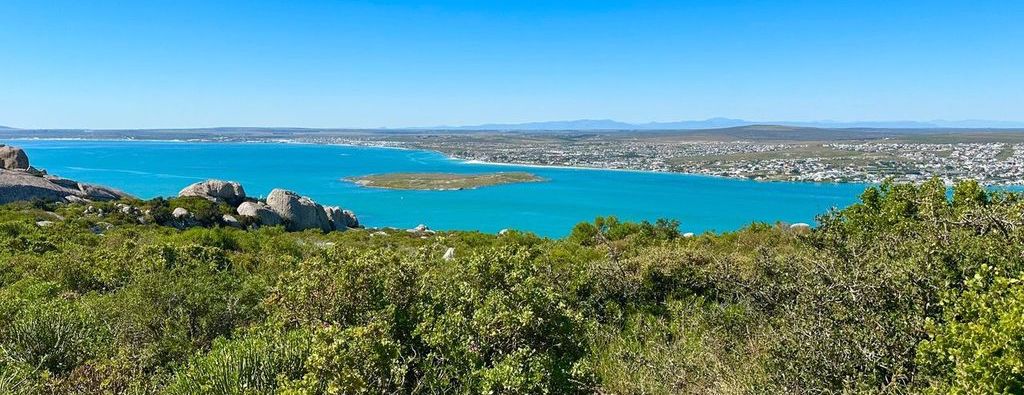
Langebaan Lagoon ©Mason Flint
Most of the province is considered to have a Mediterranean climate with cool, wet winters and warm, dry summers. Both the Great Karoo and Little Karoo, in the interior, have an arid to semi-arid climate with cold, frosty winters and hot summers with occasional thunderstorms. The Garden Route and the Overberg on the south coast have a maritime climate with cool, moist winters and mild, moist summers. The Western Cape is known for its wine production and vineyards.
There is an excellent network of highways comparable with any first-world country.
Birding Western Cape
Western South Africa, comprising the Western and Northern Cape Provinces, is one of the world’s greatest biodiversity hotspots and is legendary among international and local birders alike for the remarkable variety of birds that are found here and nowhere else. It is an indispensable destination for the eco-tourist and there are no other areas in Africa that offer such a high level of endemism in such a uniquely accessible setting. A staggering 47 of South Africa’s 58 endemic and near-endemic bird species occur here, as well as 76% of southern Africa’s 181. New innovations to assist the eco-traveler include a new birding site guide that covers the region, and the Cape Birding Route that links the up-to-date birding information with practical routes to follow and accommodation options.
Local and international bird-watchers are inevitably drawn to the region by the tourism gem of Cape Town, the capital of the Western Cape Province, and by the region’s scenic and cultural diversity, well-developed infrastructure, high standard of accommodation, and excellent network of national parks and provincial and private nature reserves. Over 220 species have even been seen around Cape Town in a single day! Although the sheer diversity of southern Africa’s more tropical eastern region is inevitably higher, most of these species have wide distributions and extend over much of eastern Africa. The west, by contrast, is rich in species largely restricted to this region.
Top 10 Species in the Western Cape: Cape Sugarbird, Cape Rockjumper, Black Harrier, Knysna Warbler, Protea Canary, Southern Black Korhaan, Hottentot Buttonquail, Agulhas Long-billed Lark, African Penguin and Bank Cormorant.
The Western Cape Province has a wide diversity of birding habitats including the unique Fynbos, Succulent Karoo, Nama Karoo, Afromontane Forest and internationally renowned wetlands. The smallest of the world’s six floral kingdoms, the tiny Cape Floral Kingdom is one of the richest biodiversity hotspots on earth, and is almost totally restricted to the winter-rainfall climate of the Western Cape. Despite occupying less than 0.05 per cent of the earth’s land surface, this small pocket of diverse vegetation lying at Africa’s southern extremity holds an astronomical 8,700 species of plants and Fynbos, the largest and most prominent subset of the Cape Floral Kingdom, has some notable endemic birds, namely Hottentot Buttonquail, Cape Rockjumper, Victorin’s Warbler, Cape Sugarbird, Orange-breasted Sunbird, Cape Siskin and Protea Canary.
The Karoo is a vast semi-desert area that is divided into two botanically very different regions and dominates the arid western half of South Africa. It forms part of the most ancient desert system in the world, and is an open area of stony plains, scattered with small shrubs, punctuated by low dunes and hills (koppies), and is very sparsely inhabited. The Succulent Karoo Biome is characterized by small succulent plants, supported by low but predictable winter rainfall. Despite these fundamental climatic and vegetation differences, most Karoo bird specials occur in both biomes.
Karoo endemics and near-endemics in the Western Cape include Karoo Korhaan, Ludwig’s Bustard, Karoo Long-billed Lark, Black-eared Finchlark, Karoo and Tractrac Chats, Karoo Eremomela, Cinnamon-breasted Warbler, Namaqua Warbler, Pale-winged Starling and Black-headed Canary.
Afromontane Forest is scattered discontinuously across central and east Africa’s montane peaks, with the temperate forests of the Cape constituting its southern remnants. Knysna Warbler and Knysna Woodpecker are local endemics. Both the Atlantic and Indian Oceans flank this region, merging at Africa’s southernmost point, Cape Agulhas. The productive Benguela Current surges up the Atlantic coast, bringing chilly, nutrient-rich waters from Antarctica, while the warmer Agulhas Current moves down the east coast of Africa from more tropical climes. The birds endemic or near-endemic to the plentiful waters of the Benguela Current of southern Africa’s west coast are African Penguin, Cape Gannet (breeding endemic only); Cape, Bank and Crowned Cormorants, African Black Oystercatcher, Hartlaub’s and Cape Gulls and Damara Tern (breeding endemic only) Furthermore, huge numbers of migrant pelagic seabirds are attracted to offshore waters (see Pelagic Birding off South Africa).
The best time to go birding in the Western Cape is undoubtedly springtime – birding picks up significantly towards the end of August, and the very best birding months are September, October and November.
There are many great birding sites in the state and many of the best are set out below. Others of interest include: On the west coast – Berg River Estuary, Lambert’s Bay (Cape Gannet colony) & Darling Farmlands.Overberg – De Mond Nature Reserve (for Damara Tern) – Grootvadersbos (for Superb Afromontane Forests with Narina Trogon, Forest Buzzard & Knysna Warbler).Tanqua Karoo – Karoopoort Cliffs and Acacia thickets (for Namaqua Warbler & Pale-winged Starling) – Eierkop Open Karoo plains and koppies (for Karoo Eremomela and Rufous-eared Warbler) – Skieterrykloof Rocky gorge and Acacia thicket (for Cinnamon-breasted Warbler, Fairy Flycatcher, Layard’s Titbabbler & Pririt Batis)Cape Peninsula – Constantia Greenbelts (for Knysna Warbler) – Table Mountain (for Black Eagle) – Robben Island (for seabirds) & – Kommetjie (for coastal endemics, including Bank Cormorant).
This page is sponsored by Birding Ecotours

-
*Pelagic Trips
WebsiteCape Town Pelagics is unique: we donate all profits to seabird research and conservation, including Birdife International’s Save the Albatross Fund. We’ve raised over R115 000 for conservation, so by booking a trip with us, you’ll make a difference to the seabirds you will see. -
Boulder's Beach
InformationSatellite ViewCome face to face with African Penguin! -
Cape Peninsula National Park
InformationSatellite ViewCape of Good Hope: An area of mostly coastal fynbos with long stretches of sandy and rocky shorelines and numerous cliff promontories, this reserve is also fabled to be the place where the Atlantic and Indian Oceans meet as well as laying claim to having the most powerful lighthouse in the Southern Hemisphere. It is good for endemics such as Cape Sugarbird, Orange-breasted Sunbird and Cape Siskin as well as rewarding bouts of sea watching in winter. The specialty of the reserve is Hottentot Button-quail, a bird that can require spending a lot of time in order to see it. -
De Hoop Nature Reserve
InformationSatellite ViewAnother area of predominately coastal fynbos with a large fresh water lake or vlei. A number of specials occur at this south coast locality, which are extremely difficult to find elsewhere in the region. Cape Vultures on Potberg Mountain, Southern Tchagra and elusive Knysna Woodpecker in thickets. Others include Stanley's Bustard,Aghulas Long-billed Lark and Damara Terns breed along the coastline in the area. -
Helderberg Nature Reserve
WebsiteSatellite ViewFynbos stands with Protea Canary, Victorin's Warbler. The stands of forests in Disa Gorge hosts Olive Woodpecker and Rameron Pigeon, with Cape and Sentinel Rock Thrush on the rocky slopes of the mountain.African Black Duck is a regular visitor to the duck pond to the left behind the restaurant… -
Kalk Bay
InformationSatellite ViewUp Boye's Drive for Ground Woodpecker early morning (dusk) -
Kirstenbosch National Botanic Garden
WebsiteSatellite ViewSuperb starting destination and good for fynbos and forest endemics, including Cape Sugarbird, Orangebreasted Sunbird and occasionally Knysna Warbler. Very scenic, a mere fifteen minutes drive from the city centre. -
Paarl Bird Sanctuary
InformationSatellite ViewThe local sewage works with good opportunities to see Baillon's Crake, Lesser Flamingo, Paradise Flycatcher, White Backed Duck & Water Thick-knee -
Rietvlei Wetland
InformationSatellite ViewRietvlei wetland is situated between Milnerton and Table View in the Cape Metropole. This is one of the more important sites for waders in the Western Cape and is a popular venue for birders… -
Rooi Els
InformationSatellite ViewA quiet holiday town with excellent chance to see Cape Rockjumper, Cape Rock Thrush, Verreaux's Eagle, Cape Sisken & Ground Woodpecker ±mid-day. Follow the gravel road along the mountain and stop at gate for a walk along the foot of the mountain. -
Sir Lowry's Pass
InformationSatellite ViewThis area is predominated by Montane fynbos and is probably one of the best spots to track down a number of endemics in the Western Cape. The most sought after species here are Cape Rockjumper and Victorin's Warbler, while other specials like Cape Sugarbird, Orange-breasted Sunbird, Cape Siskin, Cape and Sentinel Rock Thrush and Striped Flufftail also occur. -
Strandfontein Sewage Works
WebpageSatellite ViewStrandfontein Sewage Works is the best waterbirds site in Cape Town, over 100 species possible in a morning. Specials include waterfowl, African Marsh Harrier and Greater Flamingo. -
Tienie Versfeld Nature Reserve
WebpageSatellite ViewExcellent for flowers during August with Grey-backed and Cloud Cisticola. The newly split Cape Clapper Lark and Cape Long-billed Lark are both a good possibility, with Grey-winged Francolin and Orange-throated Longclaw ever present. -
West Coast National Park
WebpageSatellite ViewRAMSAR wetland site with large number of migrant shorebirds and local rarity hotspot. The vast tracts of coastal shrubland host many endemic birds including Southern Black Korhaan, Black Harrier, Grey-backed Cisticola and Lesser Double Collared Sunbird whilst the tidal lagoon attracts tens of thousands of migratory waders every year as well as having numbers of resident water birds. It is one of the better spots to find Chestnut-banded Plovers and is also one of South Africa's rarity hotspots.
-
Number of bird species: 689
(As at April 2024)
Number of endemics: 5 Fynbos endemics
Cape Sugarbird Promerops cafer
Orange-breasted Sunbird Anthobaphes violacea
Cape Rockjumper Chaetops frenatus
Victorin’s Warbler Cryptillas victorini
Protea Seedeater Crithagra leucopterus
-
Avibase - Bird Checklists of the World
PDF ChecklistThis checklist includes all bird species found in Western Cape , based on the best information available at this time. It is based on a wide variety of sources that I collated over many years. -
SANBI
ChecklistBird Checklist for South Africa’s National Botanical Gardens

-
Essential Birding in Western South Africa
| (Key Routes from Cape Town to the Kalahari) | By Callan Cohen & Claire Spottiswoode | Random House Struik | 2001 | Paperback | 136 pages, 110 colour photos, 15 maps | Out of Print | ISBN: 9781868725243 Buy this book from NHBS.com -
Newman's Birds of the South Western Cape
| (species of birds commonly found in the fynbos, forest and karoo veld habitats of the region) | By Kenneth B Newman | Korck Publishing | Poster | colour illustrations, size: 594 × 860 mm, double-laminated | ISBN: 9780620203739 Buy this book from NHBS.com
-
Animal Demography Unit - University of Cape Town
WebpageAnimal Demography Unit, Deparment of Zoology, University of Cape Town - From 1 January 2008, the Avian Demography Unit (or the ADU for short) will become the Animal Demography Unit (still the ADU). What prompted this? Ever since the ADU initiated the frog atlas project a decade ago in 1998, there have been issues with the name Avian Demography Unit – “Why is the Avian Demography Unit doing the frog atlas?” This inconsistency has recently been heightened by our involvement with projects on reptiles (Southern African Reptile Conservation Assessment, effectively the reptile atlas), and with butterflies (Southern African Butterfly Conservation Assessment, the butterfly atlas), and with five postgraduate students doing PhD and MSc projects on seals, one on rare mammals in Namibia and even one on dwarf chameleons… -
University of Cape Town Percy FitzPatrick Institute of African Ornithology
WebsiteWelcome to The Percy FitzPatrick Institute of African Ornithology on line! This web site provides an overview of what the Institute is about, study opportunities, including the Institute`s Conservation Biology Masters Programme, and current research themes and projects. You can also familiarise yourself with the staff and students of the Institute, and visit our hot links page for some useful and interesting websites.
-
BirdLife Overberg
Facebook PageThis is to keep Birdlife Overberg members informed of events, activities and rare bird sightings. -
BirdLife Plettenberg Bay
Facebook PageThis is a bird club for all ages of all Plettenberg Bay residents and visitors, with exciting talks, outings and projects. -
BirdLife Worcester
Information -
Cape Bird Club
WebsiteThis is a friendly and informal club which welcomes young and old who wish to share their appreciation, understanding and knowledge of birds. -
Cape Nature Conservation
WebsiteCape Nature Conservation (CNC) is concerned with the conservation of our natural environment within the western Cape, South Africa (see our mission statement below). This area includes the fynbos biome - one of the six plant kingdoms of the world. Cape Nature Conservation manages nature reserves and wilderness areas in the Western Cape, and invites you to experience and revel in their pristine natural beauty! If you seek truly wild places, offering hiking trails, rustic accommodation, indigenous vegetation, wildlife, and enough space and silence to renew your senses and recharge your batteries, then come and lose yourself in a Cape Nature Conservation nature reserve or wilderness area… -
Hermanus Bird Club
Information -
Lakes Bird Club
Information -
Somerset West Bird Club
WebsiteThe Somerset West Bird Club was founded over 25 years ago to encourage birding and conservation in the Helderberg. It has grown into an established organisation with two hundred local members, regular birding activities, a very successful quarterly magazine, The Batis, and links into local, regional and national programmes and organisations. -
Tygerberg Bird Club
WebsiteOur Mission To enhance our knowledge of all birds, their behaviour and their habitats, and to introduce the public to the conservation and science of our avian heritage through enjoyable participation by club members. -
West Coast Bird Club
Information -
Zandvlei Trust
WebsiteOur mission is simple. We seek to safeguard the beauty and biodiversity of the Zandvlei so that future generations can enjoy the area just as much as we do.
-
IBA Kirstenbosch National Botanic Garden
InformationSatellite ViewWhen Kirstenbosch, the most famous of the gardens, was founded in 1913 to preserve the country's unique flora, it was the first botanical garden in the world with this ethos. Kirstenbosch places a strong emphasis on the cultivation of indigenous plants. -
NP Agulhas
InformationSatellite ViewPremier whale watching spot good for southern right whale, but also some good birds such as African black oystercatcher & Damara tern. -
NP Bontebok
InformationSatellite ViewThe park is noteworthy as an excellent place to see Denham's (Stanley's) Bustard. Other large and visible species include Blue Crane, Spur-wing Goose, Secretarybird and Southern Black Korhaan. Malachite and Southern (Lesser) Double-collared Sunbird should be seen at the reception building, while the campsite attracts a number of species. Prominent amongst these are Fiscal Flycatcher, Klaas's Cuckoo (summer), Acacia Pied Barbet and Red-faced Mousebird. Pearl-breasted Swallow are regularly seen. Swee Waxbill frequents the dense riverine bush adjacent the Bree River, while Water Thick-knee are regular along the river's shoreline… -
NP Cape Peninsula (aka Table Mountain)
InformationSatellite ViewThe park contains two well-known landmarks: Table Mountain, for which the park is named; and the Cape of Good Hope, the most southwestern extremity of Africa. -
NP Namaqua
InformationSatellite ViewBirding in the park can still be explored more. Species to search for include Cinnamon-breasted Warbler, Cape Long-billed Lark, Karoo Lark, Black-headed Canary and Cape Bulbul. Black Harriers quarter the ground in search of rodents… -
NP Tankwa Karoo
InformationSatellite ViewJust two southern African regions have been bestowed the honour of designation as Biodiversity Hotspots by Conservation International. One is of course the Cape Floral Kingdom, and the other the Succulent Karoo. For those whose image of the southwestern Karoo is a shimmering wasteland to be endured as briefly as possible en route to Cape Town or Johannesburg, this may come as a surprise… -
NP Tsitsikamma
InformationSatellite ViewThe Tsitsikamma National Park is a protected area on the Garden Route, Western Cape and Eastern Cape, South Africa. It is a coastal reserve well known for its indigenous forests, dramatic coastline, and the Otter Trail. -
NP West Coast
InformationSatellite ViewThe park surrounds the Langebaan Lagoon, which is a world Ramsar site (site's deemed to be of global significance to wetland bird species). Many of the wader species are Palearctic migrants, so summer is the best time to visit the lagoon, particularly in September as species return fatigued from their transcontinental travel, and March when they congregate in large numbers to feed heavily prior to undertaking the reverse journey. In such times, the birds are often changing into or out of their Northern Hemisphere breeding plumage… -
NP Wilderness
InformationSatellite ViewWilderness National Park is situated in the heart of the Garden Route, and is a fascinating combination of rivers, lakes, estuaries and beaches, unfolding against the backdrop or lush forests and imposing mountains… -
NR & BS Paarl Mountain
Facebook PageSatellite View45 hectares of paradise with its 140 different species of birds. The Paarl Bird Sanctuary attracts a wide variety of waterfowl. Together with the waterfowl the reserve is also home to a number of species associated with the thicker vegetation growing on the northern and western side as well as a number of local and national rarities. -
NR De Hoop
InformationSatellite ViewIt lies three hours from Cape Town in the Overberg region, near Cape Agulhas, the southern tip of Africa. Approximately 340 square kilometres (130 sq mi) in area. De Hoop supports a large number of resident and migratory bird species. The reserve's total bird species count is 260. Several water birds breed in the reserve. The reserve is also home to the only remaining breeding colony of the rare Cape vulture. -
NR Gamkaberg
InformationSatellite ViewThe Gamkaberg Nature Reserve is situated in the Little Karoo region of the Western Cape province. The reserve is also home to an unusually large range of reptile and bird species. -
NR Helderberg
InformationSatellite ViewHelderberg Nature Reserve is a 398-hectare (980-acre) nature reserve in Cape Town. Animals that can be found here include over 170 species of birds. -
NR IBA Bird Island
InformationSatellite ViewBird Island Nature Reserve is a 3-hectare (7.4-acre) CapeNature nature reserve in Lambert's Bay. It is an important breeding site for Cape gannets and crowned cormorants. -
NR Jonkershoek
InformationSatellite ViewThe Jonkershoek mountains are home to Leopards, Caracals, Klipspringer, Baboons, Honey Badgers and Mongooses, however, all but the baboons are very secretive. Birdlife includes kingfishers, black eagles, fish eagles, spotted eagle owls, sugarbirds, orange-breasted sunbirds and protea seed eaters. -
NR Kogelberg
InformationSatellite ViewKogelberg Nature Reserve is considered by many to be the most beautiful of CapeNature’s protected areas. Its exceptional diversity and quality of fynbos means it is also considered the heart of the Cape Floral Kingdom... -
NR Rietvlei Wetland
InformationSatellite ViewRietvlei is a freshwater wetland located on the floodplain of the Diep River before it drains into Milnerton Lagoon and finally into Table Bay. There is a permanent freshwater lake, shallow seasonally inundated pans, extensive reedbeds, true riverine habitat and a tidal lagoon. With the gradual removal of alien vegetation, tracts of typical Strandveld flora and fauna are flourishing. The springtime wild flowers are a wonderful sight. Approximately 560 hectares in size, its location ensures that both freshwater and coastal birds are regularly seen. The wide diversity of habitats makes this wetland system particularly impressive, in both the variety of species to be found, and the sheer numbers of birds present… -
NR Zandvlei Estuary
InformationSatellite ViewZandvlei Estuary Nature Reserve is a 300-hectare (740-acre) nature reserve and recreational area located in Cape Town. The surrounding wetland is an important habitat for birds and has 166 species on its official list. The estuary was neglected in the past, and suffered from farming, urban development, dredging and the introduction of alien invasive species. The original vegetation has been partly restored through local government and volunteer efforts. There is now an Environmental Education Centre.
-
Cape Birding Route
Information ServiceWe hope to promote ecotourism in Cape Town and beyond into Africa. We would be glad to answer any quiries you might have on birding, natural history or travel in the Western Cape along the Western Cape Birding Routes, in southern Africa or in the Indian Ocean Islands. Please feel free to email info@capebirdingroute.org. -
Cape Birdnet
Mailing ListCapeBirdNet is an email listserver that allows you to share information with other birders in the Cape safely over the internet. When a CapeBirdNet member (such as yourself) sends a message to capebirdnet@yahoogroups.com , the message is automatically sent to all other members of the group.
-
Avian Leisure Tours
Tour OperatorEssentially our business is organising birding and wildlife tours throughout South Africa - tailored to individual interests and requirements: both fully guided and self drive trips or a combination of self drive & guides in certain places. Patrick has an in depth knowledge of the country and puts together itineraries that are optimised for an individual client's requirements - minimising distances required to travel in one day and using accommodation in or near to the best birding localities. We do not run set departure tours (unless on behalf of another tour operator). Our focus is on small groups (between 2 and 6 ideally). We also run a self catering birder friendly guest house in Cape Town which is a convenient place for birders to stay whilst in the Cape, but this does not necessarily have to be part of the birders itinerary -
Birding Africa
Tour OperatorBirding Africa is run by three Capetonian birders and naturalists, Callan Cohen, Claire Spottiswoode and Peter Ryan, all based at the University of Cape Town`s Percy FitzPatrick Institute of African Ornithology. Callan and Claire are postgraduate research students, and have recently published an new birding site guide to Cape Town and beyond: Essential Birding - Western South Africa. Peter is a lecturer and researcher, and the author of numerous publications, most recently a new field guide to the birds of Afrotropics. -
Birding Ecotours
Tour OperatorSouth Africa is one of the best value destinations on the entire continent. The outstanding infrastructure, great accommodation, excellent food, wonderful South African hospitality, spectacular and varied scenery, and the presence of Africa’s big and small mammals makes it one of the most pleasant countries in the world to bird in... -
Birdwatch Cape
Tour OperatorThe Western & Northern Cape Provinces cover much of the "dry west" of South Africa. The area extends north and east of the beautiful Cape Peninsula into a vast, sparsely populated semi desert known as the Karoo. Further north still lies the unique & mysterious Kalahari Desert. Our vegetation, climate and positioning on the African continent makes us home to 290 easily seen bird species including 70% of all Southern African endemics. -
Brian's Birding Tours
Tour OperatorSpecialises in personalised Birdwatching tours in the Western and Northern Cape. We do Birding Day Trips and Overnight Tours from Cape Town, as far as the Kalahari National Park. We offer customised Birding, tailored to your birding wishes… -
Cape Town Pelagics
Boat TripsJoin our weekly deep sea pelagics to more than 20 nautical miles south of Cape Point - a hotspot for trawlers. On high speed recreational crafts, you'll navigate to fishing shoals and trawlers using radar. Thanks to our experienced guides, you may see up to seven albatross species, passage migrants and cetaceans. Click here to find a trip date that suits you. -
Rockjumper
Tour OperatorOur home country of South Africa is quite simply one of the most pleasurable destinations in which to bird and travel, offering exceptional value for money along with world-class infrastructure. In addition, South Africa boasts the most endemic bird species of any African country, while a rich seabird assemblage and vast numbers of more widespread, yet no less spectacular, African birds and large mammals occur. Add to this the rich botanical heritage, fine food and wines, friendly people and the scenic splendor of Africa -
Zest for Birds
Tour OperatorWe specialise in extended birding tours throughout South Africa as well as guided birding day trips in the Western Cape targeting all the endemic and near endemic species. These trips are designed either to maximise the number of species our client can see or to chase their specific target birds. All trips are led by highly experienced guides to ensure you get the most out of the time you have available.
-
2006 [10 October] - Bo Beolens
ReportCape Town is an impressive Garden City and the Karoo an amazing arid plain, Agulhas is fecund and wet agricultural land and De Hoop an amazing Feinbos maritime area – the Cape is a remarkable place of great contrasts… -
2017 [03 March] - Dylan Vasapolli
PDF ReportThis was a private two-week tour designed around a small list of possible target species. The two focus areas would be the Western Cape region along with the eastern half of South Africa. As mentioned, this tour was built around specific species, and these species received the bulk of our efforts, with often more common/widespread species not being tried for. -
2017 [03 March] - Wian van Zyl
PDF ReportBirding in South Africa’s Cape Peninsula can sometimes be challenging and a bit windy, but with some patience and persistence it rewards with some magnificent sightings, great photographic opportunities, and an unforgettable day of birding. -
2017 [04 April] - Wian van Zyl
PDF ReportThis trip was a 9-day/8-night tour focusing on the Western Cape Province of South Africa. We started in the world famous Kirstenbosch National Botanical Garden, made our way up to the West Coast, and from there transferred into the endemic rich Tankwa Karoo. -
2017 [10 October] - Dominic Rollinson
PDF ReportToday I showed Jay and Sandy from the United States around some of the top birding spots along the eastern shores of False Bay to the east of Cape Town. After fetching them early in town we made our way to the small town of Rooiels, which was our first birding destination of the day. The main target here was Cape Rockjumper, which took a bit of time to locate, but we eventually had good views of a male and female. -
2017 [10 October] - Wian van Zyl
PDF ReportFollowing the conclusion of our set-departure Subtropical South Africa tour earlier in the day I met up with James, who would be joining this post-tour extension, in the early evening. We headed for dinner and, following dinner, drove south of Johannesburg to search for African Grass Owl. -
2017 [11 November] - Gareth Robbins
PDF Report...we revelled in the factthat we got some fabulous views of a small family group of the extremely rare and Fynbos endemic:the Bontebok! Within the bird aspect, we felt we were rather skilled in finding Cape Bunting, FiscalFlycatcher, Karoo Prinia, Cape Bulbul and Cape Robin-Chat -
2017 [12 December] - Dominic Rollinson
PDF ReportBank and Crowned Cormorants, Black Stork, African Oystercatcher, Cape Gannet, CapeVulture, Blue Crane, African Penguin, Damara Tern, Cape Spurfowl, Grey-winged Francolin,Karoo Korhaan, Karoo Long-billed, Agulhas Long-billed, and Large-billed Larks, EurasianGolden Oriole, Grey Tit, Karoo and Tractrac Chats, Namaqua, Layard’s, Rufous-eared, andVictorin’s Warblers, Fairy Flycatcher, Orange-breasted, Southern Double-collared, and GreaterDouble-collared Sunbirds, Cape Sugarbird, Black-headed Canary, Cape Siskin, CinnamonbreastedBunting -
2017 [12 December] - Dominic Rollinson - False Bay Day Trip
PDF ReportToday I showed Rosalie from the United States around some of the top birding spots along the eastern shores of False Bay to the east of Cape Town. -
2018 [05 May] - Jan Pienaar
PDF Report...In and around Springbok, including in the nearby Goegap Nature Reserve, we had Verreaux’s Eagle, Karoo Korhaan, Lanner Falcon, Acacia Pied Barbet, Red-capped and Stark’s Larks, African Red-eyed Bulbul, Orange River White-eye, Capped Wheatear and Cape Starling; whilst mammals included Springbok and Gemsbok. Inland, near the town of Pofadder, we visited a few colonies of Sociable Weaver, and had a pair of Pale-winged Starling.... -
2018 [10 October] - Dominic Rollinson
PDF ReportThis Birding Ecotours 8-day Western Cape birding tour was a whistle-stop trip around the south-western Cape, aiming to find as many of the area’s endemics as possible while also enjoying the wildlife and spectacular scenery the Cape has to offer. This trip took us from the open ocean to the biologically-rich mountain fynbos to the desolate plains of the Tankwa Karoo. -
2022 [01 January] - Dominic Rollinson - Tankwa Karoo
PDF ReportSome of the important species we saw on this particular tour included Cinnamon-breasted, Rufous-eared, Namaqua and Layard’s Warblers, Karoo Eremomela, Karoo Korhaan, Karoo, Large-billed, Spike-heeled and Karoo Long-billed Larks, Namaqua Sandgrouse and Black-headed Canary. After the three days of birding, we had a decent list of 95 species which included many of the dry-country specials that we were after... -
2022 [02 February] - Dominic Rollinson
PDF ReportThis eleven-day tour was put together for Peter and Zanna to encompass the major habitats and birding sites of the Western Cape Province of South Africa. We went from the vivid beauty of the Cape Peninsula, to the bird-rich shores of the west coast, into the hostile semi-desert of the Tankwa Karoo and finished in the lush forests of the Garden Route. -
2022 [03 March] - Dominic Rollinson 3-Day Tankwa Karoo Birding
PDF ReportAs it was Richard’s first time in South Africa it was not only endemics and near-endemics which were on the target list, as we tried to track down a number of other more widespread species. We also spent some time around Cape Town on the final afternoon as we birded a wetland area, just north of the city. -
2022 [04 April] - Dominic Rollinson Western Cape Custom Birding Trip
PDF ReportThis custom eight-day Cape birding tour was put together for Wendy and Karen to try and see as much of the beautiful Cape and its incredible array of bird species as possible. The itinerary we decided on was very similar to our set-departure Best of Cape Town and Beyond Birding Tour however we did not include a Cape pelagic trip and instead spent this day exploring the Cape Peninsula. -
2022 [08 August] - Chris Lotz & Dominic Rollinson - Birds & Mammals
PDF ReportThis was a private, custom trip focused on finding Tim some tough and/or localized birds and mammals in remote parts of South Africa. In addition to seeking these tricky species, we also headed into the Richtersveld National Park for spectacular scenery and plants. Since that brought us right to the border, we also decided to cross the Orange River into Namibia to see the Fish River Canyon. Here we were glad to see some of the avian targets we were after, including the sometimes elusive, unique Cinnamon-breasted Warbler. -
2023 [09 September] - Joshua Olszewski & Dominic Rollinson
PDF Report...Some of the major birding highlights included Black Harrier, Martial Eagle, White-backed and Lappet-faced Vultures, Pygmy Falcon, Maccoa Duck, Chestnut-banded Plover, Southern Black Korhaan, Ludwig’s Bustard, Rosy-faced Lovebird, Swallow-tailed Bee-eater, Cinnamon-breasted Warbler, Karoo Eremomela, Cape Rockjumper, Victorin’s Warbler, Orange-breasted Sunbird, Cape Sugarbird, and Protea Canary. This western South Africa birding tour is particularly notable for its diversity of larks, with 15 species seen, including Cape Clapper, Cape Long-billed, Karoo Long-billed, Stark’s, Karoo, Barlow’s, Red, and Fawncolored Larks, as well as the enigmatic Sclater’s Lark... -
2023 [10 October] - Dominic Rollinson
PDF ReportOver our eight days of Cape birding we racked up an impressive 228 bird species which included many of the Cape’s endemics and specials. Some of our highlights included Grey-winged Francolin, Karoo and Southern Black Korhaans, Namaqua Sandgrouse, African Penguin, Bank, Cape and Crowned Cormorants, Black Harrier, Ground Woodpecker, Cape Rockjumper, Fairy Flycatcher, Grey Tit, Cape Penduline Tit, nine lark species (including many Black-eared Sparrow-Larks), Victorin’s Warbler (annoyingly only seen by one of the group, despite our best efforts), Rufous-eared, Cinnamon-breasted and Layard’s Warblers, Dusky Sunbird and Protea, Forest and Black-headed Canaries... -
2026 [02 February] - Zach Simpson
PDF ReportThis tour was a four-night tour based in Cape Town. Each of the three full days was spent birding different areas within an hour or two from Cape Town. Once everyone had arrived on the first day, we spent some time birding the Wetlands in Cape Town. This kicked off our trip list well as Cape Town has good waterbird diversity and numbers. Some highlights from the first afternoon included Maccoa Duck, South African Shelduck and Cape Longclaw.
-
De Zeekoe Guest Farm
AccommodationDe Zeekoe Guest Farm is a birdlover`s paradise.Come and explore this yourself and stay at our guest house. The farm is a working ostrich and alfalfa farm on 2000 hectares. In the Western Cape region in South Africa, the farm is situated 8km from the town Oudtshoorn between the Swartberg and Outeniqua mountains on the bank of the Olifantsriver. Oudtshoorn offers the world famous Cango Caves, Calitzdorp the port capital of the world, and of course the famous ostrich show farms. The town is easily accessible situated just 60km from George International Airport. -
Klein Bosheuwel Guest House
AccommodationThe Constantia Valley, one of the historical and cultural hearts of the metropolitan area of Cape Town and famous for centuries of fine wine making, spreads out below the gardens of Klein Bosheuwel. Wilderness areas, farms, forests, riverine corridors and scenic routes abound… -
Swellendam Country Lodge
AccommodationSwellendam Country Lodge is a Guest House in the heart of the Overberg District of the Western Cape, South Africa. The Guesthouse is situated on the fringe of the town of Swellendam, it is a well-liked base for exploring this beautiful part of the country. Swellendam is a two hours drive from Cape Town, and bordering on the Garden Route and the Route 62. The guest rooms are situated in a beautiful landscaped garden where you will enjoy the wide range of birds, trees, fruit and flowers.
-
Kate Robinson - Robben Island Penguin Tracks
BlogLast updated 2016 - Features news of the African Penguin Spheniscus demersus logger research taking place on Robben Island…
-
Photographer - Trevor Hardaker
GalleryAs an avid birder living in Cape Town in South Africa, I spend quite a bit of time in the field. I often drag a camera along on my escapades and do occasionally get the opportunity to take a photo or two of the birds I am looking at. During my travels, I also get the opportunity to see a lot of other interesting creatures and I do take photos of these as well…