

Black Sea Region
The Black Sea region is a geographical region of Türkiye that covers 143,537 km2 (55,420 square miles) with a population of around 8.5 million people with half living in cities. It is bordered by the Marmara Region to the west, the Central Anatolia Region to the south, the Eastern Anatolia Region to the southeast, the Republic of Georgia to the northeast, and the Black Sea to the north. The largest city in the region is Samsun.
The region has a steep, rocky coast with rivers that cascade through the gorges of the coastal ranges. A few larger rivers, those cutting back through the Pontic Mountains, have tributaries that flow in broad, elevated basins. Access inland from the coast is limited to a few narrow valleys because mountain ridges, with elevations of up to 1,800 meters in the west up to 4,000 meters in the east in Kaçkar Mountains, form an almost unbroken wall separating the coast from the interior. The higher slopes facing northwest tend to be densely forested. Because of these natural conditions, the Black Sea coast historically has been isolated from Anatolia.
The mild, damp oceanic borderline subtropical climate of the Black Sea coast makes commercial farming profitable. Running from Zonguldak in the west to Rize in the east, the narrow coastal strip widens at several places into fertile, intensely cultivated deltas. The Samsun area, close to the midpoint, is a major tobacco-growing region; east of it are numerous citrus groves. East of Samsun, the area around Giresun is known for the production of hazelnuts, and farther east the Rize region has numerous tea plantations. All cultivable areas, including mountain slopes wherever they are not too steep, are sown or used as pasture. The western part of the Black Sea region, especially the Zonguldak area, is a centre of coal mining and heavy industry.
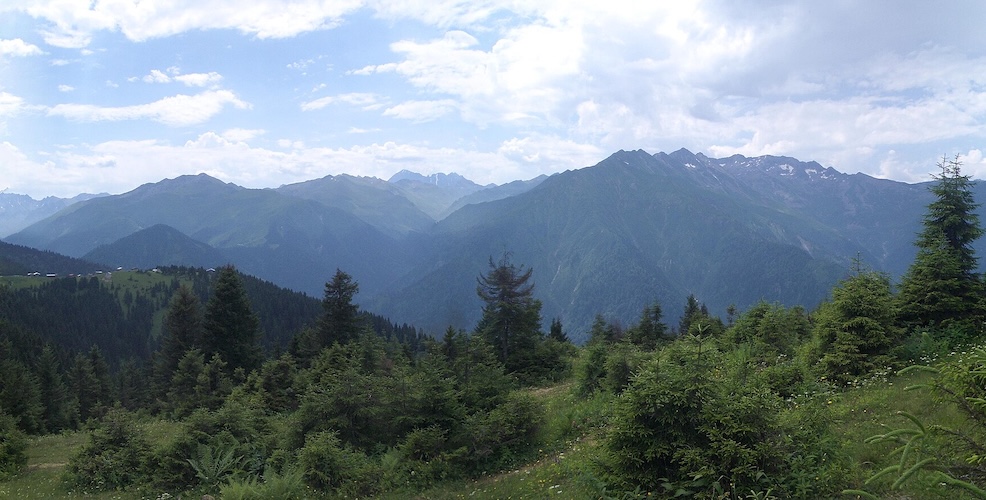
The Pontic Mountains – ©I Noaa CC BY-SA 3.0 via Wikimedia Commons
The North Anatolian Mountains in the north are an interrupted chain of folded highlands that generally parallel the Black Sea coast. In the west, the mountains tend to be low, with elevations rarely exceeding 1,500 meters, but they rise in an easterly direction to heights greater than 3,000 meters south of Rize. Lengthy, trough-like valleys and basins characterise the mountains. Rivers flow from the mountains toward the Black Sea. The southern slopes facing the Anatolian Plateau, are mostly unwooded, but the northern slopes contain dense growths of both deciduous and evergreen trees.
At the coast, summers are warm and humid, and winters are cool and damp. The eastern part of the coast averages 2,500 millimeters precipitation annually which is the highest in the whole of Türkiye. Snowfall is quite common between the months of December and March, snowing for a week or two, and it can be heavy once it snows. The water temperature in the whole Turkish Black Sea coast is always cool and fluctuates between 8° and 20 °C through the year.
Birding the Black Sea Region
The Black Sea Region of Türkiye is one of the country’s most distinctive natural regions, stretching along the northern coastline between the Black Sea and the Pontic Mountains. Known for its dense forests, deep valleys, alpine meadows, dramatic mountain ranges, and humid climate, the region supports exceptional biodiversity and some of Turkey’s richest natural habitats.
Its combination of coastal wetlands, ancient temperate forests, mountain ecosystems, and migration corridors makes the Black Sea Region one of the most rewarding birdwatching destinations in the Western Palearctic. There is a remarkable diversity of habitats, including coastal lagoons, wetlands, broadleaf and conifer forests, alpine plateaus, fast-flowing rivers, and steep mountain valleys.
The eastern Black Sea Mountains form an important migration barrier and funnel for soaring birds during spring and autumn migration. Raptors, storks, and passerines concentrate along the coastline and mountain ridges, creating spectacular migration movements.
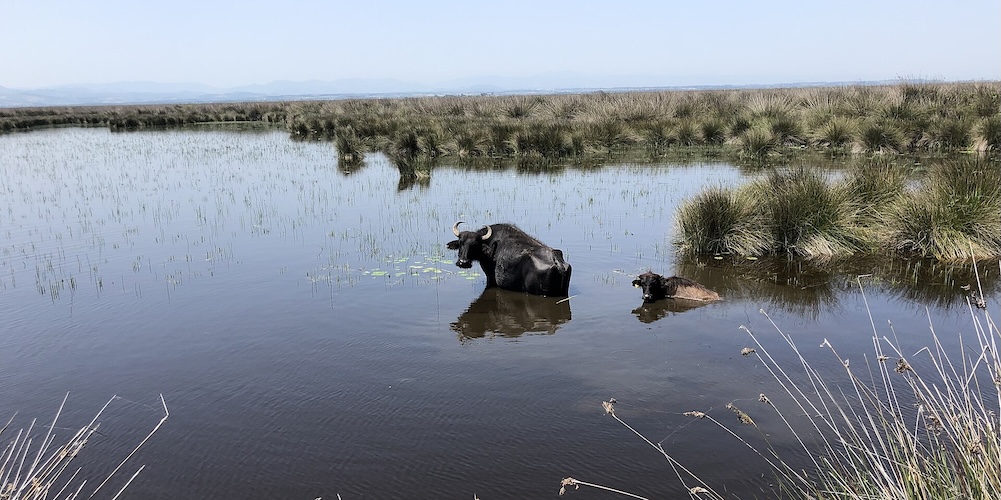
Kızılırmak Delta – ©Chidgk1 CC BY-SA 4.0 via Wikimedia Commons
The old-growth forests of the region provide ideal habitat for woodpeckers, owls, and forest passerines, while alpine meadows support high-altitude breeding species.
Notable species include Golden Eagle, Short-toed Snake Eagle, Honey Buzzard, Eurasian Sparrowhawk, Black Woodpecker, Middle Spotted Woodpecker, Nuthatches, tits and flycatchers. The mountains hold Alpine Accentor, Water Pipit, Wallcreeper and significant migratory species are Storks, bee-eaters, raptors, and passerines during migration peaks.
The best times for birdwatching are March to May for Spring migration and breeding activity; August to October for Autumn migration, especially for raptors; May to July is excellent for alpine and forest species in the Kaçkar Mountains. Winter is best for coastal wetlands that attract wintering waterbirds. Early mornings and clear migration days along the coast and mountain ridges are especially productive.
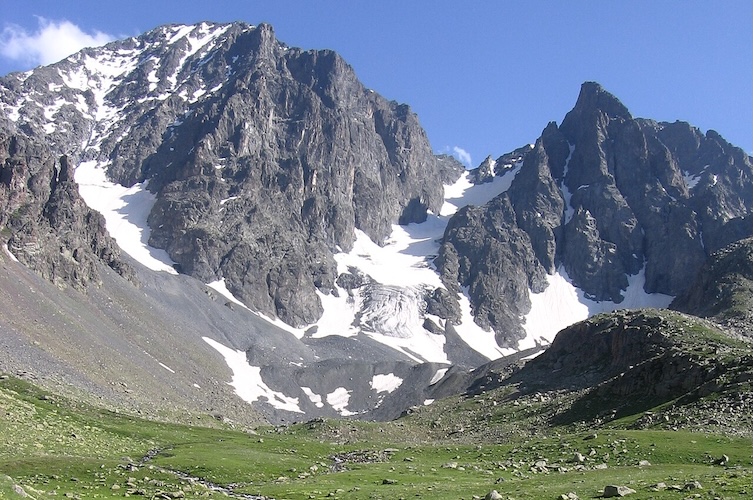
Kaçkar Mountains – ©Wikimol CC BY-SA 2.5 via Wikimedia Commons
The Black Sea Region of Türkiye is one of the country’s richest natural regions for birdwatching and wildlife observation. With its ancient forests, dramatic mountain landscapes, alpine plateaus, and internationally important wetlands, the region offers exceptional opportunities for both migration watching and breeding bird observation. From the wetlands of the Kızılırmak Delta to the alpine peaks of the Kaçkar Mountains, the Black Sea Region remains one of the most fascinating birding destinations in the Western Palearctic.
-
Karagöl-Sahara National Park
InformationSatellite ViewKnown for its old-growth forests and mountain landscapes, this national park supports woodpeckers, owls, flycatchers, and many forest passerines. The area is particularly attractive for birdwatchers interested in Caucasian and eastern Black Sea species. -
Kaçkar Mountains
InformationSatellite ViewThe Kaçkar Mountains contain alpine meadows, glacial lakes, and remote high-altitude habitats. These mountains are important for alpine species, raptors, and forest birds, offering excellent birdwatching opportunities during summer. -
Kızılırmak Delta
InformationSatellite ViewOne of Türkiye’s largest and most important wetland systems, the Kızılırmak Delta includes reed beds, freshwater marshes, flooded forests, and coastal lagoons. It hosts thousands of migratory waterbirds, including ducks, herons, pelicans, terns, and raptors throughout the year. -
Sarıkum Lagoon
InformationSatellite ViewA unique combination of wetland, forest, and sand dune habitats along the Black Sea coast. The area supports herons, ducks, warblers, and many migratory passerines during migration seasons. -
Uzungöl
InformationSatellite ViewSurrounded by dense forests and mountain slopes, Uzungöl provides habitat for woodland species, raptors, and migratory birds. The region is also well known for its scenic landscapes and eco-tourism opportunities. -
Çoruh Valley
InformationSatellite ViewThe Çoruh Valley creates an important migration route for raptors and soaring birds moving between the Caucasus and Anatolia. Eagles, buzzards, hawks, and falcons are regularly observed during migration periods.
-
Hasan Safak
Aladaglar National Park
Accommodation & Guiding
-
Number of bird species: 425
(As at May 2026)
-
Avibase
PDF ChecklistThis checklist includes all bird species found in Black Sea Region , based on the best information available at this time. It is based on a wide variety of sources that I collated over many years. I am pleased to offer these checklists as a service to birdwatchers. If you find any error, please do not hesitate to report them.
-
NatureTrek
Tour OperatorAn 8-day holiday to enjoy the wildlife and archaeological highlights of the east and Black Sea regions of Turkey. -
Safak Travel
GuidingWith decades of field experience, our founder and lead guide combines deep local knowledge with professional expertise in trekking, birdwatching, wildlife observation, and nature photography tours
-
The Black Sea
WebpageThe Black Sea investigated these two wetlands as part of the Green to Grey cross-border journalism project that aims to quantify the loss of nature to construction in 30 European countries, including Turkey. In collaboration with the Norwegian Institute for Nature Research, a team of 11 European newsrooms developed a novel methodology that combines AI and satellite imagery to detect areas where natural land has been lost to construction, a process known as artificialisation.