

People’s Democratic Republic of Algeria
Algeria, officially the People’s Democratic Republic of Algeria, is a country located in North Africa. It is the largest country of the Mediterranean Sea, the second largest on the African continent and the eleventh-largest country in the world in terms of land area. It is bordered by Tunisia in the northeast, Libya in the east, Niger in the southeast, Mali and Mauritania in the southwest, a few kilometres of the Western Sahara in the west, Morocco in the northwest, and the Mediterranean Sea in the north. Its size is almost 2,400,000 km² with an estimated population near to 46 million people. The capital is Algiers with three million inhabitants.
Most of the coastal area is hilly, sometimes even mountainous, and there are a few natural harbours. The area from the coast to the Tell Atlas is fertile. South of the Tell Atlas is a steppe landscape, which ends with the Saharan Atlas; further south, there is the Sahara Desert. The Ahaggar Mountains, also known as the Hoggar, are a highland region in central Sahara, southern Algeria. They are located about 1,500 km (932 miles) south of the capital, Algiers and just west of Tamanghasset. Algiers, Oran, Constantine, and Annaba are Algeria’s main cities.
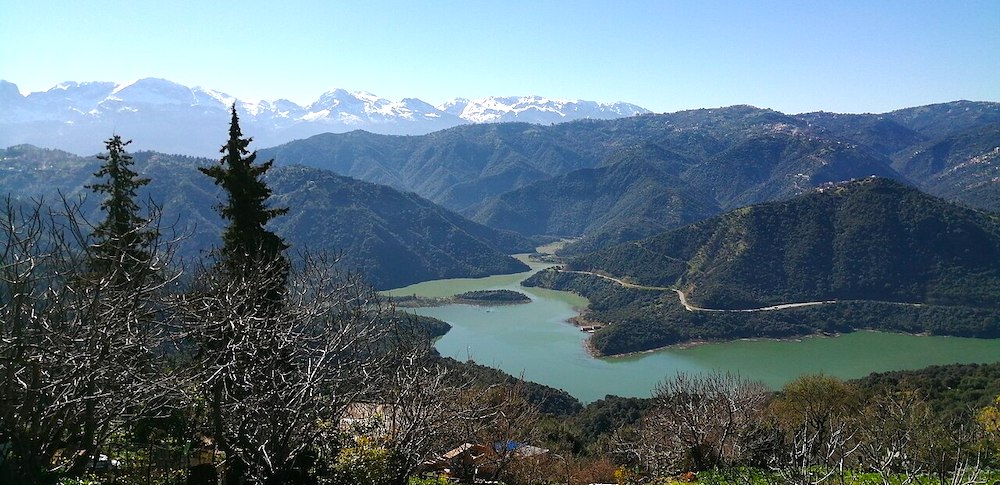
Kabylia – a mountainous coastal region – ©Dfnsaid, CC BY-SA 4.0 via Wikimedia Commons
In this region even in winter, midday desert temperatures can be very hot. After sunset, however, the clear, dry air permits rapid loss of heat, and the nights are cool to chilly. Enormous daily ranges in temperature are recorded. The highest temperature recorded in Tiguentour is 60.5 °C and is probably the highest reliable temperature ever recorded in Algeria under standard conditions.
Rainfall is fairly abundant along the coastal part of the Tell Atlas, ranging from 400 to 670 mm annually, the amount of precipitation increasing from west to east. Precipitation is heaviest in the northern part of eastern Algeria, where it reaches as much as 1000 mm in some years. Farther inland, the rainfall is less plentiful. Prevailing winds that are easterly and north-easterly in summer change to westerly and northerly in winter and carry with them a general increase in precipitation from September through December, a decrease in the late winter and spring months, and a near absence of rainfall during the summer months. Algeria also has ergs, or sand dunes between mountains, which in the summer time when winds are heavy and gusty, temperatures can get up to 43 °C.
Birding Algeria
The varied vegetation of Algeria includes coastal, mountainous and grassy desert-like regions which all support a wide range of wildlife. Many of the creatures live in close proximity to civilisation. The most commonly seen animals include Wild Boar, Jackals, and Gazelles, although it is not uncommon to spot Fennec Foxes (Algeria’s National Animal) and Jerboas. Algeria also has a small African Leopard and Saharan Cheetah population, but these are seldom seen. A species of deer, the Barbary Stag, inhabits the dense humid forests in the north-eastern areas
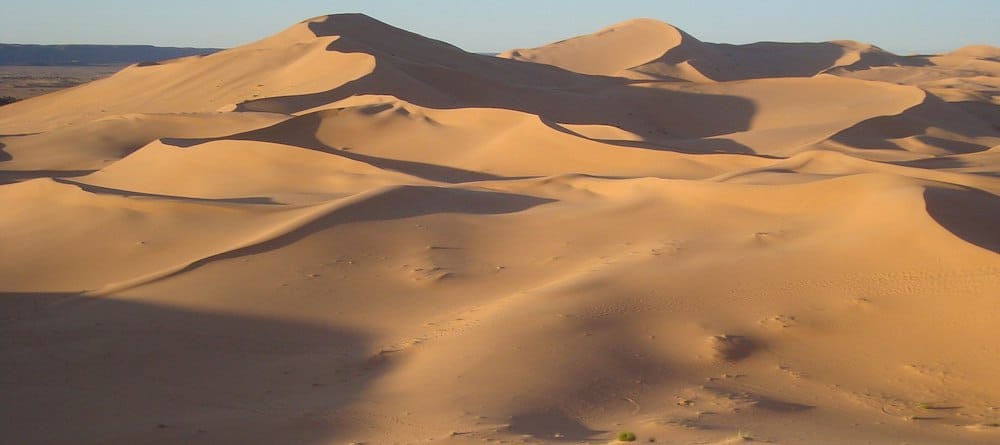
Taghit Algerian Sahara Dunes – ©Khalidou, CC BY-SA 3.0 via Wikimedia Commons
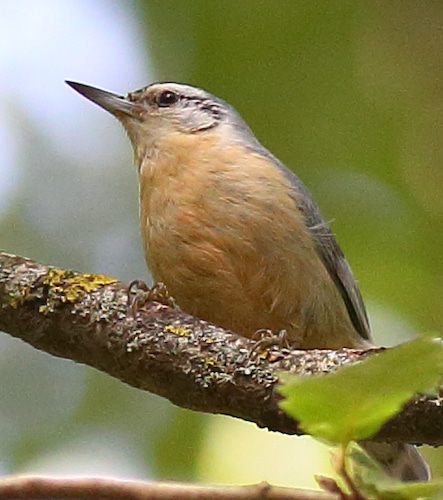
A variety of bird species, including the fairly recently known endemic nuthatch makes the country attractive for bird watchers. Most birding tours concentrate on finding the endangered and highly-localised Algerian Nuthatch in the beautiful remnant cedar forests of the northeast of the country. The forests are also inhabited by boar and jackals, but birds are often local subspecies or North African specialities and include Levaillant’s Woodpecker, the local race numidus of Great Spotted Woodpecker with its very distinctive red breast band, Eurasian Wryneck, Wood Lark, African Blue Tit, Great Tit, ledouci Coal Tit, mauritanica Short-toed Treecreeper, Eurasian Jay of the distinctive cervivalis race, Mistle Thrush, Eurasian Wren and africana Common Chaffinch. Raptors around the forest edges may include Common Kestrel, Eurasian Sparrowhawk, Western Marsh Harrier, Black and Red Kites and Booted Eagle together with Common Raven. Away from the forested areas can be found the likes of Barbary Partridge, Long-legged Buzzard (a race of Common Buzzard), Eurasian Hoopoe, Song Thrush, European Robin, Great Grey Shrike of the algeriensis sub-species, Sardinian and Tristram’s Warblers, European Serin, Spanish Sparrow and Cirl and Corn Buntings. Further south in the country are more truly African such as Red-billed Firefinch and African Silverbill. Around habitation one can find Laughing Dove, Rock Martin, White-crowned Wheatear, (Saharan) Eastern Olivaceous Warbler and House Bunting. In other places species include Desert Lark and Brown-necked Raven, Black Kite, Egyptian Vulture, Fulvous Chatterer and at the right times of the year migrant species might include Bluethroat, Common Redstart, Western Yellow Wagtail, Woodchat Shrike and Western Orphean Warbler.
Other wildlife includes Barbary Macaques, which are the sole native monkey. Various snakes, monitor lizards and numerous other reptiles can be found living among an array of rodents throughout the semi arid regions of Algeria. However, there are many other former resident animals that are now extinct, including Barbary Lions, Atlas Bears and Crocodiles.
In the north, some of the native flora includes Macchia scrub, olive trees, oaks, cedars and other conifers. The mountain regions contain large forests of evergreens (Aleppo pine, juniper, and evergreen oak) and some deciduous trees. Fig, eucalyptus, agave, and various palm trees grow in the warmer areas. The grape vine is indigenous to the coast. In the Sahara region, some oases have palm trees. Acacias with wild olives are the predominant flora in the remainder of the Sahara. Camels are still used extensively; the desert also abounds with venomous and nonvenomous snakes, scorpions, and numerous insects.
-
Wikipedia
GNU Free Documentation License
https://en.wikipedia.org/wiki/Algeria
-
Number of bird species: 445
(As at August 2024)
Number of endemics: 1
Algerian Nuthatch Sitta ledanti
The Algerian (formerly called Kabylian) nuthatch population is about 108. It was discovered in 1975, and it is confined to a forested island on one mountain top in Algeria. Goats and cattle prevent adequate regeneration of nearby vegetation. It is one of the 50 most endangered birds in the world.
-
Avibase
PDF ChecklistThis checklist includes all bird species found in Algeria , based on the best information available at this time. It is based on a wide variety of sources that I collated over many years. I am pleased to offer these checklists as a service to birdwatchers. If you find any error, please do not hesitate to report them. -
Wikipedia
Annotated ListThis is a list of the bird species recorded in Algeria. The avifauna of Algeria includes a total of 445 species. -
eBird
PDF ChecklistThis checklist is generated with data from eBird (ebird.org), a global database of bird sightings from birders like you. If you enjoy this checklist, please consider contributing your sightings to eBird. It is 100% free to take part, and your observations will help support birders, researchers, and conservationists worldwide.

-
Oiseaux d'Algerie - The Birds of Algeria
| By Aissa Moali & Paul Isenmann | Societé d'Etudes Ornithologiques de France | 2000 | Paperback | 336 pages, 115 colour photos, 210 maps | ISBN: 9782950654885 Buy this book from NHBS.com
-
MaghrebOrnitho
WebsiteMaghrebOrnitho is about birds in Northwest Africa (the Maghreb). Some birding news and articles may cover adjacent areas as well (bird migration, shared populations, potential vagrants from the south…). -
African Bird Club
WebsiteAlgeria is the second largest country in Africa and much of the interior is unexplored ornithologically. With over 400 species recorded including the endemic Algerian Nuthatch Sitta ledanti and some of the most important wetlands in the Mediterranean area, there is much to interest the visiting birder. Although Algeria's security situation is stabilising, there are still travel risks but French birdwatchers have been visiting the country again since 2002 -
L’Association Nationale Algérienne d'Ornithologie A.N.A.O.
Facebook Page
-
*Protected areas of Algeria
InformationSatellite View7 biosphere reserves, 9 RAMSAR sites and parks and nature reserves. -
Important Bird Areas
WebsiteSatellite ViewAlgeria is important for raptors, waterbirds including migrant wintering species, and large steppe birds. It has one endemic species Algerian Nuthatch Sitta ledanti which is a restricted range species, the distribution of which defines the North Algerian mountains secondary Endemic Bird Area. Algerian Nuthatch Sitta ledanti is known from four sites all within 30 km of each other on forested slopes above 1,000 m in the Petite Kabylie mountain range in the Tell region -
NP Djurdjuran
InformationSatellite Viewhe Djurdjura National Park is a refuge for a wide variety of fauna including hyena, wild boar, crested porcupine, hare, wild cat, jackal, mongoose, weasel, red fox and the Barbary Macaque, sometimes referred to as the Barbary Ape, although it is in fact not an ape, but a member of the Old World monkey species. Birding enthusiasts will appreciate the variety of birds in the park, which include a number of raptors such as the black vulture, booted eagle, long-legged buzzard, kestrel, golden eagle and peregrine falcon. -
NP El Kala - Lac Oubeïra et Lac Tonga
InformationSatellite ViewLe caractère exceptionnel d'El Kala réside dans sa réserve naturelle théoriquement protégée qui laisse le visiteur de cette région admiratif et contemplateur. Crée en 1983, Le Parc National s'étend sur une superficie de 76438 ha. Situé au nord-est de l'Algérie, il est limité à l'est par la frontière algéro-tunisienne, au nord par la mer, à l'ouest par le Cap Rosa, au sud par les contreforts du djebel El Ghorra. Le Parc est composé d'une mosaïque d'écosystèmes forestiers, lacustres, dunaires et marins, lui conférant une haute valeur biologique et écologique dans le bassin méditerranéen. Sa flore, sa faune et son patrimoine culturel lui ont valu son inscription en tant que réserve de la Biosphère par l'UNESCO en 1990. -
NR Djebel Babor
InformationSatellite ViewThis beautiful nature reserve is found in northern Algeria on the slopes of Djebel Babor Mountains. The reserve is particularly a protected forest reserve of Mediterranean conifer and mixed forest. This part of Algeria shares an eco-system or bio-sphere with characteristics similar to those seen in southern Spain and in the High Atlas Mountain ranges that cover most of the other part of North Africa’s coast to the Mediterranean Sea.
-
eBird
SightingseBirding This Year
-
BirdFinders
Tour OperatorThis exciting new tour will focus on the endangered and highly-localised Algerian Nuthatch in the beautiful remnant cedar forests of the northeast of the country. Other possible North African species include Barbary Partridge, Levaillant’s Woodpecker, African Blue Tit and Tristram’s Warbler. We are also offering an extension to southern Algeria where both Red-billed Firefinch and African Silverbill occur in their only Western Palearctic outpost. -
Native Eye
Tour OperatorThe largest country in Africa, Algeria stretches from the Mediterranean to the depths of the Sahara, and has hosted some of history’s most important civilisations. This trip shows you the many facets of a much maligned country, on a journey that takes you back more than two thousand years in time. -
NatureTrek
Tour OperatorBirding Algeria Algeria, officially the People’s Democratic Republic of Algeria, is a country located in North Africa. It is the largest country of the Mediterranean sea, the second largest on the African continent and the eleventh-largest country in the world in terms of land area. It is bordered by Tunisia in the northeast, Libya in the east, Niger in the southeast, Mali and Mauritania in the southwest, a few kilometers of the Western Sahara in the west, Morocco in the northwest, and the Mediterranean Sea in the north. Its size is almost 2,400,000 km² with an estimated population near to 35,000,000. The capital is Algiers. Most of the coastal area is hilly, sometimes even mountainous, and there are a few natural harbours. The area from the coast to the Tell Atlas is fertile. South of the Tell Atlas is a steppe landscape, which ends with the Saharan Atlas; further south, there is the Sahara desert. The Ahaggar Mountains, also known as the Hoggar, are a highland region in central Sahara, southern Algeria. They are located about 1,500 km (932 miles) south of the capital, Algiers and just west of Tamanghasset.Algiers, Oran, Constantine, and Annaba are Algeria’s main cities. In this region even in winter, midday desert temperatures can be very hot. After sunset, however, the clear, dry air permits rapid loss of heat, and the nights are cool to chilly. Enormous daily ranges in temperature are recorded. The highest temperature recorded in Tiguentour is 145.4 °F (60.5 °C) and is probably the highest reliable temperature ever recorded in Algeria under standard conditions. Rainfall is fairly abundant along the coastal part of the Tell Atlas, ranging from 400 to 670 mm annually, the amount of precipitation increasing from west to east. Precipitation is heaviest in the northern part of eastern Algeria, where it reaches as much as 1000 mm in some years. Farther inland, the rainfall is less plentiful. Prevailing winds that are easterly and north-easterly in summer change to westerly and northerly in winter and carry with them a general increase in precipitation from September through December, a decrease in the late winter and spring months, and a near absence of rainfall during the summer months. Algeria also has ergs, or sand dunes between mountains, which in the summer time when winds are heavy and gusty, temperatures can get up to 110 °F (43 °C).
-
2018 [09 September] - Karim Haddad
PDF ReportThe Algerian Nuthatch is the only species endemic of Algeria. It was only observed in four localities isolated from one another. The first discovery was on Mount Babor in 1975. -
2018 [10 October] - David Karr - Constantine and Djimla Forest
PDF ReportInspired by the flood of recent reports from birders visiting Algeria for its one endemic, the Algerian Nuthatch, Sitta ledanti, I contacted the resident expert, Karim Haddad, and hopped on a plane with the hope of joining the growing number of fellow enthusiasts to see this enigmatic little bird. -
2019 [03 March] - Bob Swann
PDF ReportInitially we started planning this trip in November 2018 with a view to visit both the north and south of the country. It was already established that visiting the Algerian Nuthatch site in the north was relatively straightforward. -
2019 [05 May] - Max Berlijn - Twitching the Algerian Nuthatch
PDF ReportThe list order is conformed the WP checklist with the recent changes on the splitting and lumping issue mainly based on publications in the “important magazines”. Subspecies is only mentioned when thought to be important and really visible in the field. -
2019 [06 June] - Bert de Bruin - Northern Algeria
PDF ReportWe made a short trip to Algeria with a stopover with a morning birding at Istanbul. In Istanbul, we were guided by Timur Caglar and in Algeria by Karim Haddad karim241267@yahoo.fr. We spent five days in Algeria. -
2019 [06 June] - Bill Simpson
PDF ReportTOUR Run by Karim Haddad karim241267@yahoo.fr and included 2 nights in the El Khayem Hotel in Constantine, all transport, all food and drinks and guiding along with his brother. -
2019 [06 June] - Dick Meijer - Twitching the Algerian Nuthatch
PDF ReportTravelling to Algeria to twitch the endemic and highly range-restricted Algerian Nuthatch is difficult to explain to non-birders. Most ambitious birders will understand though why one would invest so much effort, time and money to see this mythical, that was discovered in 1975, species... -
2020 [03 March] - , Klaus Drissner
PDF ReportLast year Bob Swan, Peter Stronach and Samuel Viles combined the first time the different parts of Algeria, to find Red-billed Firefinch and African Silverbill in the south as well as the Algerian Nuthatch in the north of the country. Thanks for this extremely helpful trip-report... -
2022 [06 June] - Roland van der Vliet
PDF ReportI wanted to see this very special species. I was too young in the early 1980s, when several birders visited the species. After the 1980s, Algeria became a dangerous country to visit. However, things changed in the 2000s so I planned a visit in summer 2020, but then the covid pandemic broke out. After two more years of waiting, we were finally able to visit in June 2022. And we were not disappointed! -
2023 [05 May] - Hamish Fletcher
PDF Report...As we passed through farmland near Tiddis, it was gratifying to hear and see so many Turtle Doves. In addition to these birds, Cattle Egrets, White Storks, Black Kites, Common Swifts, Barn Swallows, Collared Doves, Spotted Flycatchers, European Greenfinches, House Sparrows and Corn Buntings were frequently seen... -
2023 [05 May] - Lieven de Temmerman
PDF ReportThe focus of this Tour was to get quality views of one of the most isolated and scarce endemics in the West Palearctic, Algerian Nuthatch. -
2025 [12 December] - Mike Hunter
PDF Report...Walid Soukkou has gained an excellent reputation for organising 'all inclusive' short trips for birders: focussed around Algerian Nuthatch in the north, and the two Western Palearctic (WP) specialities of Red-billed Firefinch and African Silverbill in the south....
-
Algerian Nuthatch Sitta ledanti
WebpageThe Algerian Nuthatch twitch: easier than you think -
BirdLife DataZone
WebpageThe People’s Democratic Republic of Algeria is the second-largest country in Africa, after Sudan, with a total land area of 2,381,741 km². It is bordered to the west by Morocco and Mauritania, to the south-west by Mali, to the south-east by Niger and to the east by Libya and Tunisia. T -
Birds of Algeria
WebpageAfter the National Days of Algerian Birdwatchers JNOAA (Journées Nationales des Ornithologues Amateurs Algériens) organized by the Association AquaCirta (now is: EcoCirta) on 18-19-20 May 2017 in Constantine, an differents resolutions have been put in place. And among them, they noted that it is necessary to archive the observations of everyone in the same database (eBird and iNaturalist are the best solutions) and publish the observations of the amateurs in the form of articles and notes of a scientific nature. -
Les oiseaux d'Algerie
WebsiteAnnotated list [in french] -
Ornithologie en Alg
Websitearchived discussion of important birds in the country
-
North Africa Birds
BLOG