

Republic of Sierra Leone
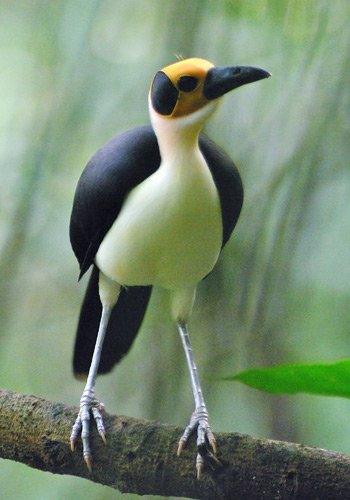
Sierra Leone is a country on the southwest coast of West Africa. It is bordered by Guinea in the northeast, Liberia in the southeast, and the Atlantic Ocean in the southwest. Sierra Leone covers a total area of nearly 72,000 km2 (nearly 28,000 square miles) and has a population of around 9 million people. Freetown is the capital, seat of government, and largest city with about 1.4 million residents. Bo is the second largest city. Other major cities in the country with a population over 100,000 are Kenema, Koidu Town and Makeni. The country is home to Fourah Bay College, the oldest (1827) university in West Africa. The country has a tropical climate, with a diverse environment ranging from savannah to rainforests. The country is rich with natural resources, notably diamonds, gold, bauxite and aluminium.
The country has four distinct geographical regions. In eastern Sierra Leone the plateau is interspersed with high mountains, where Mount Bintumani reaches 6,391 feet, the highest point in the country. The upper part of the drainage basin of the Moa River is located in the south of this region. The centre of the country is a region of lowland plains, containing forests, bush and farmland, that occupies about 43% of Sierra Leone’s land area. The northern section of this has been categorised by the World Wildlife Fund as part of the Guinean forest-savanna mosaic ecoregion, while the south is rain-forested plains and farmland. In the west, Sierra Leone has some 400 km of Atlantic coastline, giving it both bountiful marine resources and attractive tourist potential. The coast has areas of low-lying Guinean mangroves swamp. The national capital Freetown sits on a mountainous coastal peninsula, situated next to the Sierra Leone Harbour.
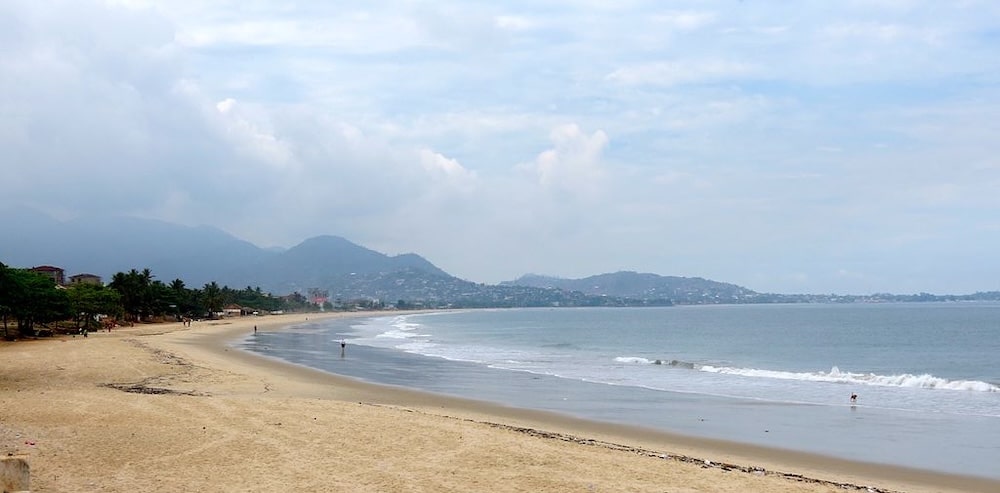
Beach near Freetown – ©Erik Cleves Kristensen CC BY 2.0 via Wikimedia Commons
The climate is tropical, with two seasons determining the agricultural cycle: the rainy season from May to November, and a dry season from December to May, which includes harmattan, when cool, dry winds blow in off the Sahara Desert and the temperature varies from around 26 to 36 °C during the year.
Birding Sierra Leone
Logging, mining, slash and burn, and deforestation for alternative land use – such as cattle grazing – have dramatically decreased forested land in Sierra Leone since the 1980s. Sierra Leone lacked a forest management system due to a brutal civil war that caused tens of thousands of deaths. Deforestation rates have increased 7.3% since the end of the civil war. On paper, 55 protected areas covered 4.5% of Sierra Leone.
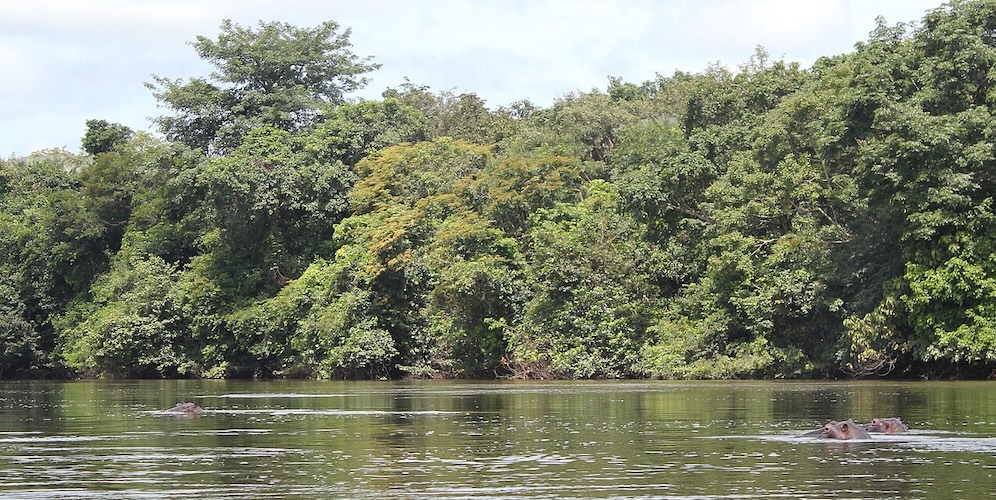
Outamba Kilimi with Hippos – ©Leasmhar CC BY-SA 3.0 via Wikimedia Commons
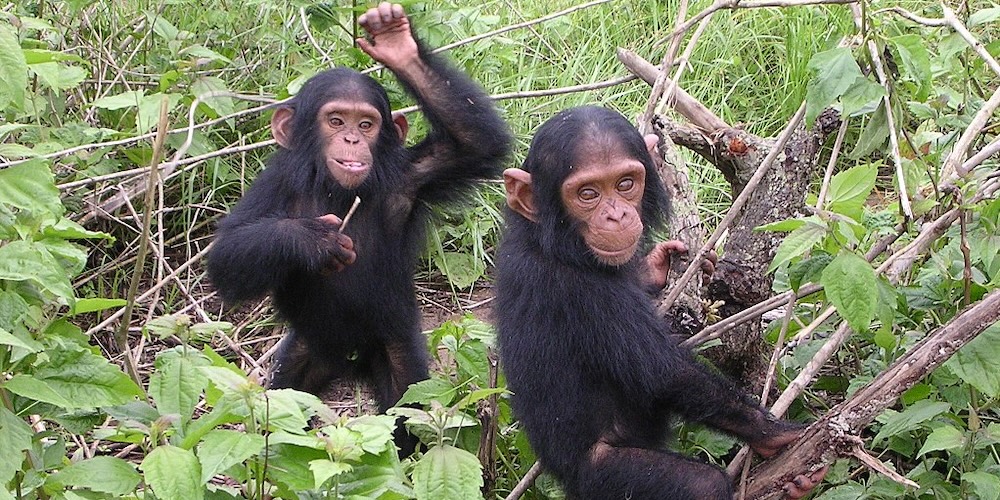
The wildlife of Sierra Leone is very diverse due to the variety of different habitats within the country. Sierra Leone is home to approximately 2090 known higher plant species, 147 mammals, 680 birds, 67 reptiles, 35 amphibians, and 99 fish species. The endangered pygmy hippopotamus has territories around the islands on the Moa River and is widespread in the Gola Forest area. There are three species of wild pig that occur across Sierra Leone: the wart hog, the giant forest hog and the red river hog. It has 15 identified species of primates that include bushbaby, monkeys and a great ape, the common chimpanzee which is Sierra Leone’s largest primate. A 2010 census estimated a wild population in excess of 5500 more than double the number previously thought to live in the country with the largest density in the Loma area, 2.69 individuals per km2, and the Outamba, with 1.21 individuals per km2.
©Delphine Bruyere CC BY-SA 3.0 via Wikimedia Commons
In June 2005, the Royal Society for the Protection of Birds (RSPB) and Bird Life International agreed to support a conservation-sustainable development project in the Gola Forest in southeastern Sierra Leone, the most important surviving fragment of rain forest in the country. At least ten birds are considered endangered including rufous fishing-owl and Gola malimbe. In the coastal area there are several important sites for migratory ducks and wading birds.
-
Wikipedia
GNU Free Documentation License
https://en.wikipedia.org/wiki/Sierra_Leone
-
Number of bird species: 680
(As at January 2025)
-
Avibase
PDF ChecklistThis checklist includes all bird species found in Sierra Leone , based on the best information available at this time. It is based on a wide variety of sources that I collated over many years. I am pleased to offer these checklists as a service to birdwatchers. If you find any error, please do not hesitate to report them. -
BirdLife
Annotated ListSierra Leone at a glance... -
E-Bird
PDF ChecklistThis checklist is generated with data from eBird (ebird.org), a global database of bird sightings from birders like you. If you enjoy this checklist, please consider contributing your sightings to eBird. It is 100% free to take part, and your observations will help support birders, researchers, and conservationists worldwide. -
Wikipedia
Annotated ListThis is a list of the bird species recorded in Sierra Leone. The avifauna of Sierra Leone include a total of 677 species.

-
Birds of Western Africa
| By Nik Borrow & Ron Demey | Christopher Helm | 2014 | Edition 2 | Paperback | 592 pages, 266 plates with colour illustrations; colour distribution maps | ISBN: 9781472905680 Buy this book from NHBS.com -
Birds of Western and Central Africa
| By Ber van Perlo | Princeton University Press | 2003 | Paperback | 384 pages, 109 plates with colour illustrations; colour & b/w illustrations, 1500+ b/w distribution maps, colour maps | Out of Print | Out of Print | ISBN: 9780691007144 Buy this book from NHBS.com
-
African Bird Club
WebsiteSierra Leone has 626 bird species recorded in an area of similar size to Scotland. It is also one of the best places to see the enigmatic White-necked Picathartes Picathartes gymnocephalus and perhaps to find the eponymous Sierra Leone Prinia Prinia leontica. The potential for birdwatchers is therefore high. A 10 year conflict and its aftermath denied birdwatchers the opportunity to visit in the recent past, but this is slowly changing as peace and democracy take hold -
Conservation Society of Sierra Leone
Website4C Main Motor Road, Tengbeh Town, Freetown, SL cssl_03@yahoo.com -
West African Ornithological Society
WebsiteThe West African Ornithological Society grew out of the Nigerian Ornithologists
-
*List of protected areas of Sierra Leone
InformationSatellite View... including national parks, game reserves, conservation areas, wetlands... -
IBAs
WebsiteSatellite View626 bird species have been recorded in Sierra Leone of which over 430 are resident and over 130 are regular seasonal migrants including 90 Palearctic migrants. There are 23 species of global conservation concern. The forests of eastern Sierra Leone form the western part of the Upper Guinea forests Endemic Bird Area (EBA) and 14 of its 15 restricted range species occur in the country. Some 174 species of the Guinea-Congo forests biome and 28 of the Sudan-Guinea Savanna biome are known from Sierra Leone. The coastline forms part of the eastern Atlantic flyway for migrant waterbirds and is probably one of the major stop-over and wintering sites for many Palearctic waders along the coast of west Africa -
NP Gola Rainforest
InformationSatellite ViewThe GRNP is Sierra Leone's largest tract of rainforest, and covers 71,070 hectares in the east of the country. Recent biological surveys show that the forest is home to more than 330 species of birds, 14 of which are threatened, over 650 species of butterfly and 49 species of mammals, including a population of 300+ chimpanzees, pygmy hippopotamuses and a much dwindled forest elephant population. -
NP Outamba-Kilimi
InformationSatellite ViewThe area was originally chosen for preservation as it contains a large number of chimpanzees. Wildlife includes primates such as chimpanzees, colobus monkeys and sooty mangabeys; hippopotamuses and pygmy hippos; elephants; common warthogs; rare bongo antelopes and over a hundred species of birds. -
NP Western Area Forest Reserve
InformationSatellite ViewThe Reserve is home to the Tacugama Chimpanzee Sanctuary - It is the westernmost semi-deciduous closed canopy forest in Sierra. Leone. The forest is home to various endangered species, including a wide variety of endangered birds -
WS Mamunta Mayosso
InformationSatellite ViewIt is one of the few areas in the country that protects the threatened Dwarf Crocodile as well as being home to 252 bird species despite its small size. -
WS Tiwai Island
WebsiteSatellite ViewTiwai is a community conservation programme, managed by the Tiwai Island Administrative Committee (TIAC), which represents both communities, government, Universities & conservation organizations. All funds raised go towards running the project as well as supporting the Community Development Fund, to help finance community initiated programmes.
-
eBird
SightingseBirding This Month
-
FEATURED
Ashanti
Tour OperatorA stunningly beautiful country with wonderfully welcoming locals, Sierra Leone meaning Lion Mountains has enjoyed almost two decades of peace since the civil unrest in the 1990’s and that’s exactly how Sierra Leoneans intend to continue. -
BirdQuest
Tour OperatorSierra Leone Birding Tours: our Sierra Leone bird watching holiday explores a country that has only recently started to register on the bird watching map. Our Sierra Leone birding tour offers some marvellous frontier African birding, being rich in West African specialities, including many Guinea Forest endemics, among which is the splendid Yellow-headed Picathartes or White-necked Rockfowl. -
Birding Africa
Tour OperatorOur Upper Guinea Specials Tour – combining Liberia and Sierre Leone – is one of several African tours that we have pioneered, and puts the comfort back into birding this little-known region. Gone are the tough hikes and rough camping required on other tours to Sierra Leone, without compromising on the birds. -
Endless Plains Africa
Tour OperatorThis is a 3-day birding watching tour in Sierra Leone’s Principal Nature Reserve on Tiwai Island in the Moa River. -
Mafilton Green Resort
Local Day ToursSierra Leone has 15 of the 16 most unusual birds of the Upper Guinea forest endemics. We arrange bird watching tours in three different sizes and budgets. The number of travel days determines how many places you can visit and thus also which species you have a chance to see. -
NatureTrek
Tour OperatorA 19-day holiday to this less visited west African country in search of birds and mammals, including some endemic and regional endemic species, taking in varied habitats from coast to forest and savannah to river. -
Ornis Birding Expeditions
Tour OperatorThis tour covers all accessible specialties of these two remote West African countries and in full comfort with no camping or long hikes! Birding in Liberia includes Mount Nimba, with Black-headed Rufous Warbler, Sierra Leone Prinia, Gola Malimbe, and Nimba Flycatcher as main targets. Tiwai Island and Gola North includes Rufous Fishing Owl, African Pitta, White-necked Picathartes, Turati's Boubou, Emerald Starling, Dybowski's Twinspot, and many more. -
Rainbow Tours
Tour OperatorSierra Leone natural history holidays are off the beaten track adventures that take you deep into relatively undiscovered parts of West Africa. Wildlife viewing in the dense Upper Guinea rainforests involves determination and luck, but Sierra Leone has some of the highest concentrations of primates and birds in West Africa. -
Tacugama
Local Day ToursPreserving Sierra Leone's Wildlife since 1995 Located just on the outskirts of Freetown, in the Western Area Peninsula National Park, Tacugama Chimpanzee Sanctuary... -
VSL Travel
Local Tour OperatorPicathartes Spotting Western Area Peninsula Forest, Tokeh, Sierra Leone
-
2018 [01 January] - Nik Borrow
PDF ReportA series of terrible events have befallen Sierra Leone since our last visit and in the aftermath of Ebola the country has been struggling to once again find its feet and their tourist industry is keen to encourage visitors to the country -
2018 [12 December] - Mike Moore
PDF ReportHaving spent 2 ½ months in Ghana prior to flying into Freetown, I was wanting to focus on trying to find a number of range-restricted species in Sierra Leone and a few others that I missed during my time in Ghana. -
2019 [01 January] - Mark Van Beirs
PDF ReportThe delicate Sierra Leone Prina, the exquisite Gola Malimbe, the rarely-seen Turati’s Boubou, the very smart Emerald Starling, the jewel-like Crimson Seedcracker and the extraordinary White-necked Rockfowl (or Yellow-headed Picathartes) were without a doubt the most favoured birds of our January 2019 Sierra Leone tour. Searching for Upper Guinea Forest endemics in this much maligned country is more difficult than in Ghana, due to the much less developed roads and tourist infrastructure -
2019 [04 April] - Daniel Branch
PDF ReportSierra Leone is an amazing country, with a vibrant atmosphere and amazing people. With so much to offer both culturally and birding, it is remarkable that so few birders make tracks here. -
2019 [12 December] - David Hoddinott
PDF ReportThe following morning, we set off early for the drive to the Western Peninsula Forest Reserve where we enjoyed some good forest birding. Some of the highlights included several Sabine’s Spinetail, Klaas’s and Diederik Cuckoo, Western Bronze-naped Pigeon, Yellow-casqued Hornbill – the first of many, a slew of woodpeckers including Buff-spotted, Brown-eared, Fire-bellied, and Melancholy Woodpecker, West African Wattle-eye, Sabine’s Puffback, splendid views of a stunning male Blue-headed Crested Flycatcher... -
2023 [01 January] - Michael Mills
PDF ReportUpper Guinea Special