

Corvidae – Crows, Jays, Magpies & Allies
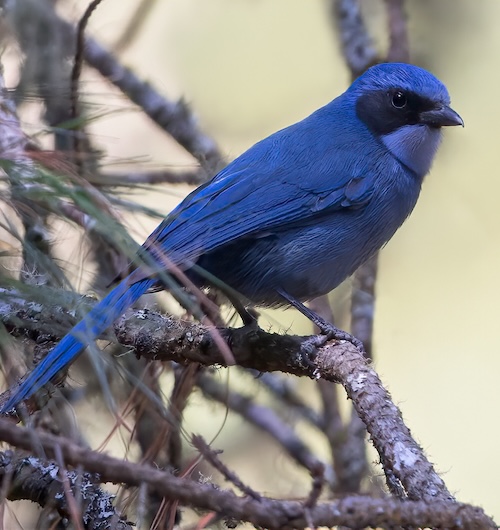
The Corvidae (Crows, Jays, Magpies and allies) also known as the corvids or simply the crow family, are a fascinating family of birds. The corvids happen to be one of the larger bird families with around 135 species. Many people do not know the crow family includes a variety of birds other than the crows and ravens including the jays, rooks, treepies, magpies, choughs (pronounced ‘chuffs’), jackdaws and nutcrackers. The genus Corvus containing 50 species makes up over a third of the entire family. Many species are among the largest passerines and the raven species are the largest of all. The variation within this family is abundant. The similarities are as well.
Over the years, much disagreement has arisen on the exact evolutionary relationships of the corvid family and their relatives. What eventually seemed clear was that corvids are derived from Australasian ancestors, and spread throughout the world from there. Other lineages derived from these ancestors evolved into ecologically diverse, but often Australasian, groups. Clarification of the interrelationships of the corvids has been achieved based on cladistic analysis of several DNA sequences. The jays and magpies do not constitute monophyletic lineages, but rather seem to split up into an American and Old-World lineage, and a Holarctic and Oriental lineage, respectively. These are not closely related among each other. The position of the azure-winged magpie, which has always been of undistinguished lineage, is less clear than previously thought.
Corvids are large to very large passerines with a robust build and strong legs; all species, except the Pinyon Jay, have nostrils covered by bristle-like feathers. Many corvids of temperate zones have mainly black or blue coloured plumage; however, some are pied black and white, some have a blue-purple iridescence, and many tropical species are brightly coloured. The sexes are very similar in colour and size. Corvids have strong, stout bills and large wingspans. The smallest corvid is the Dwarf Jay Cyanolyca nanus, at 41 g and 21.5 cm. The largest corvids are the Common Raven Corvus corax and the Thick-billed Raven Corvus crassirostris, both of which regularly exceed 1,400 grams and 65 cm. Species can be identified based on size, shape, and geography; however, some, especially the Australian crows, are best identified by their raucous calls.
All are medium to large in size, with strong feet and bills, rictal bristles, and a single moult each year (most passerines moult twice). Corvids are found worldwide, except for the southern tip of South America and the polar ice caps. The majority of the species are found in tropical South and Central America and in southern Asia, with fewer than 10 species each in Africa and Australasia. The genus Corvus has re-entered Australia in relatively recent geological prehistory, with five species and one subspecies there. Several species of raven have reached oceanic islands, and some of these species are now highly threatened with extinction, or have already become extinct. Corvids occur in most climatic zones. Most are sedentary, and do not migrate significantly. However, during a shortage of food, irruptive migration can occur. When species are migratory, they will form large flocks in the early autumn (around August in the Northern Hemisphere) and travel south.
Many species are territorial, protecting territories throughout the year, or simply during the breeding season. In some cases, territories may only be guarded during the day, with the pair joining off-territory roosts at night. Some corvids are well-known communal roosters. Some groups of roosting corvids can be very large, with a roost of 65,000 rooks once counted in Scotland. Some, including the rook and the jackdaw, are also communal nesters.
Some corvids have strong organization and community groups. Jackdaws, for example, have a strong social hierarchy, and are facultatively colonial during breeding. Providing mutual aid has also been recorded within many of the corvid species.
Some corvids can be aggressive. Blue jays, for example, are well known to attack anything that threatens their nest. Crows have been known to attack dogs, cats, ravens, and birds of prey. Most of the time, these assaults take place as a distraction long enough to allow an opportunity for stealing food.
The natural diet of many corvid species is omnivorous, consisting of invertebrates, nestlings, small mammals, berries, fruits, seeds, and carrion. However, some corvids, especially the crows, have adapted well to human conditions, and have come to rely on human food sources. In a US study of American Crows, Common Ravens, and Steller’s Jays around campgrounds and human settlements, the crows appeared to have the most diverse diet of all, taking anthropogenic foods, such as: bread, spaghetti, fried potatoes, dog food, sandwiches, and livestock feed. The increase in available human food sources is contributing to population rises in some corvid species.
|
|
|
|
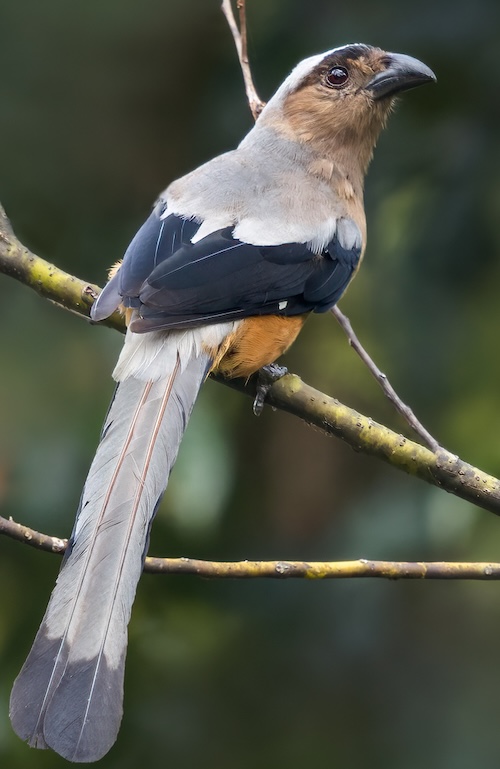
Bornean Treepie Dendrocitta cinerascens |
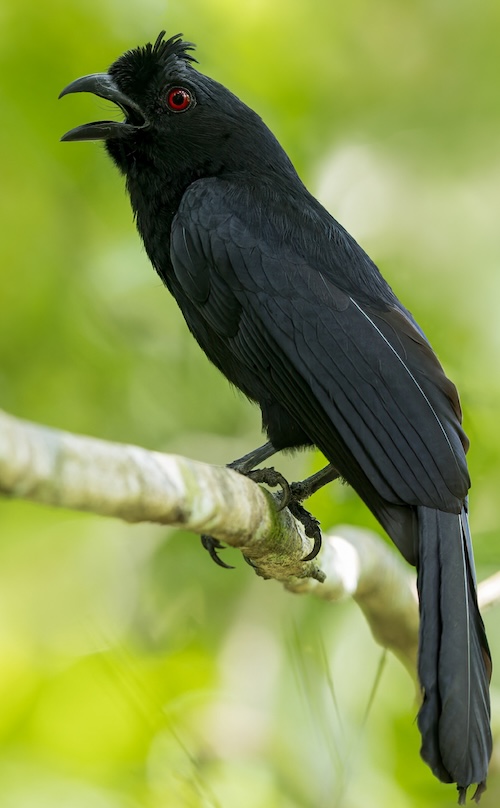
Bornean Black Magpie Platysmurus aterrimus |
|
|
|
|
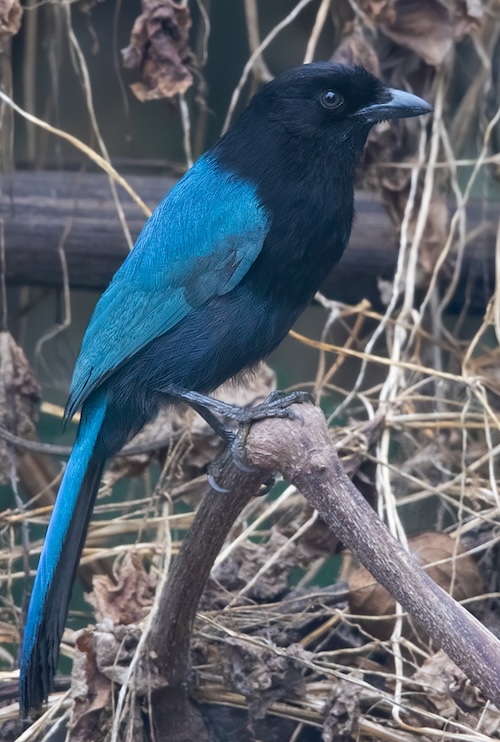
Bushy-crested Jay Cyanocorax melanocyaneus |
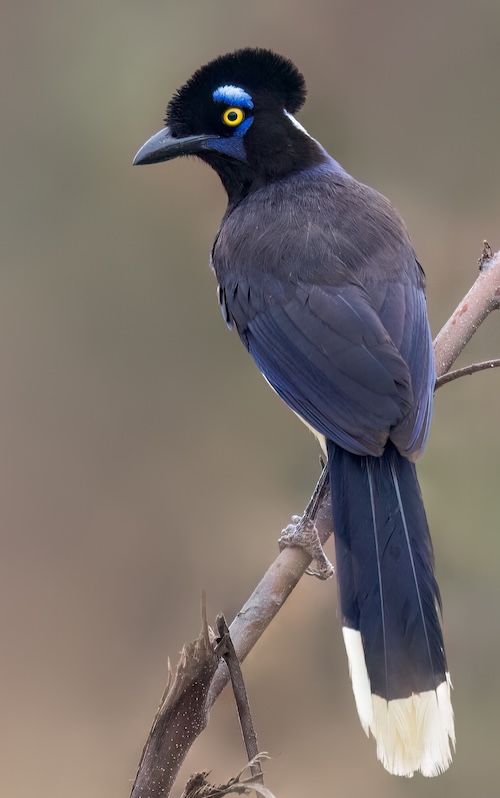
Plush-crested Jay Cyanocorax chrysops |
|
All photos in this text courtesy of ©Dubi Shapiro unless otherwise attributed |
|
Some corvids are predators of other birds. During the wintering months, corvids typically form foraging flocks. However, some crows also eat many agricultural pests, including cutworms, wireworms, grasshoppers, and harmful weeds. Some corvids will eat carrion, and since they lack a specialized beak for tearing into flesh, they must wait until animals are opened, whether by other predators or as roadkill.
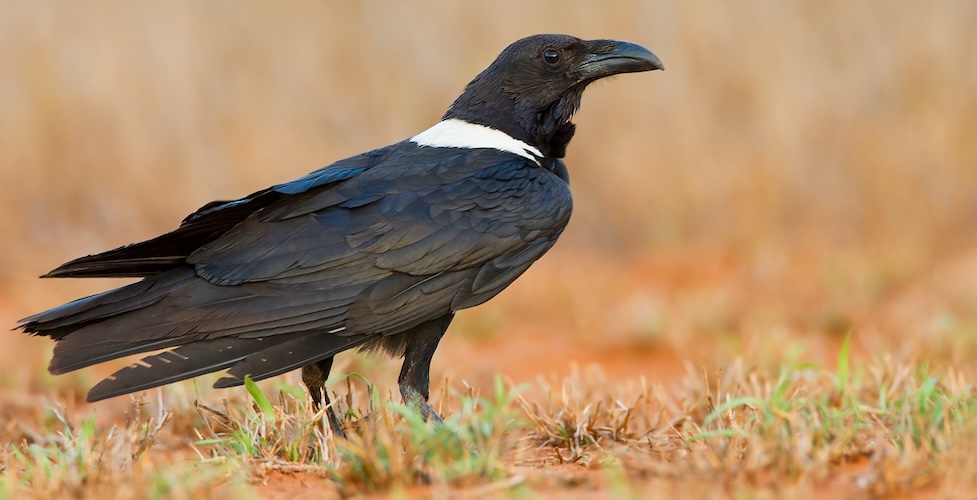
Pied Crow Corvus albus
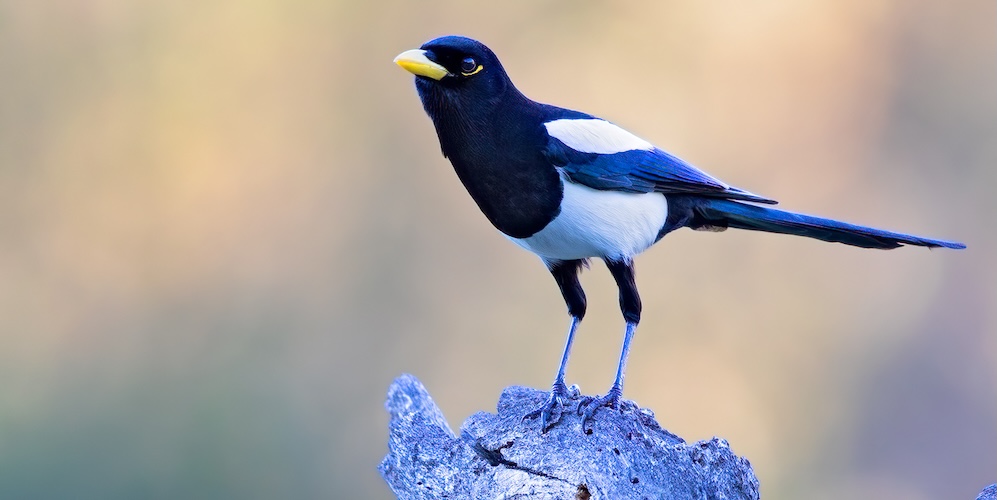
Yellow-billed Magpie Pica nuttalli
Mate selection is quite complex, and accompanied with much social play in the Corvidae. Youngsters of social corvid species undergo a series of tests, including aerobatic feats, before being accepted as a mate by the opposite sex. The partner bonds are extremely strong, and even lifelong in some species. This monogamous lifestyle, however, can still contain extra-pair copulations. Males and females build large nests together in trees or on ledges; jackdaws are known to breed in buildings and in rabbit warrens. The male will also feed the female during incubation. The nests are constructed of a mass of bulky twigs lined with grass and bark. Corvids can lay between three and ten eggs, typically ranging between four and seven. The eggs are usually greenish in colour with brown blotches. Once hatched, the young remain in the nests for up to 6–10 weeks depending on the species.
 |
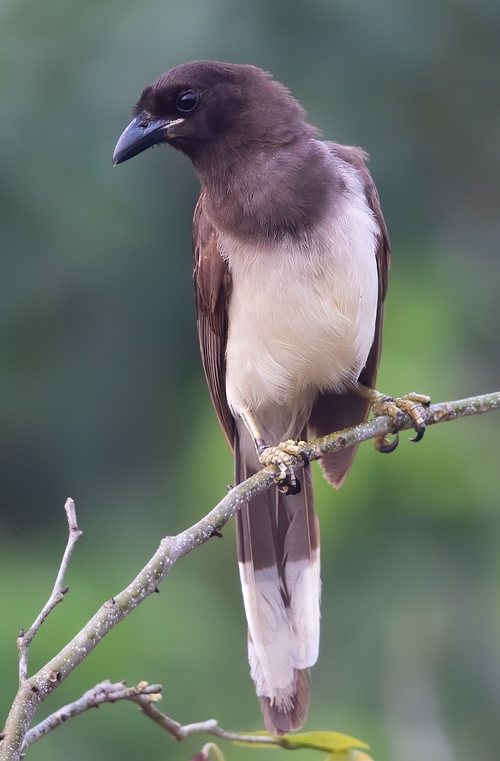 |
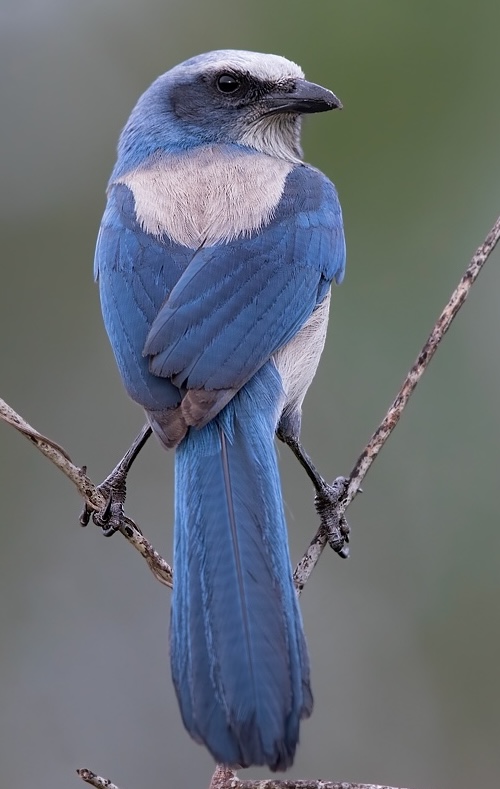
| Florida Scrub Jay Aphelocoma coerulescens | Brown Jay Cyanocorax morio |
 |
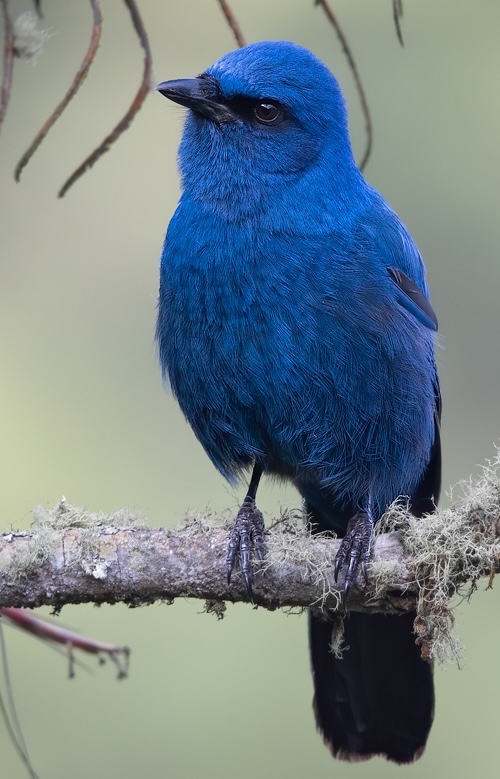 |
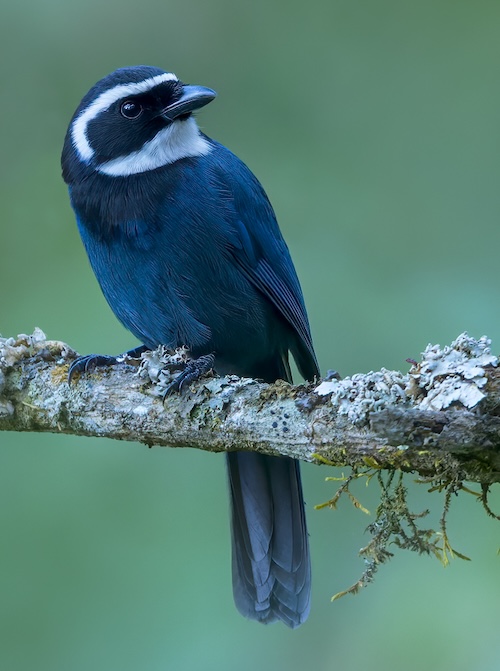
| White-throated Jay Cyanolyca mirabilis | Unicolored Jay Aphelocoma unicolor |
Corvids use several different forms of parental care, including bi-parental care and cooperative breeding. Helpers at the nest in most cooperatively-breeding birds are males, while females join other groups. White-throated Magpie-jays are cooperatively-breeding corvids where the helpers are mostly female. Young corvids have been known to play and take part in elaborate social games. Documented group games follow ‘king of the mountain’ or ‘follow the leader’ patterns. Other play involves the manipulation, passing, and balancing of sticks. Corvids also take part in other activities, such as sliding down smooth surfaces. These games are understood to play a large role in the adaptive and survival ability of the birds.
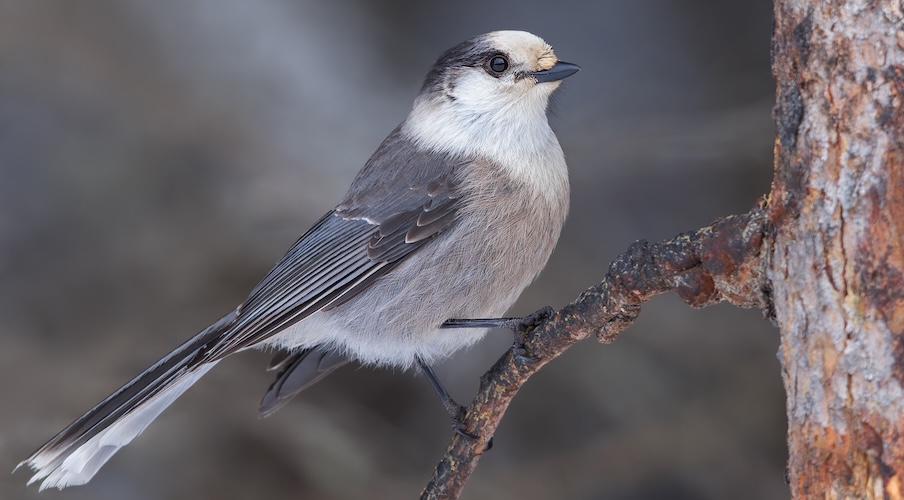
Grey Jay Perisoreus canadensis
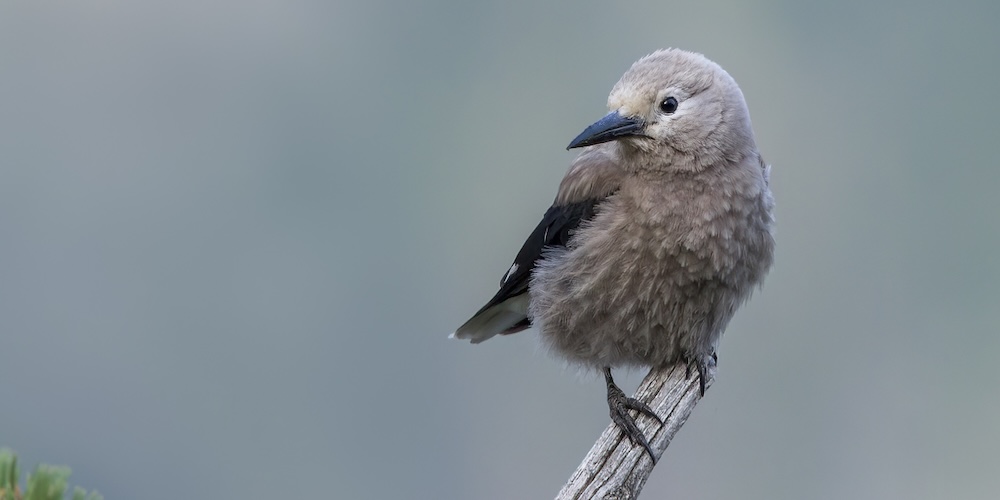
Clark’s Nutcracker Nucifraga columbiana
Corvids display remarkable intelligence for animals of their size, and are among the most intelligent birds thus far studied. Specifically, members of the family have demonstrated self-awareness in mirror tests (Eurasian Magpies) and tool-making ability (e.g. crows and rooks), skills which until recently were thought to be possessed only by humans and a few other mammals. Their total brain-to-body mass ratio is equal to that of non-human great apes and cetaceans, and only slightly lower than that of humans. They are the most intelligent, adaptive birds in the world.
|
|
|
|
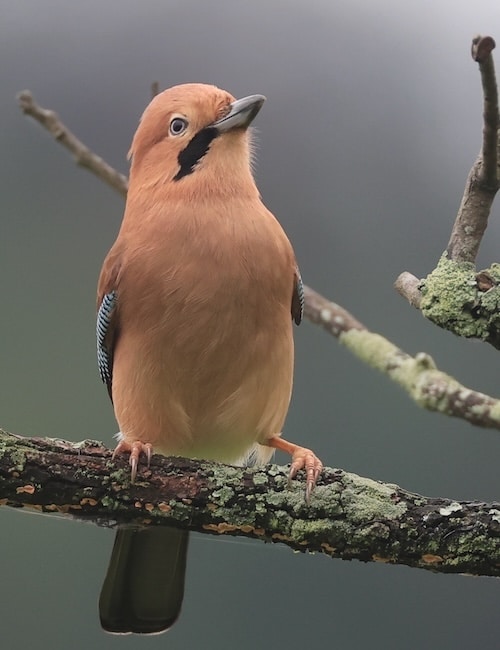
Eurasian Jay Garrulus glandarius |
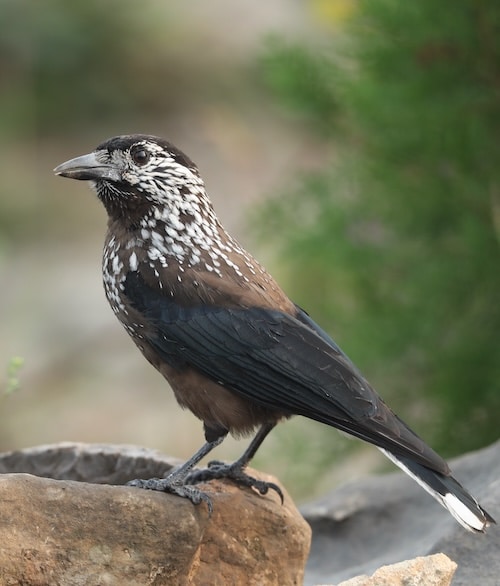
Spotted Nutcracker Nucifraga caryocatactes |
|
|
|
|
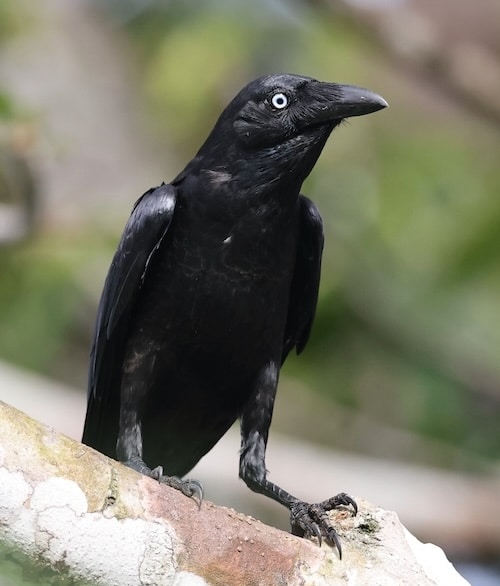
Torresian Crow Corvus orru |
Bismarck Crow Corvus insularis |
|
The above four photos courtesy of ©Nick Ludovic Green Bird-Photo-Tours ASIA
|
|
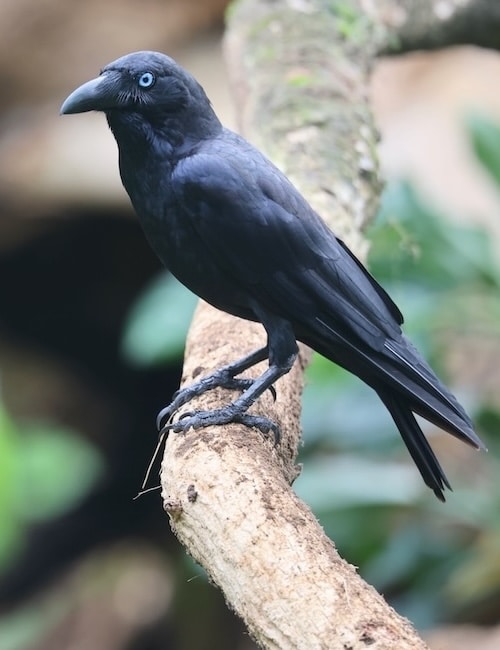
Captivating and outwardly curious they use ordinary objects as tools and toys. Wise enough to know the benefits of playing, they know how to have fun. They are some of the only birds who engage in social play like humans. They are forward thinking birds – always planning ahead, caching food up to a year and then retrieving it from hundreds of different locations with ease.
-
Number of bird species: 135
(As at November 2025)
According to the recently (2025) amalgamated AviList, there are one hundred and thirty-five species, in twenty-two genera in the Corvidae family. They are:
Alpine Chough Pyrrhocorax graculus
Red-billed Chough Pyrrhocorax pyrrhocorax
Racket-tailed Treepie Crypsirina temia
Hooded Treepie Crypsirina cucullata
Ratchet-tailed Treepie Temnurus temnurus
Malayan Black Magpie Platysmurus leucopterus
Bornean Black Magpie Platysmurus aterrimus
Rufous Treepie Dendrocitta vagabunda
Grey Treepie Dendrocitta formosae
Sumatran Treepie Dendrocitta occipitalis
Bornean Treepie Dendrocitta cinerascens
White-bellied Treepie Dendrocitta leucogastra
Collared Treepie Dendrocitta frontalis
Andaman Treepie Dendrocitta bayleii
Common Green Magpie Cissa chinensis
Indochinese Green Magpie Cissa hypoleuca
Javan Green Magpie Cissa thalassina
Bornean Green Magpie Cissa jefferyi
Sri Lanka Blue Magpie Urocissa ornata
Taiwan Blue Magpie Urocissa caerulea
Yellow-billed Blue Magpie Urocissa flavirostris
Red-billed Blue Magpie Urocissa erythroryncha
White-winged Magpie Urocissa whiteheadi
Iberian Magpie Cyanopica cooki
Azure-winged Magpie Cyanopica cyanus
Siberian Jay Perisoreus infaustus
Sichuan Jay Perisoreus internigrans
Grey Jay Perisoreus canadensis
White-throated Jay Cyanolyca mirabilis
Dwarf Jay Cyanolyca nanus
Black-throated Jay Cyanolyca pumilo
Silvery-throated Jay Cyanolyca argentigula
Azure-hooded Jay Cyanolyca cucullata
Beautiful Jay Cyanolyca pulchra
Black-collared Jay Cyanolyca armillata
Turquoise Jay Cyanolyca turcosa
White-collared Jay Cyanolyca viridicyanus
Pinyon Jay Gymnorhinus cyanocephalus
Blue Jay Cyanocitta cristata
Steller’s Jay Cyanocitta stelleri
Florida Scrub Jay Aphelocoma coerulescens
Island Scrub Jay Aphelocoma insularis
California Scrub Jay Aphelocoma californica
Woodhouse’s Scrub Jay Aphelocoma woodhouseii
Mexican Jay Aphelocoma wollweberi
Transvolcanic Jay Aphelocoma ultramarina
Unicolored Jay Aphelocoma unicolor
Black-throated Magpie Jay Cyanocorax colliei
White-throated Magpie Jay Cyanocorax formosus
Brown Jay Cyanocorax morio
Azure Jay Cyanocorax coeruleus
Violaceous Jay Cyanocorax violaceus
Purplish Jay Cyanocorax cyanomelas
Curl-crested Jay Cyanocorax cristatellus
Green Jay Cyanocorax yncas
White-tailed Jay Cyanocorax mystacalis
Bushy-crested Jay Cyanocorax melanocyaneus
Yucatan Jay Cyanocorax yucatanicus
Purplish-backed Jay Cyanocorax beecheii
San Blas Jay Cyanocorax sanblasianus
Tufted Jay Cyanocorax dickeyi
Black-chested Jay Cyanocorax affinis
Azure-naped Jay Cyanocorax heilprini
Cayenne Jay Cyanocorax cayanus
Plush-crested Jay Cyanocorax chrysops
White-naped Jay Cyanocorax cyanopogon
Eurasian Jay Garrulus glandarius
Black-headed Jay Garrulus lanceolatus
Lidth’s Jay Garrulus lidthi
Stresemann’s Bushcrow Zavattariornis stresemanni
Maghreb Magpie Pica mauritanica
Oriental Magpie Pica serica
Black-rumpedMagpie Pica bottanensis
Asir Magpie Pica asirensis
Eurasian Magpie Pica pica
Black-billed Magpie Pica hudsonia
Yellow-billed Magpie Pica nuttalli
Piapiac Ptilostomus afer
Henderson’s Ground Jay Podoces hendersoni
Biddulph’s Ground Jay Podoces biddulphi
Pander’s Ground Jay Podoces panderi
Pleske’s Ground Jay Podoces pleskei
Clark’s Nutcracker Nucifraga columbiana
Spotted Nutcracker Nucifraga caryocatactes
Southern Nutcracker Nucifraga hemispila
Kashmir Nutcracker Nucifraga multipunctata
Daurian Jackdaw Coloeus dauuricus
Western Jackdaw Coloeus monedula
Cuban Crow Corvus nasicus
Jamaican Crow Corvus jamaicensis
White-necked Crow Corvus leucognaphalus
Hispaniolan Palm Crow Corvus palmarum
Cuban Palm Crow Corvus minutus
Fish Crow Corvus ossifragus
Tamaulipas Crow Corvus imparatus
Sinaloa Crow Corvus sinaloae
Cape Crow Corvus capensis
Hawaiian Crow Corvus hawaiiensis
Rook Corvus frugilegus
White-necked Raven Corvus albicollis
Thick-billed Raven Corvus crassirostris
Brown-necked Raven Corvus ruficollis
Pied Crow Corvus albus
Somali Crow Corvus edithae
Chihuahuan Raven Corvus cryptoleucus
Fan-tailed Raven Corvus rhipidurus
Northern Raven Corvus corax
American Crow Corvus brachyrhynchos
Collared Crow Corvus torquatus
Carrion Crow Corvus corone
Flores Crow Corvus florensis
House Crow Corvus splendens
Mariana Crow Corvus kubaryi
Philippine Jungle Crow Corvus philippinus
Large-billed Crow Corvus macrorhynchos
Piping Crow Corvus typicus
Banggai Crow Corvus unicolor
Slender-billed Crow Corvus enca
Sierra Madre Crow Corvus sierramadrensis
Samar Crow Corvus samarensis
Sulawesi Crow Corvus celebensis
Palawan Crow Corvus pusillus
Long-billed Crow Corvus validus
New Caledonian Crow Corvus moneduloides
White-billed Crow Corvus woodfordi
Bougainville Crow Corvus meeki
Violet Crow Corvus violaceus
Brown-headed Crow Corvus fuscicapillus
Grey Crow Corvus tristis
Australian Raven Corvus coronoides
Little Raven Corvus mellori
Forest Raven Corvus tasmanicus
Bismarck Crow Corvus insularis
Little Crow Corvus bennetti
Torresian Crow Corvus orru
-
Crows
| (Encounters with the Wise Guys of the Avian World) | by Candace Savage | Greystone Books | 2015 | Paperback | 130 pages, colour & b/w photos, colour & b/w illustrations | ISBN: 9781771640855 Buy this book from NHBS.com -
Crows and Jays
| By Steve Madge & Hilary Burn | A & C Black | 2013 | Hardback | 192 pages, 30 plates with colour illustrations; b/w illustrations, 120 colour distribution maps | ISBN: 9781408157381 Buy this book from NHBS.com -
In the Company of Crows and Ravens
| John M Marzluff & Tony Angell | Yale University Press | 2007 | Paperback | 384 pages, 108 b/w illustrations | ISBN: 9780300122558 Buy this book from NHBS.com -
The Magpies
| (The Ecology and Behaviour of Black-billed and Yellow-billed Magpies) | by Tim Birkhead | T & AD Poyser Ltd (A & C Black) | 2010 | Hardback | 270 pages, photos, illustrations, tables | ISBN: 9781408140246 Buy this book from NHBS.com
-
Corvidae
Family AccountCorvidae is a cosmopolitan family of oscine passerine birds that contains the crows, ravens, rooks, magpies, jackdaws, jays, treepies, choughs, and nutcrackers. -
Corvidae
Family AccountCorvidae includes crows, jays, and magpies. Examples are Canada Jay, Blue Jay, Eurasian Magpie, and American Crow.
Given that there are a large number of species in this family, Fatbirder does not provide quick links to all of them. However, the entries below do include links to representatives of every genera, all those illustrated and some of the most often encountered, iconic or sought-after species.
-
Australian Raven Corvus coronoides
Species AccountAustralian crows and ravens are challenging to identify; concentrate on call, throat-hackles, behavior, and location. -
Australian Raven Corvus coronoides
Species AccountSound archive and distribution map -
Bismarck Crow Corvus insularis
Species AccountThe Bismarck crow (Corvus insularis) is a species of crow found in the Bismarck Archipelago. -
Bismarck Crow Corvus insularis
Species AccountSound archive and distribution map -
Bornean Black Magpie Platysmurus aterrimus
Species AccountGlossy black bird with a long tail, a heavy hooked bill, and a weak tuft of a crest. -
Bornean Black Magpie Platysmurus aterrimus
Species AccountSound archive and distribution map -
Bornean Treepie Dendrocitta cinerascens
Species AccountLong-tailed corvid of Borneo’s hilly and montane forests; the only treepie in its range. -
Bornean Treepie Dendrocitta cinerascens
Species AccountSound archive and distribution map -
Brown Jay Cyanocorax morio
Species AccountThe brown jay (Cyanocorax morio) is a large jay native to Central America and southern Texas. -
Brown Jay Cyanocorax morio
Species AccountSound archive and distribution map -
Bushy-crested Jay Cyanocorax melanocyaneus
Species AccountThe bushy-crested jay (Cyanocorax melanocyaneus) is a species of bird in the family Corvidae. -
Bushy-crested Jay Cyanocorax melanocyaneus
Species AccountSound archive and distribution map -
Clark's Nutcracker Nucifraga columbiana
Species AccountClark's nutcracker (Nucifraga columbiana), also known as Clark's crow, is a passerine bird in the family Corvidae, native to the... -
Clark's Nutcracker Nucifraga columbiana
Species AccountSound archive and distribution map -
Common Green Magpie Cissa chinensis
Species AccountSound archive and distribution map -
Common Green Magpie Cissa chinensis
Species AccountA neon-colored, noisy, highly social bird of lowland and mid-altitude subtropical forests. -
Dwarf Jay Cyanolyca nanus
Species AccountThe dwarf jay (Cyanolyca nanus) is a species of bird in the family Corvidae. -
Dwarf Jay Cyanolyca nanus
Species AccountSound archive and distribution map -
Eurasian Jay Garrulus glandarius
Species AccountAn inhabitant of woodland, forest, parkland, and gardens with larger trees, especially oaks. -
Eurasian Jay Garrulus glandarius
Species AccountSound archive and distribution map -
Eurasian Magpie Pica pica
Species AccountThe Eurasian magpie or common magpie (Pica pica) is a resident breeding bird throughout the northern part of the Eurasian continent. -
Eurasian Magpie Pica pica
Species AccountSound archive and distribution map -
Florida Scrub-Jay Aphelocoma coerulescens
Species AccountThe Florida Scrub Jay Aphelocoma coerulescens is one of the species of scrub jay native to North America. It is the only species of bird endemic to the U.S. state of Florida and one of only 15 species endemic to the continental United States. -
Florida Scrub-Jay Aphelocoma coerulescens
Species AccountSound archive and distribution map -
Grey Jay Perisoreus canadensis
Species AccountThe Canada jay (Perisoreus canadensis), also known as the grey jay, gray jay, camp robber, moose bird, gorby, or whisky jack... -
Grey Jay Perisoreus canadensis
Species AccountSound archive and distribution map -
Henderson's Ground Jay Podoces hendersoni
Species AccountThe Mongolian ground jay (Podoces hendersoni) or Henderson's ground jay is a species of bird in the family Corvidae. -
Henderson's Ground Jay Podoces hendersoni
Species AccountSound archive and distribution map -
House Crow Corvus splendens
Species AccountA slender, blackish medium-sized crow with a long bill. The grayish nape and sides form a paler collar that contrasts with the glossy black body. -
House Crow Corvus splendens
Species AccountSound archive and distribution map -
Iberian Magpie Cyanopica cooki
Species AccountThe Iberian magpie (Cyanopica cooki) is a bird in the crow family. It is 31–35 cm (12–14 in) long and similar in overall shape to the Eurasian magpie. -
Iberian Magpie Cyanopica cooki
Species AccountSound archive and distribution map -
Piapiac Ptilostomus afer
Species AccountSound archive and distribution map -
Piapiac Ptilostomus afer
Species AccountA unique, slender magpie-like bird with a long narrowing tail and a chunky bill. -
Pied Crow Corvus albus
Species AccountHandsome black-and-white crow. Found in almost all habitats except driest desert and thick rainforest. -
Pied Crow Corvus albus
Species AccountSound archive and distribution map -
Pinyon Jay Gymnorhinus cyanocephalus
Species AccountThe pinyon jay (Gymnorhinus cyanocephalus) is a species of jay, and is the only member of the genus Gymnorhinus. Native to Western North America. Pinyon Jay Gymnorhinus cyanocephalus from en.wikipedia.org -
Pinyon Jay Gymnorhinus cyanocephalus
Species AccountSound archive and distribution map -
Plush-crested Jay Cyanocorax chrysops
Species AccountLarge and striking dark blue jay found in various forest and woodlands types where it is often encountered in noisy groups... -
Plush-crested Jay Cyanocorax chrysops
Species AccountSound archive and distribution map -
Racket-tailed Treepie Crypsirina temia
Species AccountThe racket-tailed treepie (Crypsirina temia) is an Asian treepie, a member of the crow family, Corvidae. -
Racket-tailed Treepie Crypsirina temia
Species AccountSound archive and distribution map -
Ratchet-tailed Treepie Temnurus temnurus
Species AccountRatchet-tailed Treepie Temnurus temnurus Often seen in small family units, with pairs engaging in loud duets. -
Ratchet-tailed Treepie Temnurus temnurus
Species AccountSound archive and distribution map -
Red-billed Chough Pyrrhocorax pyrrhocorax
Species AccountThe red-billed chough, Cornish chough or simply chough is a bird in the crow family, one of only two species in the genus Pyrrhocorax. -
Red-billed Chough Pyrrhocorax pyrrhocorax
Species AccountSound archive and distribution map -
Rook Corvus frugilegus
Species AccountThe rook (Corvus frugilegus) is a member of the family Corvidae in the passerine order of birds. It is found in the Palearctic, It is a large, gregarious... -
Rook Corvus frugilegus
Species AccountSound archive and distribution map -
Spotted Nutcracker Nucifraga caryocatactes
Species AccountSound archive and distribution map -
Spotted Nutcracker Nucifraga caryocatactes
Species AccountLarge, distinctive corvid, roughly the size of a Eurasian Jay. Note the long and heavy bill, white-flecked face, and black cap. -
Sri Lanka Blue Magpie Urocissa ornata
Species AccountThe Sri Lanka blue magpie or Ceylon magpie (Urocissa ornata) is a brightly coloured member of the family Corvidae, found exclusively in Sri Lanka. -
Sri Lanka Blue Magpie Urocissa ornata
Species AccountSound archive and distribution map -
Steller's Jay Cyanocitta stelleri
Species AccountThe Steller's jay (Cyanocitta stelleri) is a jay native to western North America, closely related to the blue jay found in the rest of the continent, but with a black head and upper body. It is also known as the long-crested jay, mountain jay, and pine jay. -
Steller's Jay Cyanocitta stelleri
Species AccountSound archive and distribution map -
Stresemann's Bushcrow Zavattariornis stresemanni
Species AccountStresemann's bushcrow (Zavattariornis stresemanni), also known as the Abyssinian pie, is a rather starling-like bird, the crow family, Corvidae. -
Stresemann's Bushcrow Zavattariornis stresemanni
Species AccountSound archive and distribution map -
Torresian Crow Corvus orru
Species AccountSound archive and distribution map -
Torresian Crow Corvus orru
Species AccountThe Torresian crow (Corvus orru), also called the Australian crow or Papuan crow, is a passerine bird in the crow family native to the north and west of... -
Unicolored Jay Aphelocoma unicolor
Species AccountWell-named, this uniformly deep-blue jay occurs locally in highland evergreen and pine-evergreen forest. -
Unicolored Jay Aphelocoma unicolor
Species AccountSound archive and distribution map -
Western Jackdaw Coloeus monedula
Species AccountThe western jackdaw (Coloeus monedula), also known as the Eurasian jackdaw, the European jackdaw, or simply the jackdaw, is a passerine bird in the crow family. -
Western Jackdaw Coloeus monedula
Species AccountSound archive and distribution map -
White-throated Jay Cyanolyca mirabilis
Species AccountThe white-throated jay (Cyanolyca mirabilis), also known as the Omiltemi jay, is a species of bird in the family Corvidae. -
White-throated Jay Cyanolyca mirabilis
Species AccountSound archive and distribution map -
Yellow-billed Magpie Pica nuttalli
Species AccountThe yellow-billed magpie (Pica nuttallii), also known as the California magpie, is a large corvid that inhabits California's Central Valley and the adjacent... -
Yellow-billed Magpie Pica nuttalli
Species AccountSound archive and distribution map
-
Corvid Corner
Facebook PageWe are here to offer a friendly environment built around corvid rescue. We are building a network of rehabbers across the U.K. and have implemented a mentor programme for beginners interested in helping. The link to add yourself to our database is on the pinned post at the top of the feed.