

Polioptilidae – Gnatcatchers
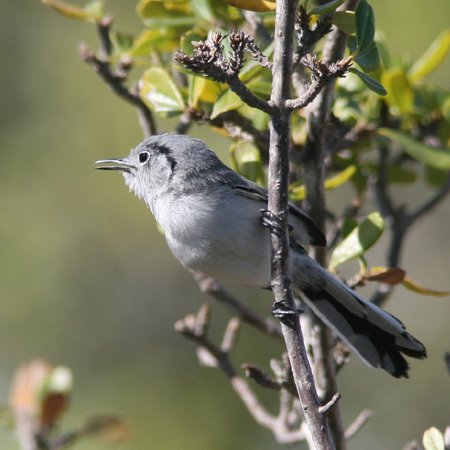
The Polioptilidae (Gnatcatchers & Gnatwrens) are a family of small passerines. The twenty species occur in North and South America (except for the far south and the high Andean regions). Most species of this mainly tropical and subtropical group are resident, but the Blue-grey Gnatcatcher of the United States and southern Canada migrates south in winter. They are close relatives of the Troglodytidae (Wrens).
These small birds are intermediate between Old-World warblers and wrens in their structure and habits, moving restlessly through foliage seeking insects. The gnatcatchers are mainly soft bluish grey in colour, and have the typical insectivore’s long sharp bill. Many species have distinctive black head patterns (especially males) and long, regularly cocked, black-and-white tails. The skulking gnatwrens are browner, more thickset, and with proportionally shorter tails and longer bills.
 |
 |
|
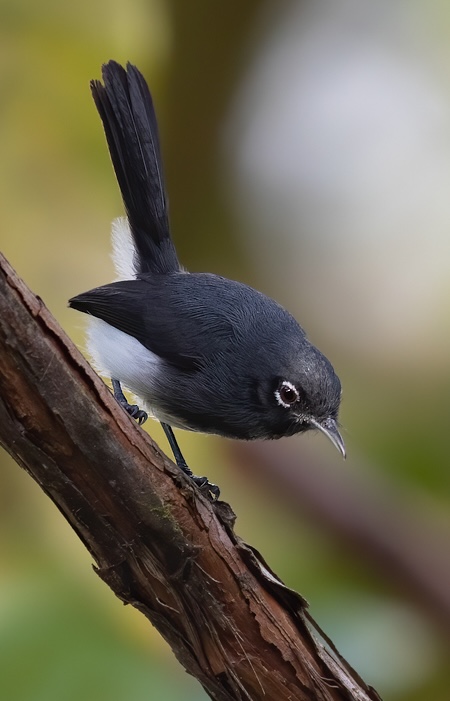
Slate-throated Gnatcatcher Polioptila schistaceigula |
Masked Gnatcatcher Polioptila dumicola |
 |
 |
|
Cuban Gnatcatcher Polioptila lembeyei |
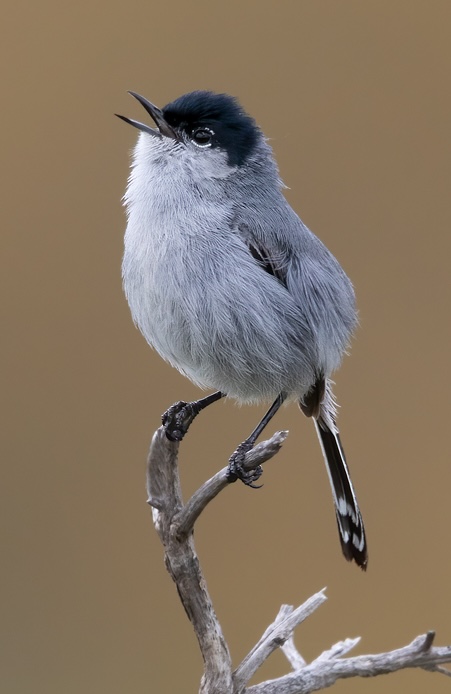
California Gnatcatcher Polioptila californica |
|
All photographs in this text courtesy of ©Dubi Shapiro |
|
They are distributed from North to South America, with the exception of the far south and high Andean regions. Gnatwrens typically occur in the undergrowth of dense, often humid, forest, while gnatcatchers, depending on the species involved, occur in anything from dry scrubby habitats (e.g. the California Gnatcatcher) to the canopy of humid Amazonian forest (e.g. the Guianan Gnatcatcher). The North American species nest in bushes or trees, but the breeding behaviour of several of the Neotropical species is essentially unknown.
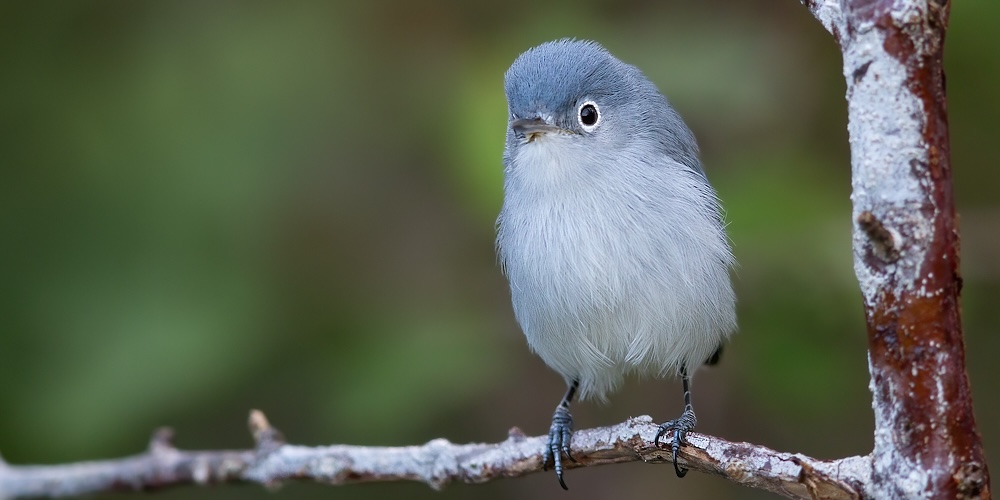
Blue-grey Gnatcatcher Polioptila caerulea
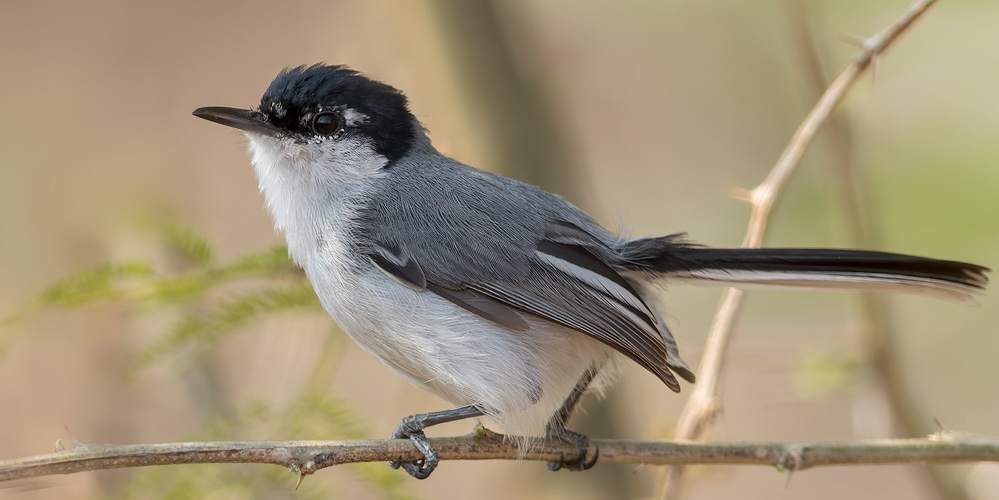
White-lored Gnatcatcher Polioptila albiloris
These insectivores often forage in groups, and usually with the tail cocked or flicking animatedly. They are constantly on the move, and use their tails to balance as they twist and turn on a perch, then jump or flutter off to another in search of prey. The songs of the three genera differ; Ramphocaenus produce a slow, whistled trill. In Microbates it is a series of whistled notes, though their harsh scolding is more often heard. Singing Polioptila species intersperse whistles with their normal high wheezy or whiny twitters.
-
Number of bird species: 20
(As at October 2025)
According to the recently (2025) amalgamated AviList, there are twenty species of Gnatcatchers and Gnatwrens in three genera in the Polioptilidae family. They are:
Collared Gnatwren Microbates collaris
Tawny-faced Gnatwren Microbates cinereiventris
Chattering Gnatwren Ramphocaenus sticturus
Trilling Gnatwren Ramphocaenus melanurus
Guianan Gnatcatcher Polioptila guianensis
Slate-throated Gnatcatcher Polioptila schistaceigula
Iquitos Gnatcatcher Polioptila clementsi
Para Gnatcatcher Polioptila paraensis
Masked Gnatcatcher Polioptila dumicola
Creamy-bellied Gnatcatcher Polioptila lactea
Cuban Gnatcatcher Polioptila lembeyei
Tropical Gnatcatcher Polioptila plumbea
Maranon Gnatcatcher Polioptila maior
Yucatan Gnatcatcher Polioptila albiventris
White-browed Gnatcatcher Polioptila bilineata
Blue-grey Gnatcatcher Polioptila caerulea
Black-tailed Gnatcatcher Polioptila melanura
California Gnatcatcher Polioptila californica
Black-capped Gnatcatcher Polioptila nigriceps
White-lored Gnatcatcher Polioptila albiloris
-
Polioptilidae
Family AccountThese tiny insectivores often forage in groups, and usually with the tail cocked or flicking animatedly. Bundles of energy constantly on the move. -
Polioptilidae
Family AccountThe gnatcatchers are a family of small passerine birds called Polioptilidae.
Fatbirder does not provide quick links to all of the species in this family. However, the entries below do include links to representatives of every genera, all those illustrated and some of the most often encountered, iconic or sought-after species.
-
Blue-gray Gnatcatcher Polioptila caerulea
Species AccountA tiny, long-tailed, thin-billed songbird. Soft blue-gray above and whitish below, with a thin white eyering. -
Blue-gray Gnatcatcher Polioptila caerulea
Species AccountThe blue-gray gnatcatcher (Polioptila caerulea) is a very small songbird, 10–13 cm (3.9–5.1 in) in length and weighing only 5–7 g (0.18–0.25 oz).[2][3] Adult males are blue-gray on the upperparts with white underparts, have a slender dark bill, and a long black tail edged in white. Females are less blue. Both sexes have a white eye ring. -
Blue-gray Gnatcatcher Polioptila caerulea
Species AccountPolioptila caerulea is listed as Least Concern. -
Blue-gray Gnatcatcher Polioptila caerulea
Species AccountSound archive and distribution map -
California Gnatcatcher Polioptila californica
Species AccountThe California gnatcatcher (Polioptila californica) is a small 10.8 cm (4.3 in) long insectivorous bird which frequents dense coastal sage scrub growth. This species was recently split from the similar black-tailed gnatcatcher of the Sonoran and Chihuahuan deserts. This bird is often solitary, but joins with other birds in winter flocks. -
California Gnatcatcher Polioptila californica
Species AccountEndangered. The small amount of remaining habitat in California is being rapidly turned into housing developments. Nesting attempts often fail, partly because of cowbird parasitism. -
California Gnatcatcher Polioptila californica
Species AccountSound archive and distribution map -
Chattering Gnatwren Ramphocaenus sticturus
Species AccountVery small bird of humid tropical forest and edge. -
Chattering Gnatwren Ramphocaenus sticturus
Species AccountSound archive and distribution map -
Collared Gnatwren Microbates collaris
Species AccountThe collared gnatwren (Microbates collaris) is a species of bird in the family Polioptilidae... -
Collared Gnatwren Microbates collaris
Species AccountSound archive and distribution map -
Cuban Gnatcatcher Polioptila lembeyei
Species AccountSound archive and distribution map -
Cuban Gnatcatcher Polioptila lembeyei
Species AccountThe Cuban gnatcatcher (Polioptila lembeyei) is a species of bird in the Polioptilidae family, the gnatcatchers. It is endemic to Cuba. -
Cuban Gnatcatcher Polioptila lembeyei
Species AccountA small, energetic, gray-and-white bird that tends to waggle its long tail. Typically feeds low in dense scrub. Endemic to Cuba and offshore islands. -
Masked Gnatcatcher Polioptila dumicola
Species AccountBold patterned gnatcatcher usually found in the canopy of savanna, open woodlands, and forest edges where it may join mixed-species flocks. -
Masked Gnatcatcher Polioptila dumicola
Species AccountSound archive and distribution map -
Slate-throated Gnatcatcher Polioptila schistaceigula
Species AccountThe slate-throated gnatcatcher (Polioptila schistaceigula) is a species of bird in the family Polioptilidae. -
Slate-throated Gnatcatcher Polioptila schistaceigula
Species AccountSound archive and distribution map -
Tawny-faced Gnatwren Microbates cinereiventris
Species AccountSmall wrenlike bird that often follows mixed flocks or ant swarms in the forest understory. -
Tawny-faced Gnatwren Microbates cinereiventris
Species AccountSound archive and distribution map -
Trilling Gnatwren Ramphocaenus melanurus
Species AccountThe trilling gnatwren (Ramphocaenus melanurus), formerly long-billed gnatwren, is a very small bird in the gnatcatcher family. -
Trilling Gnatwren Ramphocaenus melanurus
Species AccountSound archive and distribution map -
White-lored Gnatcatcher Polioptila albiloris
Species AccountTiny gray and white bird with cocked tail. Common in tropical dry forest and scrub of Pacific lowlands. -
White-lored Gnatcatcher Polioptila albiloris
Species AccountSound archive and distribution map