

Scolopacidae – Woodcock, Snipe, Sandpipers & Allies
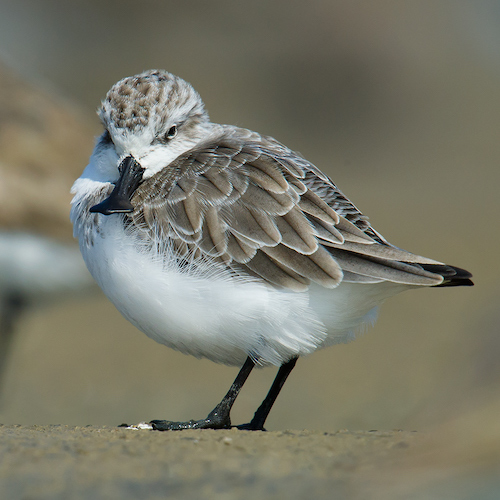
The Scolopacidae (Sandpipers, Snipe, Woodcock etc.) family is made up of waders that are sufficiently distinctive to merit their own family. The order Charadriiformes also includes Pluvianellidae (Magellanic Plover), Chionidae (Sheathbills), Burhinidae (Thick-knees & Stone Curlews), Pluvianidae (Egyptian Plover), Recurvirostridae (Stilts & Avocets) Ibidorhynchidae (Ibisbill), Haematopodidae (Oystercatchers), Charadriidae (Plovers & Lapwings), Pedionomidae (Plains Wanderer), Thinocoridae (Seedsnipes), Rostratulidae (Painted Snipe), Jacanidae (Jacanas), Turnicidae (Buttonquails), Dromadidae (Crab-Plover), Glareolidae (Coursers & Pratincoles), Stercorariidae (Skuas), Alcidae (Auks) and Laridae (Gulls, Terns & Skimmers).
Scolopacidae includes sandpipers, snipe, woodcock, curlews, stints, godwits, dowitchers, turnstones, phalaropes and shanks.
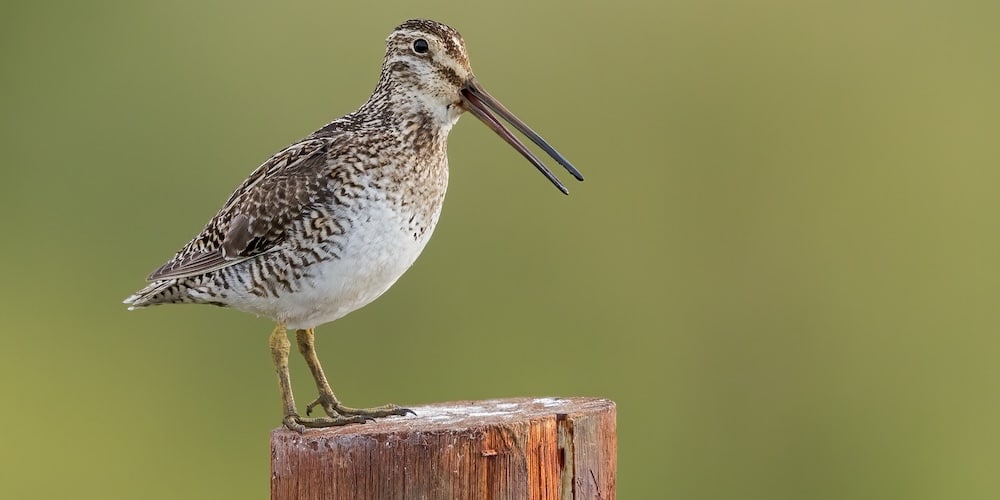
Magellanic Snipe Gallinago magellanica – ©Dubi Shapiro
Don Taylor & Stephen Message were, respectively, the author and illustrator of: Waders of Europe, Asia & North America – the late Don Taylor wrote:
Wader identification has fascinated me right from my early birding years back in the 1950s, when I was fortunate enough to find the attractive and elusive little Jack Snipe wintering on both my local patches – Hampstead Heath and Brent Reservoir. The latter soon provided other identification challenges with sightings of Wood Sandpiper and Ruff. I remember in May 1959 hitchhiking from Hampstead Garden Suburb to that Mecca of sites, Wisbech sewage-farm, to see my first Temminck’s Stint.
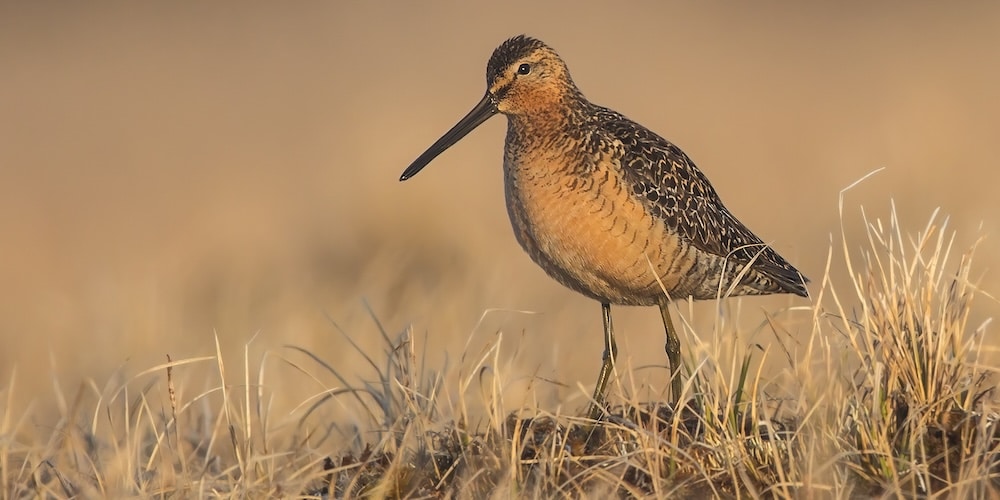
Long-billed Dowitcher Limnodromus scolopaceus – ©Dubi Shapiro
My interest was strengthened later that same year, when I observed the delightful Red-necked Phalaropes on their breeding grounds in the Outer Hebrides and the confiding Dotterel on the Cairngorms. However, it was probably the two years I spent living beside Lake Ontario, (August 1962 – July 1964), when I had the challenge of identifying the various ‘peeps’ in their autumn plumages that hooked me completely. Since settling in Kent late in 1964, there have been numbers of opportunities to add further species to my ever-expanding list, including such rarities as Sociable Plover (1968), Buff-breasted Sandpiper (1977), Terek Sandpiper (1982), Sharp-tailed Sandpiper (1987) and Oriental Pratincole (1988).
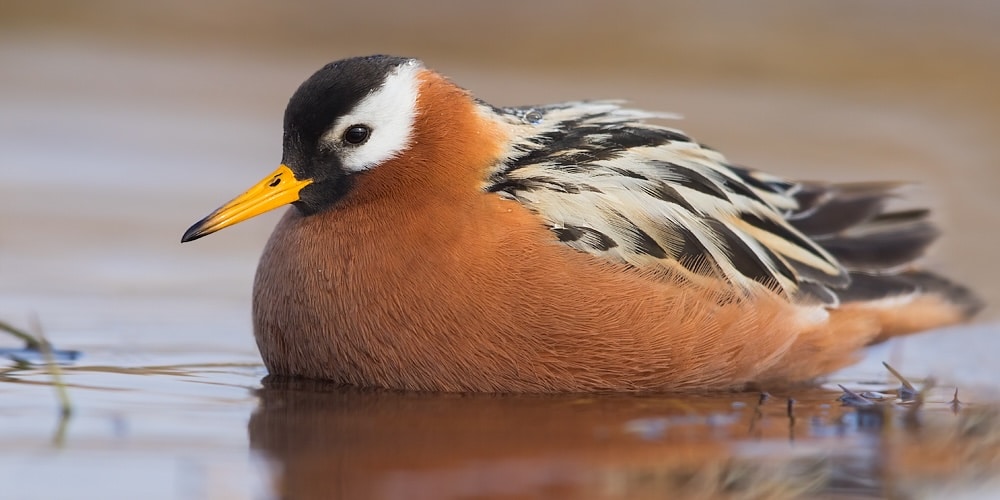
Red (Grey) Phalarope Phalaropus fulicarius – ©Dubi Shapiro
Leading tours in Europe and farther afield created greater opportunities and I found one of my favourite waders, a Cream-coloured Courser, in Southern Spain (1979). However, it was on trips specifically planned to add new wader species, with Tony Prater and David Rosair, which really helped us expand our individual wader lists. Three weeks in Argentina and Chile (November 1979) produced another 17 species for me, including my favourite, the Diademed Plover.
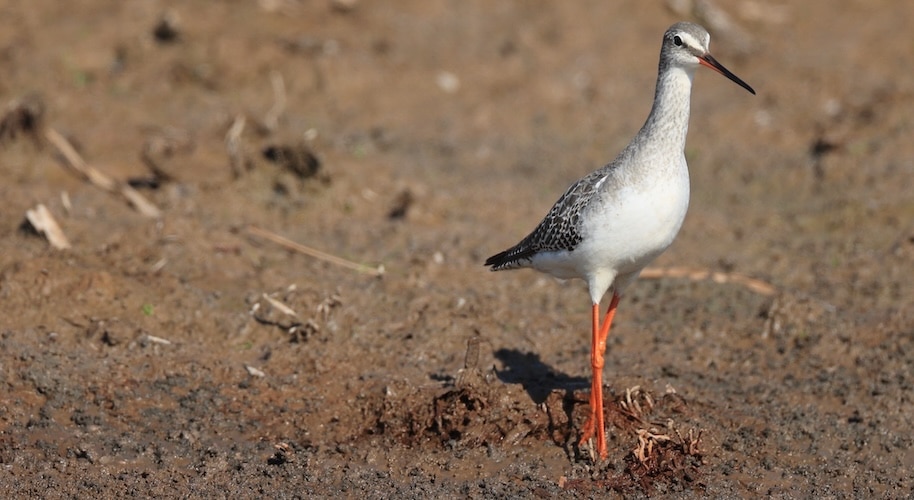
Spotted Redshank Tringa erythropus – ©Bird-Photo-Tours ASIA
I spent a month in Australia and New Zealand (January 2007), when I was able to add another 22 species, including the New Zealand Snipe on Enderby Island, during a Sub-Antarctic cruise. In May 2006 I visited Estonia to see the last of the European waders that had, until then, eluded me – Great Snipe. This was followed by two single species quests in 2008; Japan in March for Amami Woodcock and Thailand in November for the recently re-discovered White-faced Plover. To bring the story right up to date I enjoyed a week with Wirebirds (St Helena Plover) on St Helena in July/August 2009 and am now left with just a dozen more to see around the world, however these may take some time as they include such isolated locations as the Tuamotu and Chatham Islands, as well as four different South American countries for four snipe species.
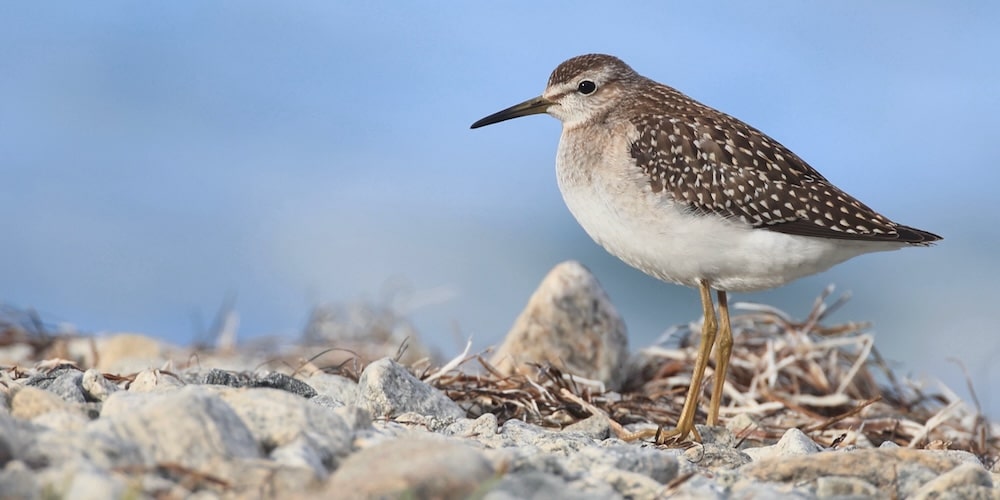
Wood Sandpiper Tringa glareola – ©Bird-Photo-Tours ASIA
Mentioning long periods of time, Stephen has had to wait far too long to see this book published, after a lengthy six-year gestation period. It was David Rosair who came up with the idea of illustrating confusing species together and I recommended that he ask Stephen to produce the plates. Sadly, or fortunately from my point of view, when David was unable to continue with the writing, Stephen suggested that I should be asked.
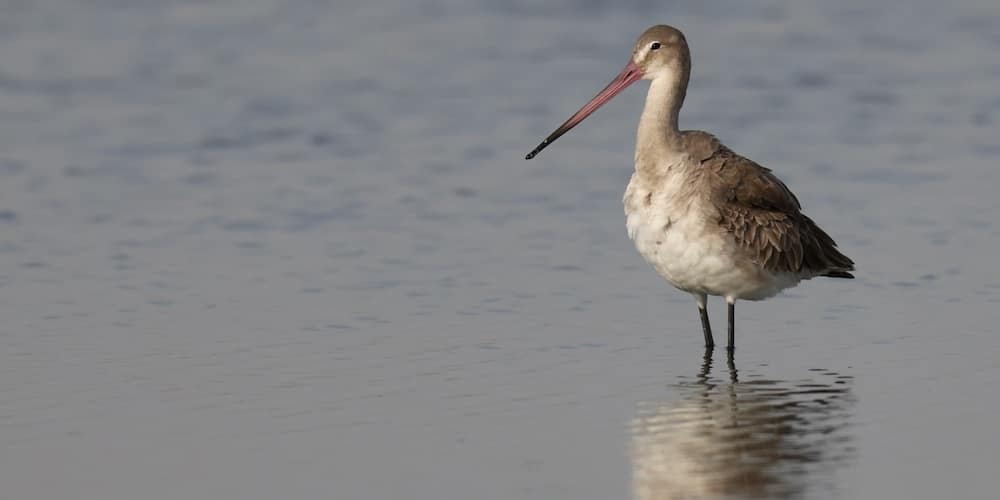
Black-tailed Godwit Limosa limosa – ©Bird-Photo-Tours ASIA
It has been a great pleasure working with him and, after about two years of writing and further painting, we are naturally delighted to see the book finally published and we are pleased with the design work, particularly of the American version.
Stephen remembers, as a 12-year-old living in his home village of Benenden, repeatedly flushing a small dark bird from the village pond.
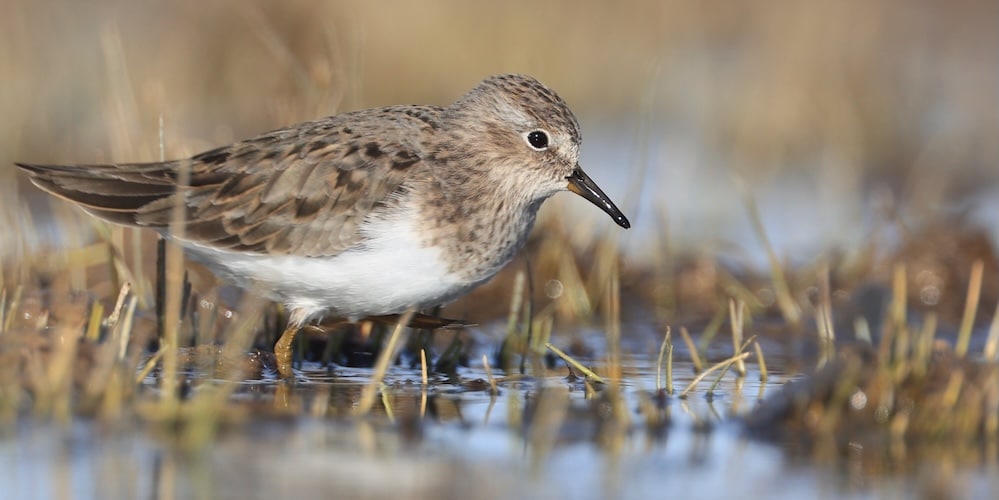
Temminck’s Stint Calidris temminckii – ©Bird-Photo-Tours ASIA
I noted that it had a white rump, gave a distinctive call and I eventually realised, of course, that it was a Green Sandpiper. Apart from having seen Snipe and Lapwing locally, this wader was effectively my introduction to this fascinating and in many instances highly migratory family. I realised that this meant virtually anything could turn up anywhere creating exciting opportunities. My first ever watercolour of a bird, painted at the age of 10, was indeed a Northern Lapwing, which I presented to my Grandparents. The Lapwing is still one of my top subjects and my favourite wader species.
We hope that many will enjoy the continuing challenge of wader identification; for which I would like to recommend an excellent very recently published tome Shorebirds of the Northern Hemisphere by Richard Chandler, a renowned wader photographer. It is filled with probably half-a-lifetime of his superb photographs to illustrate a detailed text.
-
Number of bird species: 93
(As at September 2025)
According to the recently (2025) amalgamated AviList, there are ninety-three species of snipe, sandpipers etc. in fifteen genera in the family Scolopacidae. They are:
Upland Sandpiper Bartramia longicauda
Eskimo Curlew Numenius borealis
Little Curlew Numenius minutus
Bristle-thighed Curlew Numenius tahitiensis
Hudsonian Whimbrel Numenius hudsonicus
Whimbrel Numenius phaeopus
Long-billed Curlew Numenius americanus
Far Eastern Curlew Numenius madagascariensis
Slender-billed Curlew Numenius tenuirostris
Eurasian Curlew Numenius arquata
Bar-tailed Godwit Limosa lapponica
Black-tailed Godwit Limosa limosa
Marbled Godwit Limosa fedoa
Hudsonian Godwit Limosa haemastica
Asian Dowitcher Limnodromus semipalmatus
Long-billed Dowitcher Limnodromus scolopaceus
Short-billed Dowitcher Limnodromus griseus
Jack Snipe Lymnocryptes minimus
American Woodcock Scolopax minor
Eurasian Woodcock Scolopax rusticola
Amami Woodcock Scolopax mira
Bukidnon Woodcock Scolopax bukidnonensis
Javan Woodcock Scolopax saturata
New Guinea Woodcock Scolopax rosenbergii
Sulawesi Woodcock Scolopax celebensis
Moluccan Woodcock Scolopax rochussenii
Chatham Islands Snipe Coenocorypha pusilla
Snares Snipe Coenocorypha huegeli
Subantarctic Snipe Coenocorypha aucklandica
Imperial Snipe Gallinago imperialis
Giant Snipe Gallinago undulata
Fuegian Snipe Gallinago stricklandii
Jameson’s Snipe Gallinago jamesoni
Wood Snipe Gallinago nemoricola
Solitary Snipe Gallinago solitaria
Great Snipe Gallinago media
Swinhoe’s Snipe Gallinago megala
Pin-tailed Snipe Gallinago stenura
Latham’s Snipe Gallinago hardwickii
Madagascan Snipe Gallinago macrodactyla
African Snipe Gallinago nigripennis
Wilson’s Snipe Gallinago delicata
Common Snipe Gallinago gallinago
Noble Snipe Gallinago nobilis
Puna Snipe Gallinago andina
South American Snipe Gallinago paraguaiae
Magellanic Snipe Gallinago magellanica
Terek Sandpiper Xenus cinereus
Common Sandpiper Actitis hypoleucos
Spotted Sandpiper Actitis macularius
Wilson’s Phalarope Phalaropus tricolor
Red (Grey) Phalarope Phalaropus fulicarius
Red-necked Phalarope Phalaropus lobatus
Green Sandpiper Tringa ochropus
Solitary Sandpiper Tringa solitaria
Wandering Tattler Tringa incana
Grey-tailed Tattler Tringa brevipes
Marsh Sandpiper Tringa stagnatilis
Wood Sandpiper Tringa glareola
Common Redshank Tringa totanus
Lesser Yellowlegs Tringa flavipes
Nordmann’s Greenshank Tringa guttifer
Willet Tringa semipalmata
Spotted Redshank Tringa erythropus
Common Greenshank Tringa nebularia
Greater Yellowlegs Tringa melanoleuca
Tuamotu Sandpiper Prosobonia parvirostris
Black Turnstone Arenaria melanocephala
Ruddy Turnstone Arenaria interpres
Red Knot Calidris canutus
Surfbird Calidris virgata
Great Knot Calidris tenuirostris
Ruff Calidris pugnax
Sharp-tailed Sandpiper Calidris acuminata
Broad-billed Sandpiper Calidris falcinellus
Curlew Sandpiper Calidris ferruginea
Stilt Sandpiper Calidris himantopus
Spoon-billed Sandpiper Calidris pygmaea
Red-necked Stint Calidris ruficollis
Temminck’s Stint Calidris temminckii
Long-toed Stint Calidris subminuta
Buff-breasted Sandpiper Calidris subruficollis
Sanderling Calidris alba
Dunlin Calidris alpina
Purple Sandpiper Calidris maritima
Rock Sandpiper Calidris ptilocnemis
Baird’s Sandpiper Calidris bairdii
Pectoral Sandpiper Calidris melanotos
Semipalmated Sandpiper Calidris pusilla
Western Sandpiper Calidris mauri
Little Stint Calidris minuta
Least Sandpiper Calidris minutilla
White-rumped Sandpiper Calidris fuscicollis
-
Australasian Wader Studies Group
WebsiteThe Australasian Wader Studies Group was formed in 1981 as a special interest group of Birds Australia. The group is an non-government organisation dedicated to studying waders (otherwise known as shorebirds) throughout the East-Asian Australasian Flyway. There are about 330 members, of which 90 are from Asia -
International Wader Study Group
WebsiteThe International Wader Study Group (IWSG) is an association of amateurs and professionals from all parts of the world interested in Charadrii (waders or shorebirds). Membership of the WSG is currently over 650 worldwide. Members can be found in over 50 countries around the world, including all European countries and the Americas, Asia, Africa and Australasia. The interests of the group have diversified from its original focus from ringing and migration-related studies to embrace all aspects of wader biology. -
Western Hemisphere Shorebird Reserve Network
WebsiteConserving shorebirds and their habitat through a network of key sites across the Americas.
-
Chamberlain's Waders - The Definitive Guide to Southern Africa's Shorebirds
| By Faansie Peacock | Pavo | 2016 | Paperback | 256 pages, 600+ colour illustrations, b/w illustrations, colour distribution maps, tables | ISBN: 9780620735520 Buy this book from NHBS.com -
Flight of the Godwit - Tracking Epic Shorebird Migrations
| By Bruce M Beehler | Smithsonian Books | 2025 | Hardback | 254 pages, 30 b/w illustrations, 2 two-tone maps on endpapers | ISBN: 9781588347879 Buy this book from NHBS.com -
Geographical Variation in Waders
| By Meinte Engelmoer & Cees S Roselaar | Kluwer Academic Publishers | 1998 | Hardback | 331 pages, figures, tabs, maps | ISBN: 9780792350200 Buy this book from NHBS.com -
Shorebird Ecology, Conservation, and Management
| By Mark A Colwell | UCP | 2010 | Hardback | 328 pages, 13 b/w photos, 26 illustrations, 18 tables | ISBN: 9780520266407 Buy this book from NHBS.com -
Shorebirds in Action - An Introduction to Waders and their Behaviour
| By Richard B Chandler | Whittles | 2017 | Paperback | 248 pages, 400+ colour photos | ISBN: 9781849953559 Buy this book from NHBS.com -
Shorebirds of North America - A Natural History and Photographic Celebration
| By Pete Dunne & Kevin T Karlson | PUP | 2024 | Hardback | 294 pages, 225 colour photos | ISBN: 9780691220956 Buy this book from NHBS.com -
Sky Dance of the Woodcock - The Habits and Habitats of a Strange Little Bird
| By Greg Hoch | UIP | 2019 | Paperback | 174 pages, 13 b/w photos, 6 b/w illustrations | ISBN: 9781609386276 Buy this book from NHBS.com -
The Jack Snipe - Lymnocryptes minimus
| By Guy-Noel Olivier | Oiseaux Migrateurs du Palearctique Occidental | 2008 | Paperback | 206 pages, colour photos, diagrams | ISBN: 9782952737517 Buy this book from NHBS.com -
The Shorebird Guide
| By Michael J O'Brien, Richard Crossley & Kevin T Karlson | Houghton Mifflin Harcourt | 2006 | Flexibound | 477 pages, 870+ colour photos, distribution maps | ISBN: 9780618432943 Buy this book from NHBS.com -
Waders of Europe, Asia & North America
| By Stephen Message & Don Taylor | Christopher Helm 2005 | Paperback | 224 pages, 80 plates with colour illustrations | ISBN: 9780713652901 Buy this book from NHBS.com
-
Scolopacidae
Family AccountScolopacids generally prefer to breed in wet, open, grassy habitats, and a large number of species nest on Arctic or subarctic tundra. -
Scolopacidae
Family AccountThe species in this family are some of the commonest birds of shorelines around the world and they have evolved into a wide...
-
American Woodcock Scolopax minor
Species AccountPlump, well-camouflaged shorebird that favors wooded or shrubby areas, usually near open fields. -
American Woodcock Scolopax minor
Species AccountSound archive and distribution map. -
Black-tailed Godwit Limosa limosa
Species AccountThe black-tailed godwit (Limosa limosa) is a large, long-legged, long-billed shorebird first described by Carl Linnaeus in 1758. -
Black-tailed Godwit Limosa limosa
Species AccountSound archive and distribution map. -
Bristle-thighed Curlew Numenius tahitiensis
Species AccountThe bristle-thighed curlew (Numenius tahitiensis) is a medium-sized shorebird that breeds in Alaska and winters on tropical Pacific islands. -
Bristle-thighed Curlew Numenius tahitiensis
Species AccountNumenius tahitiensis is listed as Near Threatened under criteria C2a(ii). -
Bristle-thighed Curlew Numenius tahitiensis
Species AccountSound archive and distribution map. -
Chatham Islands Snipe Coenocorypha pusilla
Species AccountThe Chatham Islands snipe (Coenocorypha pusilla), also known as the Chatham snipe, is a species of wader in the family Scolopacidae. -
Common Sandpiper Actitis hypoleucos
Species AccountThe common sandpiper (Actitis hypoleucos) is a small Palearctic wader. This bird and its American sister species, the spotted... -
Common Sandpiper Actitis hypoleucos
Species AccountSound archive and distribution map. -
Dunlin Calidris alpina
Species AccountSound archive and distribution map. -
Dunlin Calidris alpina
Species AccountCalidris alpina is listed as Near Threatened under criteria A2bcd+4bcd. -
Dunlin Calidris alpina
Species AccountThe Dunlin is a familiar shorebird around the world, where its bright reddish back and black belly, and long, drooping bill distinguish it from nearly all other shorebirds. -
Dunlin Calidris alpina
Species AccountThe dunlin (Calidris alpina) is a small wader, sometimes separated with the other "stints" in Erolia. -
Eurasian Woodcock Scolopax rusticola
Species AccountThis bizarre and cumbersome-looking relative of the snipes is fairly common but rarely seen; active mainly at dusk and dawn. -
Eurasian Woodcock Scolopax rusticola
Species AccountSound archive and distribution map. -
Jack Snipe Lymnocryptes minimus
Species AccountThe jack snipe or jacksnipe (Lymnocryptes minimus) is a small stocky wader. It is the smallest snipe, and the only member of the genus Lymnocryptes. -
Jack Snipe Lymnocryptes minimus
Species AccountSound archive and distribution map. -
Long-billed Dowitcher Limnodromus scolopaceus
Species AccountThe long-billed dowitcher (Limnodromus scolopaceus) is a medium-sized shorebird with a relatively long bill belonging to the sandpiper family, Scolopacidae. -
Long-billed Dowitcher Limnodromus scolopaceus
Species AccountSound archive and distribution map. -
Madagascan Snipe Gallinago macrodactyla
Species AccountThe Madagascar snipe (Gallinago macrodactyla) is a small stocky wader. It breeds only in the humid eastern half of Madagascar... -
Madagascan Snipe Gallinago macrodactyla
Species AccountSound archive and distribution map. -
Nordmann's Greenshank Tringa guttifer
Species AccountID tips for the endangered species, good photos -
Purple Sandpiper Calidris maritima
Species AccountThe Purple Sandpiper is a medium-sized wading bird that is larger, stockier and darker than a Dunlin. It is mainly dark grey above and whitish below. -
Purple Sandpiper Calidris maritima
Species AccountSound archive and distribution map. -
Red (Grey) Phalarope Phalaropus fulicarius
Species AccountThe red phalarope or grey phalarope (Phalaropus fulicarius) is a small wader. This phalarope breeds in the Arctic regions of North America and Eurasia. -
Red (Grey) Phalarope Phalaropus fulicarius
Species AccountSound archive and distribution map. -
Ruddy Turnstone Arenaria interpres
Species AccountThe ruddy turnstone (Arenaria interpres) is a small cosmopolitan wading bird, one of two species of turnstone in the genus Arenaria. -
Ruddy Turnstone Arenaria interpres
Species AccountSound archive and distribution map. -
Ruff Philomachus pugnax
Species AccountThe ruff (Philomachus pugnax) is a medium-sized wading bird that breeds in marshes and wet meadows across northern Eurasia. This highly gregarious sandpiper is migratory and sometimes forms huge flocks in its winter grounds, which include southern and western Europe, Africa, southern Asia and Australia. It is usually considered to be the only member of its genus, and the broad-billed and sharp-tailed sandpipers are its closest relatives. -
Ruff Philomachus pugnax
Species AccountCalidris pugnax is listed as Least Concern. -
Ruff Philomachus pugnax
Species AccountConservation status: Red The ruff is a medium-sized wading bird. It has a long neck, a small head, a rather short slightly droopy bill and medium-long orange or reddish leg. -
Spoon-billed Sandpiper Calidris pygmaea
Species AccountStunning photos of migrating SBS, plus discussion of species -
Spotted Redshank Tringa erythropus
Species AccountThe spotted redshank (Tringa erythropus) is a wader (shorebird) in the large bird family Scolopacidae. -
Spotted Redshank Tringa erythropus
Species AccountSound archive and distribution map. -
Spotted Sandpiper Actitis macularius
Species AccountSmall shorebird. Constantly bobs its tail while working edges of streams, ponds, and lakes for invertebrates. -
Spotted Sandpiper Actitis macularius
Species AccountSound archive and distribution map. -
Temminck’s Stint Calidris temminckii
Species AccountSound archive and distribution map. -
Temminck’s Stint Calidris temminckii
Species AccountBreeds on wet moorland mainly in Scandinavia and Russia; migrants occur in wide variety of wetland habitats across Africa and southern Asia. -
Terek Sandpiper Xenus cinereus
Species AccountUnique smallish wader with stumpy bright orange legs and a noticeably upturned bill. Plumage gray overall with white belly, but in flight shows conspicuous... -
Terek Sandpiper Xenus cinereus
Species AccountSound archive and distribution map. -
Tuamotu Sandpiper Prosobonia parvirostris
Species AccountA small, very dark brown shorebird with a very short thin bill and a distinct white... -
Tuamotu Sandpiper Prosobonia parvirostris
Species AccountSound archive and distribution map. -
Upland Sandpiper Bartramia longicauda
Species AccountDistinctive sandpiper found in areas with short grass. Frequently seen perched on fence posts or atop small shrubs. -
Upland Sandpiper Bartramia longicauda
Species AccountSound archive and distribution map. -
Whimbrel Numenius phaeopus
Species AccountThe whimbrel (Numenius phaeopus) is a wader in the large family Scolopacidae. It is one of the most widespread of the curlews, breeding across much of subarctic North America, Europe and Asia as far south as Scotland. -
Whimbrel Numenius phaeopus
Species AccountOne of the most wide-ranging shorebirds in the world, the Whimbrel breeds in the Arctic in the eastern and western hemispheres, and migrates to South America, Africa, south Asia, and Australia -
Whimbrel Numenius phaeopus
Species AccountSound archive and distribution map. -
Wood Sandpiper Tringa glareola
Species AccountSound archive and distribution map. -
Wood Sandpiper Tringa glareola
Species AccountWood Sandpiper is a smart wader with elegant proportions. A strong eye stripe and speckled plumage combine to make this a very attractive bird.