

Shanxi Province
Shanxi is a province in North China covering an area of 156,000 km2 (60,000 square miles) and has a population of around 35 million people. Its capital and largest city is Taiyuan, while its next most populated cities are Changzhi and Datong. The name Shanxi means ‘west of the mountains’, a reference to its location west of the Taihang Mountains. It borders Hebei to the east, Henan to the south, Shaanxi to the west and Inner Mongolia to the north. Shanxi’s terrain is characterised by a plateau bounded partly by mountain ranges. It is a leading producer of coal in China, possessing roughly a third of China’s total coal deposits. Shanxi’s culture is largely dominated by the ethnic Han majority, who make up over 99% of its population. Jin Chinese is considered by some linguists to be a distinct language from Mandarin and its geographical range covers most of Shanxi. Both Jin and Mandarin are spoken.
The province is located on a plateau made up of higher ground to the east – the Taihang Mountains and the west – the Lüliang Mountains, as well as a series of valleys in the centre through which the Fen River runs. The Great Wall of China forms most of the northern border with Inner Mongolia. The Zhongtiao Mountains run along part of the southern border and separate Shanxi from the east-west part of the Yellow River forming the western border with Shaanxi. The Fen and Qin rivers, tributaries of the Yellow River, run north-to-south through the province, and drain much of its area. The north of the province is drained by tributaries of the Hai River, such as Sanggan and Hutuo rivers. The largest natural lake in Shanxi is Xiechi Lake, a salt lake near Yuncheng in the southwest.
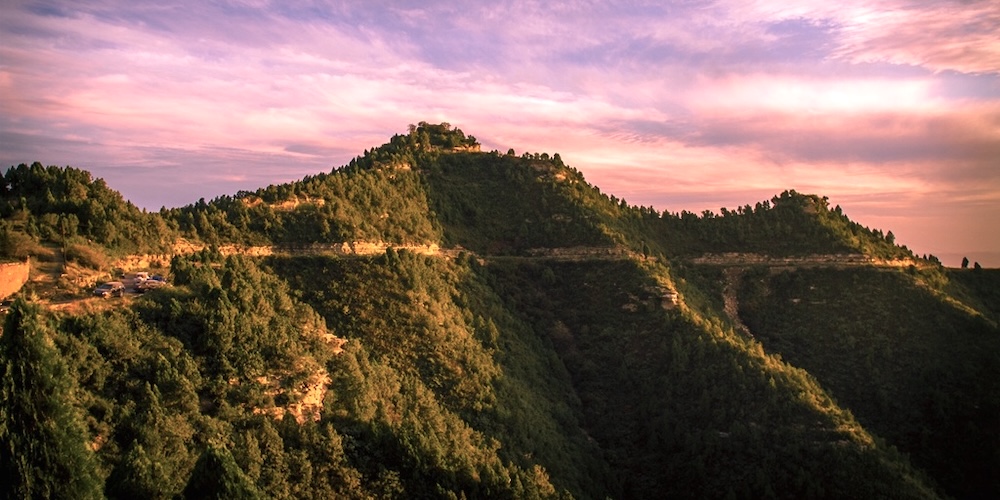
Yonghe County – ©归零者 CC BY-SA 3.0 via Wikimedia Commons
Shanxi has a continental monsoon climate, and is rather arid. Average January temperatures are below 0 °C, while average July temperatures are around 21–26 °C. Winters are long, dry, and cold, while summer is warm and humid. Spring is extremely dry and prone to dust storms. It is one of the sunniest parts of China; early summer heat waves are common. Annual precipitation averages around 14 to 28 inches, with 60% of it concentrated between June and August.
The outline of Shanxi’s territory is a parallelogram that runs from southwest to northeast. It is a typical mountain plateau widely covered by loess. The terrain is high in the northeast and low in the southwest. The interior of the plateau is undulating, the valleys are vertical and horizontal, and the types of landforms are complex and diverse. There are mountains, hills, terraces, plains, and rivers. The area of mountains and hills accounts for 80% of the total area of the province, and the area of Pingchuan and river valleys accounts for the rest. Most of the province’s is above 5,000 feet, and the highest point is the Yedoufeng, the main peak of Wutai Mountain, with an altitude of over 10,000 feet, which is the highest peak in northern China.
Birding Shanxi
Given the topography and habitat its no surprise to know that birding Shanxi means observing montane and arboreal species on the one hand, and riverine species on the other. Moreover, the relatively mild winters means significant numbers of over-wintering birds. Birding localities include popular visitor attractions as well as more protected areas of pristine and virgin forest etc.
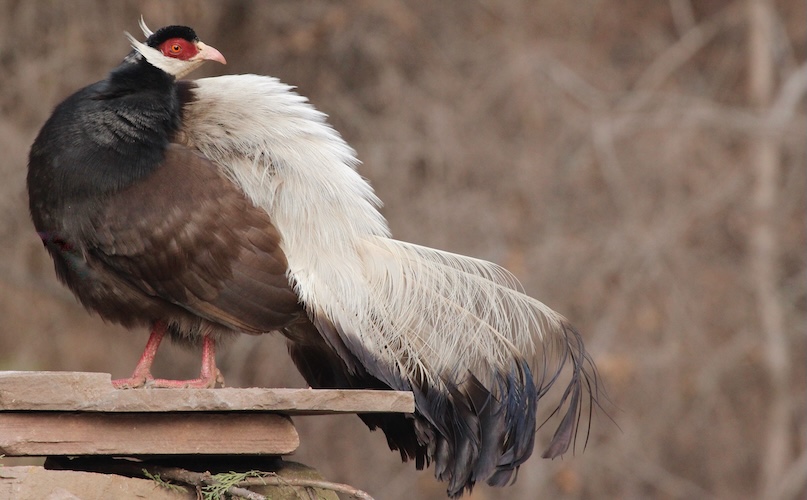
Brown-eared Pheasant Crossoptilon mantchuricum – ©Bird-Photo-Tours ASIA
Luyashan Nature Reserve is located in Ningwu County and covers an area of 21,453 hectares. It was established to protect the Chinese endemic Brown-eared Pheasant and the forest ecosystem. With large areas of deciduous and spruce forest, the reserve is one of the few areas in Loess Plateau with virtually undamaged ecosystems. The reserve has recorded more than 100 bird species, including Black Stork, Golden Eagle, Lammergeier, Chinese Nuthatch and Chinese Leaf Warbler, etc.
Lishan Nature Reserve is located in west Shanxi and covers 24,800 hectares. It has the largest primeval forest in North China which covers 800 hectares. The flora and fauna in the reserve is of a transition region between south and north which contributes the reserve abundant living resources. Close to 300 bird species have been recorded. Top target species include: Amur Falcon, Brown Shrike, Red-billed Blue Magpie, Yellow-bellied Tit, Silver-throated & Sooty Bushtits, Manchurian, Brownish-flanked & Yellowish-bellied Bush Warblers, Yellow-browed Warbler, Streak-breasted Scimitar Babbler, Plain Laughingthrush, Vinous-throated Parrotbill, White-crowned Forktail, Taiga Flycatcher and Grey-headed Bullfinch.
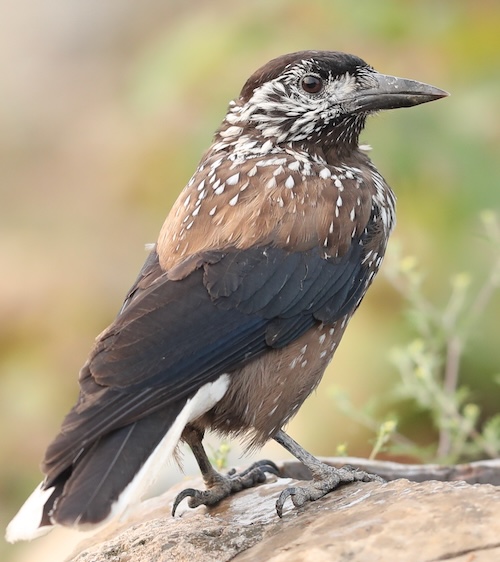
Panquangou Nature Reserve is located in Fangshan and Jiaocheng Counties. Covering an area of 10,466 hectares, the reserve is one of the eight bird sanctuaries in China aiming to protect Brown-eared Pheasants. Around 200 bird species have been recorded in the reserve. The population of Brown-eared Pheasant here has quadrupled since protection to around 2000 birds. Other species of note include Mandarin Duck, Grey-capped Pygmy, Great Spotted & Black Woodpeckers, Red-billed Blue Magpie, Spotted Nutcracker, Silver-throated Bushtit, Plain Laughingthrush, Chinese Hill Babbler, Chinese Nuthatch, Black-throated, Red-throated & Naumann’s Thrushes, White-winged Redstart, Godlewski’s and Yellow-throated Buntings.
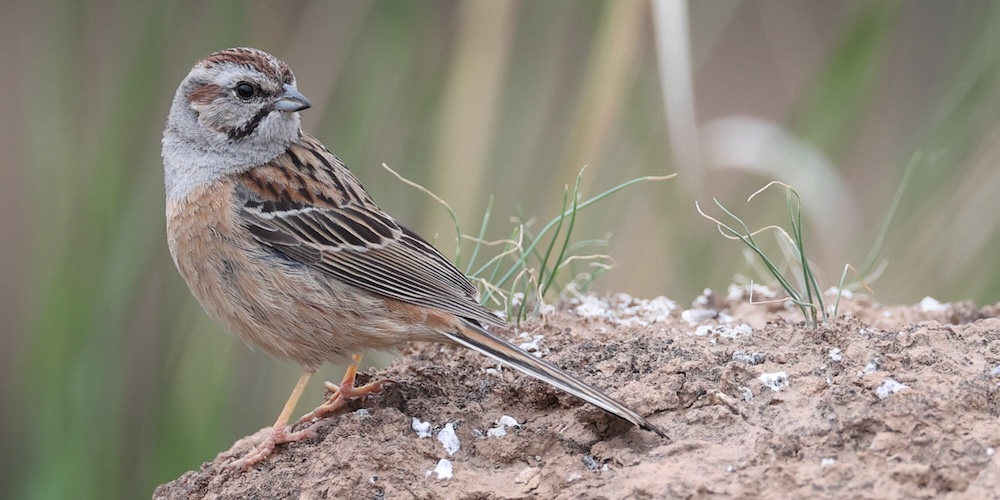
Godlewski’s Bunting Emberiza godlewskii – ©Bird-Photo-Tours ASIA
Yuncheng Wetlands Reserve is situated in Yuncheng City along the Yellow River. As one of the most important wetlands in the middle reaches of Yellow River and the largest wetland in Shanxi Province, the reserve is the main wintering habitat for migratory birds in north of China. The reserve has recorded around 240 bird species including notable species such as Black stork, Great Bustard, Ruddy Shelduck, Eastern Cattle Egret, Pied Harrier, Grey-headed Lapwing, Hill Pigeon, Brown & Chinese Grey Shrikes, Black-naped Oriole, Red-billed Blue Magpie, Asian Short-toed Lark, Vinous-throated Parrotbill, Chinese Hill Babbler and Pallas’s Bunting.
Xuanzhong Temple is situated on Shibi Mountain in the northwest of Jiaocheng County. It is one of birthplaces of Jingtu, one of important sects of Chinese Buddhism. It is the best place to see the endemic Brown Eared-Pheasant and has become one of Shanxi’s most famous birding hotspots. Other special birds include Grey-headed Woodpecker, Azure-winged Magpie, Spotted Nutcracker, Silver-throated Tit, Beijing Babbler, Vinous-throated Parrotbill, Pere David’s Laughingthrush, Long-tailed Rosefinch and Godlewski’s Bunting, among others. Other birding locations, in no particular order, include: Sanggan River National Wetland Park in Datong city, Taipingyao Reservoir in Shuozhou city, Luya Mountain in Xinzhou city, Fenhe River No 2 Dam in Qingxu county, Xiaohe Wetland Park in Jincheng city, Lingkong Mountain scenic area in Qinyuan county, Sanwan whooper swan scenic area in Pinglu county, Shunwangping scenic area in Yuanqu county, Huliu River wetland in Guangling county, Shengtian Lake in Ruicheng county and Dongyulin Reservoir in Shuozhou city.
This page is sponsored by Alpine Birding

This page is sponsored by Bird-Photo-Tours ASIA

-
Philiip He
Alpine Birding
-
Wikipedia
GNU Free Documentation License
https://en.wikipedia.org/wiki/Shanxi
-
Number of bird species: 422
(As at June 2025)Provincial Bird: Brown-eared Pheasant Crossoptilon mantchuricum
-
Aibase
PDF ChecklistThis checklist includes all bird species found in Shanxi , based on the best information available at this time. It is based on a wide variety of sources that I collated over many years. I am pleased to offer these checklists as a service to birdwatchers. If you find any error, please do not hesitate to report them. -
E-Bird
PDF ChecklistThis checklist is generated with data from eBird (ebird.org), a global database of bird sightings from birders like you. If you enjoy this checklist, please consider contributing your sightings to eBird. It is 100% free to take part, and your observations will help support birders, researchers, and conservationists worldwide.

-
Birds in Shanxi Province
| By Fan Longsuo | Huayu Nature Book Trade Co.Ltd | 2008 | Paperback | 567 pages, Colour plates | Text in Chinese only | ISBN: 9787503852916 Buy this book from NHBS.com -
Birds of China
| By Liu Yang & Chen Shuihua | Princeton University Press | 2023 | Flexibound | 672 pages, plates with 4000 colour illustrations, colour distribution maps | ISBN: 9780691237527 Buy this book from NHBS.com -
Guide to the Birds of China
| By John MacKinnon | OUP | 2022 | Edition 2 | Paperback | 513 pages, 164 plates with colour illustrations; colour distribution maps | ISBN: 9780192893673 Buy this book from NHBS.com
-
Xian Birdwatching Society
Website
-
NR Lishan Nature Reserve
InformationSatellite View -
NR Luyashan Nature Reserve
InformationSatellite ViewLuya Shan is located at the northern end of the Lüliang Shan mountains in Shanxi Province. The geology of this area is mainly granitic, with some areas of limestone. -
NR Panquangou Nature Reserve
InformationSatellite View -
NR Yuncheng Wetland Nature Reserve
InformationSatellite View
-
eBird
SightingseBirding This Year
-
Alpine Birding
Local Tour OperatorBirding trips here are made for avid birders including yearly-run trips and new China birding trips developed by AlpineBirding team and guided by our bird experts in the best -
Bird-Photo-Tours ASIA
Tour OperatorBird-Photo-Tours ASIA is the specialists in bird photography tours on the Asian continent with a portfolio of 50 bird photography tours across 26 countries and a particular specialism in bird photography in China including Shanxi Province. -
BirdQuest
Tour Operator...Next, we will travel onwards to the rugged, partly-forested mountains of Shanxi province, famous for its spectacular Brown Eared Pheasants. Also here, we may well see the strange Beijing Babbler, Yellow-streaked Warbler and Plain (or Père David’s ) Laughingthrush... -
China Bird Tour
Local Tour OperatorShanxi Extension tours after Sichuan trip -
Discover China Tour
Local Tour OperatorDay 1: All day Yuncheng program to take photo in Yuncheng Salt Lake. Program: Today we will have all day photo program in Yuncheng Salt Lake. --Yuncheng Salt Lake is one of the three largest inland salt lakes of sodium sulfate type in the world. Visitors could enjoy floating, black mud bath, hot spring, spectacle photography and bird watching here. The color of Yuncheng Salt Lake could change with the temperature, in summer, you could photo the colorful salt lake, and in the winter when the temperature lower than 5 ℃, the salt flowers will bloom. With the sunlight and types of birds, here is a paradise to photographer. There are more and more wild birds stay or overwintering in Yuncheng Salt Lake, you might see more than 120 types of birds all years round. -
Summer Wong Bird Tours
Local Tour OperatorSummer Wong Bird Tours specializes in China birding tours of Sichuan, Yunnan, Qinghai, Tibet & Eastern China
-
2016 [06 June] - Summer Wong
PDF ReportThis is a 24 days long trip including Sichuan and Shanxi, combine birdwatching and culture tour, visited : Chengdu, Longcanggou, Erlang Shan, Balang Shan, Maerkang, Ruoergai, Jiuzhaigou, Tangjiahe, Yangxian, Foping, Xi’an. -
2018 [01 January] - Chun Fai Lo
ReportBrown Eared Pheasant Crossoptilon mantchuricum is one of the four Crossoptilon pheasants, and it is endemic in China and Vulnerable. Thanks to SoSo’s arrangement, we made a weekend twitch in January 2018. The pheasant is well fed every morning in that spot so twitching is rather guaranteed. -
2018 [04 April] - Summer Wong
Report...After around 5 hours drive, just before Foping town, we had one stop on the roadside on a slope we got Grey-capped Greenfinches, 2 Vinous-throated Parrotbills, 2 Streak-breasted Scimitar Babblers, Darian Redstart, Collared Finchbill, Brownish-flanked Bush Warbler, a male Yellow-throated Bunting, Brown-breasted Bulbuls. Red-billed Blue Magpie, Common Magpie and Large-billed Crow are common all alone the road....