

Yunnan Province
Yunnan is an inland province in Southwestern China. The province spans approximately 394,000 km2 (152,000 square miles) and has a population of over 47 million people. The capital of the province is Kunming, which is Yunnan’s largest city with five million inhabitants. The province borders the Chinese provinces of Guizhou, Sichuan, autonomous regions of Guangxi and Tibet, as well as Southeast Asian countries Myanmar (Burma), Vietnam, and Laos. It is situated in a mountainous area, with high elevations in the Northwest and low elevations in the Southeast. Most of the population lives in the eastern part of the province. In the west, the altitude can vary from the mountain peaks to river valleys as much as 9,800 feet. The northern part of the province forms part of the Yunnan–Guizhou Plateau. There is a distinct canyon region to the west and a plateau region to the east. Yunnan’s major rivers flow through the deep valleys between the mountains. The highest point in the north is the Kawagebo Peak in Deqin County on the Diqing Plateau, which is about 22,110 feet high; and the lowest is in the Red River Valley in Hekou County, near the Vietnamese border, with an elevation of just 251 feet.
The province has nine lakes with areas of over 30 km2 (12 square miles). They include Dianchi Lake near Kunming, Fuxian Lake in Yuxi the second deepest lake in China, Lugu Lake, Erhai Lake, Dali etc. It is the source of two rivers, the Xi River (there known as the Nanpan and Hongshui) and the Yuan River. The Hongshui is a principal source stream of the Xi River. Rising as the Nanpan in eastern Yunnan province, it flows south and east to form part of the boundary between Guizhou province and Guangxi autonomous region. Flowing for 345 km (214 miles), it unites with the Yu River at Guiping to form what eventually becomes the Xi River. The eastern half of the province is a limestone plateau with karst scenery and unnavigable rivers flowing through deep mountain gorges; the western half is characterised by mountain ranges and rivers running north and south. These include the Nu Jiang (Salween), the Lancang (Mekong), and the Jinsha (Yangtze), which flow in close proximity in the Three Parallel Rivers protected area.

Lugu Lake – ©User:Doron CC BY-SA 3.0 via Wikimedia Commons
The rugged, vertical terrain produces a wide range of flora and fauna, and the province has been called a natural zoological and botanical garden. It is China’s most diverse province, biologically as well as culturally. This topographic range combined with a tropical moisture sustains extremely high biodiversity and high degrees of endemism, probably the richest botanically in the world’s temperate regions. Yunnan has less than 4% of the land of China, yet the province harbours around 42.6% of all protected plant species and 72.5% of all protected wild animals in the country, of which 15% are strictly endemic to Yunnan. It is home to the southeast Asian gaur, a giant forest-dwelling bovine, Indochinese tiger and Asian elephant. Other extremely rare species are the Yunnan box turtle and the Yunnan snub-nosed monkey. It is feared that the Yunnan lar gibbon, another moribund species, has already gone extinct.
The province has 11 national and regional nature reserves and two national parks – Pudacuo and Laojunshan. In total, the covered protected area in China is about 510,000 hectares.
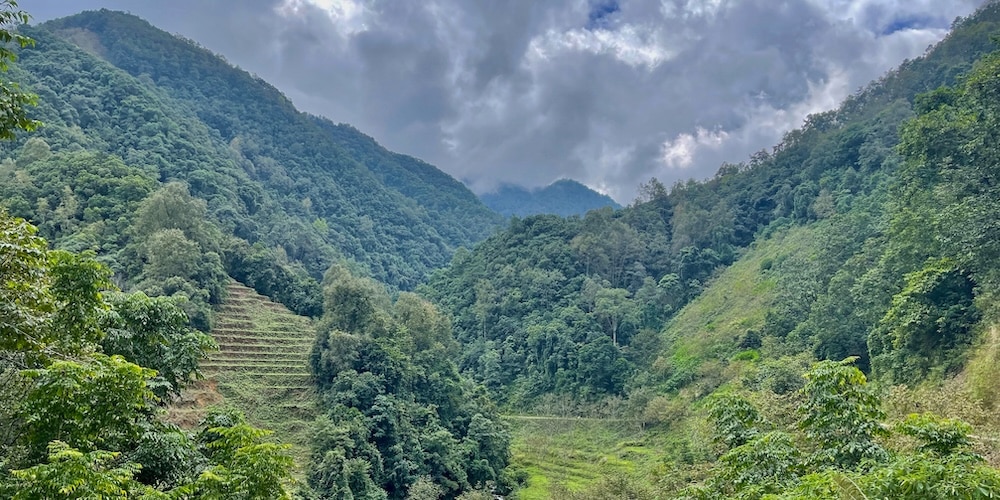
Yunnan has a generally mild climate with pleasant and fair weather because of the province’s location on south-facing mountain slopes, receiving the influence of both the Pacific and Indian oceans, and although the growing period is long, the rugged terrain provides little arable land. Much of the province lies within the subtropical highland or humid subtropical zones, with cool to warm winters, and temperate summers, except in the truly tropical south, where temperatures regularly exceed 30 °C in the warmer half of the year. In general, January average temperatures range from 8 to 17 °C; July averages 21 to 27 °C. Average annual rainfall ranges from 24 to 91 inches, with over half the rain occurring between June and August. The plateau region has moderate temperatures. The western canyon region is hot at the valley bottoms, but there are freezing winds at the mountaintops.
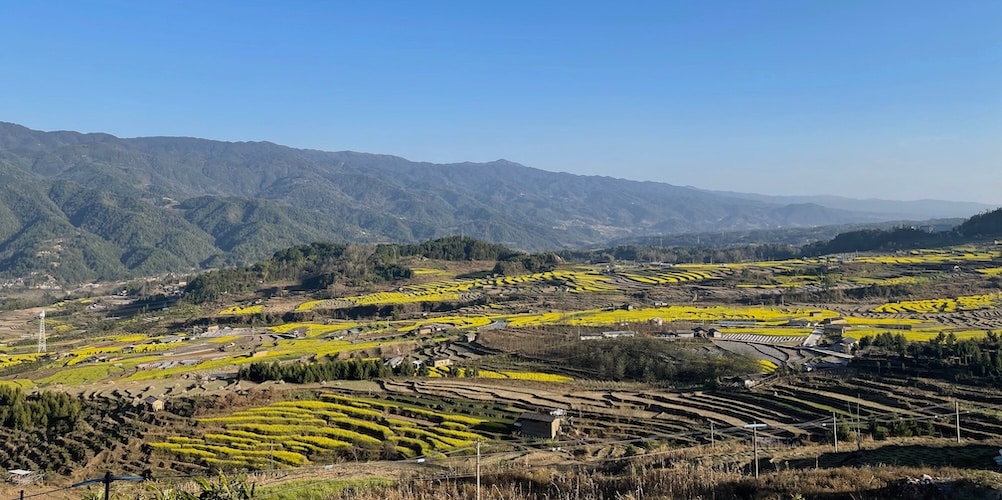
The province is rich in natural resources and Yunnan’s reserves of aluminium, lead, zinc and tin are the largest in China, and there are also major reserves of copper and nickel. Historically, the southwestern Silk Road to Bhitargarh in Bangladesh passed through modern Yunnan.
Birding Yunnan
Winter tends to be the best birding time in Yunnan, because most birds move to lower altitudes where is warmer and more food is available. Besides which the birds tend to stay as flocks in winter making then easier to see. From the snowclad 6,000m peaks of Meilixue Shan in the northwest to the jungles of Xishuangbanna in the south, Yunnan boasts every kind of habitat, and the longest provincial bird list in China with over 1000 species recorded. There are many incredible birding sites such as Gaoligong Shan (Baihualing), Hongbenghe, Yingjiang, Daying River, Nabangtian Fields, Rongshuwang (Banyan King), Trail to Xima, Ruili, Moli Waterfalls, Nanjingli Ridge, Tongbiguan, Xishuangbanna Tropical Botanical Garden, Laifengshan National Forest Park, Dali (Er Hai & Cang Shan), Wuweisi Temple, Xi Shan in Kunming, Zixishan, Ruili Botanical Garden, Napahai Lake, Sudian, Lijiang Wetland Park, Pingbiandaweishan National Forest Park, Tiger Leaping Gorge, Meili Snow Mountain, Black Dragon Pool, etc. Where do you start in a place this size?
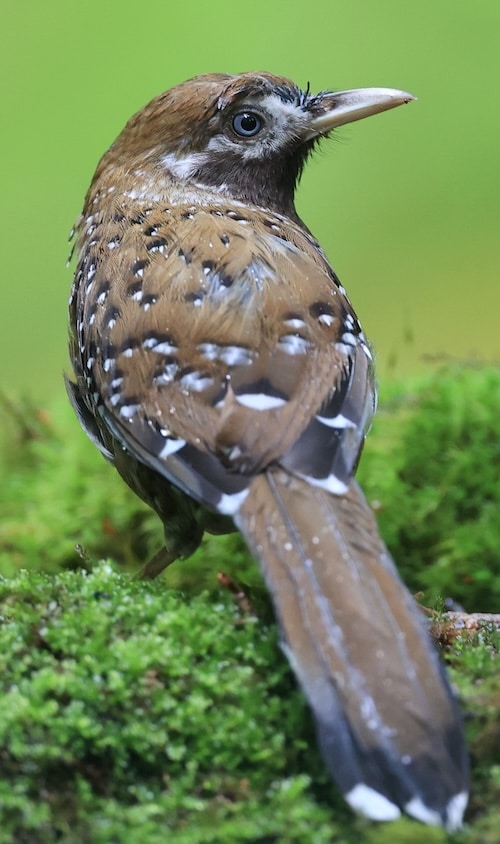
The Western Hills, or Xishan, near Kunming, are a popular area for the capital’s day-trippers, and the woods support a number of interesting species, including Rosy Minivet, Godlewski’s Bunting, Black-throated Tit, and Spectacled Fulvetta. Xishan and Kunming Botanical Garden have diverse plants that provide good habitats for different wintering and resident birds including Red-tailed & Blue-winged Minla, Red-billed Leiothrix, Japanese White-eye, Black-breasted Thrush, Blue Whistling Thrush, Black-headed Greenfinch, Crested Finchbill, Brown-breasted Bulbul, Long-tailed Shrike, and Spot-breasted Scimitar Babbler, etc.
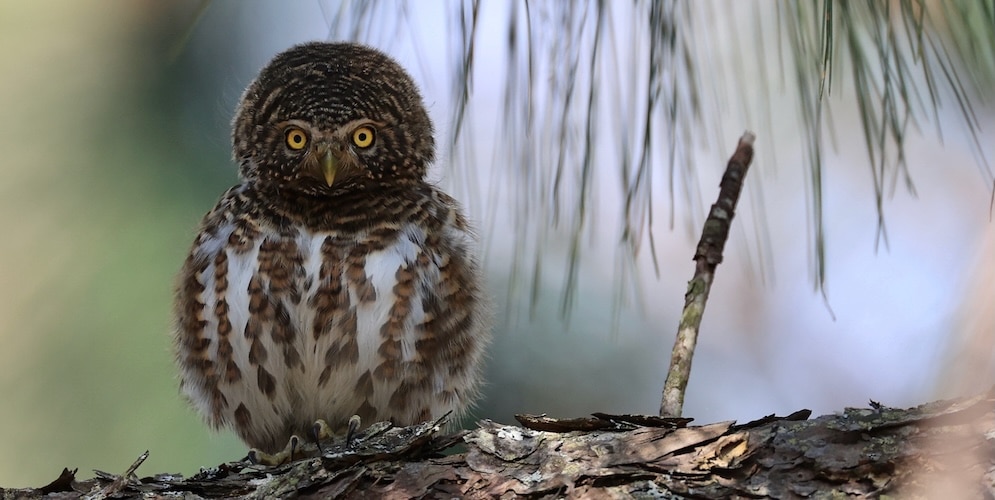
Collared Owlet Taenioptynx brodiei – ©Bird-Photo-Tours ASIA
Three hours’ bus ride further west, near the city of Chuxiong, the scenic area of Zixi Shan (Purple Stream Mountain) has similar and less-disturbed habitat than the Western Hills with Collared Grosbeak, Chinese Thrush and Yunnan Nuthatch. Covering about 16,000 hectares in land size, Zixi Mountain is the largest natural park of Yunnan province, the forest coverage is as high as 91%. The park is dominated by evergreen forest and Yunnan pine forest which provide an ideal habitat for many Nuthatches as well as some specials of southwestern China. Over 200 bird species have been recorded here, the most attractive targets here are the aforementioned endemic Yunnan Nuthatch and the rare Giant Nuthatch. Other interesting forest birds indeed including the stunning Mrs. Hume’s Pheasant, Chestnut-vented Nuthatch, Speckled Piculet, Gray-capped & Great Spotted Woodpeckers, Long-tailed & Gray-chinned Minivets, Blyth’s Shrike-Babbler, White-throated & Yellow-bellied Fairy-Fantails, Ashy-throated, Buff-barred & Black-faced Warblers, Streak-breasted & Black-streaked Scimitar-Babblers, Himalayan Bluetail, Sooty-headed & Mountain Bulbuls, Ashy Drongo and Spectacled & Yunnan Fulvettas. Sometimes, the shy Mountain Tailorbird can be spotted in the lush mixed broadleaf-conifer forest.
Cultural tourists head for the ancient city of Dali, which lies at the base of a fifty-kilometre line of 4000m high peaks – Cang Shan – the Azure Mountains. These slopes support Blood Pheasants near the top, Lady Amherst’s Pheasants in the middle, and Common Pheasants near the bottom. High above Dali the ‘Cloudy Tourist Walk’ at a height of 2,500m provides great views as well as the chance to see Nutcracker, Brown Parrotbill and Chinese Babax, among others. The well-worn tourist circuit leads north to the World Heritage Site of Lijiang, with birding opportunities at Black Dragon Pool Park at the outskirts of town, and Lashi Hai, a wetland 25 kms distant. In the Er Hai area, you can expect some common waterfowls like Purple Swamphen (Grey-headed Swamphen). Among over 200 bird species recorded here some star birds include Black-browed Tit, White-browed, Rusty-capped & Yunnan Fulvettas, Stripe-throated Yuhina, Rufous-capped Babbler, Elliot’s & Spotted Laughingthrushes, Streak-breasted Scimitar Babbler, Chestnut-tailed Minla, Yellow-throated Bunting. With a good amount of work, you also have chances to see Rufous-tailed Babbler and Bar-winged Wren-Babbler.
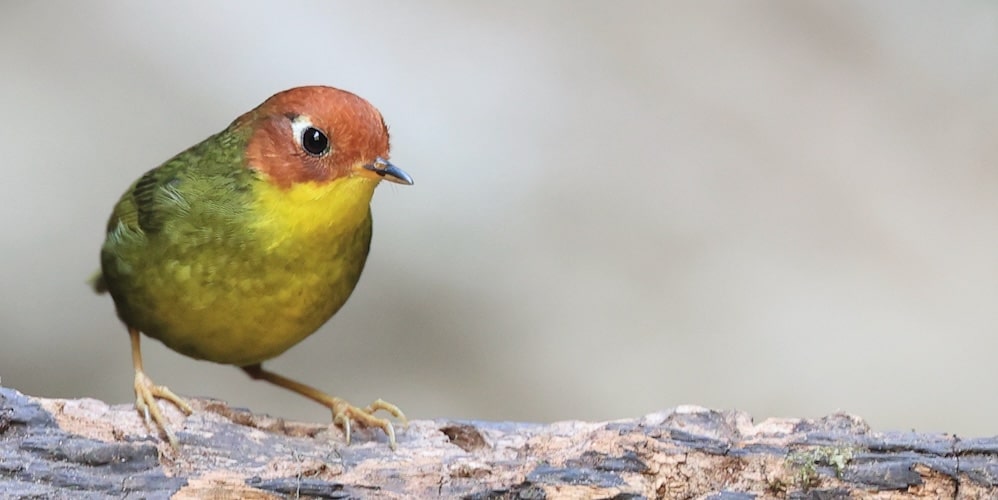
Chestnut-headed Tesia Cettia castaneocoronata – ©Bird-Photo-Tours ASIA
Further west, Gaoligong Shan, on the west side of the Salween River, is an area where a spur of the Himalayas reaches toward the wet jungles of southeast Asia. Gaoligong is rated as one of 26 hot spots for biodiversity by Conservation International. So far around 525 bird species have been recorded here. Here there are birds in common with the mountains of northeast India, such as Yellow-throated Fulvetta, Red-faced Liochichla, Black-faced Laughingthrush, Fire-tailed Myzornis and Ward’s Trogon. Some species like feeding on the ground such as Silver Pheasant, Mrs. Hume’s Pheasant, Hill Partridge, Mountain Bamboo Partridge, Rufous-throated Partridge, Slender-billed Scimitar Babbler, Red-tailed, Chestnut-crowned & Blue-winged Laughingthrushes, Grey-winged Blackbird, Long-tailed Thrush, Wedge-billed Wren-Babbler, Grey-bellied, Slaty-bellied & Chestnut-headed Tesias.
While in the dense virgin forests, you can look for Himalayan Cutia, Mountain Imperial Pigeon, Great, Golden-throated & Blue-throated Barbets, Broad-billed Warbler, Bay Woodpecker, Greater Yellownape, Red-tailed Minla, Scarlet Finch, Grey-headed & Spot-breasted Parrotbills, Whiskered & Rufous-vented Yuhinas, Striated Bulbul, Flavescent Bulbul, Beautiful Sibia, Long-tailed Sibia, Large Niltava, Rufous-bellied Niltava, Golden Bush-Robin, Snowy-browed Flycatcher, Rusty-fronted Barwing, Short-billed & Scarlet Minivets, Yellow-cheeked Tit, etc. In addition, there are some beautiful sunbirds including Fire-tailed, Black-throated, Mrs. Gould’s Sunbird & Green-tailed Sunbird. Moreover, there are a lot of bird blinds in Gaoligong because of the development of the bird watching which give more opportunities to see the above-mentioned species.
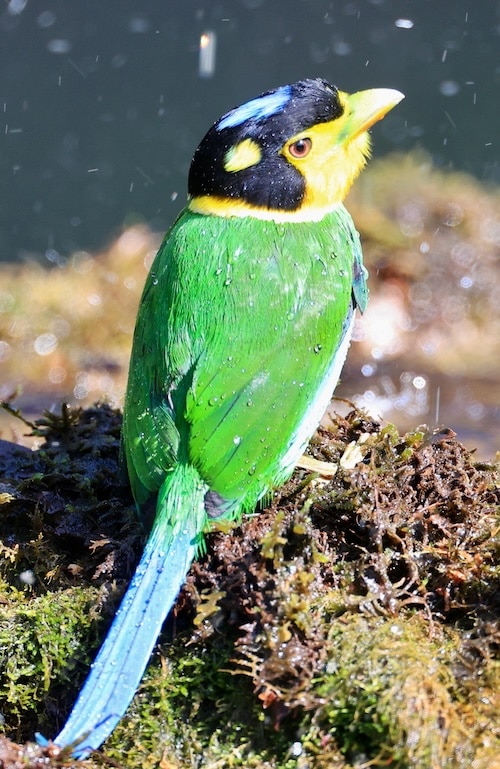
Long-tailed Broadbill Psarisomus dalhousiae – ©Bird-Photo-Tours ASIA
Black-necked Crane breeds on the Tibetan Plateau and the eastern population winters in northern Yunnan Province. The cranes may be seen in winter in northwest Yunnan at Napahai near Zhongdian (Shangri-la), and in northeast Yunnan near Zhaotong at Dashanbao National Nature Reserve (a brisk and breezy 3,000m elevation) and at Huize, a provincial nature reserve, as well at several other sites. Other brilliant species including Black Stork, Bar-headed Goose, Red-crested Pochard, Brown-headed & Pallas’s Gulls, Black Kite, White-taile, Imperial & Steppe Eagles, Grey-backed Shrike and Daurian Jackdaw. Not far from the Napa Lake, is the Shangri-La Botanical Garden where can find some unique forest species on the plateau that include White-browed Tit-Warbler, Rufous-tailed Babbler, Yunnan Nuthatch, Chinese & White-browed Fulvettas, Black-browed, Rufous-vented, Grey-crested & Sichuan Tits, Grey-backed Shrike, Elliot’s Laughingthrush, White-throated Redstart, Rufous-breasted Accentor, White-winged Grosbeak, Streaked, Long-tailed & Chinese White-browed Rosefinches, Grey-headed Bullfinch, Black-headed Greenfinch and Godlewski’s Bunting.
Located at the end of the southwest, Yingjiang is a county that borders with Myanmar. With opulent sunshine, flourishing virgin forests and various habitats, over 680 kinds of birds have been recorded here, which count around over 50% of birds of China. That’s what makes YingJiang one of the unmissable birding destinations in China. The Hornbill Valley is an important area of Yingjiang, it is an up-and-coming birding site that renowned for the best place to see hornbills including Great, Oriental Pied & Wreathed Hornbills. In addition, there is a variety of pheasants, laughingthrushes, flycatchers including Grey Peacock-Pheasant, Red Junglefowl, Kalij Pheasant, White-cheeked Partridge, Green-billed Malkoha, Crested Serpent-Eagle, Jerdon’s Baza, Collared Scops Owl, Spot-bellied Eagle Owl, Brown Boobook, Red-headed Trogon, Blue-bearded Bee-eater, Blue-eared Barbet, Greater Flameback, Lesser Yellownape, Great Slaty Woodpecker, Collared Falconet, Oriental Hobby, Long-tailed Broadbill, Blue-naped Pitta, Black-hooded Oriole, Greater Racket-tailed Drongo, Collared Treepie, Sultan Tit, Striated Swallow, Black-crested Bulbul, Grey-eyed Bulbul, Pin-striped Tit-Babbler, Large, Red-billed & Coral-billed Scimitar-Babblers, Spot-throated Babbler, Rufous-chinned & Greater Necklaced Laughingthrushes, Streaked Wren-Babbler, Nepal Fulvetta, Velvet-fronted Nuthatch, White-rumped Shama, White-tailed Flycatcher, Lesser Shortwing and Blue-winged Leafbird.
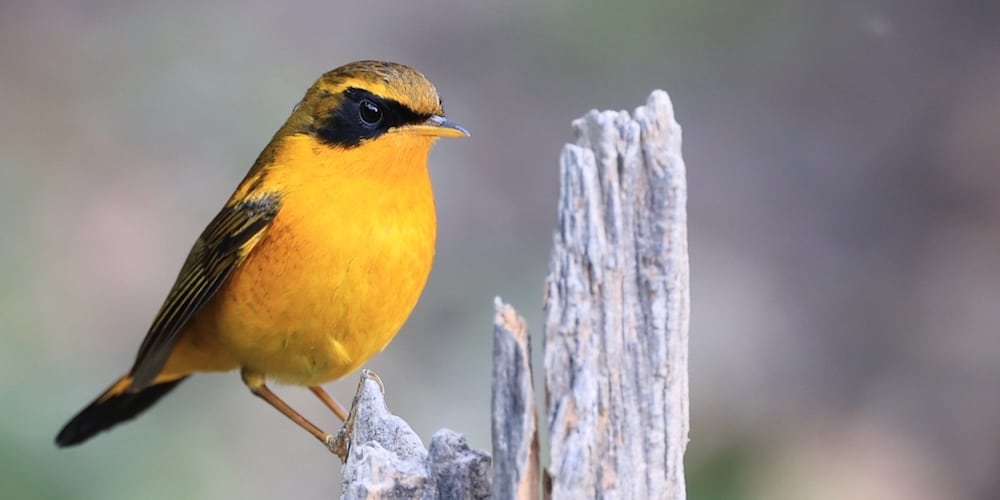
Golden Bush Robin Tarsiger chrysaeus – ©Bird-Photo-Tours ASIA
Dayingjiang River is also worth a visit for River Terns, but it can be difficult as there are only around 10 terns visit this area every winter. Other species you may encounter including Indian Spot-billed Duck, Small Pratincole, River Lapwing, Coppersmith Barbet, Alexandrine, Red-breasted & Blossom-headed Parakeets, Striated Grassbird, Rufescent & Grey-breasted Prinias, Grey-throated Martin, Asian Barred Owlet, Dusky Warbler, Collared & Great Mynas, Citrine Wagtail, Paddyfield Pipit and Little Bunting. Here the bird hides increase your chances.
Xishuangbanna Nature Reserve covers 241,776 hectares. The well-grown tropical rain forest and monsoon forest in valleys and hills contain one-sixth of the total plant species and a quarter of the total animal species in China. The reserve has recorded c. 430 bird species and subspecies.
Ruili is one of these few places in China that has a relatively intact tropical rainforest system, so is renowned for tropical birds. In the lush bamboo bush and dense forest of Nanjingli, you can look for Grey-headed, Rufous-headed & Pale-billed Parrotbills, Golden Babbler, Rufous-backed Sibia, White-browed Piculet, Long-tailed Broadbill, Black-eared Shrike-Babbler, Mountain Tailorbird and Spot-winged Grosbeak.
While in Moli Tropical Forest, you can search of Mountain Hawk-Eagle, Streaked Wren-Babbler, Dark-sided Thrush, Long-tailed & Silver-breasted Broadbills, Red-headed Trogon, Coppersmith Barbet, Rosy Minivet, Large Woodshrike, Common Iora, Grey-bellied Tesia, Yellow-bellied Warbler, Rufous-headed & Pale-billed Parrotbills, Rufous-backed Sibia, Rufous-chinned Laughingthrush, Rusty-flanked Treecreeper, Little, White-crowned, Black-backed, Slaty-backed & Spotted Forktails.
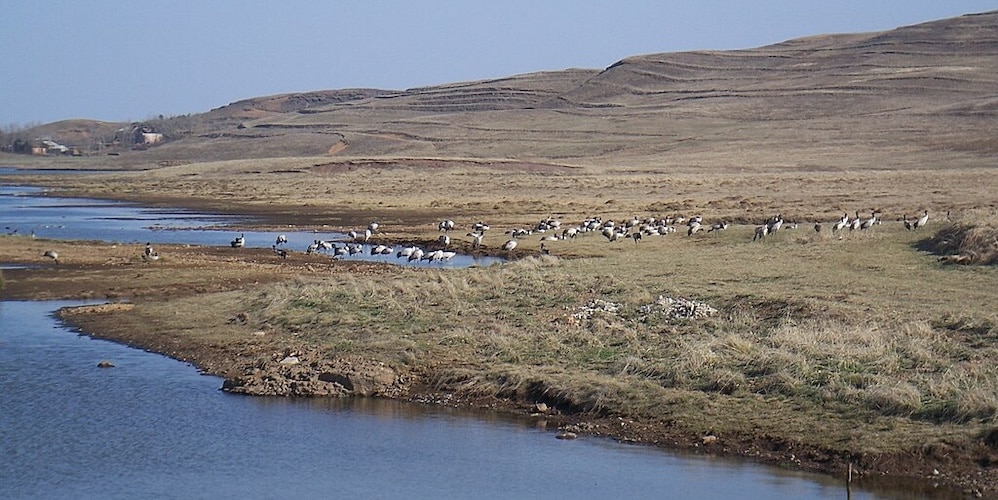
Dashanbao Black-necked Crane National Nature Reserve – ©hilloo CC BY-SA 3.0 via Wikimedia Commons
With elevation ranging from 3,000 to 3,300 meters, Dashanbao Reserve is located in the west of Zhaotong County and is the largest wintering habitat for Black-necked Crane on Yunnan-Guizhou Plateau with as many as 1200 present.
Around the small frontier town of Nabang, are some very special restricted-range species especially in the Nabang terrace Wetland and Xima Ancient Silk Road. In Nabang terrace Wetland, you can focus on Indian Spot-billed Duck, Greater Coucal, Crested Treeswift, Asian Palm-Swift, White-breasted Waterhen, River, Grey-headed & Red-wattled Lapwings, Chinese Pond & Striated Herons, White-throated, Crested & Pied Kingfishers, Green Bee-eater, Ashy Woodswallow, Striated Grassbird, Wire-tailed Swallow, Asian Pied, Chestnut-tailed, Red-billed & Vinous-breasted Starlings, Collared & Great Myna, Pied Bushchat and Scaly-breasted Munia.
Laifengshan Park is the largest park in Tengchong where you look for Silver Pheasant, Black-breasted Thrush, Brown-winged Parrotbill, and Slender-billed Oriole, Maroon Oriole, etc.
This page is sponsored by Alpine Birding

This page is sponsored by Bird-Photo-Tours ASIA

-
NR Lashihai-Wenhai Watershed
InformationSatellite ViewDiscover the Lashihai/Wenhai Watershed reserve at an elevation of 2500 meters, Lashi Lake (half an hour from Lijiang) is the largest highland lake in Lijiang County, and an important habitat for over 57 species of migratory birds - including protected species such as the black-necked crane, whooper swan and black stork.
-
John & Jeni Holmes
| johnjemi@gmail.com
https://johnjemi.blogspot.com/ -
Philip He
Alpine Birding
http://www.alpinebirding.com
-
Number of bird species: 1004
(As at June 2025)
-
Avibase
PDF ChecklistThis checklist includes all bird species found in Yunnan , based on the best information available at this time. It is based on a wide variety of sources that I collated over many years. I am pleased to offer these checklists as a service to birdwatchers. If you find any error, please do not hesitate to report them. -
E-Bird
PDF ChecklistThis checklist is generated with data from eBird (ebird.org), a global database of bird sightings from birders like you. If you enjoy this checklist, please consider contributing your sightings to eBird. It is 100% free to take part, and your observations will help support birders, researchers, and conservationists worldwide. -
Yunnan Exploration
ListBirds Checklist in Yunnan Province, China

-
Birds in Yunnan
| By Ji Weizhi | China Forestry Publishing House | 2006 | Hardback | 287 pages, colour photos | Out of Print | ISBN: 9787503843907 Buy this book from NHBS.com -
Birds of Baima Snow Mountain
| By Ge Ma Jiangchu | Huayu Nature Book Trade Co.Ltd | 2014 | Hardback | 364 pages, colour photos | Text Chinese/Tibetan | ISBN: 9787541680489 Buy this book from NHBS.com -
Birds of China
| By Liu Yang & Chen Shuihua | Princeton University Press | 2023 | Flexibound | 672 pages, plates with 4000 colour illustrations, colour distribution maps | ISBN: 9780691237527 Buy this book from NHBS.com -
Guide to the Birds of China
| By John MacKinnon | OUP | 2022 | Edition 2 | Paperback | 513 pages, 164 plates with colour illustrations; colour distribution maps | ISBN: 9780192893673 Buy this book from NHBS.com -
HKBWS Field Guide to the Birds of Hong Kong and South China [English / Chinese]
| By Hong Kong Birdwatching Society | HKBS | 2022 | Edition 9 | Paperback | 372 pages, plates with colour illustrations | ISBN: 9789627508342 Buy this book from NHBS.com
-
Kunming Birdwatching Association
WebsiteKunming Birdwatching Association (KBA) is managed by Kunming Association for Science and Technology (KAST), and is a community-based organization which aims to protect and to conduct research on birds -
Xishuangbanna Wildbird Society
InformationXishuangbanna Wildbird Society (XWS) which depends on the Xishuangbanna National Nature Reserve is a legally registered society which cares for birds and their habitats in the largest rainforest in mainland China. XWS aims at spreading the idea of wild bird conservation through promoting birdwatching in rainforest. It also promote ecotourism which really stresses on the rainforest, birds and other wildlife. Hope that XWS can cooperate with other birdwatching societies and birdwatchers to conserve the birds in this largest primary rainforest
-
NFP Laifengshan National Forest Park
InformationSatellite ViewLaifengshan is a popular park and visitors that day included several Chinese bird photographers. -
NNR Dashanbao
InformationSatellite ViewThe reserve has been set up to protect a total area of 19,200 hectares of plateau marshland at altitudes between 2,200 and 3,300 meters that provide winter habitat for the Black-necked crane. The reserve has been designated as a Ramsar site since 2004. -
NNR Gaoligong Mountain
InformationSatellite ViewThere are more than 300 species of birds such as silver pheasants, golden pheasants, peacocks, sunbirds and various Garrulax canorus… -
NNR Xishuangbanna
InformationSatellite ViewThe Reserve boasts 539 species of terrestrial vertebrate which accounts for 25% of the total in China, 429 species of birds, 36% of the total, 47 species of amphibians, 68 species of reptiles and 100 species of fish… -
NR Lashihai Wetland
InformationSatellite ViewAt the turn of each autumn and winter, thousands of water fowls migrate afar from the north, among which there are some of national protected birds, such as Black Storks, Black Neck Cranes, Chinese Mergansers, etc. as well as great numbers of ordinary water birds like Ruddy Shelducks and Mandarin Ducks and so on. According to the records, the quantity of bird species in the area of Lashihai wetland each year amounts to 25,000 ~ 30,000, the Anatidae of Anseriformes takes the dominant. 9 from 57 species of birds in wetland are of special, rare and distinctive ones. They are distributed in the shallow lake areas in the south, west and east side of Lashihai. -
WII & NR Napahai Wetland
InformationSatellite ViewA seasonal karst marsh composed of meadow, open water, peatlands, and surrounding forests situated at about 3,260m above sea level, with lake outflow through karst caves draining underground into the Jinsha River in the upper reaches of the Yangtze… -
WII Bitahai Wetland
InformationSatellite ViewProvincial Nature Reserve. An alpine wetland between 3,000 and 4,260 meters above sea level, with swamps, lake, peatlands, and adjacent forest cover. The site has very high hydrological values such as flood prevention and control in the key catchment zones of the Qinghai-Tibet Plateau; as part of the Jinsha River watershed in the upper reaches of the Yangtze River, it supplies water to the aquifers and stabilizes the flow in the lower reaches of the Yangtze…
-
eBird
SightingseBirding This Month
-
Absolute Wild
Tour OperatorLocated in southwestern China, Yunnan Province has recorded over 940 bird species including around 40 endemic species, ranking first in China in terms of total bird species. -
Alpine Birding
Local Tour OperatorBirding trips here are made for avid birders including yearly-run trips and new China birding trips developed by AlpineBirding team and guided by our bird experts in the best... -
Bird Photo Tours ASIA
Tour OperatorThis 20-day Bird-Photo-Tour to China’s Yunnan Province provides a superb chance for close range bird photography of extremely shy species encompassing: (i) Laughingthrushes, Partridges and Pheasants (ii) Parrotbills, Pittas and Barbets (iii) Broadbills, Yuhinas and Minlas (iv) Sunbirds, Bulbuls and Wren Babblers (v) Woodpeckers, Shortwings and Warblers and much more besides. -
BirdFinders
Tour OperatorThis fabulous tour will enjoy an array of normally elusive forest birds from comfortable hides overlooking feeding stations. Up to seven species of pheasants, six scimitar babblers, 15 laughingthrushes, 11 thrushes and numerous forktails, flycatchers, babblers, wren-babblers, cupwings, shortwings and tesias can be easily seen and photographed here. We will also spend time looking for regional specialities such as Yunnan Nuthatch and Yunnan Fulvetta. -
BirdQuest
Tour OperatorCHINA’S SICHUAN & NORTHERN YUNNAN – The Ultimate Chinese Endemics Tour -
Birding Ecotours
Tour OperatorYunnan is the most southwestern province in China and is the country’s most diverse province, biologically as well as culturally. Yunnan contains snow-capped mountains (it is at the far eastern edge of the Himalayan uplift) and true tropical environments, thus supporting a wide range of habitats and species. -
China Birding Tour
Local Tour OperatorChina Birding is a travel company based in China, Chengdu and Tibet.We do tailor made itineraries for any bird watchers who have an interest in the birds of China: Qinghaai, Sichuan, Yunnan and Tibet. We have the experience. We can do tour arrangements for individuals or for for birding travel companys visiting China. We can arrange all your hotels, travel and guiding -
China Dragon Tours
Local Tour Operator14 Days West Yunnan Birding Tour with Gaoli Gongshan Mountain -
Nature Travel Birding
Tour OperatorSouthern Yunnan Birding Tour 13 DAY/ 12 NIGHT TOUR -
NatureTrek
Tour OperatorYunnan's Forests and Mountains -
Rockjumper
Tour OperatorChina - Yunnan Extension -
Summer Wong Bird Tours
Local Tour OperatorSummer Wong Bird Tours specialises in China birding tours of Sichuan, Yunnan, Qinghai, Tibet & Eastern China... -
WINGS
Tour OperatorLying in the most south-western corner of China, Yunnan Province has received little attention from birders and yet it holds some of the most exciting habitats and alluring species in the whole of Asia. -
Yunnan Exploration
Local Tour Operator15 Days Southwest Yunnan Birding Tour - This is a fascinating tour to a seldom-visited region featuring some of the most diverse birding in Asia (more than 300 species possible) with spectacular scenery, fascinating botany, colorful tribal groups, tasty traditional food, and wonderful tea. -
Zoothera Birding
Tour OperatorIn this exciting ZOOTHERA tour we visit the mountains and hidden valleys of the ornithological mecca that is Yunnan.
-
2016 [03 March] - Craig Brelsford - Dulong Gorge
ReportA week in Yunnan is under our belt, and Dulong Gorge is yielding amazing Himalayan specialties. Among the species noted by us so far are Fire-tailed Myzornis, Grandala, Rufous-breasted Bush Robin, Striated Laughingthrush, and Assam Laughingthrush as well as Gongshan Muntjac. We have noted western Yunnan favorites Rusty-flanked Treecreeper, Yellow-throated Fulvetta, Beautiful Sibia, Rusty-fronted Barwing, and Streak-throated Barwing. We have heard the mournful whistle of Hill Partridge, found a flock of 140 Tibetan Serin, noted Goldcrest in a mixed flock at 2960 m, and discovered 4 Eurasian Teal looking out of place on the Dulong River. Also using the river are Common Merganser, Great Cormorant, Crested Kingfisher, and Brown Dipper. Crimson-breasted Woodpecker was a lifer for us, and Wallcreeper delighted us all. We noted a troop of Stump-tailed Macaque. -
2016 [05 May] - Glen Valentine & David Hoddinott - Sichuan & Yunnan
PDF Report406 species recorded, the following were just some ofthe most memorable and desirable species seen:Tibetan and Snow Partridges; Tibetan Snowcock;Verreaux’s Monal-Partridge; the spectacularTemminck’s Tragopan; Chinese Monal; White Eared,Blue Eared, Blood, Golden and Lady Amherst’sPheasants; dancing Black-necked Cranes; the rarelyseen Solitary Snipe; sky-pointing Eurasian Bittern... -
2017 [06 June] - Glen Valentine
PDF ReportThe provinces of Yunnan and Sichuan certainly offer some of the best birding in all of China and , quite simply , in Asia as a whole . Rockjumper’s 2017 comprehensive Sichuan birding tour and pre - tour extension of Yunnan was , as 2016’s trip , a mammoth success. Birding our way through the picturesque mountains and landscapes of these two very interesting provinces was an absolute pleasure... -
2018 [05 May] - Summer Wong
PDF ReportYunnan & Sichuan, China -
2018 [06 June] - Dave Farrow - Northern Yunnan & Sichuan
PDF ReportThe Birdquest tour to Sichuan this year was a great success, with a slightly altered itinerary to usual due to the closure of Jiuzhaigou, and we enjoyed a very smooth and enjoyable trip around the spectacular and endemic-rich mountain and plateau landscapes of this striking province. Gamebirds featured strongly with 14 species seen, the highlights of them including a male Temminck’s Tragopan grazing in the gloom, Chinese Monal trotting across high pastures... -
2019 [06 June] - Rich Lindie
PDF ReportThis year's scheduled tours to Sichuan and Yunnan enjoyed even greater success, in many ways than all our previous tours; and that's saying a lot, as all of our previous tours to these destinations have been fantastic successes! -
2020 [02 January] - Zoothera Birding
ReportOur second visit to Yunnan provided another mouth-watering selection of crippling Asian specialities. Building on the popularity of the hides at Baihualing we altered our itinerary from last year to visit another set of hides at Hongbenghe... -
2021 [07 July] - Michael W - Dali, Yunnan
PDF ReportThis is a summary of a trip to Dali, Yunnan during which I took daily trips to different birding sites and found 76 species of birds. I hope that this kind of trip report can fill a gap for those who aren’t able (because of cost or time) to join a professional birding tour, but who want to explore accessible birding areas on their own. -
2024 [02 February] - Mark Havenhand
ReportAfter an absence of two years from China, and having got word that the border regions of Yunnan-Myanmar were once more open, it was time for a revisit... -
2024 [06 June] - Somon Mitchell
ReportThe 2024 Birdquest tour to Sichuan and Northern Yunnan was a resounding success. As well as recording a total of 339 species, we tallied an impressive 163 ‘diamond birds’ – (species with restricted ranges rarely encountered on any other tour itinerary), exceeding or equalling recent tours in both 2015 and 2018. -
2025 [03 March] - Joshua Bergmark
PDF Report...Then, the three day extension produced all the hoped-for specialties of northern Yunnan, these being Yunnan Nuthatch, White-speckled Laughingthrush, Rufous-tailed Babbler, Eyeringed Parrotbill, Black-headed Greenfinch, Sharpe’s Rosefinch, plus the amazing Black-and-white Snub-nosed Monkey...
-
Birding in the Spring City
Informationnywhere you go in Kunming, so long as it's outside, you can find wild animals. It's true, and I'm not just talking about invertebrates. I'm talking about birds. Every morning after I drop my son off at school, I head on over to Yunnan University with a pair of binoculars. I spend about an hour each morning walking around campus listening and looking for little feathered gems flitting about the branches or skulking in plain sight.