

Tripura
Tripura is a landlocked state in northeastern India. The third-smallest state in the country, it covers 10,491 km2 (4,051 square miles); and the seventh-least populous state with a population of around four million people. It is bordered by Assam and Mizoram to the east and by Bangladesh to the north, south and west. Agartala is the capital and the largest city. Bengali, English and Kokborok are the state’s official languages. It is geographically isolated from much of India, as only one major highway, National Highway 8, connects it with the rest of the country. Agartala is located on a plain to the west.
The state has a tropical savanna climate, and receives seasonal heavy rains from the south west monsoon. The seven contiguous states – Arunachal Pradesh, Assam, Manipur, Meghalaya, Mizoram, Nagaland and Tripura – are collectively known as the Seven Sister States. Due to its geographical isolation, economic progress in the state is hindered. Poverty and unemployment continue to plague Tripura, which has a limited infrastructure. Most residents are involved in agriculture and allied activities, although the service sector is the largest contributor to the state’s gross domestic product.
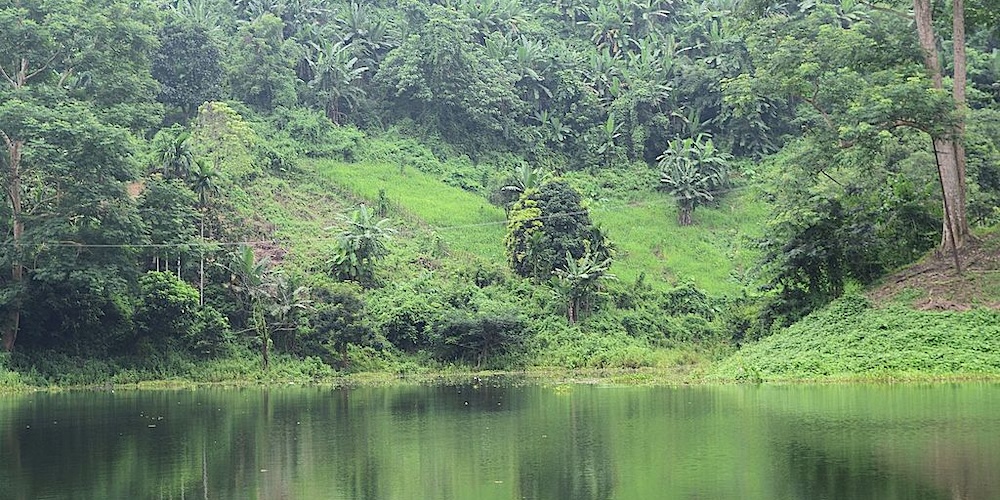
Deep Dumboor Lake – ©Yapri Debbarma CC BY-SA 4.0 via Wikimedia Commons
The physiography is characterised by hill ranges, valleys and plains. The state has five anticlinal ranges of hills running north to south, from Baramura in the west, through Atharamura, Longtharai and Shakhan, to the Jampui Hills in the east. The intervening synclines are the Agartala–Udaipur, Khowai–Teliamura, Kamalpur–Ambasa, Kailasahar–Manu and Dharmanagar–Kanchanpur valleys. At an altitude of 3,081 feet, Betling Shib in the Jampui range is the state’s highest point. The small isolated hillocks interspersed throughout the state are known as tillas, and the narrow fertile alluvial valleys, mostly present in the west, are called Doóng or lungas. A number of rivers originate in the hills of and flow into Bangladesh. The Khowai, Dhalai, Manu, Juri and Longai flow towards the north; Sumli to the north west; the Bijoy; Gumti to the west; and the Muhuri and Feni to the south west. The flood plains and narrow valleys are overlain by alluvial soil, and those in the west and south constitute most of the agricultural land.
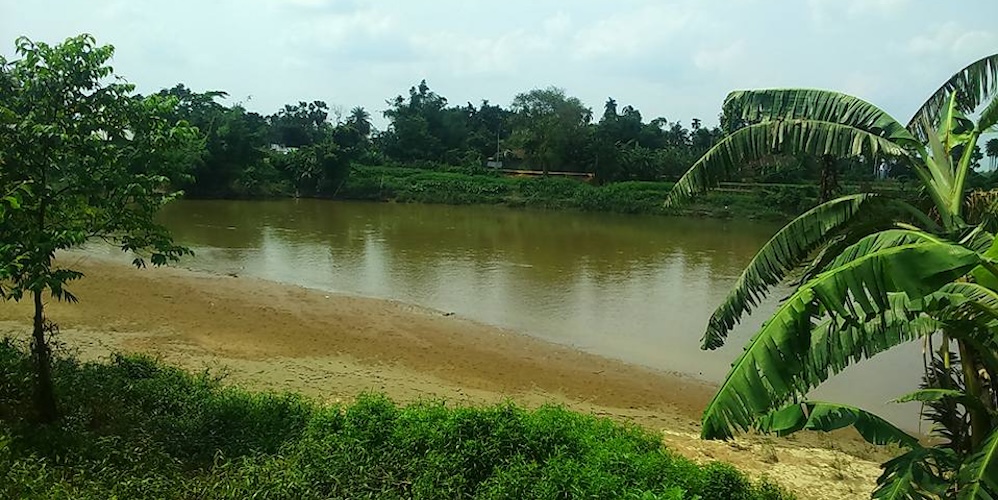
Gomati River – ©Nishith Joshi CC BY-SA 4.0 via Wikimedia Commons
Tripura has a tropical savanna climate. The undulating topography leads to local variations, particularly in the hill ranges. The four main seasons are winter, from December to February; pre-monsoon or summer, from March to April; monsoon, from May to September; and post-monsoon, from October to November. During the monsoon season, the south west monsoon brings heavy rains, which cause frequent floods. The average annual rainfall is between 78 and 108 inches. During winter, temperatures range from 13 to 27 °C, while in the summer they fall between 24 and 36 °C.
Birding Tripura
Forests cover more than half of the state, in which bamboo and cane tracts are common. Tripura has the highest number of primate species found in any Indian state. Like most of the Indian subcontinent, Tripura lies within the Indo-Malayan realm. According to the Biogeographic classification of India, the state is in the ‘North-East’ biogeographic zone with three different types of ecosystems: mountain, forest and freshwater. The evergreen forests on the hill slopes and the sandy river banks are dominated by species such as Dipterocarpus, Artocarpus, Amoora, Elaeocarpus, Syzygium and Eugenia. Two types of moist deciduous forests comprise the majority of the vegetation: moist deciduous mixed forest and Sal Shorea robusta forest dominate. The interspersion of bamboo and cane forests with deciduous and evergreen flora is a peculiarity of Tripura’s vegetation. Grasslands and swamps are also present, particularly in the plains. Herbaceous plants, shrubs, and trees such as Albizia, Barringtonia, Lagerstroemia and Macaranga flourish in the swamps of Tripura. Shrubs and grasses Phragmites (reeds) and Saccharum (sugarcane).
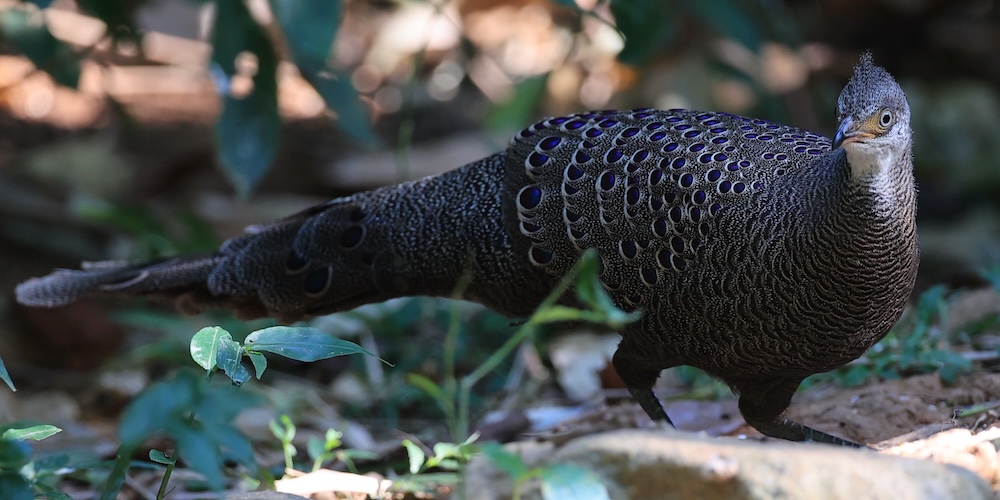
Grey Peacock-Pheasant Polyplectron bicalcaratum – ©Bird-Photo-Tours ASIA
Tripura hosts 90 land mammal species from 65 genera and 10 orders, including such species as Indian Elephant Elephas maximus, Sloth Bear Melursus ursinus, Bearcats (binturong) Arctictis binturong, Wild Dog Cuon alpinus, Porcupine Artherurus assamensis, Barking Deer Muntiacus muntjak, Sambar Cervus unicolor, Wild Boar Sus scrofa, Gaur Bos gaurus, Leopard Panthera pardus and Clouded Leopard Neofelis nebulosa as well as many species of small cats and primates. Out of 15 free-ranging primates of India, seven are found in Tripura; this is the highest number of primate species found in any Indian state. 570 species of birds have been recorded in the state.
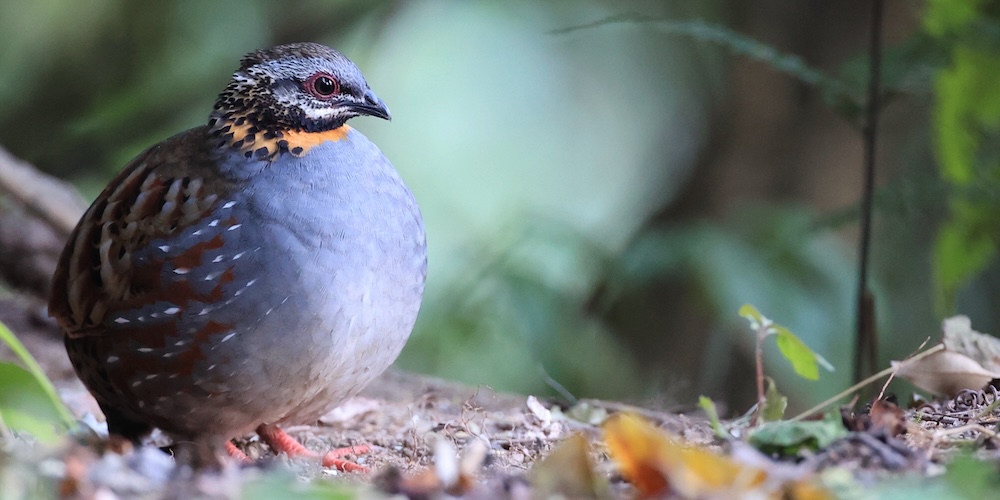
Rufous-throated Partridge Arborophila rufogularis – ©Bird-Photo-Tours ASIA
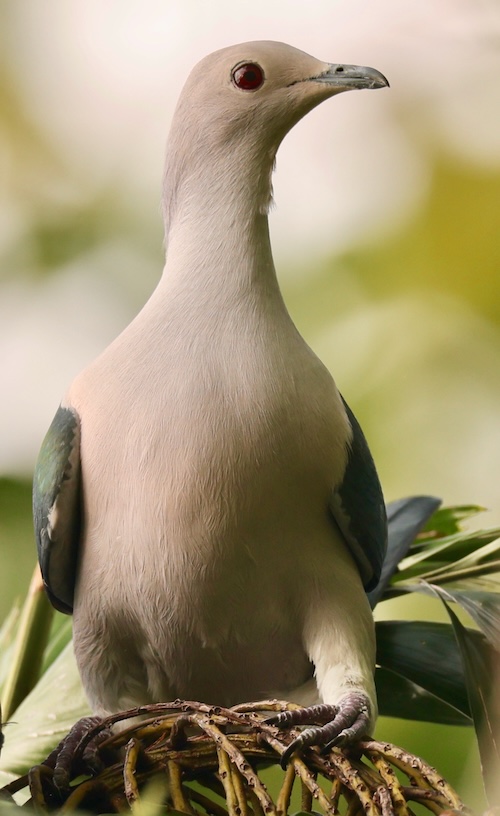
There are four Wildlife sanctuaries – Sipahijola, Gumti, Rowa and Trishna and two National Parks – Clouded Leopard National Park and Rajbari National Park. These protected areas cover a total of 567 km2 (219 square miles). Gumti is designated as an Important Bird Area. In winter, thousands of migratory waterfowl throng to Gumti and Rudrasagar lakes. The varied landscapes, from wetlands to forests, create a variety of habitats that support a wide range of birdlife with a number particularly attractive to migrants. Cultivated areas are excellent for raptors as well as larks, pipits, and wagtails. Scrubland is favoured by Wren-warblers, cuckoos, Crow-Pheasants, and, particularly, Indian Robins. Tripura’s wetlands are wintering grounds for numerous waterfowl species. Forested areas are best for Green Imperial Pigeon Ducula aenea, the state bird of Tripura.
-
Wikipedia
GNU Free Documentation License
https://en.wikipedia.org/wiki/Tripura
-
Number of bird species: 570
(As at July 2025)State Bird: Green Imperial Pigeon Ducula aenea
-
Avibase
PDF ChecklistThis checklist includes all bird species found in Tripura , based on the best information available at this time. It is based on a wide variety of sources that I collated over many years. I am pleased to offer these checklists as a service to birdwatchers. If you find any error, please do not hesitate to report them. -
Bubo Birding
PDF ChecklistThis checklist includes all species that have been reported in Tripura in eBird, but updated to IOC taxonomy, together with the likelihood of seeing each species for each month of the year. -
E-Bird
PDF ChecklistThis checklist is generated with data from eBird (ebird.org), a global database of bird sightings from birders like you. If you enjoy this checklist, please consider contributing your sightings to eBird. It is 100% free to take part, and your observations will help support birders, researchers, and conservationists worldwide.

-
Birds of the Indian Subcontinent
| By Richard Grimmett, Carol Inskipp & Tim Inskipp | Helm | 2025 | Edition 2 | Paperback | 544 pages, 240+ plates with colour illustrations; colour distribution maps, b/w illustrations | 9781472984777 ISBN: 9781472984777 Buy this book from NHBS.com
Birds of the Indian Subcontinent
Apple iOS | AndroidThe eGuide to Birds of the Indian Subcontinent is an interactive companion to Birds of the Indian Subcontinent – the definitive guide for birdwatchers visiting the region. It covers India, Pakistan, Nepal, Bhutan, Bangladesh, Sri Lanka and the Maldives. This application has specific features that will enhance your birding experience.
Indian Birds
Apple iOS | AndroidPioneers in bringing Indian Birding to the smart phone generation - Introducing Indian Birds, the time-honoured and cherished birding companion for India. Established in 2010, it proudly remains the sole mobile app available on App Store, offering bird enthusiasts the ability to explore bird namesUseful Information-
Bird Count Regional Coordinator
E-MailDipak Sinha
Organisations-
Tripura Biodiversity Board
WebsiteThe primary mandate of the Tripura Biodiversity Board (TBB) is to advice the State Government including technical assistance and guidance to the departments of the state government on any matter concerning conservation of bio-diversity, sustainable use of its components and fair and equitable sharing of benefits arising out of the use of biological resource and knowledge. -
Wild Tripura Foundation
WebsiteWe are Govt. registered Trust based in Tripura and pioneering in the field of documentation and conservation of the exquisite flora and fauna of the state.
Reserves-
NP Clouded Leopard National Park
InformationSatellite Viewt covers an area of about 5.08 square kilometres (1.96 sq mi) and is home to four species of primate monkey including Phayre's langur. -
NP Rajbari National Park
InformationSatellite ViewIt covers an area of about 31.63 square kilometres (12.21 sq mi). One must also keep a lookout for the captivating Pheasant-tailed Jacana, White-breasted Kingfisher, Indian Black drongo, Tailorbird, Jungle Myna, Hornbill, Doves, and many such species. -
WS IBA Gumti
InformationSatellite ViewThis sanctuary is the place for many animals like elephants, sambar, buffalo, yapping deer, sarow and wild goat and numerous more. Reptiles have additionally discovered a home in the sanctuary. The home spreads a range of 389.54 km2 and is rich in flora and fauna. It is found close to the sanctuary is a huge water reservoir involving a region of 300 km2. A few inhabitant and migratory birds flock to this repository and henceforth might be spotted effectively. Invest some opportunity viewing the colourful fowls and take back home a few remembrances as photos. It is the second home in state of Tripura. -
WS Rowa
InformationSatellite ViewIt covers an area of only 0.86 square kilometres (0.33 sq mi). -
WS Sipahijola
InformationSatellite ViewMore than 150 species of birds are found here. Wonderful habitat of Sepahijala attracts lot of migratory birds of which Lesser Whistling Duck, White Ibis, Open-billed Stork is of prime importance… -
WS Trishna
InformationSatellite ViewIn Tripura, there are four Wildlife Sanctuary viz. Sepahijala, Trishna, Gumti and Rowa of which Trishna is of unique type. One can appreciate both in-situ and ex-situ conservation of flora and fauna at Trishna Wildlife Sanctuary…
Sightings, News & Forums-
eBird
SightingseBirding This Month
Guides & Tour Operators-
Finderbridge
Tour OperatorTripura Wildlife Tour · Day 1 - Arrive at Agartala · Day 2 - Sepahijala Wildlife Sanctuary & Clouded Leopard National Park · Day 3 - Trishna Wildlife Sanctuary. -
Soar Excursions
Tour OperatorNortheast India comprises of eight states – Arunachal Pradesh, Assam, Manipur, Meghalaya, Mizoram, Nagaland, Sikkim, and Tripura.
Fatbirder - linking birders worldwide...
Skip to content