
County Louth
County Louth is a coastal county in the north of the province of Leinster and is part of the Border Region. It is named after the village of Louth. Nicknamed the ‘Wee County’, it is the smallest of Ireland’s thirty-two counties covering just 826 km2 (319 square miles) with a population of around 140,000 people. Louth County town is Dundalk, although Drogheda is the largest settlement; together they house well over half the populous.,
It borders four counties; Meath to the south, Monaghan to the west, Armagh to the north and Down to the northeast across Carlingford Lough. To the east it meets the Irish Sea. By virtue of which it has a temperate oceanic climate with cool humid summers and mild winters, strongly influenced hy Atlantic Ocean currents.
Carlingford sea lough, on the Louth side, hold the Cooley Peninsula with the Cooley Mountains. On the northern ide are extensive mudflats with Brent Geese and small islets at the mouth of the lough have breeding terns, which can be seen fishing the lough’s shallow water. Slieve Foy in the Cooley Mountains is the highest point of the county at 1,932 feet.
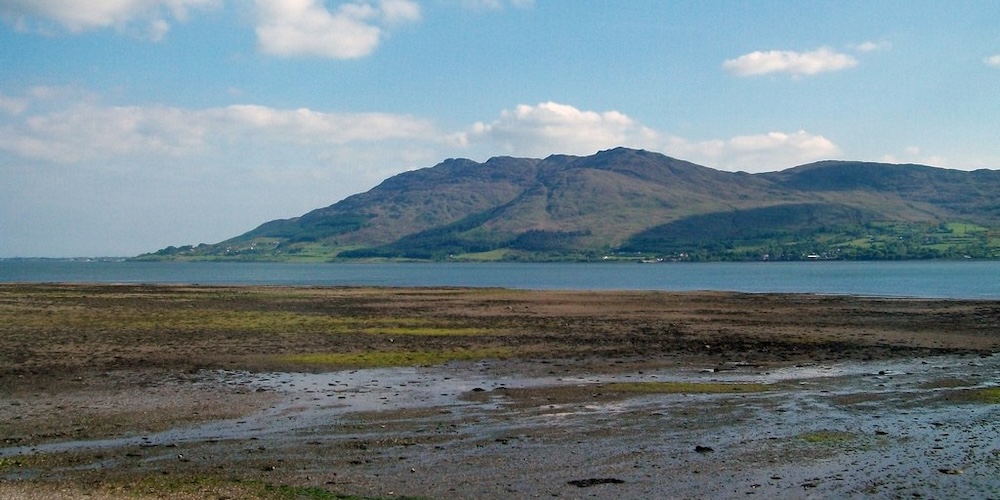
Dobbin’s Point, Warrenpoint – ©Eric Jones CC BY-SA 2.0 via Wikimedia Commons
Louth’s rivers include the Boyne and its tributary the Mattock on its southern border, Castletown, Fane, Glyde, and Dee, with the Flurry River in the north.
Birding County Louth
The best known, and probably best birding site in the county is Dundalk Bay, a Special Area of Conservation an expanse of rich mud flats which a winter home for upwards of 60,000 waders. Golden Plover, Knot and Dunlin in particular are present in large numbers. Recently a hide has been provided through the Louth Nature Trust and others. This is located in a hived off area of the waste water treatment works. The area also holds many geese in winter and is good all year round for gulls and other seabirds.
Historically the Little Terns have nested at Baltray but they have had a series of extremely poor breeding seasons with only occasional rearing of a small number of young. Their breeding was hampered by a combination of disturbance and predation by a range of nest predators. Volunteers now help avoid disturbance and areas have been fenced off in the hope that numbers recover.
Black Guillemot have three nesting sites in County Louth, at Port Oriel, at Gyles Quay and at Greenore Port. Nesting sites are typically gaps between boulders or cavities along the shore, however, they often select harbours when cavities or crevices in the quay walls provide ideal areas. This tendency to choose man-made structures for nesting is apparently increasing.
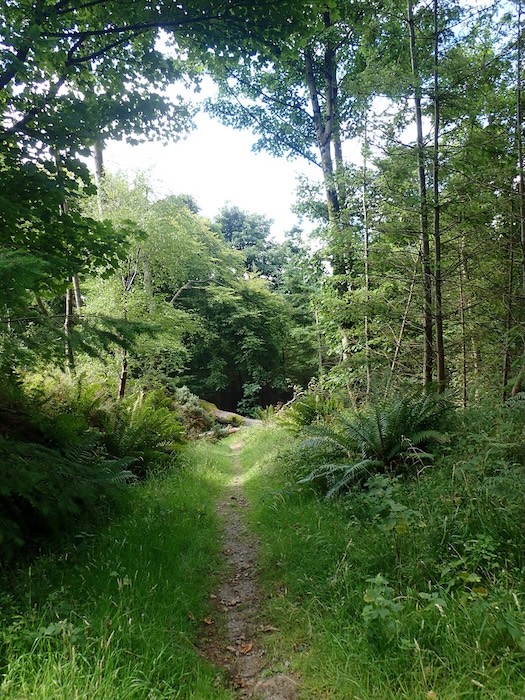
Ravensdale Forest path – ©Eric Jones CC BY-SA 2.0 via Wikipedia Commons
North of Dundalk on the border with Northern Ireland is the largest forested area in the county – Ardee Bog is the most prominent raised bog in the county and is located near Ardee and recognised as a biodiversity hotspot particularly as a critical wetland for wildlife, including Barn Owls. Other notable peatland areas include Stormanstown Bog and the Anna Bog.
Ravensdale Forest. The site is open access with mixed woodland rising steeply to the summit of Black Mountain (506m) with many kilometres of forest roads and tracks. There are three way-marked trails in the forest. It holds most of the usual woodland species including Great-spotted Woodpeckers.
-
Wikipedia
GNU Free Documentation License
https://en.wikipedia.org/wiki/County_Louth
-
Dick Coombes
-
Number of bird species: 267
(As at March 2026)
-
Avibase
PDF ChecklistThis checklist includes all bird species found in Louth , based on the best information available at this time. It is based on a wide variety of sources that I collated over many years. I am pleased to offer these checklists as a service to birdwatchers. If you find any error, please do not hesitate to report them. -
eBird
PDF ChecklistThis checklist is generated with data from eBird (ebird.org), a global database of bird sightings from birders like you. If you enjoy this checklist, please consider contributing your sightings to eBird. It is 100% free to take part, and your observations will help support birders, researchers, and conservationists worldwide.
-
Birds of Ireland - A Field Guide
| By Jim Wilson | Gill Books | 2024 | Edition 2 | Paperback | 288 pages, 1600+ colour photos, colour distribution maps | ISBN: 9781804580721 Buy this book from NHBS.com -
Finding Birds in Ireland - The Complete Guide
| By Eric Dempsey & Michael O'Clery | Gill Books | 2014 | Edition 2 | Paperback | 389 pages, 300 colour photos, colour maps | ISBN: 9780717159253 Buy this book from NHBS.com
-
Friends of Ardee Bog
WebpageA shared love of Ardee Bog brought us together. -
Louth Birdwatch Ireland
X PageNews from the Birdwatch Ireland Louth branch -
Louth Nature Trust
WebsiteThe Louth Nature Trust is a voluntary, non-profit organisation which was established in February 2008. Founding directors of the Trust were Sandra Mckeever, Margaret Reilly, Peter Philips and Breffni Martin. It is a conservation group formed to protect the county’s natural resources and to aid in promoting awareness of, and interest in the landscape, wildlife, flora and fauna of Co. Louth.
-
Irish Birding
SightingsSearch by county etc. -
Louth Bird News
News & SightingsNews and sightings -
eBird
SightingseBirding This Month
-
2024 [02 February] - Brian Carruthers
PDF Reportd FINGAL Branch organized an outing to the Dundalk area County Louth, Ireland.
-
Birdwatch Ireland Louth
BLOGBIRD WATCH IRELAND LOUTH BLOG 2008 - 2020
-
Wildlife Photographer - Enda Flynn - Cooley Wildlife Photography
Facebook PageEnda Flynn is a wildlife photographer that lives on the Cooley peninsula and has been interested in natural history all his life. Active in the field most days either in the mountains,forests or shoreline has helped build up a good knowledge of the habits and habitats of the local fauna and flora,making him an ideal guide for a days photography…