

Fuerteventura
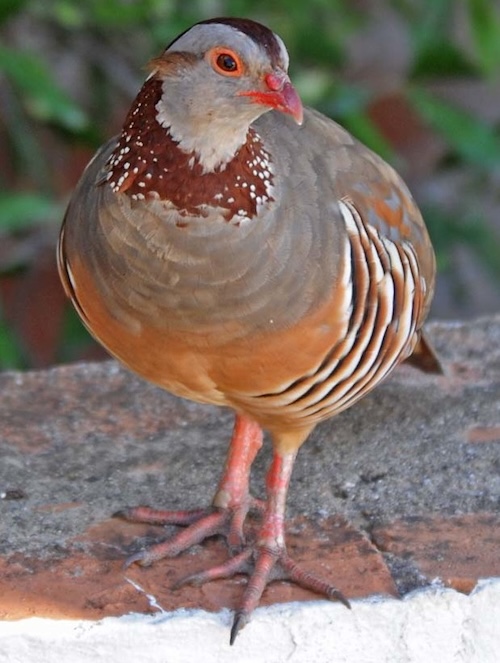
Fuerteventura literally meaning ‘strong fortune’ but translated by some as ‘Strong Winds’ or a corruption of the French term for ‘Great Adventure’ is one of the Canary Islands. It lies in the Atlantic Ocean and is part of the North Africa region geographically, but politically, is part of Spain. Covering 1,660 square kilometres (641 square miles), located just 100 km (62 miles) off the coast of north Africa, it is the second largest of the Canary Islands, after Tenerife with a population nof around 125,000 people. The island is 100 kilometres (62 miles) long and just 31 kilometres (19 miles) wide. It is part of the province of Las Palmas and has six municipalities and its capital is Puerto del Rosario.
The entire island was declared a biosphere reserve by UNESCO (May 2009). The climate on Fuerteventura is pleasant throughout the year, and often referred to as the island of eternal spring and is at the same latitude as Florida. The sea regulates air temperature, diverting hot Sahara winds away from the island. During the winter months, temperatures average a high of 22 °C and a low of around 15 °C, whereas during the summer a mean high of 28 °C and a low of 20 °C can be expected. Precipitation is just 6 inches per year, most of which falls in autumn and winter. December is the month with highest rainfall although most runs off into the see as the forests were felled in Victorian times and the vegetation denuded by overgrazing. Water is now sourced by desalinating seawater. Attempts have been made to replant the pine forests, with mixed success.
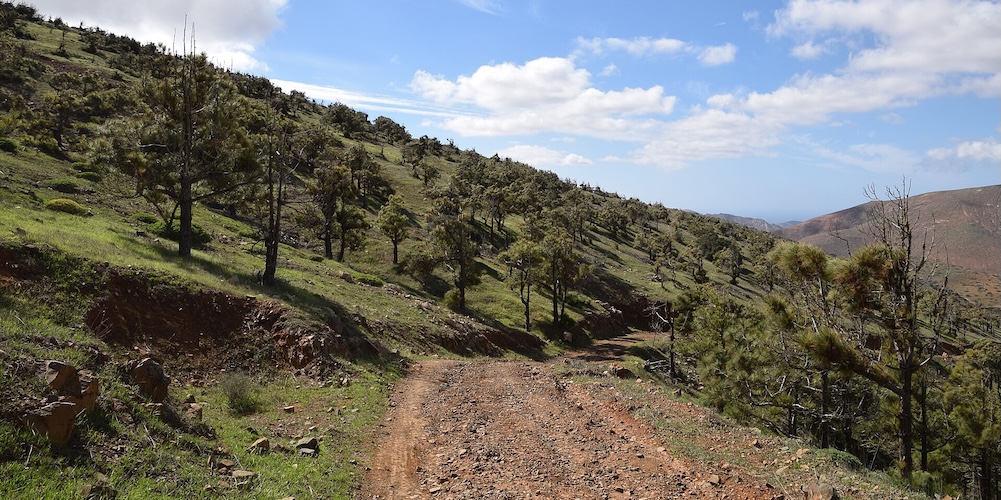
©Luc.T CC BY 2.0 via Wikimedia Commons
It has many long white sand beaches, but a third of the island’s beaches are black volcanic shingle. The highest point in Fuerteventura is Pico de la Zarza standing at 2648 ft (807 m) in the southwestern part of the island. Geographical features include Istmo de la Pared which is 5 km (3 mi) wide and is the narrowest part of Fuerteventura. The island is divided into two parts, the northern portion which is Maxorata and the southwestern part called the Jandía peninsula.
Birding Fuerteventura
The island is home to one of the two surviving populations of the threatened Canarian Egyptian vulture. On the barren, rocky land there are Barbary ground squirrels and geckos. It is the only place in the world that the Canary Island Chat is found (a separate subspecies on the islets of Allegranza and Montaña Clara to the north of Lanzarote is now unfortunately extinct).
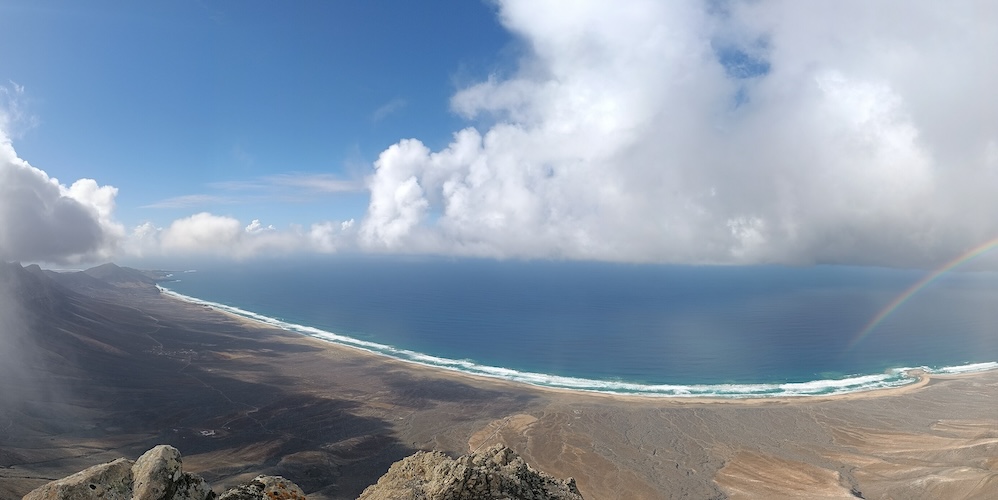
View from Pico de la Palma – ©Jakub Krajňák, CC0, via Wikimedia Commons
Other interesting species best seen on Fuerteventura include the Barbary Partridge, Cream-Coloured Courser, Lesser Short-toed Lark, Spectacled Warbler, Berthelot’s Pipit, Hoopoe, Southern Grey Shrike and Trumpeter Finch. A good tip for birding in the Canaries is to head for fresh water, as birds tend to congregate around it, especially on the very dry Eastern islands. Sadly, there are many feral cats and dogs.
Return to the Canaries page: Canary Isles Main Page
-
Number of bird species: 332
(As at May 2026)
Number of endemics: 1
Canary Islands Chat Saxicola dacotiae
-
Avibase
PDF ChecklistThis checklist includes all bird species found in Fuerteventura , based on the best information available at this time. It is based on a wide variety of sources that I collated over many years. I am pleased to offer these checklists as a service to birdwatchers. If you find any error, please do not hesitate to report them. -
eBird
PDF Checklisthttps://ebird.org/printableList?regionCode=ES-CN-FVT

-
Crossbill Guide: Lanzarote and Fuerteventura, Canary Islands, Spain
| By Dirk Hilbers, Kees Woutersen & Constant Swinkels | KNNV Uitgeverij | Edition 2 | 2023 | Paperback | 176 pages, colour photos, colour illustrations, colour maps | ISBN: 9789491648267 Buy this book from NHBS.com
-
eBird
SightingsThe report below shows observations of rare birds in Fuerteventura County. Includes both unreviewed and reviewed/approved observations.
-
Fuerteventura Bird Watch
Tour OperatorFuerteventura Bird Watch is run by Derek Bradbury who has worked as a volunteer on conservation projects on the island of Fuerteventura for many years. It has been primarily a research project undertaken to record the impact that the fast growing tourist industry and the massive changes in the infrastructure is having on the indigenous bird species of this island and the migratory birds, some of which breed, and some that stop off on their migration passage north or south depending on the time of year. -
HeatherLea
Tour OperatorDesert specialities and spring migration in a Canary Islands hotspot! -
NatureTrek
Tour OperatorA relaxing 8-day birdwatching holiday to Fuerteventura in the Canary Islands. -
Swallow Birding
Tour Operator
-
2017 [03 March] – David Collins – Fuerteventura
PDF ReportFrom the minibus we had wonderful close views of about ten cream-coloured coursers. They are such elegant and unusual birds and it is always special to watch them at close quarters. -
2017 [12 December] - Matt Eade
ReportWith constant positive news and some lovely photos coming out of the Dwarf Bittern on Fuerteventura, my interest in seeing this bird was becoming more and more intense. I am in no means a Western Palearctic lister, nor do I keep a list of this region, however having been to Africa five times and still yet to get even a sniff of a Dwarf Bittern, I felt it was a good decision in trying to see this bird. With staff travel flights at £37 return I needed no more pushing, and Friday morning I set off to LGW for an early on time departure bound for the Canaries. -
2018 [03 March] - David & Amanda Mason
Report...For at least 10 years we have considered Fuerteventura for a short burst of winter sunshine. This year, at long last, we took the plunge: not many lifers on offer, but some relaxed birding along the island’s many tracks sounded like a good idea... -
2019 [03 March] -Phil Callagher
PDF ReportFuerteventura always offers a unique range of species, but in spring 2019 the island looked particularly attractive. It was hosting a long-staying vagrant African Dwarf Bittern, plus four pairs of recently-colonised Red-billed Tropicbirds, both difficult birds to tick off in the Western Palearctic (or indeed anywhere). -
2021 [087 August] - Matthew Mellor - Fuerteventura & Lanzarote
PDF Report...PDF Report... -
2022 [03 March] - Ed O'Hara
PDF ReportBarranco de la Torre / Museo del las Salinas del Carmen -
2024 [02 February] - Pete Hines
PDF Report...This was a new site for me, the only barranco which contained water, the closest to my accommodation in Costa de Antigua and very close to the airport. There were probably two pairs of Fuerteventura Stonechat at this site... -
2024 [03 March] - Ed O'Hara
PDF ReportDaily diary -
2024 [09 September] - Toby Carter
PDF ReportDespite mid-September being far from the prime time to visit this island (usually December-April), was still hoping to connect with all the islands specialities. With Houbara Bustard, Fuerteventura Stonechat and Trumpeter Finch being the main targets for lifers, Cream-coloured Courser was another species high on the list...
-
Birdwatching in Fuerteventura
Facebook PageWe’ve had a great weeks birdwatching in Fuertuventura. We caught up with all our target species. Here’s some of my photos with rough locations... -
The Girl On The Move
WebpageBirdwatching in Fuerteventura: Villaverde