
Birds Collective Names
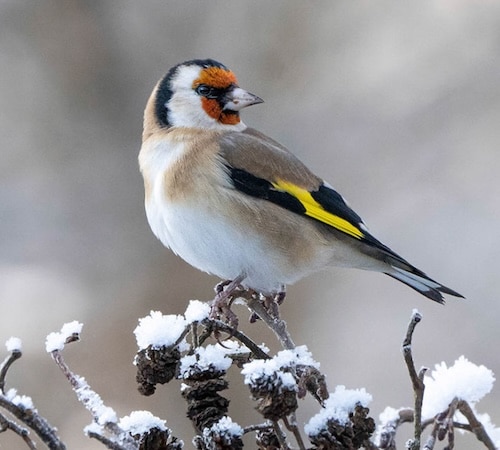
Most people will know a handful of collective names for different species of birds. In the nursery we probably learn about a gaggle of geese, or in some places a gobble of turkeys. The general populace will probably understand what you mean by a charm of Goldfinches. On the other hand, some quite common generic terms for bird species are not well understood.
The general public knows that a group of cows is a herd, but are less likely to know that also applies to swans, for example. One or two scary or otherwise unusual common names are quite well known such as a murder of Crows or a parliament of Rooks. Watchers of wildlife documentaries maybe familiar with a murmuration of Starlings.
When I watch quiz programs, I’m always surprised how little an awful lot of ordinary people know about very common birds, not even their names. And a great many people can’t tell a Blue Tit from a Blue Jay and wouldn’t even know which are native to their own country. In the UK, in some ways that’s quite remarkable because the majority of households feed the birds that turn up in their gardens on a very regular basis.
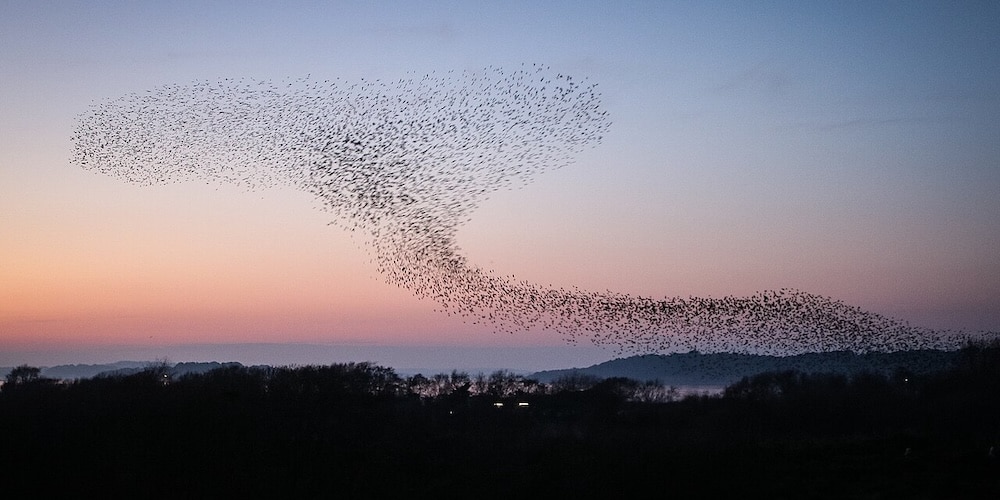
Murmuration of Starlings – ©Tanya Hart, CC BY-SA 3.0 via Wikimedia Commons
Below you will find explanations and in some cases links to lists of the collective names of a great many birds. Having said that, in some cases there are several terms applied and at others terms mistakenly applied. For example, the term for a group of Bitterns a siege in some times and places that has been corrupted and the term used is a sedge of Bitterns. There is also a growing tendency to create new collective terms for bird species that in the past or even currently are not generally known to the ordinary man in the street. The problem with this is that it is the construct of individuals, not an actual agreed term.
(NB I recently saw an online reference by AI saying that the names were interchangeable and that a ‘sedge of Bitterns’ comes from their association with sedges. This is completely incorrect. Bitterns like reed-beds and sedges are plants of the wet meadow, whereas Common Reeds Phragmites australis, are the main plant of reed-beds, a different sort of habitat.)
| Bird Species | Collective Name | Bird Species | Collective Name |
| Bitterns | Siege | Parrots | Pandemonium |
| Blackbirds | Cloud | Partridge | Covey |
| Blackbirds | Grind | Plovers | Congregation |
| Buntings | Stocking | Quails | Bevy |
| Buzzards | Wake | Ravens | Unkindness |
| Cormorants | Gulp | Ravens | Treachery |
| Cranes | Dance | Ravens | Conspiracy |
| Crows | Murder | Red Kites | Wake |
| Ducks | Paddling | Red Kites | Husk |
| Eagles | Convocation | Rooks | Parliament |
| Flamingos | Flamboyance | Rooks | Building |
| Geese | Gaggle | Snipe | Wisp |
| Goldfinches | Charm | Snow Buntings | Drift |
| Jackdaws | Clattering | Sparrows | Host |
| Jays | Scold | Sparrows | Quarrel |
| Lapwings | Deceit | Starlings | Murmuration |
| Larks | Exaltation | Storks | Muster |
| Long-tailed Tits | Volery | Swans | Herd |
| Magpies | Tiding | Thrushes | Mutation |
| Magpies | Mischief | Turtledoves | Pitying |
| Merlins | Cast | Woodcocks | Fall |
| Nightingales | Watch | Woodpeckers | Decent |
| Owls | Study | Wrens | Chime |
| Owls | Parliament |
-
An Exaltation of Larks
| By James Lipton | Penguin | 1993 | Paperback | 336 Pages | ISBN: 9780140170962 Buy this book from NHBS.com -
The Boke of Saint Albans
| By Dame Juliana Berbers | HardPress | 2024 | eBook | 6.5 mb | ISBN: B0CW1F83T4 Buy this book from NHBS.com
-
A parcel of oystercatchers: collective nouns for birds
WebpageA spring of teals, a deceit of lapwings, an unkindness of ravens. How did such inventive terms come about? -
Collective Nouns For Birds
WebpageBelow you’ll find a comprehensive list of collective nouns for birds, some familiar and some not so well known... -
Collective Nouns for Birds
WebpageHere’s our comprehensive list of collective nouns for birds, handily organised into an A-Z list. -
Collective names for birds
WebpageCollective terms -
Collective nouns for birds explained
ArticleWe celebrate our favourite collective nouns for birds, from the weird and the wonderful to the most curious. -
Group Names for Birds: A Partial List
WebpageAny of these group names may properly be used by birders who wish to display their erudition, although it is probably linguistically inaccurate (and it certainly is bad manners) to upbraid someone who refers to "a bunch of ravens" by saying, "Surely you mean `an unkindness of ravens,' my good fellow." -
Irish Garden Birds 2020 – Collective Nouns for Wild Birds
WebpageGroup nouns aren’t something we tend to give much thought to. When it comes to large numbers of birds, the word ‘flock’ is a suitable catch-all term. A flock of crows, a flock of finches, a flock of geese – you know what it means. Lots of a similar type of bird together. -
List Lovers list of collective nouns for birds also includes the individual baby names, males and females and plural for each bird species. Did you know the first list of collective nouns was published in The Book of St Albans circa 1500 and it wasn’t definitive – it was based on folklore, humor and the whim of the publisher and it’s the same today.
WebpageWe’re all familiar with some of the basic collective nouns for birds, such as a murder of crows or a gaggle of geese, but what about a charm of finches or a parliament of owls? -
List of Collective Nouns for Birds
WebpageList Lovers list of collective nouns for birds also includes the individual baby names, males and females and plural for each bird species. Did you know the first list of collective nouns was published in The Book of St Albans circa 1500 and it wasn’t definitive – it was based on folklore, humor and the whim of the publisher and it’s the same today. -
Spurious Collective Nouns for British Birds
WebpageA daytime chatshow of mistlethrush... -
Whimsical Group Names
WebpageView a list of whimsical group names submitted by chatters.