

Volga
The Volga Federal District consists of the republics of Chuvasia, Udmertia, Bashkortostan, Mordovia, Novogorod and Tatarstan; the krai of Perm and the oblasts of Orenburg, Samara, Ulyanovsk, Penza, Saratov, Nizhny-Novogorod, Mari El and Kirov. It covers an area of 1,037,000 km2 with a total population of 29 million people. The largest city and administrative capital is Nizhny-Novogorod with around 1.25 million citizens.
The republics and oblasts vary greatly in size. The smallest, Chuvash Republic covers 18,343 km2, but has over two thousand rivers with the major ones being the Volga, the Sura, and the Tsivil. There are also over four hundred lakes including large reservoirs where Volga is dammed. It has a population of around 1.2 million people a third of whom live in the capital, its largest city Cheboksary.
One of its major nature reserves, Khvalynshy National Park is located in Saratov oblast, which covers 100,200 km2 with a population of 2.4 million; almost a million of whom live in the capital city of the same name. The area is largely flat lying in the plain of the Volga.

Khvalynsky National Park – ©Рощина Екатерина Владимировна CC BY-SA 4.0 via Wikimedia Commons
The largest region is Perm krai covering 160,000 km2, with a population of 2.5 million people, one million o0f who live in its capital, also called Perm. Ther district is located east of the East European Plain and west of the Ural Mountains. IOt has an incredible 29,000 rivers, only two of which exceed 200km, the Kama River and the Chusovaya River. Forests cover over 70% of Perm Krai’s area. Coniferous forests predominate, with deciduous forests more common in the south. Consequently, there are 62 species of mammals, more than 270 species of birds, 39 species of fishes, 6 species of reptile and 9 species of amphibians. Although smaller at 143,600 km2, Bashkortostann Republic has a population of over four million a quarter of whom live in the capital, Ufa. It is mountainous in part but has many lakes and more than 13,000 rivers. Over 30% is wooded with many national parks and reserves covering over 10,000 km2. The area is also rich in minerals and coal and oil deposits.
Birding Volga
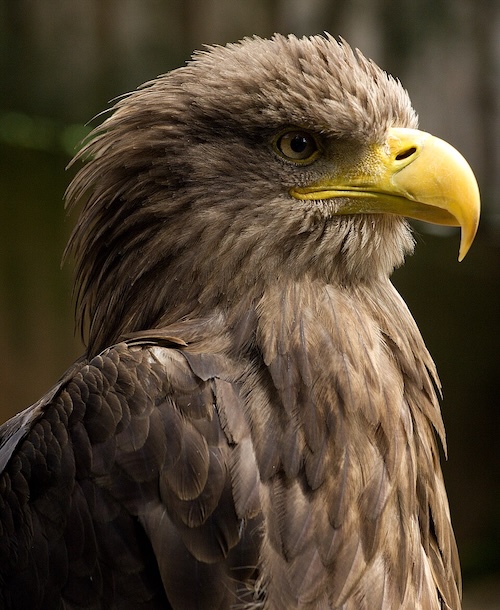
The Volga Federal District spans many diverse ecosystems – from the taiga forests in the north to the arid steppes in the south; from steep mountains to lush lakes and rivers. This creates a rich avifauna with over 300 recorded species, including many birds of prey, waterfowl, with iconic nesting species like White-tailed Eagle, Imperial Eagle, and Siberian Rubythroat.

Samarskaya Luka – ©Михаил Шнейдер CC BY-SA 4.0 via Wikimedia Commons
Roughly in the middle of the Volga district lie areas like the Samarskaya Luka National Park and Mordovia State Nature Reserve, which serve as vital stopover and breeding sites for many iconic species such as the Black Stork, Honey-buzzard, and Middle-spotted Woodpecker.
The Volga delta and its floodplain is known as one of Russia’s top birding regions. Its extensive reedbeds and wetlands attract large numbers of waterfowl, including Purple Heron, Glossy Ibis, Spoonbill, and White-headed Duck.
The Ural Mountians and their foothills with their forest-rich river banks suchn as in like Bashkortostan support an unusually high density of birds of prey, including Peregrine Falcon, Eagle Owl, and Golden Eagle.
Other notable Birds across the federal district includes White-tailed Eagle, Eastern Imperial Eagle, Osprey, Saker Falcon, and Steppe Eagle. Waterbirds & Waders include Terek Sandpiper, Red-necked Grebe, and Great Reed Warbler and its forests hold a lot of Passerines; not just Siberian Rubythroat but manynmmore suchn as Eurasian Tree Sparrow and Golden Oriole.
-
Belaya River
The environs of the Belaya-River is one of the most interesting and ornithologically rich sites in the region. A landscape of river banks with the scenerey often changing from one bank to another. You can find here coniferous taiga forests, alder and birch river-valley forests, meadows, willow bushes and small bogs. This variety determines a rich avifauna. More than 130 species of birds have been recorded here. The most important peculiarity is a very high density of predatory birds. Especially Peregrines, Eagle Owls, Golden Eagle, Imperial Eagle, Short-toed Eagle and Osprey. Moreover, rhe river channels have a lot of waterfowl.
-
Number of bird species: 392
(As at July 2026)
-
Avibase
PDF ChecklistThis checklist includes all bird species found in Volga Federal District , based on the best information available at this time. It is based on a wide variety of sources that I collated over many years. I am pleased to offer these checklists as a service to birdwatchers. If you find any error, please do not hesitate to report them.
-
BR Middle Volga Integrated Biosphere Reserve
InformationSatellite Viewit is a combination of the Zhiguli Nature Reserve and the Samarskaya Luka National Park, making it the first integrated biosphere reserve in Russia. -
NR Bashkiriya
InformationSatellite ViewBashkirsky Nature Reserve (Zapovednik) (Russian: Башкирский) is located in the central part of the Bashkir (Southern) Urals. It features forested mountain slopes from the western slopes of the southern Ural Mountains to the Kaga River, and a displays the transition from mountain forest to steppe-forest. Because of its location at the meeting point of several ecoregions, the reserve has high levels of biodiversity. he reserve records 812 species of vascular plants, 95 species algae, 42 of fungi (macromycetes), 322 of lichens, and 124 of mosses.[2] The animals of the reserve are those typical of the southern Ural forests - brown bear, squirrel, lynx, red squirrel, and grouse. the park has recorded 275 species of vertebrates, including 17 species of fish, 3 of amphibians, 6 of reptiles, and the 196 species of birds and 53 species of mammals. The fast, cold streams support trout. -
NR Prisursky Nature Reserve
InformationSatellite View...in the northern Volga Uplands of the East European Plain. It protects for study an area of forest-steppe and mixed forest, with sections in different parts of Chuvashia... -
NR Privolzhskaya Lesostep Nature Reserve
InformationSatellite Viewsituated in the watershed midway between the Volga River and the Don River. The reserve is divided into 5 sectors, all in the western part of the Volga Uplands... -
NR Volga-Kama Nature Reserve
InformationSatellite View...at the confluence of the Volga River, the Kama River, and the Myosha River. There are two sections to the reserve, one on the left bank terraces of the Volga, at the actual meeting point of the rivers... -
NR Zhiguli Nature Reserve
InformationSatellite View...located on the Samara Bend in the Samara region, where the Volga River swings around the Zhiguli Mountains...
-
Birds of Chuvashia
WebpageGallery
-
Webcams in Volga Federal District
WebpageA numberof nest cams