

Siberia
The Siberia Federal District is a large area of eastern Russia. (Geographically there is a small southern part in Kazakhstan). It consists of the Republics of Tuva, Altai and Khakassia; the krais of Krasnoyarsk and Altaio and the oblasts of Tomsk, Omsk, Novosibirsk, Kemerovo, and Irkutsk.
Western Siberia lies between the Ural region and the Yenisei River, which conventionally divides Siberia into two halves, the other being made up of Central Siberia and Eastern Siberia. Western Siberia consists of the ‘Oblasts’ of Tomsk, Omsk, Novosibirsk and Kemerovo, which together cover almost 2.5 million km2 around one million square miles. 80% of it makes up the West Siberian Plain – the largest plain in the world that slopes to the north. It has a lot of slow-flowing rivers with meandering river-channels. Rivers include the Ob, Irtysh, Nadym, Pur and Taz,
The most populous city is Novosibirsk, administration centre of the oblast of the same name. Other administrative centres are the cities sharing their names with their own oblasts; Omsk, Kemerovo and Tomsk.
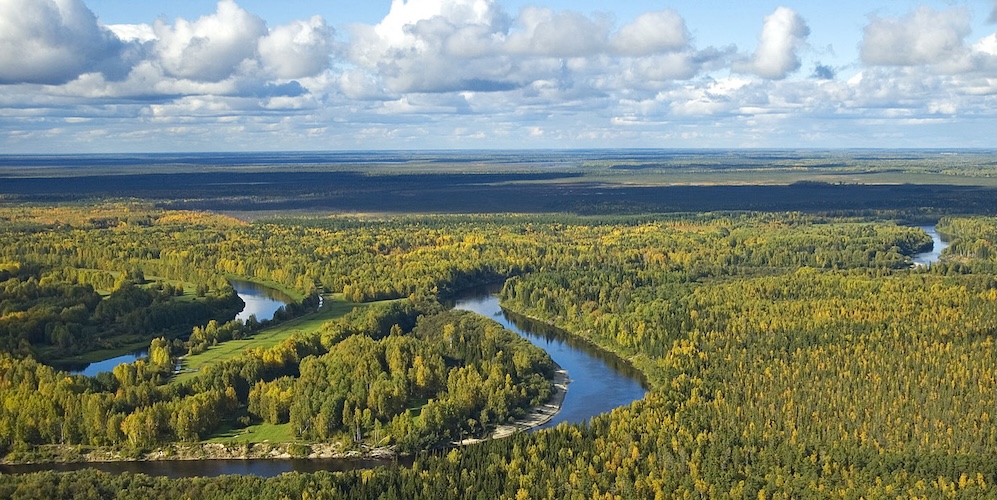
Vasyugan River, Tomsk oblast – ©Vadim tLS Andrianov CC BY-SA 3.0 via Wikimedia Commons
Eastern Siberia is a part of Siberia that incorporates the territory located between the Yenisei River in the west and the Pacific Ocean divides in the east. Its area covers about 7,200,000 km2 (2,800,000 square miles). Most of Eastern Siberia is occupied by the Central Siberian Plateau, as well as by tundra in the north and mountain ranges in the south. It borders Western Siberia to the west, Altai to the southwest, Baikal to the southeast and the Russian Far East to the east. To the north lies the Arctic Ocean. It is made up of Yakutia, Krasnoyarsk krai, Tuva, and Irkutsk oblast. The largest cities are Irkutsk and Krasnoyarsk.
Yakutia, also known as the Sakha Republic covers around 3 km2 (1.2 million square miles) but has a population of just one million people; a third of whom live in the capital and largest city, Yakutsk, the world’s coldest major city. Krasnoyarsk krai covers 2.3 million km2 (Over 900,000 square miles) with a population of 2.9 million people, the largest city and capital is Krasnoyarsk where 1.1 million people live. It stretches from the Sayan Mountains in the south, along the Yenisei River to the Taymyr Peninsula in the north. The region has many rivers, mostly tributaries of the Yenisei as well as several thousand lakes. Ergaki Nature Park, which has an area of almost 344,000 hectares encompassing the western Sayan Mountains is in the south of the krai.
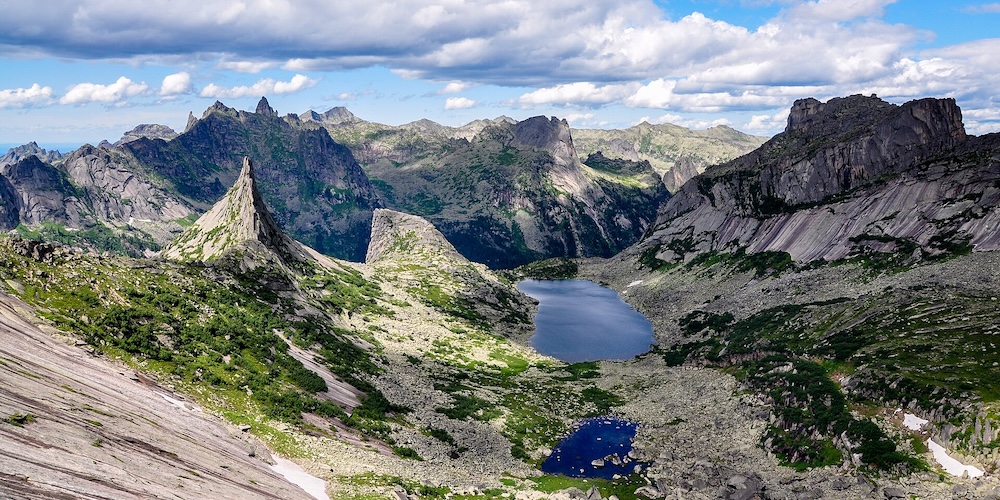
Ergaki Nature Park – ©Andrea Gennad CC BY-SA 4.0 via Wikimedia Commons
Irkutsk oblast is much smaller at 774,846 km2 (299,170 square mile) but has a population of around 2.5 million people 600,000 of whom live in the capital city of the same name. The Angara River runs north across the region and has a number of damns creating very large reservoirs. It is an area of hills and broad valleys partly edged by mountains. Tuva is much smaller still at 168,604 km2 (65,098 square miles) with a population of around 340,000, around a third of whom live in the capital Kyzyl. The eastern part of the region is forested upland, while the western part is drier lowlands.
The West Siberian Plain lies between between the Ural Mountains in the west and the Yenisei River in the east, and the Altai Mountains on the southeast. Much of the plain is poorly drained and consists of some of the world’s largest swamps and floodplains. In fact, most of West Siberian as a whole is low lying wetland. The Central and northern part of the plain is about 100m above sea level. Taiga forests occupied the sides of river valleys. They consist of mostly pine in the western part of the region and cedar-pine together with larch dominating in the eastern part. The largest rivers, such as Ob with tributaries including the Vasyugan, and the Irtysh, Tobol, hardly flood in spring.
Winters on the West Siberian Plain are harsh and long. The climate of most of the plain areas is either subarctic or continental.
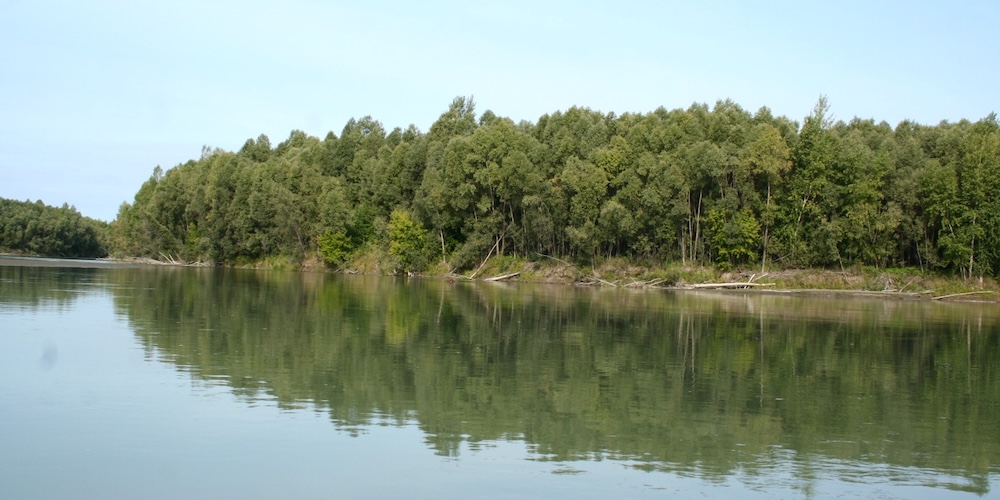
Ob River – ©Игоревич, Public domain, via Wikimedia Commons
The Vasyugan Plain is one of the largest single raised bogs in the world covering over 50,000 km2. There are numerous lakes in the vast interfluve swamps of the Ob-Taz floodplain.
In contrast to Western Siberia, this region consists mostly of tablelands and mountains. Eastern Siberia has a lot of big rivers, such as Yenisei, Lena, Yana, Indigirka and others. The largest part of the region is covered in permafrost, which underlies the land. It has continental climate with very cold winters.
Birding Western Siberia
The plain has eight distinct vegetation regions: tundra, forest-tundra, northern taiga, middle taiga, southern taiga, sub-taiga forest, forest-steppe, and steppe. The number of animal species in the West Siberian Plain ranges from at least 107 in the tundra to 278 or more in the forest-steppe region. In the south of the plain, where permafrost is largely absent, rich grasslands that are an extension of the Kazakh Steppe formed the original vegetation, which had almost all been cleared by the early 21st century.
This combination of river valleys, lakes, bogs and other wetlands give shelter to over 200 bird species, including many breeding and migrating birds such as Siberian Cranes, especially a lot of wildfowl, waders and raptors can be found in the region. They include Tundra Swans, Bean Geese, and Long-tailed Ducks among the wildfowl, waders such as Red-necked Phalaropes, Curlew Sandpipers and the striking Ross’s Gull. Top raptors include Snowy Owls and Rough-legged Buzzards.
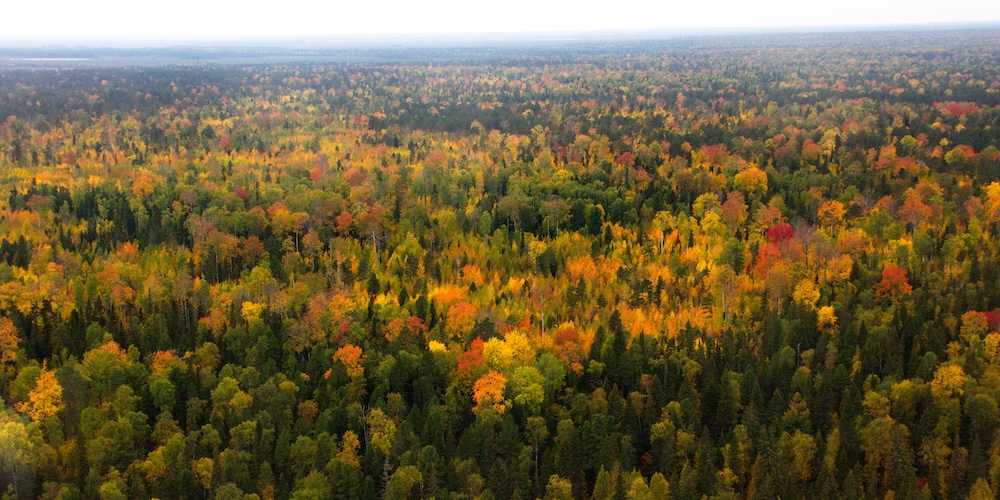
The boundless forest of the Yugansky Nature Reserve in Khantia-Mansia – Tatiana Bulyonkova, Novosibirsk CC BY-SA 2.0 via Wikimedia Commons
In the south of Western Siberia there is a forest-steppe zone. Large feather-grass plains and other grasslands, together with small birch-aspen forests and big lakes determine the unique look of the territory. Here it is possible to find such interesting birds as Black Stork, Corncrake and many others.
In the Taiga are Western Capercaillie, Hazel Grouse, and Eurasian Black Grouse. Raptors include Great Grey Owls, Northern Hawk Owl and Golden Eagle. Passerines are represented by Bohemian Wax Wings, Palaces Warblers and Siberian Jays and many others.
Birding Eastern Siberia
This large territory has a great variety of landscapes. Tundra occupies much of the lands along Northern Seas. It has low vegetation, which mostly consists of mosses, lichens, sedges and gramineous plants. The summer is very short here, and because of this the avifauna is very specialised with a lot of geese, waders and gulls breeding here, but only a few passerine bird species, such as Snow Bunting and Lapland Bunting, inhabit the tundra.
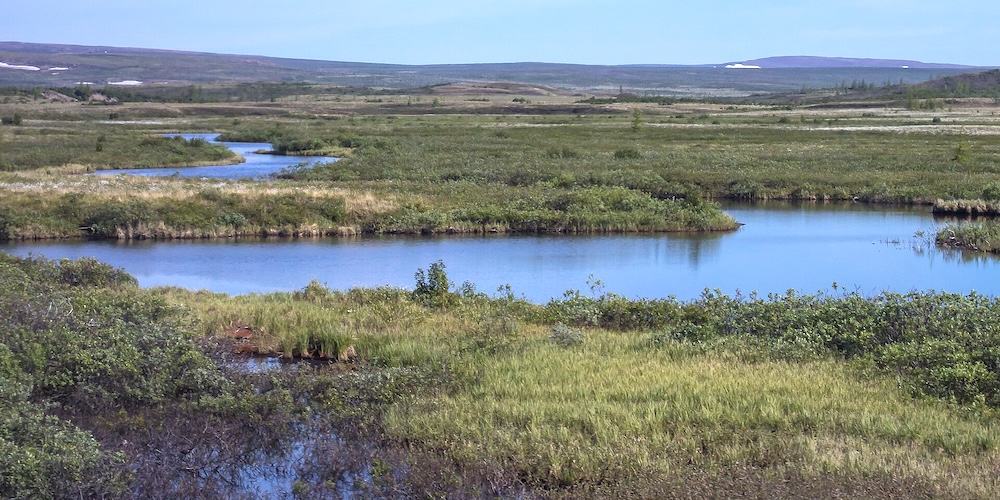
Siberian Tundra – ©Ninaras CC BY 4.0 via Wikimedia Commons
One of the iconic tundra birds is the beautiful Snowy Owl.
To the south begins boundless taiga. The most common tree species are larch and, in some places, cedar-pine. Dark coniferous forests are less widespread in this region. The typical birds of the taiga forests are Siberian Jay, Golden Mountain Thrush, Rose Finch, Red-flanked Bluetail and Hawk Owl. Large parts of the taiga zone are occupied by fire forests, places that demonstrate different stages of recovery. Such forest attracts some special birds, for example, Yellow-Browed Warbler & Black-throated Thrush.
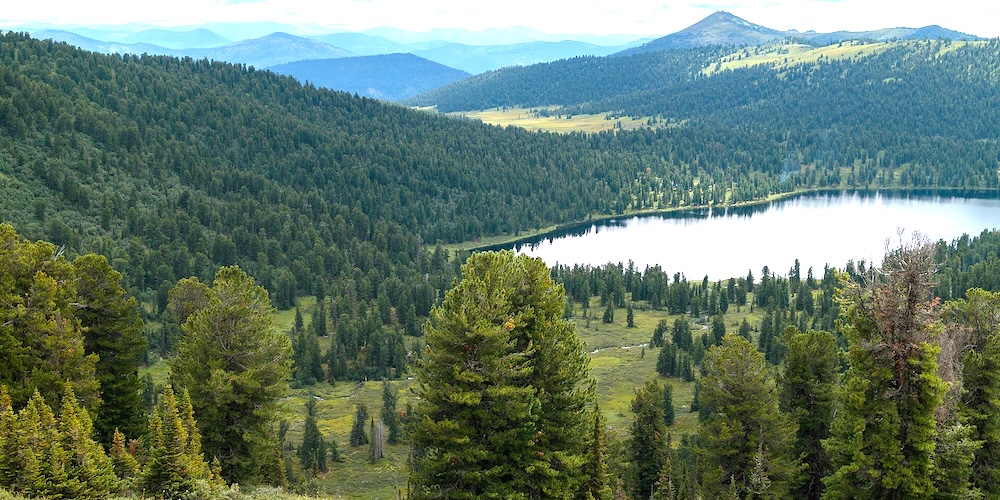
Taiga – Ergaki Range, Sayan Mountains – ©Vyacheslav Argenberg CC BY 4.0 via Wikimedia Commons
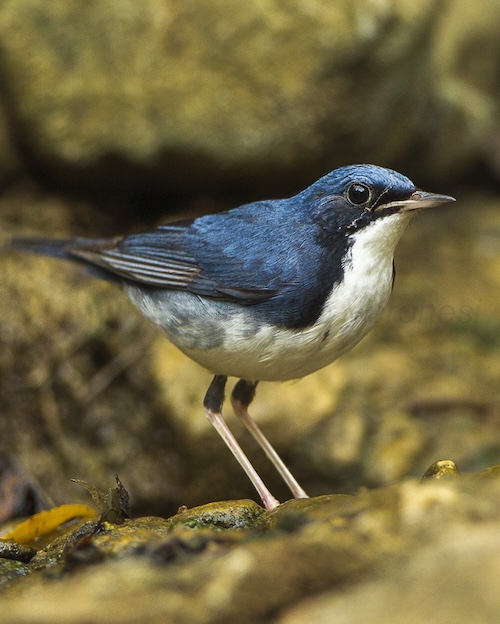
One of the richest habitats is the well-developed floodplains of big rivers. Willow and alder forests together with meadows and marshes give rise to a larger variety of avifauna with such specialties as Siberian Thrush, Siberian Blue Robin, Gray’s Grasshopper Warbler and many others.
In the south is a steppe zone, which consists of different grasslands and lakes. A lot of non-forest birds breed here and many water-loving species make stops here during migration.
The Republic of Altai has a distinct habitat and avifauna so we have given it a separate page – see below
-
Khakassky State Natural Reserve
WebsiteSatellite ViewState Natural Reserve “Khakassky! Khakassia is one of those areas where you can see practically all kinds of landscape within the limited territory. To the North there are spurs of Kuznetski Alatau with heights up to 1500 m. Mountain tops eroded by the Khakassian winds are covered by larch and birch forests.. If you drive off about 80-100 km from the capital of Khakassia Abakan you will find yourself in the kingdom of steppes. On the territory as little as 10000 sq. km there are more than 200 lakes of different salinity degree. In the South Khakassia is framed by Sayan Mountains. It’s the land of snowy mountain peaks, impassable taiga and cold clear rivers. The Reserve consists of 9 separate areas which stretched from the North to the South of the Republic. Thereby you can observe great variety of natural complexes, landscapes and incredible diversity of plant and animal life in our region. “Podzaploty” and “Hol-Bogaz” areas belong to “Kuznetski Alatau” mountain range The areas “Lake Shira”, “Lake Bele”, “Lake Itkul” represent steppe landscape. The areas “Little Abakan” and “Lykov’s Zaimka” are part of Sayan mountain realm. However two areas of the Reserve “Khakassky” are very special and are situated one hour drive from Abakan. These are the areas called “Oglahty” and “Kamyziak steppe / lake Ulug-Kol”. The area “Oglahty” is unique in respect that there is no natural source of water on its territory. The only source of water for local floral life is natural precipitation. Nevertheless 1/3 of the area is covered with birch forests and very high grass. In these forests and nearby ravines vegetation grow as high as 1m 20 cm. tall. Total number of plants is more than 400 species concentrated in this area. Complexity of the relief appeared due to the ancient mountain range Oglahty gives us opportunity to observe variety of biocoenosis and plant associations. On the small area you will see a grassland steppe, a stony steppe, a dry meadow and brushwood. Steep slopes in the South and in the East are covered with rock and rock slide vegetation Steppes of Khakassia are not similar to those of European part of Russia. They are also different from Kazakhstan steppe. Khakassian steppes being part of Altay-Sayan mountain country belong to mountainous insular steppes of Siberia. Animal world of the plot “Oglahty” is typically steppe and represents complex of the open area and rock species. There are 5 kinds of reptiles, 148 species of birds, 27 kinds of mammal species inhabit the territory of the plot. “Kamyziak steppe/ lake Ulug-Kol” is even more interesting for research. It is located in the Uibat steppe which is the oldest heart of Khakassia. There are a lot of old historical monuments on the territory of the plot and bordering areas. Most monuments are more than 4000 years old. The lake is located in the lowland lakeside basin and its depth doesn’t exceed 1 m. The lake water is bitter-salty and during certain arid years the lake may dry up completely. The northern and the western shores where three little streamlets disgorge into the lake covers swamps and saline fields. The rest of the shore line is mud littoral shelf. Intense showers during dry summers cause temporary springs of water. Active salt solution causes carst development. Because of hard habitat factors on this plot only 138 species of plants are here. However none of the factors mentioned above reflects the unique nature of the area.. The lake Ulug-Kol falls to the Key Ornithological Areas and it is the water-marshy areas. This is a place of rest for more than 120 species of birds during spring and autumn migrations. Migratory birds have been landing on Ulug-Kol and staying in the area for more than thousand of years already. So that they could have some rest and get stronger for the approaching voyage. Some of them stay here for the summer and bring up their young . The lake is the biggest Avocet habitat in the Middle Siberia. The numbers of avocets has been registered as many as 80-100 couples which is 50% of Avocet population in Middle Siberia. The ruddy shelduck (50-80 pairs), shelduck (20-30), demoiselle crane (5-10 pairs), pochard, pintail, gadwall, curlew and whimbrel and other species also inhabit the lake. -
Kondinskie Lakes
ReportThis site is a complex of lakes, which are situated along the left bank of the Konda River. The largest lakes are Aranthur and Range-Thur. Sand banks of Aranthur are mostly by pine forests. There are also a lot of wetlands around Range Thur. More than 170 species have been found here, many of them are waterfowl and water loving birds. Such species as Bean Goose, Black-throated Diver, Red-throated Diver, Whooper Swan and many others breed near the lakes. It’s also possible to find Eagle Owl, Honey Buzzard, Hen-harrier, Osprey, Golden Eagle and Peregrine. The banks of the lakes will give you a comfortable observation point. -
Lena River Delta
InformationSatellite ViewLena River Delta The vegetation of this territory is virtually unique. It includes not only floodplainspecies, but also sea-bank meadows, marshes and different kinds of tundra complexes, such as willow tundra, lichen tundra, grass tundra and many others. Sheltered places are lined with larch elfin woods, and on its northern boundary are larch. The avifauna of the site includes 109 species, among them there are 60 breeding species. The variety of vegetation and large number of different pools attract a lot of waterfowl and waders. You can find here Red-throated & Black-throated Divers, Bewick -
Middle Chulym River Valley
Satellite ViewThis site includes part of a river channel and surrounding floodplain. There are meadows, small plots of trees and bushes, lakes, and former river-beds. It’s possible to find here nesting of Black Stork, White-tailed Eagle, Golden Eagle and Osprey. A lot of waders also live here. It is also an important migration stopover for many Ducks and Geese. Moreover, the floodplain landscapes, as usual, are full of small birds, such as Wagtails, Buntings, Thrushes, and Warblers. The best time here is May. -
Putoransky Reserve
InformationSatellite ViewThe altitudinal vegetation levels show well on the slopes of the Putorany Mountains. There are 4 main levels: forest, crooked forest, tundra and rock. Mountain lakes and rivers complete the landscape. The most common tree species is larch. Crooked forests consist of willow bushes, alder-bushes and Arctic birch. Tundra is a kingdom of lichens and grass. Close to 160 bird species have been recorded in the reserve. Avifauna includes forest, tundra and water species. In the alpine level it’s possible to see Tundra Grouse, Common Dotterel, Horned Lark, Snow Bunting and Wheatear. Such tundra specialities as Golden Plover, American Golden Plover, Red-throated Pipit, Bluethroat and Lapland Bunting also breed here. Willow Grouse, Dusky Thrush, Little Bunting and Polar Bunting inhabit mountain light forests. The most typical birds of coniferous forests are Oriental Cuckoo, Hawk Owl, Mountain Accentor, Siberian Tit, Siberian Jay, Siberian Capercaille and Rose Finch. Near water landscapes the avifauna has about 50 breeding species. Among them you can find White-billed Northern Diver, Black-throated Diver, Red-throated Diver, Siberian Gray-rumped Sandpiper, Shoveler, Smew, Red-breasted Merganser, Goosander and Lesser White-fronted Goose. -
Stolby Reserve
InformationSatellite ViewThe avifauna of the south taiga is well represented in this territory. There are two main altitude zones in these mountains. Light coniferous forests consist of larch and pine, covering the land between 200m and 400m above sea level. In the higher zones they are replaced by dark forests with fir, spruce or cedar-pine in prevalence. The trees usually have a complete covering of green mosses. On the south mountainsides there are some small isolated steppes. More than 200 species of birds have been recorded in the reserve. Siberian Flycatcher Mugimaki Flycatcher, Brown Flycatcher, Pallas’s Warbler, Eye-browed Thrush, Golden Mountain Thrush, Siberian Blue-Robin, Red-flanked Blue-Tail, Eagle Owl, Capercaille, Great Gray Owl and other taiga species inhabit the dark forests. Also you can find here such predatory birds as Peregrine & Little Sparrowhawk. Typical light forest birds are Golden Oriole, Thick-billed Warbler, Red-Breasted Flycatcher, Yellow-breasted Bunting, Pine Bunting, Oriental Turtle-dove and Nightjar. -
Tsentralno-Sibirsky Reserve
InformationSatellite ViewThis site is situated on the Yenisey River, in the middle taiga faunal sub-zone. It represents typical taiga habitats, such as cedar-pine and larch forests, fire forests and bogs. You can find here a lot of taiga avifauna species. Including Hawk Owl, Eagle Owl, Capercaille, Siberian Jay and Nutcracker. If you are interested in small birds, you can enjoy Brambling, Yellow-browed Bunting, Siberian Flycatcher & Indian Tree Pipit. Moreover, the floodplain of the Yenisey River gives refuge to a lot of birds, including such interesting ones as Pin-tailed Snipe, Siberian Thrush, Ruby-throat, Rufous-tailed Robin, Yellow-breasted Bunting and some Warblers. On the sand banks in August it’s possible to see at water-loving birds, such as Little Gull, Grey Plover, Pectoral Sandpiper, Ruff, Red-necked Phalarope, different Ducks & Geese. -
Ulukh-Kol Lake
InformationSatellite ViewThis lake is very shallow (predominated about 1 metre deep) as it has no outlets the water is saline. It is surrounded by steppe. The most numerous breeding population of Pied Avocet in Siberia has been recorded here. During spring and autumn migrations mixed flocks of Bewick -
Yugansky Reserve
InformationSatellite ViewYugansky Nature Reserve protects 648,636 hectares of pristine West Siberian taiga and wetlands in Khanty-Mansi Autonomous Okrug.
-
Olga Batova
Ecological Travel Center - Moscow | info@ecotravel.ru
https://www.ecotravel.ru
-
Number of bird species: 659
(As at July 2026)
-
Avibase
PDF ChecklistThis checklist includes all bird species found in Siberia , based on the best information available at this time. It is based on a wide variety of sources that I collated over many years. I am pleased to offer these checklists as a service to birdwatchers. If you find any error, please do not hesitate to report them.

-
The Birds of Siberia
| (A Record of a Naturalist's Visits to the Valleys of the Petchora and Yenesei) | By Henry Seebohm | Cambridge University Press | 2011 | Paperback | 512 pages, 113 b/w illustrations, 2 b/w maps | ISBN: 9781108037952 Buy this book from NHBS.com -
Where to Watch Birds in Europe & Throughout Russia
| By Nigel Wheatly | Lynx Edicions | 2004 | Paperback | 468 pages, 50 illustrations, 100 maps | ISBN: 9788487334573 Buy this book from NHBS.com
-
Minusinsk Regional Museum of N.M. Martyanov
WebpageN.M. Martyanov [Minusinsk Regional] Museum was created in 1877 under the initiative of local man N.M. Martyanov. Exhibits including birds. Lenina 60, Minusinsk, Krasnoyarsky kray, Russia, 662800 Phone: +7 39132 22297; +7 39132 20054
-
Birding Siberia
Facebook PageBirds and birdwatching in Siberia and adjacent territories in central or eastern Asia. -
Sibirds
WebsiteSiberian Birdwatching Community
-
NP Pripyshminskiye Bory
InformationSatellite ViewPripyshminskiye Bory National Park is divided into two sections. The Talisky section, which is on the right bank of the Pyshma River, is just south and east of the town of Talitsa. It a relatively flat forest of pine, spruce and larch. The second section, Tugulymskaya, is located 20 miles to the northeast, in Tugulymsky District. It has more extensive swamps and wetlands on the floodplains of the Pyshma River, with forest of larch, fir and cedar. Much of this section is swamp, with some higher sandy ground supporting pine forest. -
NR Azas Reserve
InformationSatellite ViewAzas Reserve is a Russian 'Zapovednik' (strict nature reserve), located in the central part of the Todzha basin (a large intermountain trough within the Altai-Sayan mountain region) of south-central Asia about 500 km west of Lake Baikal. The reserve stretches along the Azas River, and is situated in the Todzhinsky District of Tuva. The animal life in the reserve has not yet been fully studied, but is typical of the Altai-Sayan mountain country and the base steppe sections. -
NR Bolshoy Arktichesky Reserve
InformationSatellite ViewBolshoy Arktichesky Reserve is located on the northern outskirts of Krasnoyarsky kray in the territory Taimyrsky Autonomous Okrug. It was created in 1993. The area consists of 4,169,200 hectares and is located on the northern coast of the Taimyr Peninsula and its adjacent islands. The reserve comprises seven departments. Box 126, Shorsa 1, Dudinka, Taimyrsky AO, Russia, 663210 -
NR Central Siberia
InformationSatellite ViewTsentralno-Sibirsky Reserve is a strict nature reserve. With over 1 million hectares of protected area, it is one of the largest forest reserves in the world. The reserve is located in the middle Yenisei River and Podkamennaya Tunguska River valleys, of the Central Siberian Plateau. The reserve is known for large concentrations of elk along the Yenisei during winter. Overall, the terrestrial animal life of the reserve is that of the north central boreal forest: sable, reindeer, etc. The Yenisei is a flyway for migratory birds, and the reserve is popular for bird-watching excursions. -
NR Central Siberia Strict Nature Reserve
InformationSatellite ViewThe reserve is known for large concentrations of elk along the Yenisei during winter. Overall, the terrestrial animal life of the reserve is that of the north central boreal forest: sable, reindeer, etc. The Yenisei is a flyway for migratory birds, and the reserve supports bird-watching excursions. -
NR Gydansky
InformationSatellite ViewGydansky Reserve is located on adjacent for Central Siberia territory. Is located in Tazovsky district Yamalo-Nenetsky autonomous okrug, on Yavay, Mamonta, Oleny peninsulas and islands Karskoe Sea - Oleny, Shokalsky, Proklyatye, Pestsovye, Rovny. Is created in 1996. The area is 878,200 hectares. Species include Red-breasted Goose, Bewick`s Swan, White-billed Diver, Gyrfalcon, Peregrine. Gyda village, Yamalo-Nenetsky AO, Russia. -
NR IBA Denezhkin Kamen Strict Ecological Reserve
InformationSatellite ViewScientists on the reserve have recorded 37 species of mammals. The area is a site of international importance for birds; 140 species have been recorded, with 111 nesting. 10 species of bird in the Red Book of Russia are found, including the vulnerable Lesser white-fronted goose and the Red-footed Falcon. -
NR IBA Kuznetsky Alatau
InformationSatellite ViewThe animal life of the reserve is mostly that of the boreal taiga, with some mountain and steppe communities. The most common mammals are rodents. The beaver has been reintroduced and now inhabits most river valleys; the number of individuals was about 200-250 individuals in 2016. Kuznetsk is an Important Bird Area as designated by Birdlife International. -
NR Ilmen
InformationSatellite ViewThe dark taiga is to the west, on the mountain ridges; Ilmen is more in a pine and birch forest subzone. Forests cover 85% of the Reserve - of which 55% is pine (Pinus sylvestris), and about 40% birch. The remaining 5% is mostly meadow, and steppe. Because 9% of the reserve is lake and river, the surrounding floodplains and dead birch trees provide a good habitat for mushrooms which are an object of study at the site. Throughout the reserves history, the mammals and birds of the region have been the subject of frequent scientific publication. -
NR Khakassia
InformationSatellite ViewThis is a Russian strict nature reserve covering two large mountain areas (alpine and mountain-steppe), and a cluster of seven steppe sites located within the left bank of the Minusinsk depression. The reserve is situated in the Tashtypsky District of Khakassia.[1][2] It was originally created to preserve steppe ecosystems, wetlands and waterfowl nesting sites. The animal life of the reserve is characteristic of the northern Sayan mountain steppe and forest region. Characteristics mammals of the steppe are the steppe lemming, vole, and common field mouse. Larger mammals are the hare, fox and deer. Scientists on the reserve have recorded 52 species of mammals and 295 species of birds -
NR Little Sosva
InformationSatellite ViewThe dark taiga is to the west, on the mountain ridges; Ilmen is more in a pine and birch forest subzone. Forests cover 85% of the Reserve - of which 55% is pine (Pinus sylvestris), and about 40% birch. The remaining 5% is mostly meadow, and steppe. Because 9% of the reserve is lake and river, the surrounding floodplains and dead birch trees provide a good habitat for mushrooms which are an object of study at the site. Throughout the reserves history, the mammals and birds of the region have been the subject of frequent scientific publication. -
NR Putorana
InformationSatellite ViewPutoransky State Nature Reserve is a nature reserve in the northern part of Central Siberia, located about 100 km north of the Arctic Circle in Krasnoyarsk Krai. There are 34 mammal species including one of the rarest known hoofed animals - the Putorana bighorn sheep (Ovis nivicola borealis). About 140 bird species have been noted in the reserve. Reindeer migration routes cross the reserve. -
NR Sayano-Shushenskiy
InformationSatellite ViewSayano-Shushenskiy Reserve is a strict ecological reserve in a remote area of the West Sayan Mountains of south Siberia. It is on the southern bank of the Yenisei River along the Sayano-Shushenskoye reservoir. The reserve thus protects a large section of the wooded, mountainous territory above the reservoir created by the Sayano–Shushenskaya Dam, the largest power plant in Russia. There are a small number of snow leopards in the reserve. Over 100 species of birds are recorded. Those representative of the Siberian taiga include the Eurasian nuthatch, blue nightingale, nightingale whistler, nutcracker, Himalayan Cuckoo, and grouse. The bearded partridge is typical of the rocky steppe areas, and birds of prey such as ospreys, falcons and eagles are common throughout. -
NR Taymyr
InformationSatellite ViewTaymyr Nature Reserve is a strict nature reserve located in the northern lowlands of Siberia, on the Taimyr Peninsula, and on the coast of the Laptev Sea of the Arctic Ocean. The reserve includes the most northern forest of Dahurian larch in the world, and also the most northern mainland mountain range in the world. The protected area was established to protect the breeding grounds of the Red-breasted goose (Branta ruficollis) as well as the summer residences of wild reindeer (Rangifer tarandus) and the biodiversity of the Lake Taymyr. The reserve attracts large number of waterfowl, from 21 species, most of which nest on the site. Geese populations in the tens of thousands collect on Lake Taymyr, and the reserve supports the vulnerable Red-breasted goose. A common site is the Wheatear. Most of the migratory birds are only on the reserve site for four months, from May to September. -
NR Ubsunurskaya Kotlovina
InformationSatellite ViewUbsunurskaya Kotlovina Reserve is located on the southern edges of the Republic Tuva within the Erzinsky, Tes-Khemsky and Mongun-Taiginsky districts. From zoogeographical point of view Ubsunurskaya hollow is characterized by a unique combination of desert (Chlamydotis undulata, desert wheatear, midday gerbil, hairy-footed jerboa), steppe (Melanocorypha mongolica, Cricetulus barabensis, and Ochotona daurica), taiga -
NR Verkhne-Tazovsky (Upper Taz)
InformationSatellite Viewbirch 7%, spruce 3% and aspen 1%. The understory is relatively clear, mostly pine. To the extent a shrub layer exists, it is found in sparse clumps of juniper and rosehip. Scientists on the reserve have recorded 68 species of vertebrates, and 98 species of birds. Most of the bird biodiversity is in the floodplains. The upper reaches of the Taz are important spawning and wintering grounds for salmon and whitefish. -
NR Yugansky
InformationSatellite ViewThe reserve is in the central part of the West Siberia plain, in the southern part of the Middle Ob lowlands. It is situated in the Surgutsky District of the Khanty-Mansi Autonomous Okrug, about 500 km due north of the city of Omsk. The reserve was created in 1982, and covers an area of 648,636 ha (2,504.40 square miles). The terrain of Yugansky is primarily floodplains, covered by spruce forests with cedar and fir. The reserve is home to 40 species of mammals, more than half of which species are rodents. The large mammals are represented by bear, lynx, and wolverine. Herbivores include elk and reindeer forest. -
NS Stolby
InformationSatellite ViewThis is a Russian strict ecological reserve located 10 km south of the city of Krasnoyarsk, on the northwestern spurs of the Eastern Sayan Mountains. Fauna has a pronounced taiga aspect (red-backed mouse, sable, Siberian musk deer, hazel grouse and others) with the inclusion of forest-steppe animals (Siberian roe deer, steppe polecat, long-tailed ground squirrel and others) and a range of birds including osprey, golden eagle, saker falcon, peregrine falcon and others.
-
Branta Tours
Tour OperatorBirding in Central Siberia -
Rubythroat
Tour OperatorRussia birding tours Our Russia trips are focused mainly on Siberia, in central and east Russia. Siberia is the largest region of Russia and is home to a diverse range of mammal and bird species, including the iconic Siberian tiger and numerous bird species, such as the Siberian crane, Steller’s Sea-Eagle, Ross’s Gull and Yellow-billed Diver. -
Siberia Trekking
Local Tour Operator...discover Russian nature
-
2021 Winter
ReportThere are photographs from day trip to mixed forest near Tomsk, Western Siberia.
-
Birds of Central Siberia
WebsiteGenerally, about 400 species of birds stay here in different times. Some of them already are not to be found any more or are extremely rare. Others appeared here as distant visitors. We have compiled here the most complete list of bird species of this territory. It is made on the base of the literature analysis. Moreover you can find here other information, concerned birds, which can be interesting and useful. -
West Siberian Taiga
WebpageUNEP-WCMC Author Team UNEP-WCMC Author Team West Siberian Taiga Bioregion: Siberian Boreal Forests & Mountain Tundra (PA7) Realm: Subarctic Eurasia Ecoregion Size (1000 ha): 167,426 Ecoregion ID: 720 Conservation Target: 82% Protection Level: 1 States: Russia First published: September 23, 2020 A vast lowland, the West Siberian Taiga contains some of the world’s most extensive forests and the largest peatlands. Coniferous forests, swamps, bogs, fens, rivers and lakes support numerous invertebrates, fish, small mammals and birds.