

Baden-Württemberg

Landlocked Baden-Württemberg is one of the 16 federal regions of Germany. It is the third largest state and covers 35,748 km2 (13,802 square miles) of southwest Germany with a population of around 11.2 million people. It borders three other German states, Rhineland-Palatinate, Hesse and Bavaria, and also shares borders with France and Switzerland. The Rhine forms its western, and parts of its southern border. The Black Forest, the central melting range of the state, rises east of the Upper Rhine Valley. The high plateau of the Swabian Alb between the Neckar River, the Black Forest and the Danube is an essential European watershed. The region shares Lake Constance, also known locally as the Swabian Sea, with Switzerland, Austria and the state of Bavaria. The region also shares the foot-hills of the Alps with Bavaria and Austria. Baden-Württemberg itself has no border with Austria.
The climate varies across the state, mostly due to its high number of mountains. Most of western Baden-Württemberg is lower than 2,600 feet and enjoys an almost year-round mild oceanic climate. The climate in the eastern parts of the state is more continental. For example, winters in the city of Ulm are colder than in Berlin, while winters in the warmest area lack snow. The Black Forest, Swabian Alb and the Alps frequently get snow, especially at high elevations. Summers there have more rain than in the valleys, but the winters tend to have more sun.
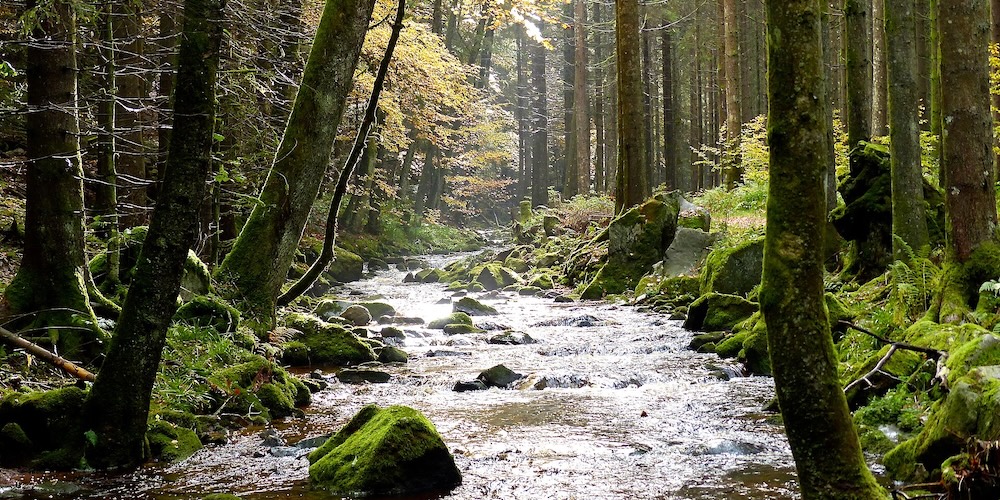
A Black Forest Stream – ©Roman Boed CC BY 2.0 via Wikimedia Commons
The administrative capital and largest city is Stuttgart, which metropolitan area has a population of 5.5 million. Like most of the large cities of the region it straddles the Neckar River. The state is known for its industrialized areas, including car manufacturing including the HQs of Porsche, Mercedes-Benz etc.
Birding Baden-Württemberg
Baden-Wuerttemberg is home to, a unique selection of bird species for Germany, which are more usually found in the warmer climes of the Mediterranean. For example, Bee-eaters and Hoopoe breed on the Kaiserstuhl, Alpine Swift is to be found in nearby Freiburg and Purple Heron in Waghaeusel. At the same time some species, the core of whose distribution is in Central Europe, also have significant populations in the state. These include Red Kite, Middle Spotted Woodpecker and Collared Flycatcher, as well as Citril Finch; a representative of alpine fauna, which has an isolated population in the Black Forest. The state has many wetland habitats of national importance which, apart from Lake Constance are mainly to be found along the Rhine Valley and in the bogs of Upper Swabia (Schwaben).
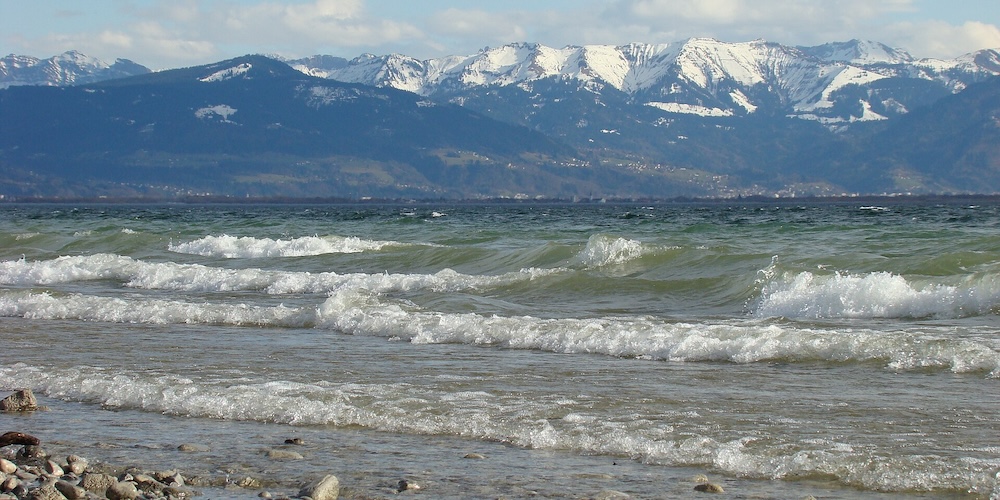
Bodensee – Olsine, Public domain, via Wikimedia Commons
Lake Constance (Bodensee) on the borders of Germany, Austria and Switzerland is the largest German inland water with a surface area of 570 km². Its maximum length is 63 km and it is 14 km wide at its broadest point. It is one of the most productive and varied regions in the whole of central Europe for birding with 150 breeding bird species and over 410 confirmed species records. The proximity to the Alps and the sheer abundance of bird life add to the region’s attractions.
Two important migration routes, the northern border with the Alps and the broad Rhine valley, which are used by many species for traversing the Alps, meet at Lake Constance. When the conditions for overflying the Alps are unsuitable the migrating birds concentrate locally and large numbers of resting birds can be observed. This constellation is particularly relevant in the Rhine Delta where, as a result, many rare species are recorded annually.
Lake Constance is the most important central European rest, moult and overwintering area for many water birds. The Untersee part of the lake (which spreads out from the river Rhine to the waters of the Gnadensee, Zeller See, and Untersee) is rich in nutrition and attracts enormous concentrations of birds. The make-up of these water bird gatherings varies from season to season. In September they are characterised by late breeding species such as Great Crested and Black-necked Grebe, Tufted Duck and Mute Swan as well as breeding or visiting species in moult like the Red-crested Pochard. Later in November large numbers of diving ducks such as Tufted Duck, Pochard, Goldeneye, Teal, Gadwall, and Whooper Swan and Cormorants can be observed. Up to 200,000 water birds gather on Lake Constance at this time, many of which fed primarily on the Zebra Mussel. From January onwards the mussel eaters still dominate but the overwintering populations of divers, sea ducks and goosanders reach their peak.
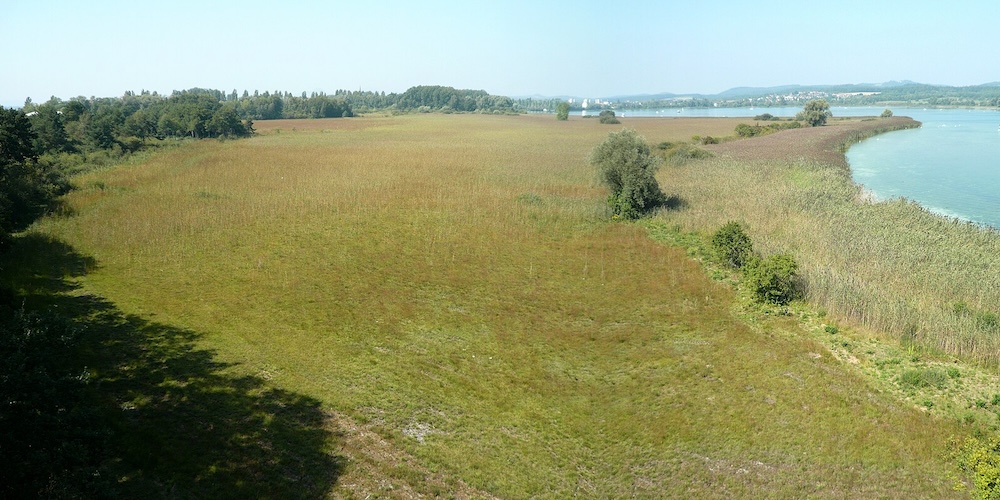
Mettnau Peninsular – Ramessos, Public domain, via Wikimedia Commons
If the water level of the lake falls under three metres, mud-flats are exposed all around the shoreline providing good conditions for waders in transit.
Vorarlberg Rhine Delta is the top birding area at any time of year and the Wollmatinger Ried should also not be neglected. The so-called diver stretch is very interesting in winter. Mettnau, Eriskircher Ried, and the Radolfzell und Stockach Aach estuaries can also be included in the programme. In spring and summer, the Hohentwiel Vulkanberg is worth visiting. The Mindelsee is well worth a detour in autumn for its Ferruginous Ducks (with a 99.9 % sighting chance!). A five-day tour in the Lake Constance area is time enough to experience a wide-ranging insight into the area’s bird life. It is advisable to take your passport with you if you plan to cross the border into Austria or Switzerland where motorway tolls must be paid (vignette). All areas described are accessible by main road.
Probably the best area for birding, after Lake Constance, is the area around Freiburg with the sole breeding population of Alpine Swift in Germany. Alpine as well as Mediterranean species also breed between the Feldberg and Kaiserstuhl. In this area it is possible, within a short space of time, to observe Citril Finch, Ring Ouzel, Bee-eater and Hoopoe. Together with the Taubergiessen nature reserve, the Freiburg region is good for a full week’s birdwatching. The best time to visit is mid-May to the end of June. This is also the best time for visiting the middle Alb foothills which provide a good insight into the bird life of the cultivated orchard meadows which are widespread in the area. A trip to this region can be combined with the wetlands at the Federsee or the River Danube near Ulm. For those wanting to combine a wetland visit with the Northern Black Forest, the Wagbachniederung near Waghaeusel is a must. This is perhaps the best wetland in the state apart from Lake Constance.
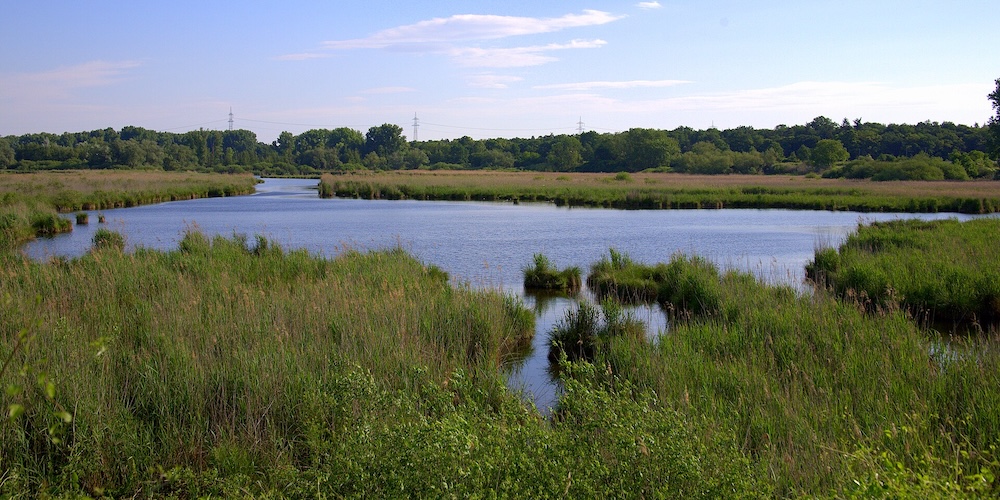
Wagbachniederung – ©Butterfisch CC BY-SA 4.0 via Wikimedia Commons
The top species include Divers, Black-necked Grebe, Little Bittern, Bewick’s and Whooper Swan, Ruddy Shelduck, Red-crested Pochard and Ferruginous Duck, all the Central European wader species, Mediterranean Gull, Forster’s Tern, Savi’s Warbler, Great Reed Warbler, Bearded Tit and a number of rarities.
-
Feldberg
InformationSatellite ViewThe Feldberg, the highest point in the Black Forest, lies in the South of the region. A nature protection area. The site offers general tourist information and suggested nature trails. Interesting birds include Ring Ouzel, Raven, Citril Finch, Water Pipit und Three-toed Woodpecker. -
Lake Constance (Bodensee)
InformationSatellite ViewTop sites around Lake Constance - from the Moning & Wagner guide 2005: Hohentwiel im Hegau, Radolfzeller Aachried, Mettnau peninsula, Mindelsee, Stockacher Aachmündung, Wollmatinger Ried-Untersee-Gnadensee, Diver stretch (in Switzerland, Eriskircher Ried, Vorarlberg Rhine delta (Austria), a must! -
Mechtersheimer Tongruben
InformationSatellite ViewThe reserve comprises the remaining area of the former clay pit (core zone some 10 hectares) as well as the exploited quarry (some 24 hectares). In addition to the conservation of the core zone with breeding sites of rare species such as Purple Heron, Penduline Tit, Great Reed Warbler, Kingfisher, Middle Spotted Woodpecker, Marsh Harrier, Sedge Warbler, Sparrowhawk und Little Bittern. Much of the quarry has been re-naturalised. The reserve is very important as a passage and wintering habitat. -
Taubergiessen
InformationSatellite ViewThe nature reserve is one of the largest in the state. It consists of extensive meadow and riverine woodland countryside crisscrossed with a network of waterways. It is one of the last remaining large, near-natural water meadow habitats in Germany. Of particular ornithological interest is the large Middle Spotted Woodpecker population. Other interesting bird species include Great White Egret and und rarely Purple Heron. Common, Black Tern and Osprey are passage guests. Ducks include Gadwall, Teal, Wigeon, Shoveler, Garganey, Pintail and Pochard. A few pairs of Kingfisher and Great Reed Warbler breed here as has the Penduline Tit. Water Rail breed in the reeds. Winter visitors are Smew, White-fronted and und Bean Goose as well as Goosander and Goldeneye. Cormorants are also present in large numbers; Bittern and White-tailed Eagle are rare winter guests. In the riverine forest some 10 pairs of Black Woodpecker breeds but the highlight is the 180 pairs of Middle Spotted Woodpecker. Other woodpecker species are Green Woodpecker and Wryneck, Nightingale and Golden Oriole are very common. Other breeders are Black Kite, Honey Buzzard and Hobby. In the extensive meadows east of the dyke, with copses and oxbows, Red-backed Shrike, Great Grey Shrike, Turtle Dove, Long-eared Owl and Corn Bunting are to be found. Bee-eaters visit to feed. The extremely rare Woodchat Shrike has bred here from time to time. -
The Middle Alb foothills
InformationSatellite ViewNear Goeppingen and Schorndorf and environs -
The higher regions of the northern Black Forest
InformationDespite human interference the Black Forest is still one of the less fragmented woodland areas in Germany. It takes its name from the extensive, near-natural, dark mixed woods with the characteristic Silver Fir. This often primeval woodland is to be found in the core area of the National Park. They are home to numerous animal species such as Roe and Red Deer, Wild Boar and the very occasional Lynx; but also to birds such as the Raven, Three-toed Woodpecker, Pygmy Owl or Capercaillie, the symbolic bird of the Black Forest. -
Wagbachniederung
InformationSatellite ViewThe reserve, of some 224 hectares, lies between Mannheim and Karlsruhe on the right bank of the Rhine near Waghaeusel. It was previously an oxbow lake cut off from the main river course some 8,000 years ago. It consists or original reed beds and water meadows, an abandoned quarry and an old sugar beet factory in Waghaeusel with sewage and sludge pools. It is an important rest area for waders and other migrants. Previously 96 species bred here and 250 have been recorded. The whole area can be observed from field tracks. Entry from the car park at the pilgrimage church in the village (via motorway A5, exit Kronau/Waghaeusel and Kirrlach). Cross the main road to get into the northern part of the reserve. A visit can be combined with the following nature reserve in Rhineland-Palatinate
-
Christoph Moning & Christian Wagner
http://www.amazon.de/beobachten-S%FCddeutschland-Beobachtungsgebiete-zwischen-Watzmann/dp/3440104451 -
David Conlin
-
Number of bird species: 393
(As at June 2026)
-
Avibase
PDF ChecklistThis checklist includes all bird species found in Baden-Wurttemberg , based on the best information available at this time. It is based on a wide variety of sources that I collated over many years. I am pleased to offer these checklists as a service to birdwatchers. If you find any error, please do not hesitate to report them. -
eBird
PDF ChecklistThis checklist is generated with data from eBird (ebird.org), a global database of bird sightings from birders like you. If you enjoy this checklist, please consider contributing your sightings to eBird. It is 100% free to take part, and your observations will help support birders, researchers, and conservationists worldwide.
-
Ornithologische Arbeitsgemeinschaft Bodensee (OAB)
WebsiteLake Constance (Bodensee) Ornithological Working Group Comprehensive information in German on the bird life of Lake Constance and the activities of the OAB. Some 412 species (including 50 captivity escapes)have been recordedon Lake Constance. Birdwatching is easy from many viewpoints along the shoreline. With a bit of luck you will have surprise sightings all year round… -
Ornithologische Gesellschaft Baden-Württemberg
WebsiteThe Ornithological Society Baden-Württemberg e.V. (OGBW), founded in 2005, is the amalgamation of the Southwest German Feldornithologists. With a focus on scientific avifauna, more than 400 members make important contributions to bird protection in Baden-Württemberg.
-
NP Black Forest
InformationSatellite ViewThe national park has an area of 10,062 hectares (100.62 km2; 38.85 sq mi) and is located on the main crest of the Northern Black Forest, mainly between the Black Forest High Road (Schwarzwaldhochstraße) and the valley of the Murg. -
NR Federsee Fen
InformationSatellite ViewThe Europa reserve is an SPA with 107 breeding bird species and a total of 265 species recorded. A short introduction and description in English is included. -
NR Nonnenmattweiher
InformationSatellite ViewThe Nonnenmattweiher is a lake that has been impounded by an embankment in the Southern Black Forest in Germany. Together with the surrounding area it forms a nature reserve of the same name in the High Black Forest in the state of Baden-Württemberg. -
NR Old Neckar Nature Reserve
InformationSatellite ViewThe fish richness of the oxbow lake with mud-pepper, chub, rudd, carp and another 15 species is attractive for grey heron, kingfisher and bittern -
NR Wollmatinger Ried
InformationSatellite ViewThe nature reserve of Wollmatinger Ried – Untersee – Gnadensee is a protected area on the shores of Lake Constance in Germany. It has an area of 767 hectares and is the largest and most important nature reserve on the German side of Lake Constance.
-
Baden-Württemberg Rare Bird Alert
SightingsThe report below shows observations of rare birds in Baden-Württemberg. Includes both unreviewed and reviewed/approved observations.
-
Arbeitsgemeinschaft Wanderfalkenschutz Baden-Württemberg
WebsiteBaden-Wuerrtemburg Peregrine Working Group - The working group peregrine falconry Baden-Wuerttemberg (AGW) in the NABU was created 1965, with the aim to protect the indigenous peregrine falcons from extinction. At the same time, the foundations for the reconstruction of a stable population should be developed.