

Lower Saxony
Lower Saxony is one of the 16 federal states of Germany. The second largest state, it is coastal and lies in the northwest of with a land area of 47,614 km2 (18,384 square miles) and a population of around 8.2 million people. It borders the North Sea and the states of Schleswig-Holstein and Hamburg to the north, Mecklenburg-Vorpommern to the northwest, Brandenburg and Saxony-Anhalt to the east, Thuringia to the southeast, Hesse to the south and North Rhine-Westphalia to the southwest as well as the Netherlands to the west. The state of Bremen forms two enclaves completely within Lower Saxony. The state capital and largest city is Hanover. There are a number of off-shore islands that are part of the state.
The northern half of the state is part of the north German plain and is almost invariably flat except for the gentle hills around the Bremen enclave. Towards the south and southwest lie the northern parts of the central uplands, the Weser uplands and the Harz Mountains, and between these two lie the lower Saxon hills, a range of low ridges.
In the northeast lies the largest heathland in Germany, the Lüneburg Heath. To the north, the Elbe Valley separates Lower Saxony from Hamburg, Schleswig-Holstein, Mecklenburg-Vorpommern and Brandenburg. The extreme west of the state is known as Emsland and was once dominated by inaccessible swamps. There are four major north flowing rivers; the Ems, Weser, Aller & Elbe. Climatically, the state is in the north temperate zone with western prevailing winds.
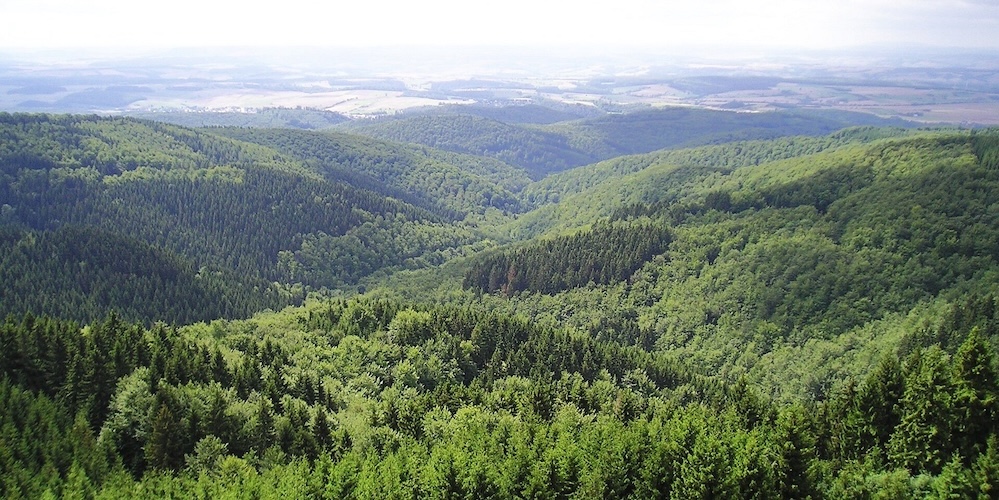
Harz Mountains – ©TerraX_Bln CC BY 3.0 via Wikimedia Commons
The economy is largely agricultural, dominated by animal husbandry with cattle, pigs and hens all important. There are some arable areas growing wheat, sugar beet and other crops, but there is also some mining and heavy industry, including five plants run by Volkswagen, which is probably the state’s largest individual employer.
Birding Lower Saxony
Lower Saxony has a lot to offer for nature lovers and birdwatchers. The state, which is comparatively unspoiled by development. offers appealing countryside between the Rivers Ems and Elbe, between the mountain summits of the Harz Mountains region and the maritime climate of the North Sea. Lower Saxony is committed to nature conservation: more than 20 per cent of the state’s area has been designated as protected, with the mudflats of the Wadden Sea National Park taking in the entire North Sea coast, and the Harz National Park extending over the state border into Saxony-Anhalt.

Lüneburg Heath – ©Hamburger Birderin CC BY-SA 4.0 via Wikimedia Commons
The Elbtalaue riverine woodland landscape enjoys protected status as a biosphere reserve. In between lie countless peat bogs, secluded areas of heathland and extensive tracts of mixed woodland. These are in part incorporated into 730 nature reserves, over 1,400 landscape protected areas and 12 wide ranging nature parks, the latter primarily serving recreational activities.
Over 350 bird species have been recorded, with the Wadden Sea coast and islands of particular importance for migratory birds along the East Atlantic flyway. The National Park there is a massive staging post for millions of waders, geese and ducks, especially during the autumn. The Elbe River Valley is particularly important for both Black & White Storks and also for Common Cranes.
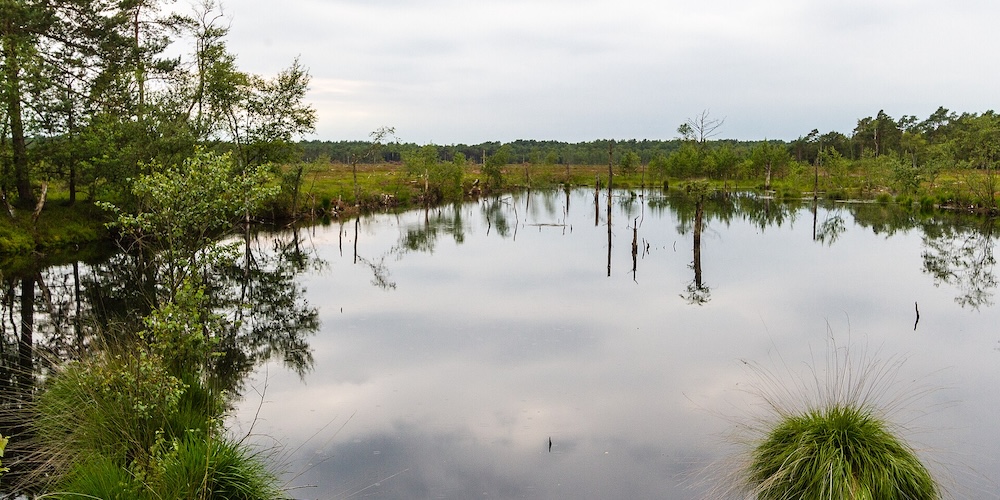
Pietz Bog – ©Friedrich Haag Wikimedia Commons
In the North East, the heaths are good for European Nightjar and a range of heathland birds, including Black Grouse, Red-backed Shrike and Grasshopper Warblers in Summer. It is a particularly rich area for birds as the heaths are interspersed with woodlands and wetlands too.
-
Number of bird species: 453
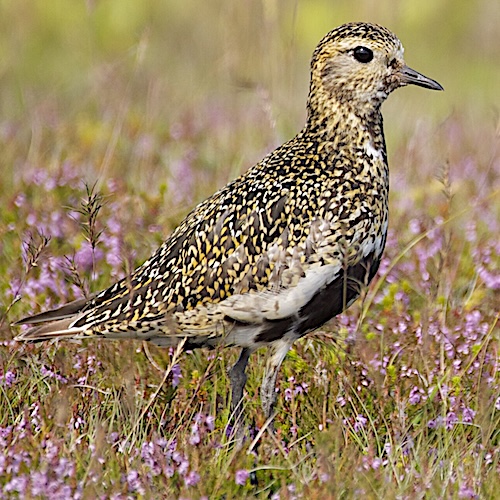
(As at June 2026)State Bird - Golden Plover Pluvialis apricaria
-
Avibase
PDF ChecklistThis checklist includes all bird species found in Lower Saxony , based on the best information available at this time. It is based on a wide variety of sources that I collated over many years. I am pleased to offer these checklists as a service to birdwatchers. If you find any error, please do not hesitate to report them. -
eBird
PDF ChecklistThis checklist is generated with data from eBird (ebird.org), a global database of bird sightings from birders like you. If you enjoy this checklist, please consider contributing your sightings to eBird. It is 100% free to take part, and your observations will help support birders, researchers, and conservationists worldwide.
-
Helgoland Bird Observatory - Institut für Vogelforschung
Observatory WebsiteSatellite ViewBird research institute on the North Sea island…
-
Arbeitskreis Göttinger Ornithologen (AGO)
Website(In German only) This website presents not only the comprehensive tasks taken on by the working group and new developments in the bird world. It also is intended as a vehicle for nature conservation and species protection matters in the region and beyond. Keep checking regularly for updates! -
Avifaunistische Arbeitsgemeinschaft Lüchow-Dannenberg
WebsiteWendland lies in the northeast of Lower Saxony and borders on Mecklenburg-Western Pomerania, Brandenburg and Saxony-Anhalt. It has a diverse flora and fauna and it varied, mostly near-natural countryside, lies between the River Elbe valley in the north, the East Hanover moraine in the West and the Old Mark in the south -
Helgoland - Ornithologische Arbeitsgemeinschaft (OAG) Helgoland
WebsiteThe Ornithologische Arbeitsgemeinschaft (OAG) Helgoland e.V. (Heligoland Ornithological Work Group) was founded on 9th March 1991 with the aim of supporting research on birds on Heligoland. The number of the members has recently risen to over 500. The main task of the OAG is to publish the annual Bird Report for the island, in cooperation with the Institut f -
NABU East Friesland
WebsiteMasses of information on nature, environmental protection and birding. Organisation of regular excursions for local nature-lovers and visitors.
-
NP Harz
InformationSatellite ViewThe lynx now lives wild again in the Harz, having been eradicated from the mountains since the early 19th century. Another reintroduction project was the capercaillie, which died out in the Harz in 1920-1930. Its reintroduction began in 1978. Over the years about 1,000 birds have been reared and set free. In spite of the number of birds the population was not assessed as stable. Due to the lack of success, the project was closed in 2003. -
NP Lower Saxon Wadden Sea
InformationSatellite ViewThe Lower Saxon Wadden Sea National Park embraces the East Frisian Islands, mudflats and salt marshes between the Bay of Dollart on the border with the Netherlands in the west and Cuxhaven as far as the Outer Elbe shipping channel in the east. The national park has an area of about 345,800 hectares (1,335 sq mi). The habitats to be protected by this park include the mudflats, salt marshes, beaches, dunes and estuaries on the North Sea. The approximately 180,000 birds of north-western Europe's shelduck population also spends their moulting season from July to September in the Wadden Sea, as do about 200,000 eider; and about 1,000 pairs of eiders use the mudflats of the North Sea as a breeding area. Most of them breed on the island of Amrum. -
NR Barnbruch WII
InformationSatellite ViewThe Barnbruch is a wetland of international importance in the old glacial valley of the river Aller that provides a habitat for endangered species of birds, amphibians and insects. -
NR Breites Wasser
InformationSatellite ViewMany rare birds breed in the area and there are also colonies of gulls. In autumn and spring quite a few migratory birds rest here en route to their destinations. -
NR Central Lüß Plateau Heathland
InformationSatellite ViewIt has a total area of about 293 hectares (720 acres). -
NR Große Aue
InformationSatellite ViewThreatened dragonflies, such as the banded darter, southern emerald damselfly live here as do birds like the whitethroat and little grebe. Reed buntings, reed warblers and snipe also occur here. -
NR Großes Meer
InformationSatellite ViewThe nature reserve of South Großes Meer (Südteil Großes Meer) was established in 1974 and is surrounded by a 2,500 hectares (6,200 acres) large protected landscape. The northern part, by contrast, is used as a leisure and recreation area and has facilities for angling and water sports. With its extensive belt of reed-beds and the adjacent wetlands the Großes Meer and its surrounds are a breeding area and habitat of regional importance. Black-tailed godwit, snipe, lapwing, short-eared owl, marsh harrier, hen harrier, bittern, sedge warbler, bluethroat and reed bunting are a few of the species of breeding bird that are important from a conservation perspective. In winter huge flocks of greylag geese and greater white-fronted geese shelter here. -
NR Kiehnmoor
InformationSatellite ViewThis whole area is very secluded. Rare birds have settled here including the crane and the black stork. Even the otter may be found here. -
NR Lüneburg Heath
InformationSatellite ViewThe Lüneburg Heath Nature Reserve is one of the oldest and largest nature reserves (Naturschutzgebiete or NSGs) in Germany, and the oldest and largest in Lower Saxony. It is the only freely accessible part of Lower Saxony in which the Black Grouse may be found. -
NR Meißendorf Lakes and Bannetze Moor
InformationSatellite ViewThe Meißendorf Lakes and Bannetze Moor are a nature reserve and bird reserve of national importance on the edge of the Lüneburg Heath in the state of Lower Saxony. Species that breed here include: white-tailed eagle, sedge warbler, bittern, garganey, peewit, to name only those on the IUNC Red List of Endangered Species. But many other species also breed here, such as the kingfisher, crane, penduline tit, little grebe, water rail, reed warbler, great crested grebe, cormorant, grey heron, greylag goose, gadwall, red-crested pochard, barn owl, black-headed gull, marsh harrier, coot, shoveler, sparrowhawk and red kite. -
NR Sandwater
InformationSatellite ViewThe Sandwater near Simonswolde (in the municipality of Ihlow) in the north German district of Aurich is a shallow fen lake on the edge of the geest and is one of the few remaining, preserved, natural "inland seas" in East Frisia. The extensive reed beds have an important function in providing nesting and feeding grounds for reed breeders and waterfowl. The expanding beds of common reed, however, are causing the lake to gradually silt up and reduce the area of open water. -
NR Teufelsbäder
InformationSatellite ViewThe Teufelsbäder 'Devil's Baths' is the name of a moor landscape near Osterode am Harz in the Harz Mountains of central Germany. The ponds and marshy depressions in the nature reserve, which covers an area of roughly 84 hectares (210 acres).It is a habitat for rare plant species and a breeding ground for numerous birds typical of such features. -
NR Tiste Bauernmoor
InformationSatellite ViewThe Tiste Bauernmoor is an area of raised bog on the Lüneburg Heath. It has an area of 570 hectares (1,400 acres). These areas now form breeding grounds and staging areas for many species of bird, some of them rare. The crane has resettled in the area and now breeds here. In late autumn several thousand cranes rest on the moor before flying on to their winter quarters. This makes the Tiste Bauernmoor one of the most important sites for cranes on the Northwest German Plain. Other rare birds such as the sea eagle and the osprey have been seen here. The following birds of prey have also been observed on the moor: hobby, peregrine, merlin, marsh harrier, hen harrier, Montagu's harrier, red kite, black kite, European honey buzzard and rough-legged buzzard.[2] In addition there is evidence that the following have bred here, or at least have been seen during the breeding season: Short-eared owl, great grey shrike, teal, garganey, shoveler, black stork, snipe, peewit, nightjar, grasshopper warbler, stonechat, whinchat and red-backed shrike. The list of residents runs to more than 40 species. -
NR Weesener Bach
InformationSatellite ViewThe Weesener Bach, also called the Lutterbach, is a tributary of the Örtze in northern Germany. It rises in the Südheide Nature Park, south of the village of Lutterloh near Unterlüß, then flows through the Hermannsburg village of Weesen and enters the Örtze north of Hermannsburg after about 10.5 km (6.5 mi). Along the banks and water meadows there are 60 more endangered species, such as vascular plants, mosses, amphibians and reptiles. Even the kingfisher lives here.
-
Niedersachsen Rare Bird Alert
SightingsThe report below shows observations of rare birds in Niedersachsen. Includes both unreviewed and reviewed/approved observations.