

Caprimulgidae – Nightjars & Nighthawks

The Caprimulgidae or nightjars, the only family of Caprimulgiformes, are medium-sized nocturnal or crepuscular family characterised by long wings, short legs and very short bills. They are sometimes called goatsuckers, due to the ancient folk tale that they sucked the milk from goats (the Latin for goatsucker is Caprimulgus). Some New World species are called nighthawks, poorwills and etc. Nightjars usually nest on the ground. The English word ‘nightjar’ originally referred to the European Nightjar Caprimulgus europaeus.
Caprimulgids are perhaps best known for their distinctive calls that punctuate the night. Their nocturnal habits, cryptic plumage, and often-camouflaged eggs leave much unknown about the breeding habits or conservation status of many species. Nightjars and nighthawks find their prey of nocturnal insects by sight even in the dimmest of light levels. Sight clearly plays an important role in mate-finding, too, as sexual selection in these birds of the night has led to a diversity of visual signals, including long tail plumes or rackets from wing feathers in males. Their jarring calls have earned them the common name of nightjars.
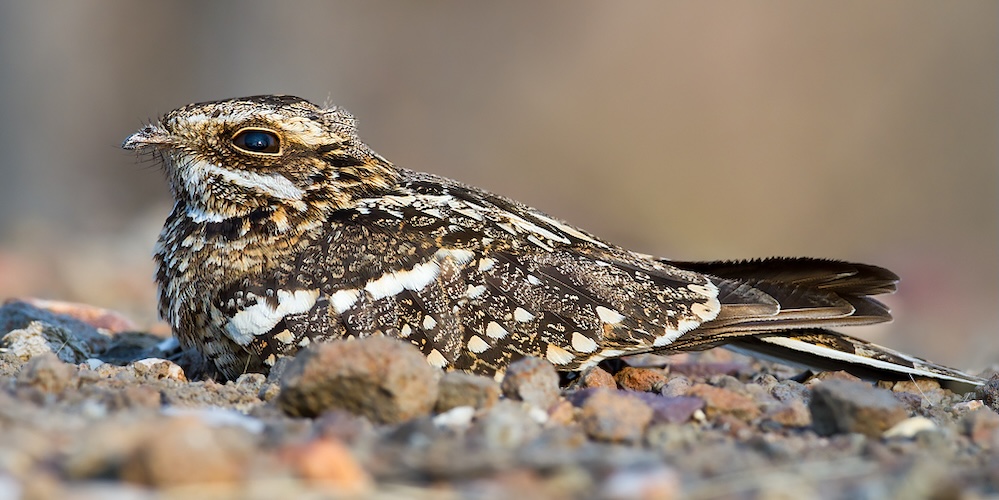
Square-tailed Nightjar Caprimulgus fossii – ©Dubi Shapiro
Previously, all members of the orders Apodiformes, Aegotheliformes, Nyctibiiformes, Podargiformes, and Steatornithiformes were lumped alongside nightjars in the Caprimulgiformes. In 2021, the International Ornithological Congress redefined the Caprimulgiformes as only applying to nightjars, with potoos, frogmouths, oilbirds, and owlet-nightjars all being reclassified into their own orders. A phylogenetic analysis found that the extinct family Archaeotrogonidae, known from the Eocene and Oligocene of Europe, are the closest known relatives of nightjars.
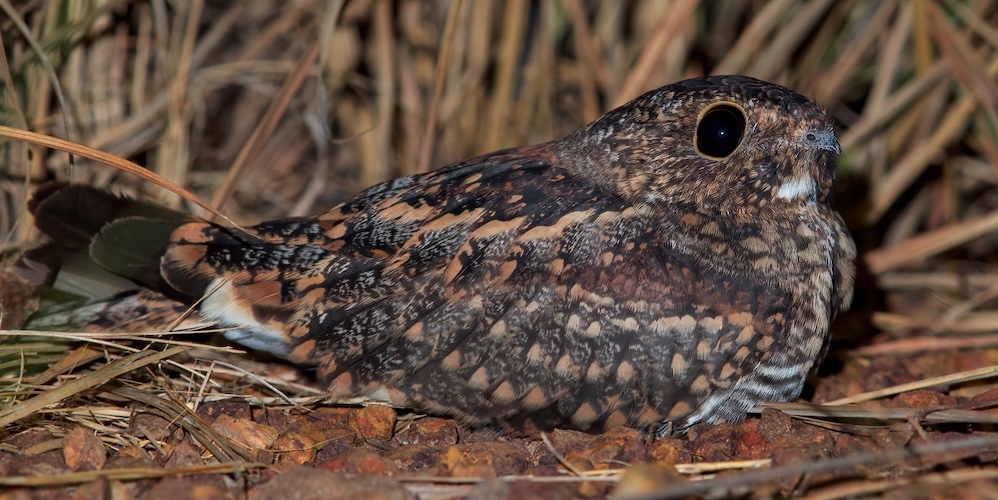
Least Nighthawk Chordeiles pusillus – ©Dubi Shapiro
Traditionally, nightjars have been divided into two subfamilies: the Caprimulginae, or typical nightjars and the Chordeilinae. The Chordeilinae included species with short bills and lack of elongated rictal bristles in the genera Nyctiprogne, Lurocalis and Chordeiles. Molecular phylogenetic studies have shown that the two subfamilies are not monophyletic. In addition, the subfamily Eurostopodinae was introduced for species in the genera Eurostopodus and Lyncornis but these two genera are now known not to be closely related.
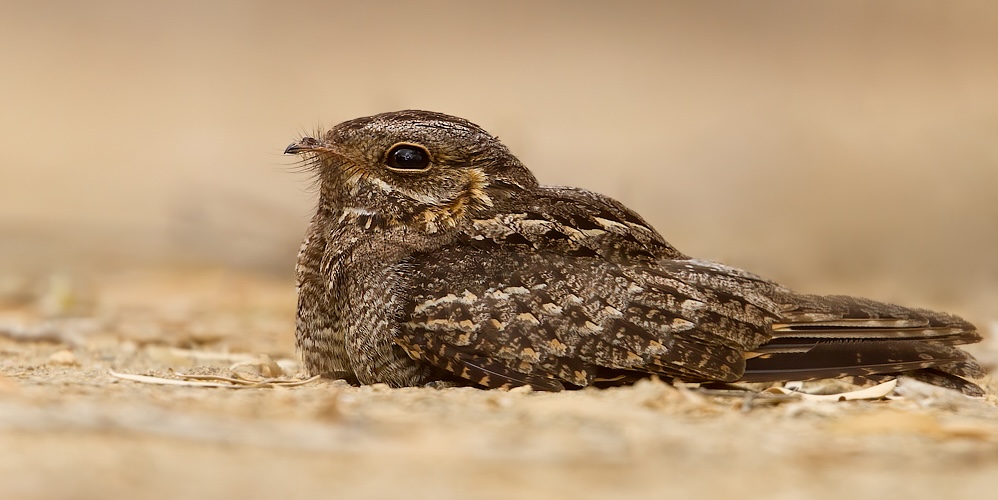
Madagascan Nightjar Caprimulgus madagascariensis – Dubi Shapiro©
Caprimulgids are found around the world in all continents except Antarctica. They are mostly active in the late evening and early morning or at night, and feed predominantly on moths and other large flying insects. They are not known to live in extremely arid desert regions. Nightjars can occupy all elevations from sea level to 4,200 m (13,800 ft), and a number of species are montane specialists. However, nightjars occupy a wide range of habitats, from deserts to rainforests but are most common in open country with some vegetation.
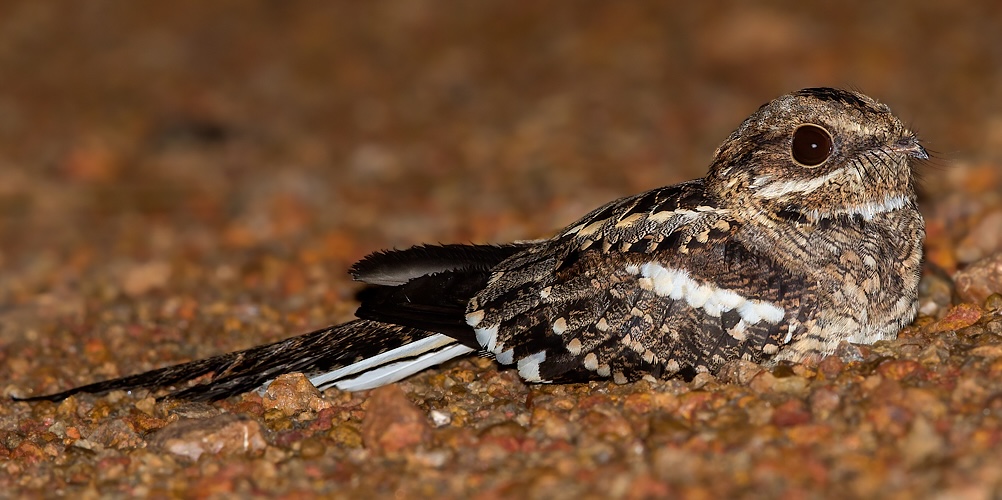
Long-tailed Nightjar Caprimulgus climacurus – ©Dubi Shapiro
The nighthawks are confined to the New World, and the eared nightjars to Asia and Australia. A number of species undertake migrations, although the secretive nature of the family may account for the incomplete understanding of their migratory habits. Species that live in the far north, such as the European nightjar or the common nighthawk, migrate southward with the onset of winter. Geolocators placed on European nightjars in southern England found they wintered in the south of the Democratic Republic of the Congo. Other species make shorter migrations.
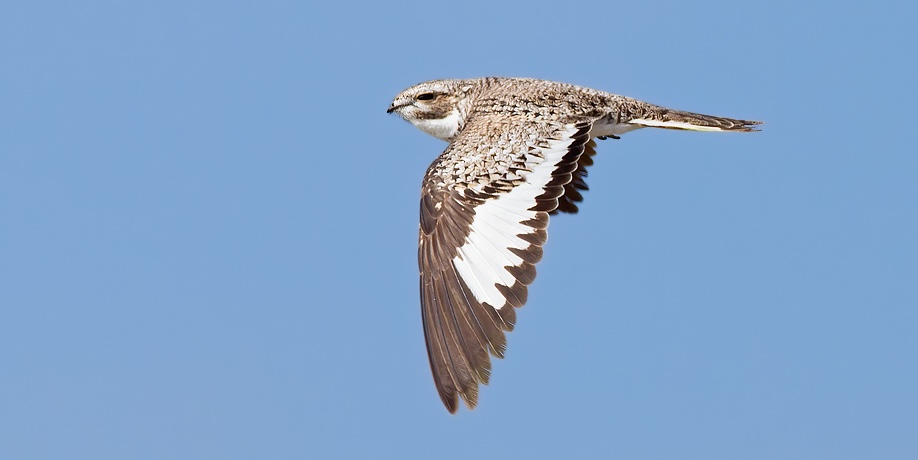
Sand-coloured Nighthawk Chordeiles rupestris – ©Dubi Shapiro
Most have small feet, of little use for walking, and long pointed wings. Their soft plumage is cryptically coloured to resemble bark or leaves. Some species, unusual for birds, perch along a branch, rather than across it. This helps to conceal them during the day.
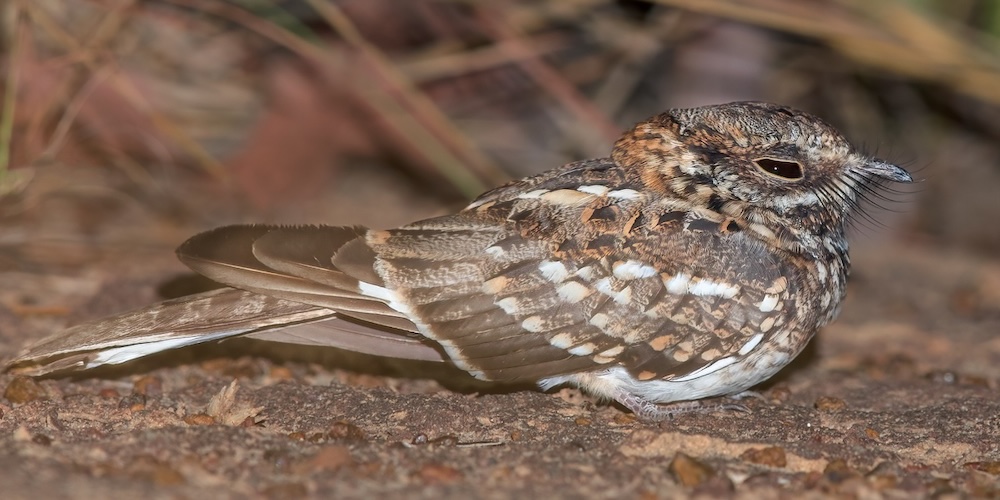
White-tailed Nightjar Hydropsalis cayennensis – ©Dubi Shapiro
The Common Poorwill, Phalaenoptilus nuttallii, is unique as a bird that undergoes a form of hibernation, becoming torpid and with a much-reduced body temperature for weeks or months, although other nightjars can enter a state of torpor for shorter periods.
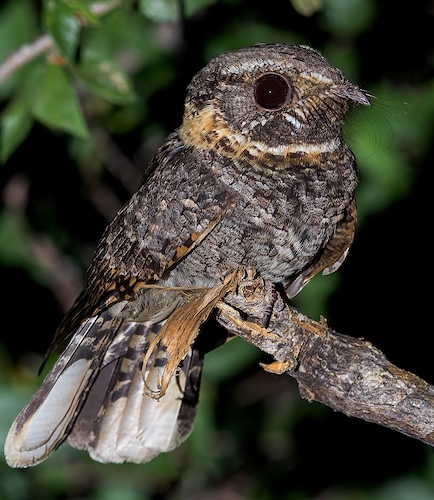
Buff-collared Nightjar Antrostomus ridgwayi – ©Dubi Shapiro
Nightjars lay one or two patterned eggs directly onto bare ground. It has been suggested that nightjars will move their eggs and chicks from the nesting site in the event of danger by carrying them in their mouths. This suggestion has been repeated many times in ornithology books, but while this may accidentally happen, surveys of nightjar research have found very little evidence to support this idea.
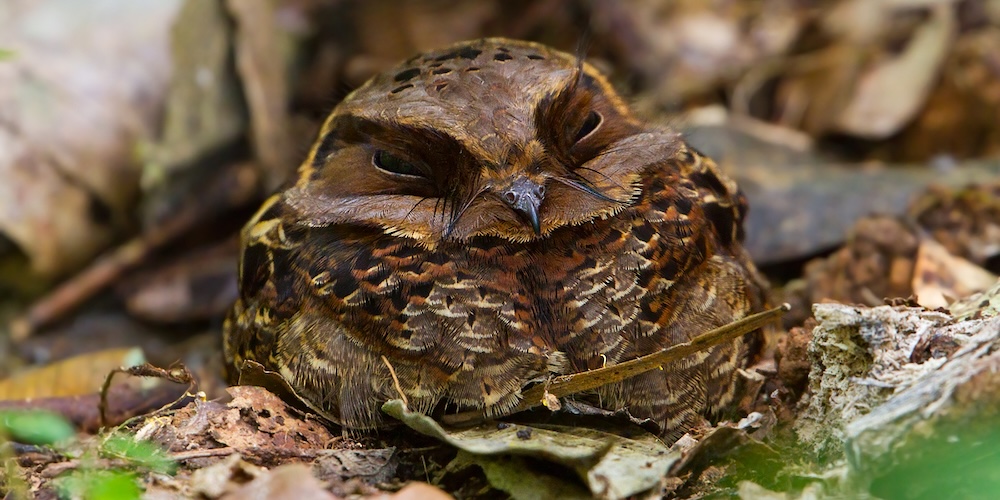
Collared Nightjar Gactornis enarratus – ©Dubi Shapiro
Some species of nightjars are threatened with extinction. Road-kills of this species by cars are thought to be a major cause of mortality for many members of the family because of their habit of resting and roosting on roads.
-
Number of bird species: 97
(As at September 2025)
According to the recently (2025) amalgamated AviList, there are 97 species of Poorwills, Nightjars & Nighthawks & allies currently recognised in twenty-two genera in the family Caprimulgidae; the only family in the Caprimulgiformes order. They are:
Spotted Nightjar Eurostopodus argus
Solomons Nightjar Eurostopodus nigripennis
New Caledonian Nightjar Eurostopodus exul
White-throated Nightjar Eurostopodus mystacalis
Satanic Nightjar Eurostopodus diabolicus
Papuan Nightjar Eurostopodus papuensis
Archbold’s Nightjar Eurostopodus archboldi
Malaysian Eared Nightjar Lyncornis temminckii
Great Eared Nightjar Lyncornis macrotis
Collared Nightjar Gactornis enarratus
Rufous-bellied Nighthawk Lurocalis rufiventris
Short-tailed Nighthawk Lurocalis semitorquatus
Plain-tailed Nighthawk Nyctiprogne vielliardi
Band-tailed Nighthawk Nyctiprogne leucopyga
Blackish Nightjar Nyctipolus nigrescens
Pygmy Nightjar Nyctipolus hirundinaceus
Anthony’s Nightjar Nyctidromus anthonyi
Pauraque Nyctidromus albicollis
Roraiman Nightjar Tepuiornis whitelyi
Swallow-tailed Nightjar Uropsalis segmentata
Lyre-tailed Nightjar Uropsalis lyra
Tschudi’s Nightjar Quechuavis decussata
Todd’s Nightjar Setopagis heterura
Little Nightjar Setopagis parvula
Cayenne Nightjar Setopagis maculosa
Band-winged Nightjar Systellura longirostris
Sickle-winged Nightjar Eleothreptus anomalus
White-winged Nightjar Eleothreptus candicans
Spot-tailed Nightjar Antiurus maculicaudus
White-tailed Nightjar Hydropsalis cayennensis
Ladder-tailed Nightjar Hydropsalis climacocerca
Scissor-tailed Nightjar Hydropsalis torquata
Long-trained Nightjar Hydropsalis forcipata
Least Poorwill Siphonorhis brewsteri
Eared Poorwill Nyctiphrynus mcleodii
Yucatan Poorwill Nyctiphrynus yucatanicus
Ocellated Poorwill Nyctiphrynus ocellatus
Choco Poorwill Nyctiphrynus rosenbergi
Common Poorwill Phalaenoptilus nuttallii
Chuck-will’s-widow Antrostomus carolinensis
Rufous Nightjar Antrostomus rufus
Cuban Nightjar Antrostomus cubanensis
Hispaniolan Nightjar Antrostomus ekmani
Tawny-collared Nightjar Antrostomus salvini
Yucatan Nightjar Antrostomus badius
Silky-tailed Nightjar Antrostomus sericocaudatus
Buff-collared Nightjar Antrostomus ridgwayi
Eastern Whip-poor-will Antrostomus vociferus
Dusky Nightjar Antrostomus saturatus
Mexican Whip-poor-will Antrostomus arizonae
Puerto Rican Nightjar Antrostomus noctitherus
Nacunda Nighthawk Chordeiles nacunda
Least Nighthawk Chordeiles pusillus
Sand-colored Nighthawk Chordeiles rupestris
Lesser Nighthawk Chordeiles acutipennis
Common Nighthawk Chordeiles minor
Antillean Nighthawk Chordeiles gundlachii
Brown Nightjar Veles binotatus
Pennant-winged Nightjar Caprimulgus vexillarius
Standard-winged Nightjar Caprimulgus longipennis
Red-necked Nightjar Caprimulgus ruficollis
Jungle Nightjar Caprimulgus indicus
Grey Nightjar Caprimulgus jotaka
Palau Nightjar Caprimulgus phalaena
European Nightjar Caprimulgus europaeus
Sombre Nightjar Caprimulgus fraenatus
Rufous-cheeked Nightjar Caprimulgus rufigena
Egyptian Nightjar Caprimulgus aegyptius
Nubian Nightjar Caprimulgus nubicus
Sykes’s Nightjar Caprimulgus mahrattensis
Golden Nightjar Caprimulgus eximius
Large-tailed Nightjar Caprimulgus macrurus
Timor Nightjar Caprimulgus ritae
Andaman Nightjar Caprimulgus andamanicus
Mees’s Nightjar Caprimulgus meesi
Jerdon’s Nightjar Caprimulgus atripennis
Philippine Nightjar Caprimulgus manillensis
Sulawesi Nightjar Caprimulgus celebensis
Donaldson Smith’s Nightjar Caprimulgus donaldsoni
Fiery-necked Nightjar Caprimulgus pectoralis
Montane Nightjar Caprimulgus poliocephalus
Indian Nightjar Caprimulgus asiaticus
Madagascan Nightjar Caprimulgus madagascariensis
Swamp Nightjar Caprimulgus natalensis
Plain Nightjar Caprimulgus inornatus
Star-spotted Nightjar Caprimulgus stellatus
Nechisar Nightjar Caprimulgus solala
Savanna Nightjar Caprimulgus affinis
Chirruping Nightjar Caprimulgus griseatus
Freckled Nightjar Caprimulgus tristigma
Bonaparte’s Nightjar Caprimulgus concretus
Salvadori’s Nightjar Caprimulgus pulchellus
Prigogine’s Nightjar Caprimulgus prigoginei
Bates’s Nightjar Caprimulgus batesi
Long-tailed Nightjar Caprimulgus climacurus
Slender-tailed Nightjar Caprimulgus clarus
Square-tailed Nightjar Caprimulgus fossii
-
Nightjars & their Allies
| By David T Holyoak | OUP | 2001 | Hardback | 773 pages, 24 colourplates, b/w illustrations, tabs, maps | ISBN: 9780198549871 Buy this book from NHBS.com -
Nightjars of the World
| By Nigel Cleere | Helm | 2026 | Edition 2 | Hardback | 416 pages, 36 plates with colour illustrations; ~500 colour photos, colour distribution maps | ISBN: 9781472913487 Buy this book from NHBS.com
-
Caprimulgidae
Family AccountCaprimulgids are perhaps best known for their distinctive calls that punctuate the night. -
Caprimulgidae
Family AccountNightjars are medium-sized nocturnal or crepuscular birds in the family Caprimulgidae...
Given the number of species in this family, Fatbirder does not provide quick links to all of them. However, the entries below do include links to representatives of every genera, all those illustrated and some of the most often encountered, iconic or sought-after species.
-
Band-tailed Nighthawk Nyctiprogne leucopyga
Species AccountDistinctive, locally common nighthawk of lowland rivers. Appears small and dark; in dim light, best distinguished from other nighthawks by swallowlike... -
Band-tailed Nighthawk Nyctiprogne leucopyga
Species AccountSound archive and distribution map. -
Band-winged Nightjar Systellura longirostris
Species AccountMedium-sized nightjar found in a wide range of open habitats from sea level up to the edge of cloud forest in the Andes (4,400 m). -
Band-winged Nightjar Systellura longirostris
Species AccountSound archive and distribution map. -
Blackish Nightjar Caprimulgus nigrescens
Species AccountA fairly small, dark nightjar found in the lowlands and foothills of northern South America -
Blackish Nightjar Caprimulgus nigrescens
Species AccountThe blackish nightjar (Nyctipolus nigrescens) is a species of bird in the Caprimulgidae family. This relatively small dark nightjar is found in the Guianas and the Amazon. It is rare or even absent in the western part, but is among the commonest nightjars in the eastern Amazon and the Guianas. -
Blackish Nightjar Caprimulgus nigrescens
Species AccountNyctipolus nigrescens is listed as Least Concern. -
Brown Nightjar Veles binotatus
Species AccountThe brown nightjar (Veles binotatus) is a species of nightjar in the family Caprimulgidae. It is the only species in the genus Veles. -
Brown Nightjar Veles binotatus
Species AccountSound archive and distribution map. -
Buff-collared Nightjar Antrostomus ridgwayi
Species AccountThe buff-collared nightjar or Ridgway's whip-poor-will (Antrostomus ridgwayi) is a species of nightjar in the family Caprimulgidae. It is found in Guatemala... -
Buff-collared Nightjar Antrostomus ridgwayi
Species AccountSound archive and distribution map. -
Chuck-will’s-widow Antrostomus carolinensis
Species AccountLarge night bird with a remarkably big head. Plumage is variable, ranging from grayish to strikingly rufous, but always intricately patterned. -
Chuck-will’s-widow Antrostomus carolinensis
Species AccountThe chuck-will's-widow (Antrostomus carolinensis) is a nocturnal bird of the nightjar family Caprimulgidae. It is mostly found in the southeastern United... -
Chuck-will’s-widow Antrostomus carolinensis
Species AccountSound archive and distribution map. -
Collared Nightjar Gactornis enarratus
Species AccountBeautifully patterned cryptic nightjar. Found mainly inside of eastern and northern Madagascar rainforest, though very locally in dry forest. -
Collared Nightjar Gactornis enarratus
Species AccountThe collared nightjar (Gactornis enarratus) is a species of nightjar in the family Caprimulgidae. It is endemic to Madagascar. -
Collared Nightjar Gactornis enarratus
Species AccountSound archive and distribution map. -
Common Nighthawk Chordeiles minor
Species AccountChordeiles minor is listed as Least Concern. -
Common Nighthawk Chordeiles minor
Species AccountSound archive and distribution map. -
Common Nighthawk Chordeiles minor
Species AccountThe common nighthawk (Chordeiles minor) is a medium-sized [3][4] crepuscular or nocturnal bird[3][5] within the nightjar family, whose presence and identity are best revealed by its vocalization. -
Common Nighthawk Chordeiles minor
Species AccountOften roosts along tree branches or on the ground. Feeds at night on large insects. Watch for them flying under bright lights at ballgames or supermarkets. -
Common Pauraque Nyctidromus albicollis
Species AccountSound archive and distribution map. -
Common Pauraque Nyctidromus albicollis
Species AccountCryptically patterned nightbird; widespread and common in Central and South America, limited U.S. range. Found in shrubby woodlands. -
Common Pauraque Nyctidromus albicollis
Species AccountThe pauraque (Nyctidromus albicollis) – also called the common pauraque to distinguish it from similar species – is a nightjar species, one of two birds in the genus Nyctidromus. -
Common Poorwill Phalaenoptilus nuttallii
Species AccountNamed for its song: a whistled "poor-WILL," sometimes with a faint third note. Strictly nocturnal; more often heard than seen. -
Common Poorwill Phalaenoptilus nuttallii
Species AccountThe common poorwill (Phalaenoptilus nuttallii) is a nocturnal bird of the family Caprimulgidae, the nightjars. It is found from British Columbia and southeastern Alberta, through the western United States to northern Mexico. The bird's habitat is dry, open areas with grasses or shrubs, and even stony desert slopes with very little vegetation. -
Common Poorwill Phalaenoptilus nuttallii
Species AccountSound archive and distribution map. -
Cuban Nightjar Antrostomus cubanensis
Species AccountDark brown and buff nocturnal bird often first noted by its distinctive song, a low, burry “weeyo” given in rapid succession. -
Cuban Nightjar Antrostomus cubanensis
Species AccountSound archive and distribution map. -
Eared Poorwill Nyctiphrynus mcleodii
Species AccountSound archive and distribution map. -
Eared Poorwill Nyctiphrynus mcleodii
Species AccountThe eared poorwill (Nyctiphrynus mcleodii) is a species of nightjar in the family Caprimulgidae. It is endemic to Mexico. -
Egyptian Nightjar Caprimulgus aegyptius
Species AccountThe Egyptian nightjar (Caprimulgus aegyptius) is a medium-small nightjar which occurs in south west Asia and north Africa and winters in tropical Africa. -
Egyptian Nightjar Caprimulgus aegyptius
Species AccountSound archive and distribution map. -
Egyptian Nightjar Caprimulgus aegyptius
Species AccountCaprimulgus aegyptius is listed as Least Concern. -
European Nightjar Caprimulgus europaeus
Species AccountThe European nightjar (Caprimulgus europaeus), common goatsucker, Eurasian nightjar or just nightjar, is a crepuscular and nocturnal bird in the nightjar family -
European Nightjar Caprimulgus europaeus
Species AccountSound archive and distribution map. -
Great Eared Nightjar Lyncornis macrotis
Species AccountUnique, feline-looking nightjar. Distinct ears and frequently erect posture distinguish it from many other nightjars. -
Great Eared Nightjar Lyncornis macrotis
Species AccountSound archive and distribution map. -
Indian Nightjar Caprimulgus asiaticus
Species AccountThe Indian nightjar (Caprimulgus asiaticus) is a small nightjar which is a resident breeder in open lands across South Asia and Southeast Asia. -
Indian Nightjar Caprimulgus asiaticus
Species AccountSound archive and distribution map. -
Jungle Nightjar Caprimulgus indicus
Species AccountSound archive and distribution map. -
Jungle Nightjar Caprimulgus indicus
Species AccountThe jungle nightjar (Caprimulgus indicus) is a species of nightjar found in India and Sri Lanka. It is found mainly on the edge of forests where it is seen or heard at dusk. The taxonomy of this and related nightjars is complex and a range of treatments have been followed that cover this and several other nightjars in the Asian region. It was formerly called the grey nightjar or Indian jungle nightjar and sometimes included the East Asian grey nightjar (C. jotaka) as a subspecies. -
Jungle Nightjar Caprimulgus indicus
Species AccountCaprimulgus indicus. The IUCN Red List of Threatened Species 2024: e.T22725692A26400 -
Large-tailed Nightjar Caprimulgus macrurus
Species AccountAn intricately patterned nocturnal bird, usually found roosting on the ground or a low branch in open forest, secondary growth, and cultivated areas. -
Large-tailed Nightjar Caprimulgus macrurus
Species AccountSound archive and distribution map. -
Least Nighthawk Chordeiles pusillus
Species AccountSmall nightjar of savannas and dry forests, where it forages for insects with characteristic erratic flight like other nighthawks. -
Least Nighthawk Chordeiles pusillus
Species AccountSound archive and distribution map. -
Least Poorwill Siphonorhis brewsteri
Species AccountA nocturnal inhabitant of open arid woodlands and thornscrub. Perches on ground from which it makes floppy and erratic flight upon its long wings in pursuit... -
Least Poorwill Siphonorhis brewsteri
Species AccountSound archive and distribution map. -
Little Nightjar Setopagis parvula
Species AccountThe little nightjar (Setopagis parvula) is a species of nightjar in the family Caprimulgidae. It is found in Argentina, Bolivia, Brazil, Paraguay, Peru... -
Little Nightjar Setopagis parvula
Species AccountSound archive and distribution map -
Long-tailed Nightjar Caprimulgus climacurus
Species AccountThe long-tailed nightjar (Caprimulgus climacurus) is one of 98 species of nightjar in the family Caprimulgidae, the "true nightjars". -
Long-tailed Nightjar Caprimulgus climacurus
Species AccountSound archive and distribution map. -
Madagascan Nightjar Caprimulgus madagascariensis
Species AccountThe Madagascar nightjar or Madagascan nightjar (Caprimulgus madagascariensis) is a species of nightjar in the family Caprimulgidae. -
Madagascan Nightjar Caprimulgus madagascariensis
Species AccountSound archive and distribution map. -
Red-necked Nightjar Caprimulgus ruficollis
Species AccountResembles Eurasian Nightjar, but larger with a rufous collar and upper breast and lacks the dark “forearms” seen on Eurasian Nightjar. -
Red-necked Nightjar Caprimulgus ruficollis
Species AccountSound archive and distribution map. -
Roraiman Nightjar Tepuiornis whitelyi
Species AccountA medium-sized, dark nightjar of tepui highlands, difficult to identify by plumage alone. Cryptically patterned with dark brown and gray accented with buffy... -
Roraiman Nightjar Tepuiornis whitelyi
Species AccountSound archive and distribution map. -
Rufous-bellied Nighthawk Lurocalis rufiventris
Species AccountThe rufous-bellied nighthawk (Lurocalis rufiventris), sometimes also Taczanowski's nighthawk, is a species of nightjar in the family Caprimulgidae. -
Rufous-bellied Nighthawk Lurocalis rufiventris
Species AccountSound archive and distribution map. -
Sand-coloured Nighthawk Chordeiles rupestris
Species AccountThe sand-colored nighthawk (Chordeiles rupestris) is a species of nightjar in the family Caprimulgidae. It is found in Bolivia, Brazil, Colombia, Ecuador... -
Sand-coloured Nighthawk Chordeiles rupestris
Species AccountSound archive and distribution map. -
Scissor-tailed Nightjar Hydropsalis torquata
Species AccountThe scissor-tailed nightjar (Hydropsalis torquata) is a species of nightjar in the family Caprimulgidae. It is distributed over much of eastern South... -
Scissor-tailed Nightjar Hydropsalis torquata
Species AccountSound archive and distribution map. -
Spot-tailed Nightjar Antiurus maculicaudus
Species AccountPlumage similar to other nightjars, but note the pale buffy eyebrow, buffy V-shaped stripe on the back, and bold wing spotting. -
Spot-tailed Nightjar Antiurus maculicaudus
Species AccountSound archive and distribution map. -
Spotted Nightjar Eurostopodus argus
Species AccountThe spotted nightjar or spotted eared-nightjar (Eurostopodus argus) is a species of nightjar in the family Caprimulgidae. -
Spotted Nightjar Eurostopodus argus
Species AccountSound archive and distribution map. -
Square-tailed Nightjar Caprimulgus fossii
Species AccountThe square-tailed nightjar (Caprimulgus fossii) is a species of nightjar in the family Caprimulgidae which is native to tropical and subtropical woodlands... -
Square-tailed Nightjar Caprimulgus fossii
Species AccountSound archive and distribution map. -
Standard-winged Nightjar Caprimulgus longipennis
Species AccountThe standard-winged nightjar (Caprimulgus longipennis) is a nocturnal bird in the nightjar family. Previously placed with the pennant-winged nightjar. -
Standard-winged Nightjar Caprimulgus longipennis
Species AccountSound archive and distribution map. -
Swallow-tailed Nightjar Uropsalis segmentata
Species AccountThe swallow-tailed nightjar (Uropsalis segmentata) is a species of nightjar in the family Caprimulgidae. It is found in Bolivia, Colombia, Ecuador, and Peru. -
Swallow-tailed Nightjar Uropsalis segmentata
Species AccountSound archive and distribution map -
Tschudi's Nightjar Quechuavis decussata
Species AccountFairly common but nocturnal bird of lowland desert with scattered low bushes and agricultural areas with hedges and brush. -
Tschudi's Nightjar Quechuavis decussata
Species AccountSound archive and distribution map -
White-tailed Nightjar Hydropsalis cayennensis
Species AccountThis rather long-tailed nightjar is found in open grassy or shrubby habitats from Costa Rica across much of northern South America. -
White-tailed Nightjar Hydropsalis cayennensis
Species AccountSound archive and distribution map. -
White-winged Nightjar Eleothreptus candicans
Species AccountThe white-winged nightjar (Eleothreptus candicans) is a species of nightjar in the Caprimulgidae family native to Bolivia, Brazil and Paraguay, where it lives in open grassland with scattered trees. -
White-winged Nightjar Eleothreptus candicans
Species AccountEleothreptus candicans is listed as Vulnerable under criteria D1.
-
#Nighthawk #MosquitoHawk #Bullbat #NightJar Photos and Discussions Group
Facebook PagePhotos and Discussions Group.