

Mendoza
Mendoza is one of the 23 provinces of Argentina, and is located in the western central part of the country in the Cuyo region. Neighbouring provinces are San Juan to the north, San Luis to the east, La Pampa to the southeast and Neuquén to the south. To the west is then country of Chile, with the Andes mountains forming the border. The province covers an area of 148,827 km2 (57,462 square miles) with a population of a little over two million people, half of whom live in the metropolitan area of the capital, also called Mendoza.
The geography of the province descends from the almost 22,832 feet of the Aconcagua mountain down to the semi-flat land in the east. A series of longitudinal valleys such as the Uspallata, separate the Andes from the Pre-cordillera lower mountains. To the east, the Cuyean plains are crossed by tributaries of the Desaguadero River. Other important rivers include the Mendoza, Tunuyán, Diamante and Atuel Rivers.
The climate is continental, sunny and dry in the entire territory of the province, with warm summers and relatively cold winters. The arid soil is due to the scant precipitation and the great temperature difference between day and night allows mainly xerophytes and few trees to grow. The annual precipitation is between 150 and 350 mm, and hail is not uncommon and an important problem for the region’s viticulture.
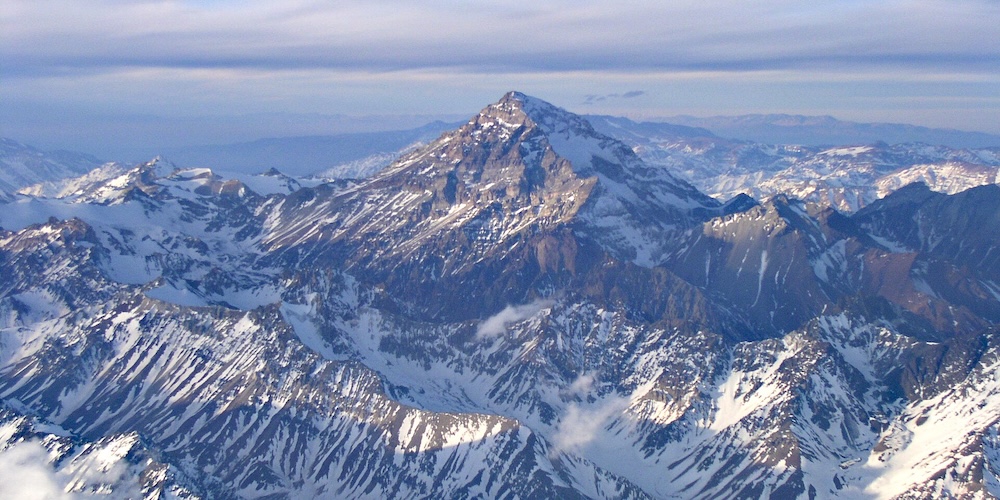
Aconcagua – ©Beatriz Moisset CC BY-SA 3.0 via Wikimedia Commons
There are fertile lands surrounding the basins of the many rivers, that spring from the glaciers of the Cordillera. Different wind fronts affect the landscape, mainly the Zonda wind, but also the mild Pampero, the warm Viento Norte and in winter the very rare Sudestada from the Southeast. This latter one mostly affects the pampas.
The Mendoza economy is quite diversified. Agriculture, particularly viticulture has long accounted for much of Menodoza’s foreign exchange earnings (followed closely by tourism, mainly from Chile). Besides wine, other important crops (mainly for the Argentine market) are apples, pears, tomatoes, onions, plums, olives, cherries, peaches and quince. Apiculture, with 30,000 beehives, is another growing activity favoured by Mendoza’s dry weather. Mining is also important to the Mendoza economy and has grown sharply in recent years. Fourteen percent of the national reserves of petroleum are in Mendoza, also home to large-scale mining of lime and uranium.
Birding Mendoza
The province is a land of contrasts, having different elevations, temperature bands. deserts and arid areas, wetlands, and cultivated valleys. The Andean Foothills & high-altitude areas like Aconcagua National Park and Potrerillos are where to spot high altitude species like the magnificent Andean Condor and Andean Goose. There are special hummingbirds such as Red-tailed Comet and White-sided & Andean Hillstar. One can hope for Steinbach’s Canastero, Greater Yellow-Finch, Black-winged Ground Dove, White-tipped Plantcutter, Patagonian Mockingbird and a sight of Torrent Duck’s riding fast mountain streams. Raptors such as Black-chested Buzzard-Eagle, Mountain Caracara soar above and Grey-breasted Seedsnipe hide amongst the scree. The Laguna de Horcones is one of the primary wetlands and its trail is a starting point inside Aconcagua Provincial Park, offering the highest concentration of waterfowl and terrestrial high-elevation species.
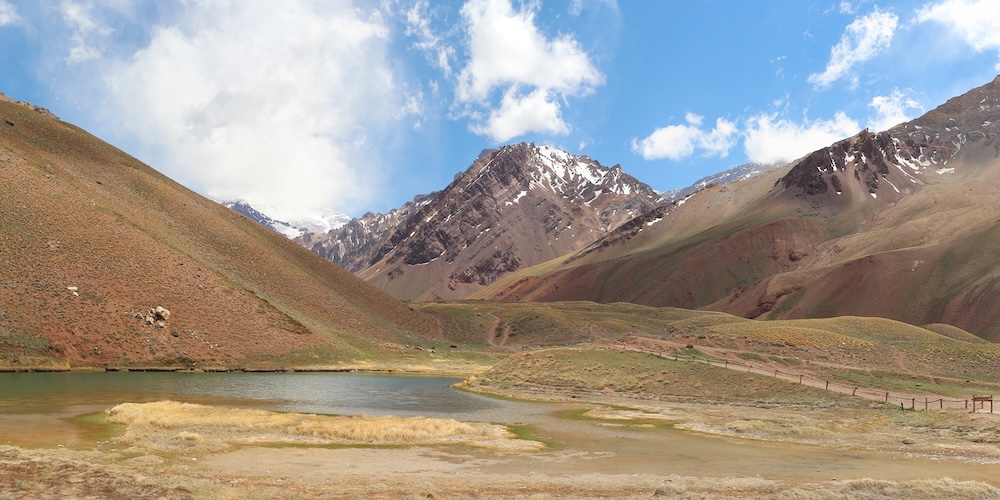
Aconcagua National Park – ©Bernard Gagnon CC BY-SA 4.0 via Wikimedia Commons
The Malargüe wetlands refer primarily to the Laguna de Llancanelo, an internationally renowned high-altitude oasis located in the semi-desert region of the Malargüe Department. Covering an area of roughly 91,365 hectares, the site is a complex wetland system comprised of freshwater springs, streams, salt flats, marshes, and a shallow saltwater lagoon. Its primary water source is snowmelt from the Andes, brought in via the Malargüe River. It serves as a vital strategic refuelling and breeding stopover along migratory routes connecting North America to South America’s southern tip. more than 180 species of birds make Laguna Llancanelo one of the most important wetlands in all of South America. Chilean Flamingo, Two-banded Plover, Black-necked & Coscoroba Swans, Chiloe Wigeon, White-winged Coot, Crested Duck, Yellow-billed Pintail and more with a supporting cast of waders, gulls, herons and water-loving passerines etc.

Malargüe Department – ©ANDY ABIR ALAN CC BY-SA 3.0 via Wikimedia Commons
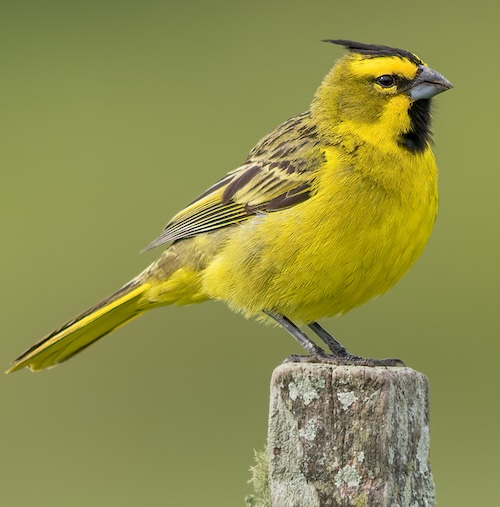
Much of the province is arid with areas like the Monte Desert, salt flats and dry plains dominating. These arid lowlands are home to unique regional specialties including the Chaco Eagle, Sandy Gallito, Crested Gallito, and the endangered Yellow Cardinal, as well as Elegant Crested-Tinamou, Spectacled Tyrant, Burrowing Parakeet, Band-tailed Earthcreeper, Carbonated Sierra Finch, Gray-flanked Cinclodes, Tawny-throated Dotterel, Lesser Rhea and Spot-winged Falconet to name a few.
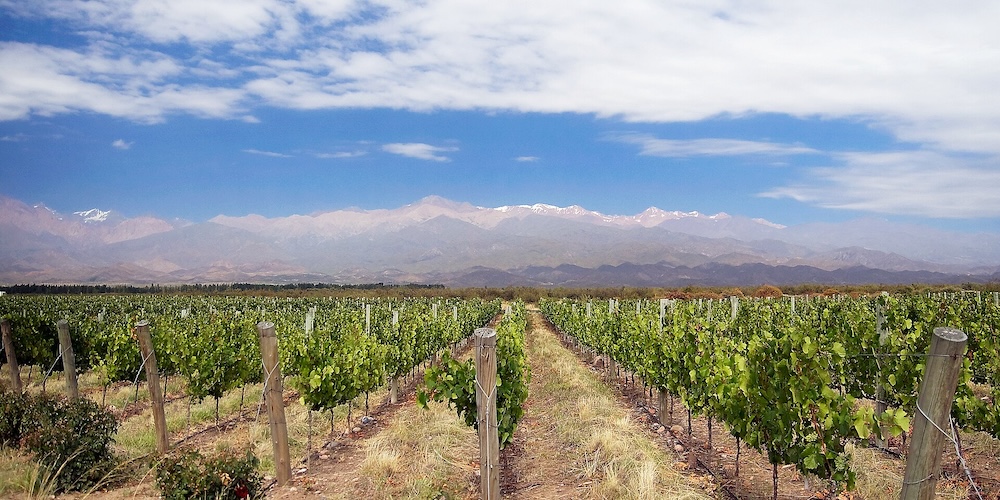
Medoza’s Vineyards – ©David CC BY 2.0 via Wikimedia Commons
Even local parks & vineyards have their attractions for birders. Urban green spaces like San Martin Park host Red-crested Cardinal, while cultivated areas of vineyards and other crops (such as Salentein or around Tunuyán) frequently yield sightings of Carbonated Sierra-Finch and other local passerines. Eared Doves, Spot-winged Pigeons, Striped Woodpecker, Guira Cuckoo. Ferruginous Pygmy-Owl, Tufted Tit-Tyrant, and a variety of finches, and common species such as Monk Parakeet, Chimango Caracara and Great Kiskadee can easily be sought out.
-
Wikipedia
GNU Free Documentation License
Information
-
Number of bird species: 424
(As at October 2026)
-
Avibase
PDF ChecklistThis checklist includes all bird species found in Mendoza , based on the best information available at this time. It is based on a wide variety of sources that I collated over many years. I am pleased to offer these checklists as a service to birdwatchers. If you find any error, please do not hesitate to report them. -
eBird
PDF ChecklistThis checklist is generated with data from eBird (ebird.org), a global database of bird sightings from birders like you. If you enjoy this checklist, please consider contributing your sightings to eBird. It is 100% free to take part, and your observations will help support birders, researchers, and conservationists worldwide.
-
NR La Reserva Divisadero Largo
WebpageSatellite ViewLa Reserva Divisadero Largo was declared Adrea Protected in 1983. This reserve, 492 hectares, is located in the estribores of General San Martin Park, just 8 km. West of the capital of Mendoza, in the foothills of the Andes. -
PP Parque Aconcagua
WebsiteSatellite ViewThe Aconcagua Provincial Park has peaks over 5000m so imposing rising toward the open sky, reaching its peak in the Northern summit of Cerro Aconcagua (6962m -
PP Parque Provincial Tupungato
InformationSatellite ViewJust 110 km from the city of Mendoza is the Tupungato Provincial Park, a site that has a stunning landscape of high tourist value. Being a protected area is home to rivers, streams, wildlife, preserving the condor and the guanaco...
-
Mendoza Rare Bird Alert
SightingsObservations for last 7 days - The report below shows observations of rare birds in Mendoza. Includes both unreviewed and reviewed/approved observations.
-
Trogon Tours
Tour OperatorTrogon Tours is the official nature travel company of Birding Argentina, the leading birding and nature specialists for southern South America since 2001