

Santiago del Estero
Santiago del Estero is one of the twenty-three provinces of Argentina and is located in the north of the country. The landlockled province is bordered by Salta to the northwest, Chaco to the north and east, Santa Fe to the east, Córdoba to the south, Catamarca to the southwest and Tucumán to the west. It covers 136,351 km2 (52,645 square miles) with a population of over a million people. The capital city is also called Santiago del Estero and is home to over 310 thousand people; almost a third of the province’s citizens.
The province is located almost completely in the flat lands of the Gran Chaco, with some depressions. In these depressions lagoons have formed, mainly at Bañado de Figueroa, Bañado de Añatuya, and those near the basin of the Salado and Dulce Rivers. The Sumampa and Ambargasta sierras are the result of the influence of the Pampas at the southwest.
The soil, rich in lime and salt, is arid and characterised by semi-deserts and steppes. The predominant weather is sub-tropical with a dry season and high temperatures during the entire year; the annual average has increased to c.24° in recent years, with maximum of up to 50°C. The dry season, during the winter, receives an average of 120 mm of precipitation, but the annual average is 700 mm. There are a number of very large salt flats.
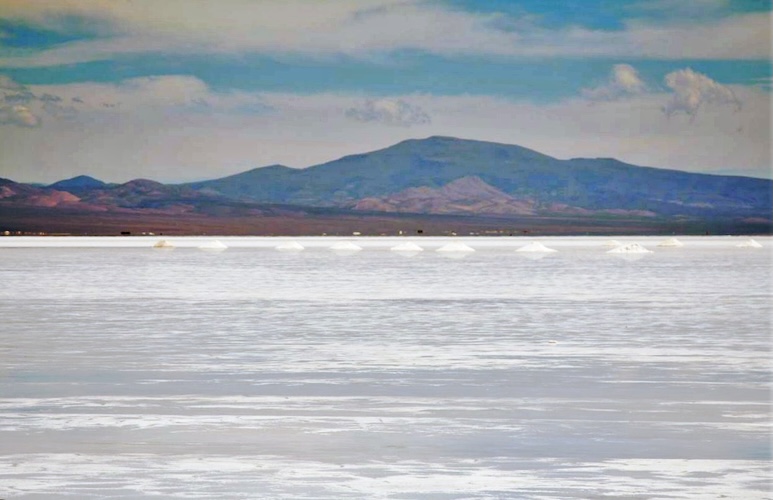
Salinas Grandes – ©Public Domain via Wikimedia Commons
Santiago del Estero had long been very rural and fairly agricultural (known for its excellent cotton and tobacco, as well as leather) and nearly lacking in manufacturing. The economy of the province still leans toward primary production, especially in agriculture, which constitutes about 12% of the province’s output. Centred on the basins of the Salado and Dulce Rivers, the main crops include cotton (20% of the national production), soybean, maize and onions. Cattle farming is also important, mainly in the east, where weather conditions make it possible, but goats, with 15% of the national production, adapt better to the rest of the province.
The wood industry of quebracho and algarrobo has also added implanted species totalling an annual average of over 300 thousand tons, of which around 100 thousand tons are used for timber and the rest for firewood and vegetal coal. There is little mining but in the salt flats in the southwest. Manufacturing (less than 10% of output) consists of small industrial enterprises centred mainly on food, textiles and leather.
Birding Santiago del Estero
The most important protected are in the province is Copo National Park, protecting dry Chaco. A large part of the park is made up of forests, with the Santiago Red Quebracho its most characteristic tree species. Larger species in the park include Maned Wolf, Jaguar, Giant Anteater, Chacoan Peccary and Giant Armadillo.
The Ansenuza Wetlands (most of which is in neighbouring Córdoba province) and surrounding Dulce River marshes form South America’s largest saline wetland. These wetlands support large populations of migratory shorebirds and waterbirds including Wilson’s Phalarope Phalaropus tricolor, Buff-breasted Sandpiper Calidris subruficollis and Lesser Yellowlegs Tringa flavipes and three flamingo species (Chilean, Andean & Puna), alongside native mammals such as Capybaras.
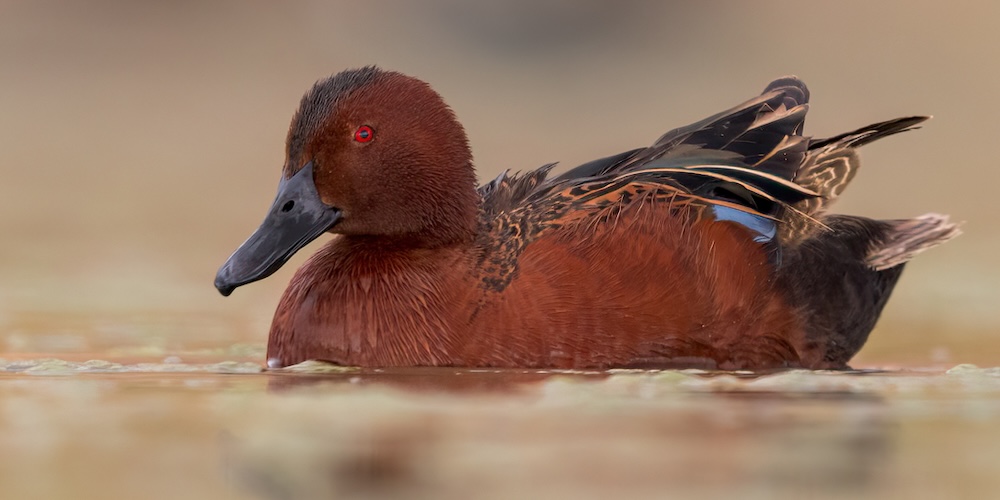
Cinnamon Teal Spatula cyanoptera – ©Dubi Shapiro
The area is good for wildfowl species such as Ringed Teal Callonetta leucophrys, Red Shoveler Spatula platalea, Cinnamon Teal Spatula cyanoptera and White-cheeked Pintail Anas bahamensism as are other lakes and wetland sites such as where the Dulce River is dammed at Dique Los Quiroga, which has one of the highest bird species counts in the province. Other notable wetland species include Wattled Jacana Jacana jacana, Limpkin Aramus guarauna and Southern Lapwing Vanellus chilensis. All of which can be found in the lagoons of Bañado de Figueroa and Bañado de Añatuya.
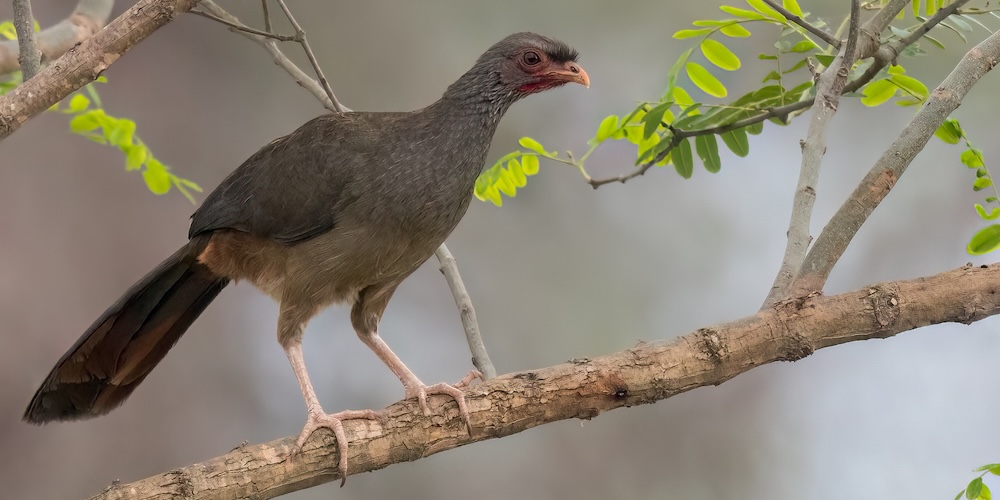
Chaco Chachalaca Ortalis canicollis – ©Dubi Shapiro
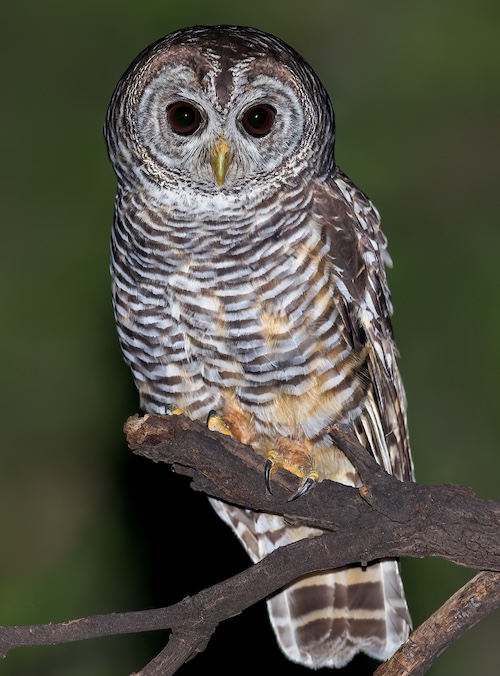
Sierra de Guasayán, Sumampa and Ambargasta are hilly areas offering different scrub and habitats notable for transitional species. The Forest & Scrub hold, among other species, Chaco Chachalaca Ortalis canicollis, Striped Cuckoo Tapera naevia, Picui Ground Dove Columbina picui, Eared Dove Zenaida auriculata, White-tipped Dove Leptotila verreauxi, Spot-winged Pigeon Patagioenas maculosa and Picazuro Pigeon Patagioenas picazuro. Blue-fronted Amazon Amazona aestiva is common in larger trees and dry forest patches where Chaco Owl Strix chacoensis is best found along with Crowned Solitary Eagle Buteogallus coronatus. As a ground-dwelling tinamou suited to dry Chaco forests and brush Quebracho Crested Tinamou Eudromia formos aoccur here.
Scrub gives way to dry grasslands favoured by Red-legged Seriema Cariama cristata, a long-legged terrestrial bird that forages in open scrub and savannas along with Many-colored Chaco Finch Saltatricula multicolor, a colourful seed-eater that is also characteristic of Chaco scrublands. Chaco Sparrow Rhynchospiza strigiceps is more often found in open, dry shrublands and scrubby edges.
With well over four hundred species recorded there are many birds to be found across the province, although it is rarely targeted by birding tours.
-
Wikipedia
GNU Free Documentation License
https://en.wikipedia.org/wiki/Santiago_del_Estero_Province
-
Number of bird species: 439
(As at November 2026)
-
Avibase
PDF ChecklistThis checklist includes all bird species found in Santiago del Estero , based on the best information available at this time. It is based on a wide variety of sources that I collated over many years. I am pleased to offer these checklists as a service to birdwatchers. If you find any error, please do not hesitate to report them. -
eBird
PDF ChecklistThis checklist is generated with data from eBird (ebird.org), a global database of bird sightings from birders like you. If you enjoy this checklist, please consider contributing your sightings to eBird. It is 100% free to take part, and your observations will help support birders, researchers, and conservationists worldwide.
-
NP Ansenuza National Park
InformationSatteliteb ViewRecognized as a Ramsar wetland and a site of hemispheric importance for shorebirds, the area gained further protection when Ansenuza National Park was established in mid-2022 -
NP Copo National Park
InformationSatteliteb ViewIt houses a representative sample of the Dry Chaco biodiversity in average state of conservation.
-
Santiago del Estero Rare Bird Alert
SightingsThe report below shows observations of rare birds in Santiago del Estero. Includes both unreviewed and reviewed/approved observations. Subscribe to this alert - Observations for last 7 days
-
Aves de Santiago del Estero
PDFBirds of Santiago, Argentina
-
Aves de Santiago del Estero
BLOGThis site aims to spread the enormous diversity of wild birds in our province of Argentina, with the hope that this will help to encourage their conservation