

State of Rio Grande do Norte
Rio Grande do Norte, literally ‘Large River of the North’; the Potenji River. It is one of the twenty-seven states of Brazil, which is located in the northeastern part of the country, on the edge of the South American continent. To the west lies the state of Ceara and to the south the state of Paraiba and to the north and east is the Atlantic Ocean. It covers an area of approximately 52,800 square kilometres over 20,000 square miles and has a population of slightly less than three point five million people, many of whom live in its largest city and state capital is Natal – there are 1.5 million people in its metropolitan area.
Apart from tourism, the main economic activity in the state is petroleum extraction, and the state is the second largest producer in Brazil. It also has considerable agriculture, particularly fruit growing and mining, with sea salt production being another significant activity.
Rio Grande do Norte is dominated by its coastline. Its 410 kilometres (254 miles) of sand, much sun, coconut palms and lagoons are responsible for the fame of its beaches, such as the secluded white sandy shores of Praia de Cajueiro, Genibapu (to the north of Natal), with sand dunes reaching 50 m (164 ft) high. The beach of Baía Formosa, the prettiest of the south coast, has falésias, stretches with reefs and very popular for surfing. To the south, the beach of Sagi, a little more rustic, has clear waters and small dunes. In Natal, beside beaches, there are other tourist attractions, such as the fortress of Reis Magos and the Parque das Dunas, the second largest urban park in the country. There are also many mangroves in the state, and the deep interior is dominated by rainforest. Rocas Atoll (the only atoll in the south Atlantic Ocean), 260 km Northeast of Natal, also belongs to the state of Rio Grande do Norte.
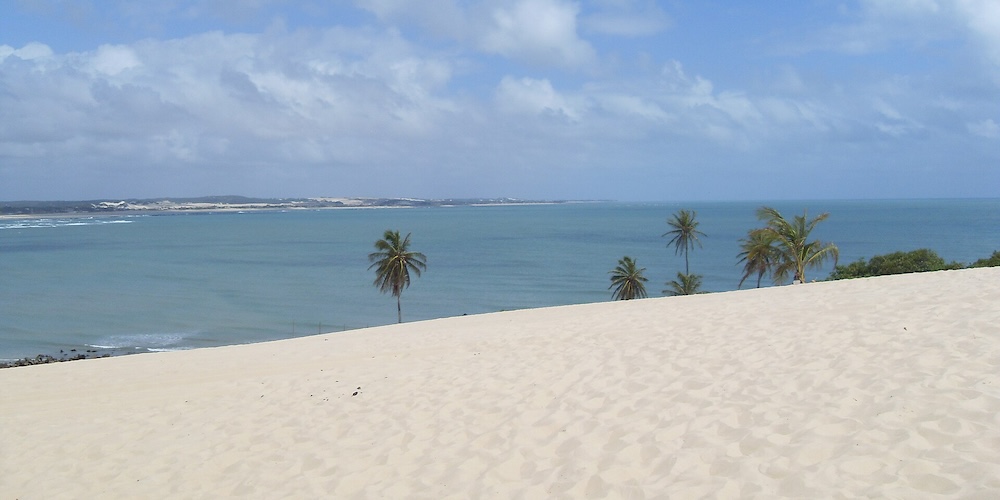
Natal Dunes State Park – ©Andrepimentasc CC BY-SA 3.0 Wikimedia Commons
According to NASA, the air is the second-cleanest in the world after Antarctica. Two climates predominate: humid tropical, in the oriental littoral, and semi-arid, in the remaining (most part) of the State (including the North coast). The rainforest which once covered most of Brazil’s coast had its northern end in the south of Rio Grande do Norte; the area north of Natal, the capital, is under dunes, a kind of formation associated with semi-arid climate. That semi-arid climate is characterised not only by tits low level, but also the irregularity of rainfall; some years can go by with no, or very little rain; most of the interior of the State is part of the Polygon of Droughts (an area which receives special attention from the federal government).
Birding Rio Grande do Norte
The state offers three biomes rich in birdlife, albeit to a lesser extent than some other northeast coastal states. These are the Atlantic Forest, Caatinga dry forest and coastal wetlands all of which can be accessed within a few hours’ drive. Three such different biomes in Rio Grande do Norte; the Atlantic Forest of the southern coast; the Caatinga of the interior and the coastal wetlands such as estuaries, salt pans and mangroves, create a bird diversity out of all proportion to the size of the state. The Caatinga is exclusively Brazilian habitat and holds endemic species. The best time to visit runs from the end of the rainy season onward (March to July), when the interior turns green and breeding activity peaks. The salt pans of Galinhos and Macau concentrate shorebirds and migrants; the area around Pico do Cabugi and the Apodi region hold the Caatinga endemics.

Chapadão Pipa RN – Universos Paralelos de Can! CC BY 2.0 via Wikimedia Commons
Top spots include Pipa and Tibau do Sul, which are located south of Natal, these coastal areas feature patches of Atlantic Forest with high biodiversity. Then there is Pico do Cabugi, an isolated volcanic peak surrounded by dry Caatinga scrubland, ideal for its unique species. Chapada do Apodi is a flat tableland which has a mix of species. On the coast Fernando de Noronha is an oceanic archipelago, a part of the state featuring island endemics like the Noronha elaenia and Noronha vireo.
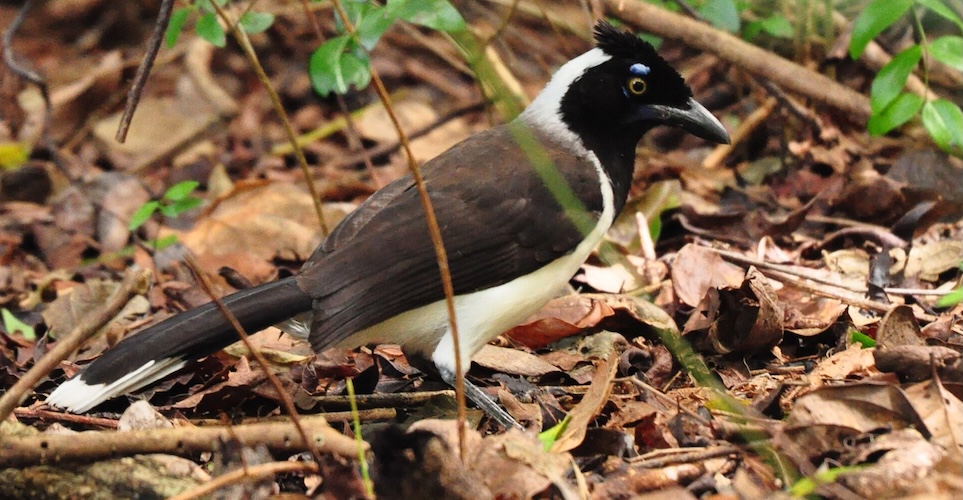
White-naped Jay Cyanocorax cyanopogon – Shanthanu Bhardwaj CC BY-SA 2.0 via Wikimedia Commons
Some target species include Red-cowled Cardinal Paroaria dominicana, a striking Caatinga endemic; White-naped Jay Cyanocorax cyanopogon also found in the dry interior as is Caatinga Parakeet Eupsittula cactoru, which is common in the arid scrublands. There are also many seabirds and waders that can be easily observed along the extensive coastal wetlands, beaches and dune sustems.
-
Number of bird species: 567
(As of September 2026)
-
Avibase
PDF ChecklistThis checklist includes all bird species found in Rio Grande do Norte , based on the best information available at this time. It is based on a wide variety of sources that I collated over many years. I am pleased to offer these checklists as a service to birdwatchers. If you find any error, please do not hesitate to report them. -
eBird
PDF ChecklistThis checklist is generated with data from eBird (ebird.org), a global database of bird sightings from birders like you. If you enjoy this checklist, please consider contributing your sightings to eBird. It is 100% free to take part, and your observations will help support birders, researchers, and conservationists worldwide.
-
Universidade Federal do Rio Grande do Norte
Website
-
BR Atol das Rocas Biological Reserve
InformationSatellite ViewRocas is the first marine protected area created in Brazil. It is a Biological Reserve and therefore the only human activity allowed there is scientific research… -
ES Seridó Ecological Station
InformationSatellite ViewThe Ecological Station is a "strict nature reserve" under IUCN protected area category Ia. The purpose is to conserve nature and support scientific research -
NF Nísia Floresta National Forest
InformationSatellite ViewThe forest is in the state's coastal plain at 80 metres (260 ft) above sea level. It is in the Trairi River basin. It holds two seasonal lakes of 0.7 and 7.1 hectares (1.7 and 17.5 acres) and part of a permanent lake of 20.8 hectares (51 acres). -
NFR Açu National Forest
InformationSatellite ViewIt has an area of 218.46 hectares (539.8 acres). The terrain is flat or slightly undulating. The only body of water is Lago do Piató, which has a maximum depth of 10 metres (33 ft). -
NR Mata da Estrela Private Natural Heritage Reserve
InformationSatellite ViewThe reserve holds a remnant of Atlantic Forest in an area that was largely deforested to make way for sugar cane plantations. -
SP Natal Dunes State Park
InformationSatellite ViewThe Natal Dunes State Park is considered the second largest urban park in Brazil. It protects an area of Atlantic Forest and dunes in the heart of the city of Natal, capital of Rio Grande do Norte.
-
eBird
SightingseBirding This Month
-
Brazil Nature Tours
Tour OperatorNatal is situated on a peninsula between Rio Potengi and the Atlantic Ocean and is the capital of Rio Grande do Norte. Natal is nowadays one of the most attractive beach capitals of the northeast coast.
-
eBird
WebpageRecent Trip Reports Rio Grande do Norte
-
Lumar Hotel Pontanegra
AccommodationThe cosy Lumar Hotel Pontanegra Natal is situated within 5 minutes' walk of Ponta Negra Market and offers 24-hour reception and wake-up calls, along with cars for rent. Thanks to its waterfront location, this smoke-free hotel lies 2.2 km from the Natal Convention Center and has a view of Ponta Negra. -
Pousada Villa do Sol - Genipabu
AccommodationOwing to its status as a designated area of preservation, Genipabu is one of the most sought-out beaches in Brazil. Its signature emblem is the vast expanse of shifting sand dunes, traversed by dune buggies and camels to offer visitors an up-close view of this pristine region. Other adventures include horseback riding, native fishing boat ocean excursions, and ecotours of the river. Pousada Villa do Sol, at the mouth of the Cear -
Toca da Coruja Pousada - Praia de Pipa
AccommodationToca da Coruja belongs to Roteiros de Charme, an association that gathers hotels and inns that are selected for their charm, quality of services, good facilities, and especially lodging facilities that are committed to preserving the environment, that is, to serve as well as the maximum attention to satisfy the needs of the guests, without compromising the future of the next generations.