

Macrosphenidae – Crombecs, Longbills & African Warblers
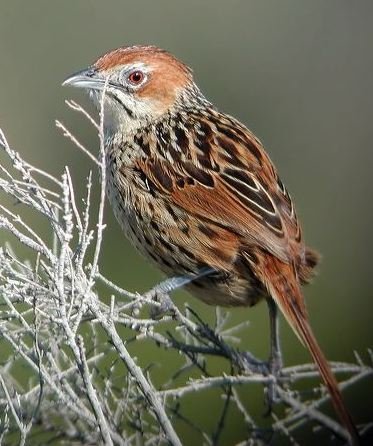
The Macrosphenidae (African Warblers, Longbills & Crombecs) are a newly recognised family of passerines. Most of the species were formerly placed in the Old-World warbler family Sylviidae, although one species, the Rockrunner, was placed in the babbler family Timaliidae. A series of molecular studies of the Old-World warblers and other bird families in the superfamily Sylvioidea (which includes the larks, swallows and tits) found that the African warblers were not part of the family Sylviidae, but were instead an early offshoot (basal) to the entire Sylvioidea clade.
The African warblers are found in a range of habitats in sub-Saharan Africa. These range from primary rainforest to forest edge and open woodland habitats for the longbills, wooded savanna to arid scrubland and bushland in the crombecs, rocky arid scree areas and grassland for the Rockrunner, and grassland for the moustached grass warbler and Cape Grassbird. The family is overwhelmingly non-migratory, although the Moustached Grass Warbler and the Northern Crombec both make some localised movements in West Africa related to the rainy season.
|
|
|
|
Moustached Grass Warbler Melocichla mentalis |
Red-faced Crombec Sylvietta whytii |
|
All photos in this text courtesy of ©Dubi Shapiro |
|
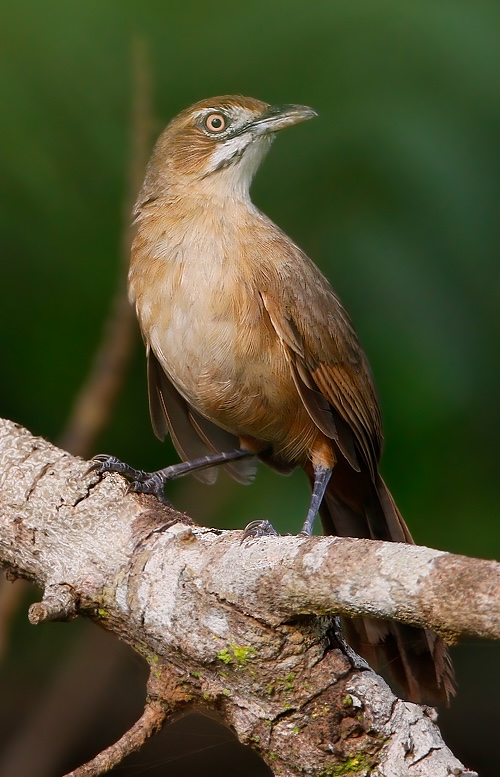
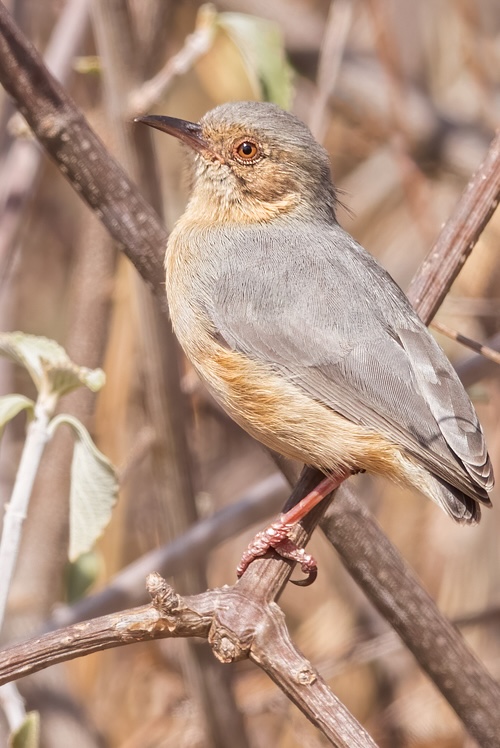
They range in size from the smaller crombecs, which measure 8 centimetres in length and weigh as little as 6.5 grams, to the Cape Grassbird, which measures 19–23 centimetres in length and the Moustached Grass Warbler which weighs 29–40 grams. There is considerable difference in appearance between the genera; for example, the two grass warblers and Victorin’s Warbler possess long graduated tails, whereas the crombecs have tails of which barely extend beyond the tail coverts and folded wings.
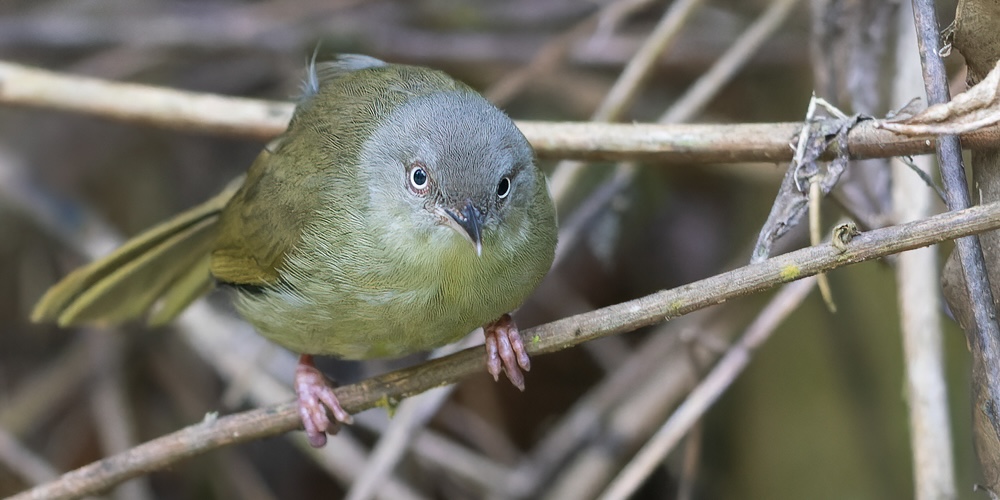
Kretschmer’s Longbill Macrosphenus kretschmeri
They are insect eaters, and take a range of insect prey. The longbills and crombecs feed in the canopy and in bushes, either as singles or pairs and sometimes in small groups, whereas the other species are more terrestrial in their habits. Where two species co-occur, such as the Red-faced Crombec and the Long-billed Crombec over parts of their range, niche partitioning occurs, with one species feeding in the canopy and the other species feeding lower down in the bushes and trees. Some species of both crombec and longbill have been reported to join mixed-species feeding flocks.
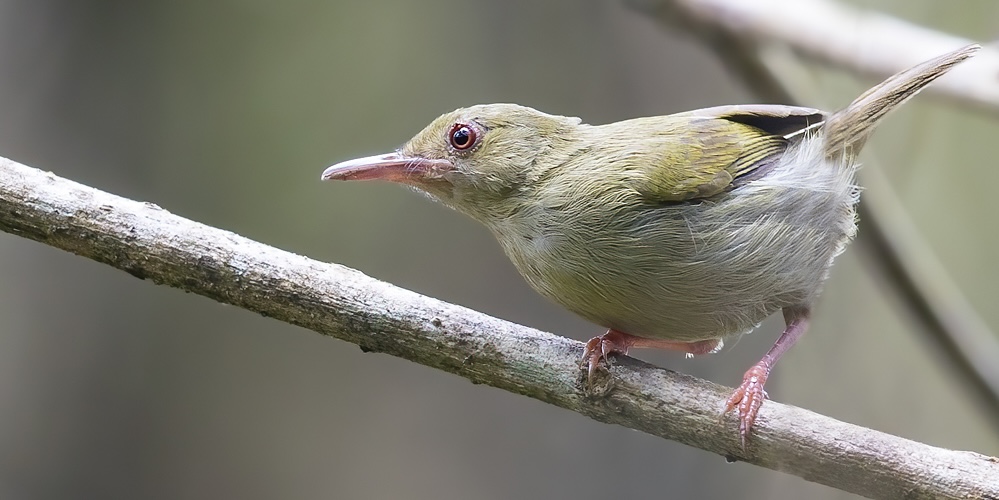
Grey Longbill Macrosphenus concolor
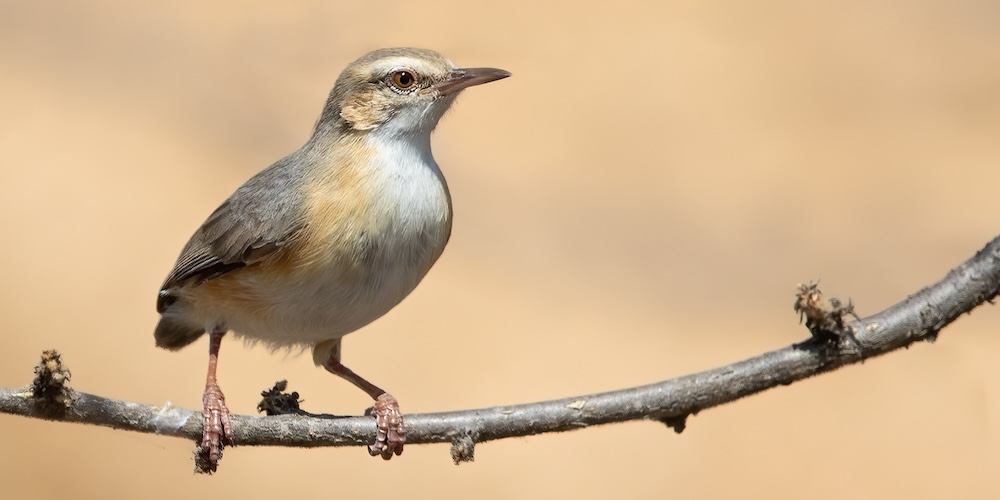
Long-billed Crombec Sylvietta rufescens
Breeding is seasonal and usually timed to coincide with the end of the dry season and beginning of the rainy season; in species with large ranges this can lead to considerable variation as to the exact timing. Information is lacking in many species, but for those that have been studied the African warblers are territorial and monogamous. Nest design varies within the family; the crombecs construct deep pocket shaped nests suspended from a branch; whereas the Victorin’s Warbler, Cape Grassbird and Moustached Grass Warbler construct cup nests weaved from grass.

Rockrunner Achaetops pycnopygius
The majority of the species in this family are considered to be fairly secure and are listed by the IUCN as least concern. One species, the Pulitzer’s Longbill, is listed as endangered. It is endemic to forests found on escarpments in western Angola, a habitat threatened by forest clearance and the spread of slash-and-burn agriculture, and the population is thought to number less than a thousand and is still declining. Another potential concern is Chapin’s Crombec, which is either a species or a subspecies of the White-browed Crombec; its status is uncertain, as conflict has prevented surveys in its range, but it may be extinct.
-
Number of bird species: 18
(As at October 2025)
According to the recently (2025) amalgamated AviList, there are eighteen species, in six genera, in the Macrosphenidae family. They are:
Kemp’s Longbill Macrosphenus kempi
Yellow Longbill Macrosphenus flavicans
Grey Longbill Macrosphenus concolor
Pulitzer’s Longbill Macrosphenus pulitzeri
Kretschmer’s Longbill Macrosphenus kretschmeri
Rockrunner Achaetops pycnopygius
Cape Grassbird Sphenoeacus afer
Moustached Grass Warbler Melocichla mentalis
Victorin’s Warbler Cryptillas victorini
Green Crombec Sylvietta virens
Lemon-bellied Crombec Sylvietta denti
White-browed Crombec Sylvietta leucophrys
Northern Crombec Sylvietta brachyura
Philippa’s Crombec Sylvietta philippae
Red-capped Crombec Sylvietta ruficapilla
Red-faced Crombec Sylvietta whytii
Somali Crombec Sylvietta isabellina
Long-billed Crombec Sylvietta rufescens
-
Macrosphenidae
Family AccountMacrosphenids live in a variety of habitats, including dry, rocky scree slopes (Rockrunner), arid acacia scrubland and savanna (most crombecs)... -
Macrosphenidae
Family AccountThe African warblers are a newly erected family Macrosphenidae, of African songbirds.
Fatbirder does not provide quick links to all of the species in this family. However, the entries below do include links to representatives of every genera, all those illustrated and some of the most often encountered, iconic or sought-after species.
-
Cape Grassbird Sphenoeacus afer
Species AccountThe Cape grassbird or Cape grass warbler (Sphenoeacus afer) is an African warbler found in southern Africa. -
Cape Grassbird Sphenoeacus afer
Species AccountSphenoeacus afer is listed as Least Concern. -
Cape Grassbird Sphenoeacus afer
Species AccountSound archive and distribution map -
Green Crombec Sylvietta virens
Species AccountA small, virtually tailless olive-green bird. Note the slightly darker cap and the pale eyebrow. -
Green Crombec Sylvietta virens
Species AccountSound archive and distribution map -
Grey Longbill Macrosphenus concolor
Species AccountA small, unusual warbler of forests that joins mixed-species flocks as it searches along vines and vegetation for food. -
Grey Longbill Macrosphenus concolor
Species AccountSound archive and distribution map -
Kretschmer’s Longbill Macrosphenus kretschmeri
Species AccountAn unusual warbler with a long bill and pale eyes. Dull brownish overall with slightly paler underparts. -
Kretschmer’s Longbill Macrosphenus kretschmeri
Species AccountSound archive and distribution map -
Long-billed Crombec Sylvietta rufescens
Species AccountSound archive and distribution map -
Long-billed Crombec Sylvietta rufescens
Species AccountA tiny, rotund, virtually tailless warbler with buff-orange underparts, gray-brown upperparts, and a dark eye-stripe that forms a buffy eyebrow. -
Moustached Grass Warbler Melocichla mentalis
Species AccountThe moustached grass warbler (Melocichla mentalis) is a species of African warbler, formerly placed in the Sylviidae family. -
Moustached Grass Warbler Melocichla mentalis
Species AccountMelocichla mentalis is listed as Least Concern. -
Moustached Grass Warbler Melocichla mentalis
Species AccountSound archive and distribution map -
Red-faced Crombec Sylvietta whytii
Species AccountThe red-faced crombec (Sylvietta whytii) is a species of African warbler, formerly placed in the family Sylviidae. -
Red-faced Crombec Sylvietta whytii
Species AccountSound archive and distribution map -
Rockrunner Achaetops pycnopygius
Species AccountA very unusual large and chunky warbler with a white eyebrow and throat, streaked breast, and rufous belly. Found on and around rocks within arid savanna. -
Rockrunner Achaetops pycnopygius
Species AccountThe rockrunner (Achaetops pycnopygius), also known as the Damara rock-jumper, is a species of African warbler, formerly placed in the Sylviidae family. It is the only member of the monotypic genus Achaetops. It is found in Angola and Namibia. -
Rockrunner Achaetops pycnopygius
Species AccountSound archive and distribution map -
Victorin’s Warbler Cryptillas victorini
Species AccountVictorin's warbler (Cryptillas victorini) or Victorin's scrub warbler, is a species of African warbler, formerly placed in the family Sylviidae. -
Victorin’s Warbler Cryptillas victorini
Species AccountSound archive and distribution map