
The BTO recently issued advice on bird feeding, based on research by RSPB, BTO etc. so the guidance reflects the current state of knowledge about birds using garden feeders. Their advice seeks to ensure that the benefits are maximised and the risks associated with garden bird feeding are minimised. Feeding not only supports birds but also provides valuable opportunities for people to connect with nature. We now know a lot about feeding the birds in our gardens, but there is also much to be learned so all advice must be seen as interim.
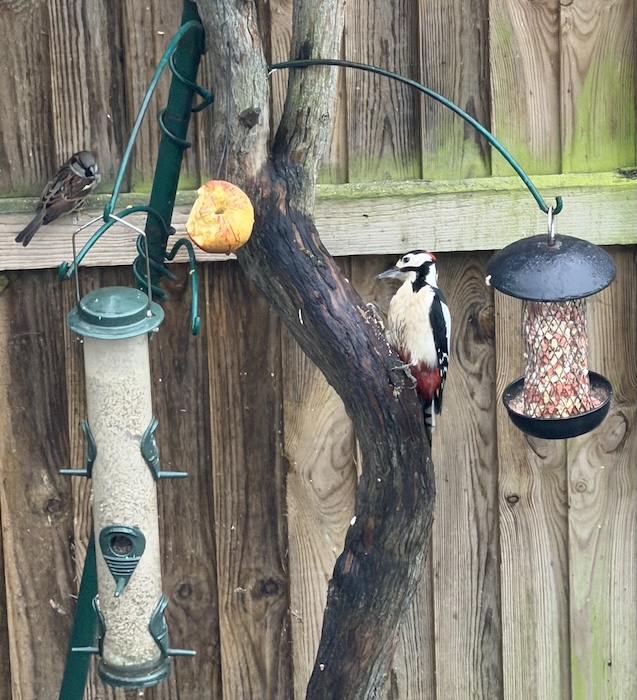
The most clearly understood scientific evidence currently is about how our feeders can spread disease; particularly in relation to finch trichomonosis and its effects, particularly on Greenfinches and Chaffinches. Both species have suffered massive population declines. Analysis shows that declines in adult survival associated with the disease have been worst in residential settings, which is consistent with transmission risk at feeding stations.
Ongoing collaborative research between the RSPB, Institute of Zoology and BTO is further examining how feeding practices influence disease dynamics. Recent results from this work, identify the post-breeding period as a time of elevated outbreak risk in gardens. These findings have directly informed the advice on when to feed; they conclude there should be a seasonal component.
So, until and unless further research indicates otherwise, it’s best to feed seeds and peanuts from November to April, but pause those foods from May to October. Feeding mealworms and suet can continue all year-round.
However, it is vital to maintain good food and water hygiene if you feed birds. To recap on previous advice, clean bird baths and change the water daily, Bird feeders should be taken down and washed at least once a week. It’s also been previously recommended that wooden bird tables are not used because of the difficulty of ensuring that they are absolutely clean and free from disease. It’s also important to report any dead birds and mammals or reptiles and amphibians.
There is also a call to rethink how we feed our garden birds because, in nature, types of food come and go. In gardens, we can constantly offer the same food. Feeding in ways that reflect natural patterns can support birds, while reducing unintended impacts. It’s not always easy to follow advice, particularly for those with very small gardens, but so far as possible, feeding stations should be moved around and the types of food offered should differ at different times of year. So that different birds may come and go into the garden at different periods and no one species comes to rely on the steady supply. Alongside this, of course, all of us gardeners should try our best to supply plants that naturally offer food to birds and nectar to insects. And native plants are always better than foreign imports.
I’m following this advice so far as it is possible in my very small garden. I certainly change the water in the bird baths every day and clean them out, and we regularly clean the feeders. We’ve stopped supplying seeds May to October, but we continue to supply lots of suet and mealworms, and oddly this has attracted at least one species we never used to see in the garden – Jackdaws.
Like many of you, seeing the birds in the garden coming to the feeders is probably essential for my mental health, but at the same time I want to make sure I’m doing the birds good and not just exploiting them for my benefit.