
An Explanation from Finches Friend
Finch Trichomonosis has been endemic in the UK for 21 years. The term ‘Finch Trichomonosis’ is somewhat misleading, as many wild birds are susceptible including Pigeons, where the disease is called ‘Frounce’, and also in our Raptors and Owls where disease is called ‘Canker’, the parasite Trichomonas Gallinae is responsible for all of these. It is likely that Trichomonosis was established in the Pigeon lofts of the late 1800s and early 1900s. It was then transferred to our garden birds from the 1980s as intensive garden feeding became more popular.
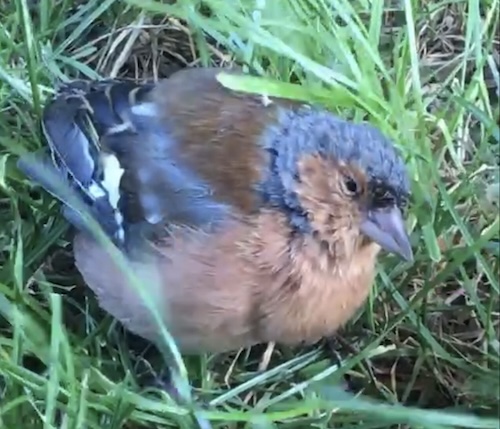
To understand how to combat Trichomonosis, we need to understand how it is transmitted. RSPB have yet to release their science, it is under peer review, however the Canadian science we rely upon is long standing and peer reviewed. It tells us that Trichomonosis is transmitted through saliva, through faeces and through direct ingestion. It sees the period of Summer and early Autumn as the most dangerous times, aligning directly with recent RSPB advice advising the avoidance of seed feeding through the summer and the avoidance of feeding on flat surfaces at any time.
Trichomonosis in our Raptors and Owls is transmitted though predation of sick birds as well as direct ingestion.
If we drill a little deeper, we uncover the significance of “wet and warm”. Put simply the gut of a songbird has a temperature of around 42°C. If our feeding products replicate the conditions of a songbird gut, they will incubate the parasite.
The Biggest Culprit
The vast majority of Trichomonosis transmission in the UK takes place on or rather inside port tube feeders. When it rains, rain water enters the feeder ports, creating a ‘teardrop’ of damp food at the feeding point of each. When the sun comes out, the temperature of the food is raised to create the perfect conditions for the parasite to replicate. All that is needed then is one sick bird to feed. It will leave the parasite in the damp food through its saliva; the feeder will then incubate it. That feeder will then go on to infect dozens of visitors.
You can apply the same logic to flat surface products, bird tables, conventional window feeders, novelty feeders, catching trays, bird baths and damp ground under feeders. All host and transmit disease. Dry food can transmit disease, but it cannot incubate it. The chances of transmission drop dramatically once H2O is not involved.
~~~~~
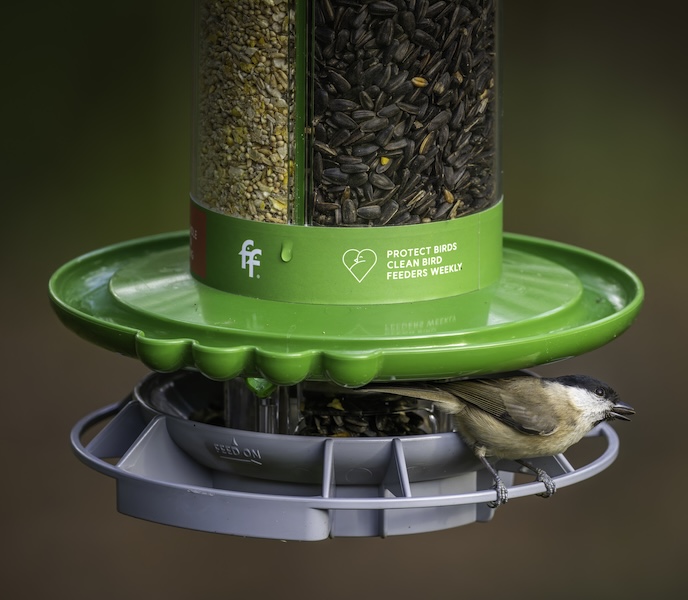
Keeping food (and birds) dry
At Finches Friend we designed our feeders with the realities of disease transmission in mind. In our feeders, birds feed from a perch to avoid any faeces being deposited in the food; we provide 45° rain protection; and we make cleaning really easy.
We produce the only safe window feeder in the world, rain protected and where birds feed from a perch.
Cleaner Feeder 1, 2 and 4 offer rain protection, sealed food stores, switchable food flow and cartridge cleaning.
Our Cleaner Peanut Feeder (which also works for pellets) offers food in age order, has rain protection and separate perching.
Our ZIG guards keep Parakeets and Squirrels away.
We are the only business in the world that has taken the issue of wild bird disease in home feeding seriously. Learn more at finchesfriend.com. Worldwide patents granted or pending.
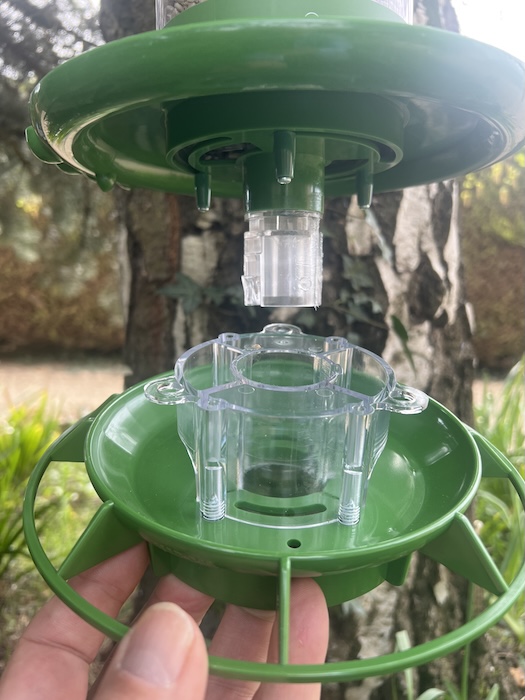
Cleaning made easy